
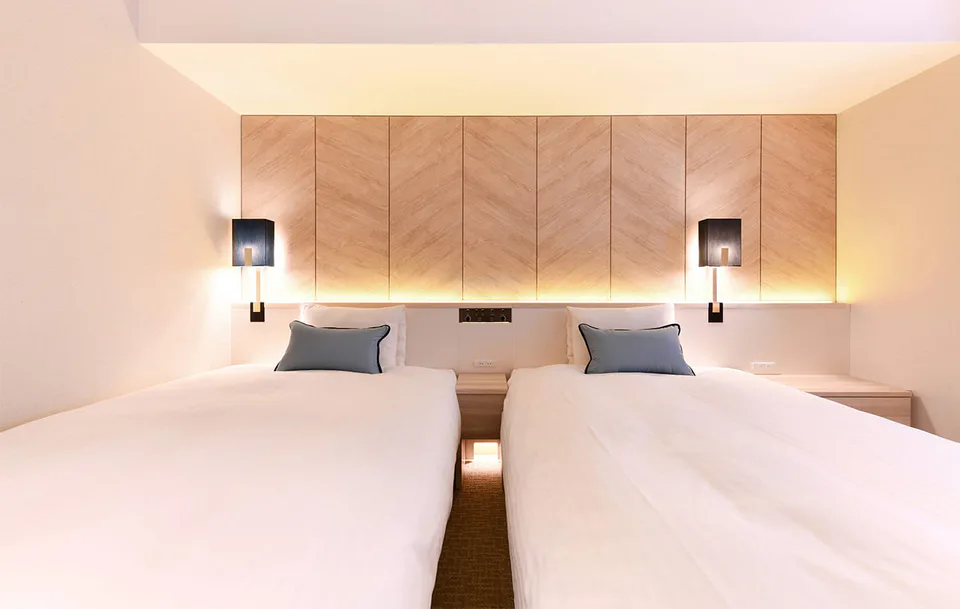
Vessel Hotel Campana Nagoya is worth the extra walk when the public bath, family policy or room upgrade will be used repeatedly—not simply because it is “near Nagoya Station.” The hotel officially gives about nine minutes on foot from JR Nagoya Station’s Sakura-dori Exit, while its current hotel brochure gives about four minutes from Subway Nagoya Station Exit 1. That difference is the key: the walk penalty depends on which part of the station your trip actually uses.
If you have a 07:00 Shinkansen, two 29-inch suitcases and will never use the bath, a directly connected station hotel has a stronger case. If you are staying two or three nights, will use the bath morning and evening, need 24-hour laundry or are travelling with children who can benefit from Vessel’s bed-sharing policy, the extra distance can buy more than it costs.
Hotel facts were rechecked August 27, 2026. Approximate USD conversions use JPY 1,000 ≈ US$6.28 only for orientation; nightly hotel rates and exchange rates move.
↔ Scroll table left or right
Your stay | Vessel verdict | Why |
One night, early Shinkansen, heavy luggage | Compare a station-connected hotel first | The walk is paid on arrival and again before the hardest departure |
Two or three nights, bath used twice or more | Vessel gets stronger | The bath is a repeatable benefit while the arrival walk happens only once |
Family using existing beds | Strong conditional value | Children 18 and under can share existing beds free with a parent/grandparent, but bed width and floor space remain real limits |
Two adults + two large suitcases | Start at Standard Twin, not Standard Double | 20.9 m² gives materially more usable floor than the 15.0 m² double |
Late event finish, bath still planned | Good fit | Bath runs until 01:00, last entry 00:30 |
Late event finish, no bath/breakfast/laundry use | Location premium weakens | You are paying the walk without consuming the hotel’s differentiators |
ValueNavi Hotel Score: strong repeatable utility, only average Shinkansen friction
This score is for a specific and common use case: two adults, two nights in Nagoya, Standard Twin, luggage, at least one city/subway day and two intended public-bath sessions. Ten means more traveller-friendly for that decision. It is not an official hotel rating, and it should not be copied to a one-night 06:30-departure stay—the route profile changes too much.
Decision dimension | ValueNavi score | Why |
|---|---|---|
JR / Shinkansen route fit | The official JR walk is about nine minutes, so repeated Shinkansen legs keep charging the location penalty | |
Subway / city route fit | Subway Nagoya Exit 1 is listed at about four minutes, making a city-oriented stay less punitive than the JR headline suggests | |
Two-adult room practicality | The 20.9 m² Standard Twin is a materially better luggage baseline than the 15.0 m² Standard Double | |
Recovery utility | The public bath is included for overnight guests and can be used morning and late evening when the hours fit | |
Multi-night utility | Bath, breakfast and 24-hour laundry can repeat across the stay instead of being one-off amenities | |
Family policy value | Bed-sharing is unusually broad for children 18 and under, but the real bed width and room floor area still cap comfort | |
Early-departure resilience | An early Shinkansen can erase breakfast value and makes every outdoor station minute more important |
The score tells you why the hotel is polarising. It does not have one big weakness; it has one repeated location cost sitting beside several repeatable utilities. A transport-only stay exposes the weak dimension. A two- or three-night stay can actually use the strong ones.
The “9-minute walk” is not one universal journey
The hotel’s current access page gives roughly nine minutes from JR Nagoya Station’s Sakura-dori Exit, while the current hotel brochure lists roughly four minutes from Subway Nagoya Station Exit 1. That means the location should be judged by the rail node you repeat.
A Shinkansen-heavy stay pays more of the nine-minute JR-side walk. A subway-heavy city stay can interact with the hotel differently because the useful exit is closer. Meitetsu passengers from Chubu Centrair also need to count the station crossing after arriving at Meitetsu Nagoya rather than treating “Nagoya Station” as one doorway.
Use a simple walk-count test. If a station-connected hotel would save six minutes each way versus your actual Vessel route, then:
arrival + departure = roughly 12 minutes of saved walking;
three additional rail day trips = six more station legs, adding roughly 36 minutes;
the same three-night stay with mostly subway/local-city days may have a much smaller penalty.
Those are planning illustrations, not official door-to-door times. Their purpose is to show why one “9-minute” headline is a poor value metric. Count the walks you will actually repeat.
ValueNavi Walk Tax: compare repetition, not one arrival walk
For hotel location, I would use two ledgers rather than one “minutes from station” number:
Walk Tax = extra walking versus your realistic alternative × number of station-facing legs
Repeatable Utility = bath sessions actually used + breakfasts actually used + laundry reset + room/family benefit actually consumed
These are editorial planning tools, not monetary formulas. Their job is to expose repetition. An extra six minutes once is trivial; an extra six minutes on eight station legs is different. In the other direction, a public bath that appears once on an amenities list can be used four times across a three-night stay.
Decision rule: if the Walk Tax repeats but the hotel utilities do not, move closer to the station. If the walk is manageable and at least two important utilities repeat, Vessel becomes much easier to justify.
What does the walk buy? Start with the public bath
The second-floor public bath is the clearest feature a more immediate station hotel may not reproduce. Current official hours are 06:00–10:00 with last entry at 09:30, and 15:00–01:00 with last entry at 00:30. Overnight guests use it without a separate admission fee. The men’s side has a dry sauna; the women’s side has a mist sauna.
This creates a useful bath-session test. If you plan one evening bath after a long rail day and another the next morning, the facility is used twice. If you stay three nights and use it four or five times, the value repeats while the first arrival walk does not. If you dislike public bathing and will use only the room bath, delete the public bath entirely from the premium calculation.
The tattoo rule is specific: tattoos must be completely covered by two 8 × 10 cm cover stickers supplied by the front desk. Guests who cannot meet that condition should not count the bath as usable value.
For families, the current rule is more nuanced than “diaper child cannot use the bath.” The hotel says children who use diapers may enter the public bath, but they may not enter the bathing area while wearing a diaper. That distinction matters when deciding whether the family can actually use the facility together.
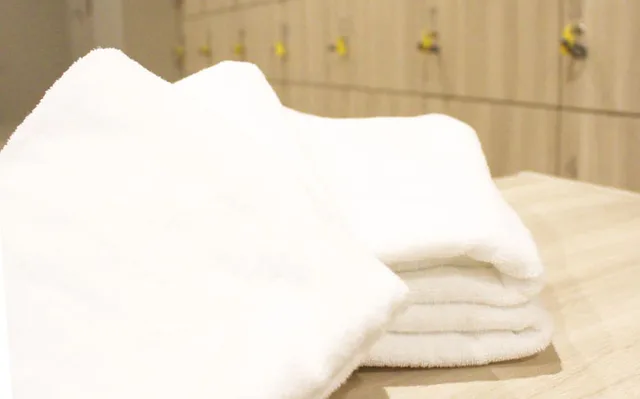
Public-bath amenities at Vessel Hotel Campana Nagoya.
The Standard Twin gives about 39% more published floor area than the Standard Double
The current official room list gives the Standard Double as 15.0 m² with one 140 cm bed. The Standard Twin is 20.9 m² with two 120 cm beds. On published area, that is 5.9 m² more—about 39% more floor area.
That difference matters more than the room name. Two adults with two large suitcases should not treat the cheapest double as the baseline simply because it legally sleeps two. The double is a credible solo room or short-stay couple room. The twin is the safer two-person starting point when luggage needs to remain accessible.
The next upgrade is much smaller. Comfort Twin is 21.4 m², only 0.5 m² larger than Standard Twin, so its value should come from the higher-floor positioning and Airweave mattress rather than meaningful extra floor space.
For families or groups, Superior Twin and Superior Triple are both 27.0 m². The Superior Twin uses two 140 cm beds and is listed for up to three adults; the Superior Triple adds a 90 cm bed and is listed for up to five adults. Capacity still does not equal comfort: five adult occupants plus luggage inside 27 m² is a very different product from two adults using the same published area.
Vessel’s family policy is valuable only if the existing beds still work
The hotel currently allows children aged 18 and under to share existing beds free when staying in the same room as a parent or grandparent. That is unusually generous on paper, but it does not create another bed or another square metre.
The decision should therefore be:
Can the child legally use the bed-sharing policy?
Is the actual bed wide enough for the people sharing it?
Does the room still have enough floor for luggage, stroller and circulation?
The Standard Double cannot take the hotel’s loan baby cot; the Standard Twin can. A family that needs a cot has therefore already moved beyond the cheapest room before rate comparison begins.
Breakfast also changes by age: the current guest price is JPY 1,700 (about US$11) for adults, JPY 900 (about US$6) for ages 6–12 and free for children five and under. The family saving can be real, but calculate it using the actual child ages rather than the phrase “family-friendly.”
Breakfast is an early-start benefit only if 06:30 is early enough
Breakfast currently runs 06:30–09:30 with the room closing at 10:00. That is useful before a normal Shinkansen or sightseeing day, especially when the group wants one predictable meal before leaving.
It is not useful for every early departure. If you need to be on a train around 06:30–07:00, the buffet either disappears from the value calculation or creates a rushed sequence. Do not pay a breakfast-inclusive premium for a meal window you cannot use.
The same principle applies after a late event. A 00:15 bath followed by a 06:30 breakfast may technically fit the timetable, but the hotel cannot manufacture sleep. Value the facilities by the combinations you will realistically use, not by how many boxes the hotel can tick.
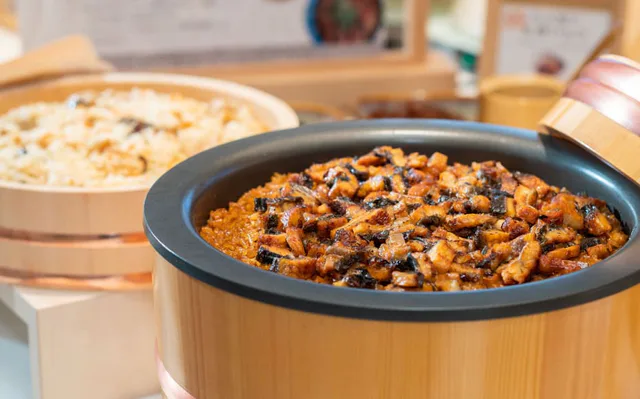
Breakfast at Vessel Hotel Campana Nagoya.
24-hour laundry makes more sense on night three than night one
The hotel currently provides a laundry corner on the second floor available 24 hours. This is a small feature with almost zero value on a single overnight but much more value in the middle of a longer Japan trip.
A traveller arriving from Tokyo or the Japanese Alps and continuing to Kyoto can use Nagoya as a reset night: laundry, bath, sleep, breakfast, then move on. In that itinerary, the hotel is doing more work than a station-connected room that only shortens the walk.
That is the wider decision rule for Vessel: the farther you are willing to walk from the station, the more hotel functions you should actually consume.
When a station-connected hotel is worth paying more
Nagoya JR Gate Tower Hotel is the cleanest red-team alternative because its official access page states that it is directly connected to JR Nagoya Station and about five minutes from the hotel front desk to the Shinkansen ticket gate. That solves a different problem from Vessel.
I would pay a reasonable premium for the station-connected option when:
the stay is only one night;
arrival and departure both use the Shinkansen;
departure is early enough that breakfast/bath value disappears;
rain, limited mobility or large luggage makes every outdoor minute expensive;
the Vessel room you actually need has risen close to the price of the connected hotel.
I would keep Vessel when the rate gap is meaningful and the bath, family policy, larger practical twin or laundry will be used. The comparison is not “nine minutes versus zero.” It is walk tax versus repeatable hotel utility.
Late finish: the bath deadline matters more than the station label
The hotel works particularly well after a late event when you can still return before the 00:30 last bath entry. In that scenario, the extra walk has an immediate payoff: reach the room, use the public bath, sleep.
If the event plus dinner routinely pushes you after 00:30, the hotel loses one of its strongest differentiators on exactly the nights when the walk feels longest. That is a real reversal condition. A closer hotel can then become better even if its facilities look weaker on paper.
The correct late-night test is not “Can I walk nine minutes?” It is “After I make that walk, is the thing I paid to reach still open?”
One night, two nights or three nights
One night: Vessel needs a specific job—bath, family policy or a clear rate saving. If the stay is only late check-in → sleep → early Shinkansen, station connection is more valuable.
Two nights: this is the strongest middle ground. The arrival walk is paid once, but bath, breakfast and room utility can repeat. Standard Twin becomes the sensible two-adult baseline.
Three nights or more: room size and laundry become more important. Vessel can work well as a Nagoya rail base, but repeated Shinkansen days also multiply the walk tax. Count station crossings before assuming the cheaper nightly rate wins.
Final verdict
Choose Vessel Hotel Campana Nagoya when you will use at least two repeatable advantages—public bath, family bed-sharing, breakfast, laundry or a larger practical room—and the station walk is not the hardest part of the trip. For two adults with luggage, start with the 20.9 m² Standard Twin rather than judging the hotel from the 15.0 m² Double.
Choose a station-connected hotel when the stay is transport-first: one night, late arrival, early Shinkansen, heavy bags, poor weather or limited mobility. If Vessel’s bath closes before you get back and breakfast opens after you need to leave, its two most visible benefits have already disappeared.
The extra walk is worth it only when you can name what you are buying at the other end.
Compare Vessel Hotel Campana Nagoya rooms for your dates
References
Vessel Hotel Campana Nagoya — access · official hotel brochure — JR and subway walking references · official room sizes and occupancy · public-bath hours and rules · breakfast hours and prices · Nagoya JR Gate Tower Hotel — official station access. Checked August 27, 2026. Hotel prices, policies and operating hours can change.