
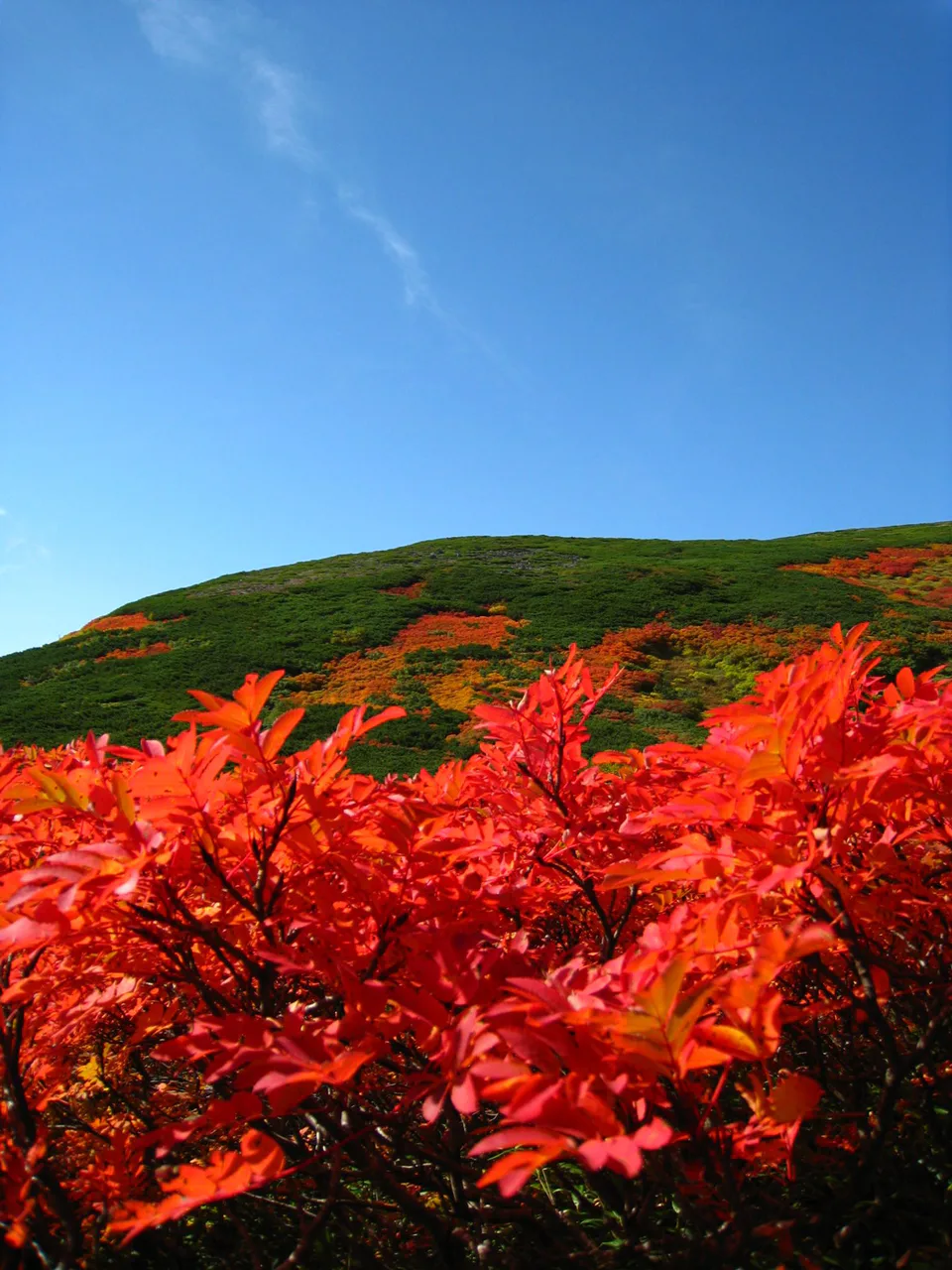
Ginsendai is one of Daisetsuzan's earliest autumn-colour targets, but in 2026 the first decision is not the leaves — it is which access regime applies to your date. The regular summer weekend climbing shuttle continues only through 6 September. The autumn vehicle-control period then starts on 12 September and uses a different system: reserved charter buses from Sounkyo plus reserved timed private-vehicle access. Mixing those two systems is an easy way to build a route around the wrong bus.
Ginsendai is also not a ropeway viewpoint. The road ends at a mountain trailhead, and the famous upper-slope views require real hiking. If you want early Daisetsuzan colour with a lower walking and return-deadline burden, compare Asahidake vs Kurodake before committing.
↔ Scroll table left or right
2026 date | Access product | Reservation logic | Main trap |
Through 6 Sep on listed weekends/holidays | Seasonal Sounkyo–Ginsendai climbing shuttle | 8 seats; official page says reserve by 17:00 the previous day | Assuming this small summer shuttle continues into peak autumn |
7–11 Sep | Transition period | Do not assume either shuttle product; verify road/access directly | Planning from a 2025 or summer timetable |
12–23 Sep | Autumn vehicle-control period | Reserved charter bus or reserved timed private-vehicle access | Turning up without the correct reservation/product |
After 23 Sep 16:30 | General vehicle access may resume, subject to weather/road closure | Check current road status | Assuming the road must stay open until the historical end of autumn |
Ginsendai in 30 seconds: who should actually go?
Go: early alpine colour is a top priority, you are comfortable on a real mountain trail, and you can protect a fixed return.
Choose Asahidake instead: you want volcanic scenery and a more complete sightseeing circuit from a ropeway.
Choose Kurodake instead: you want the easiest stop-loss, a 5th-station view and an onsen-based overnight.
Skip Ginsendai: pushchairs, step-free needs, poor balance, no hiking footwear or zero tolerance for a fixed transport deadline.
Do not confuse the 8-seat summer shuttle with the autumn charter
Kamikawa Town's 2026 summer climbing-shuttle notice lists weekend/holiday operation from July through 6 September. That product has a capacity of only eight passengers, costs JPY 2,500 one way and requires reservation by 17:00 the day before.
The autumn system beginning 12 September is different. Kamikawa Town's 2026 autumn-control notice states that the Ginsendai road is regulated from 12–23 September. It introduces a reserved charter from Sounkyo Information Center with two outbound services — 06:00→07:00 and 07:00→08:00 — and two returns — 15:00→16:00 and 15:30→16:30. The published fare is JPY 2,500 one way / JPY 5,000 return, with a stated capacity of 40 people per bus.
Private cars do not simply remain the flexible alternative during that period. The autumn notice also uses reserved alternating-direction access because parking at the trailhead is limited, with a JPY 2,000 cooperation fee per private car. The gate closes at 16:30 and overnight parking at the trailhead is discouraged.
The important decision is therefore date-specific: your 6 September transport and your 12 September transport are different products even though the destination is identical.
7–11 September is not a free “gap week” you can guess through
The summer shuttle notice ends on 6 September, while the autumn vehicle-control period starts on 12 September. That five-day transition should not be filled with assumptions from either timetable. If your trip falls there, verify the current road, ordinary access and any updated operator notice directly before locking the hotel or hike.
This is an example of why Ginsendai is more difficult than a ropeway destination. The colour may look promising while the transport product you saw in a travel blog is no longer the one operating on your date.
Trailhead sightseeing and Mount Akadake are not the same trip
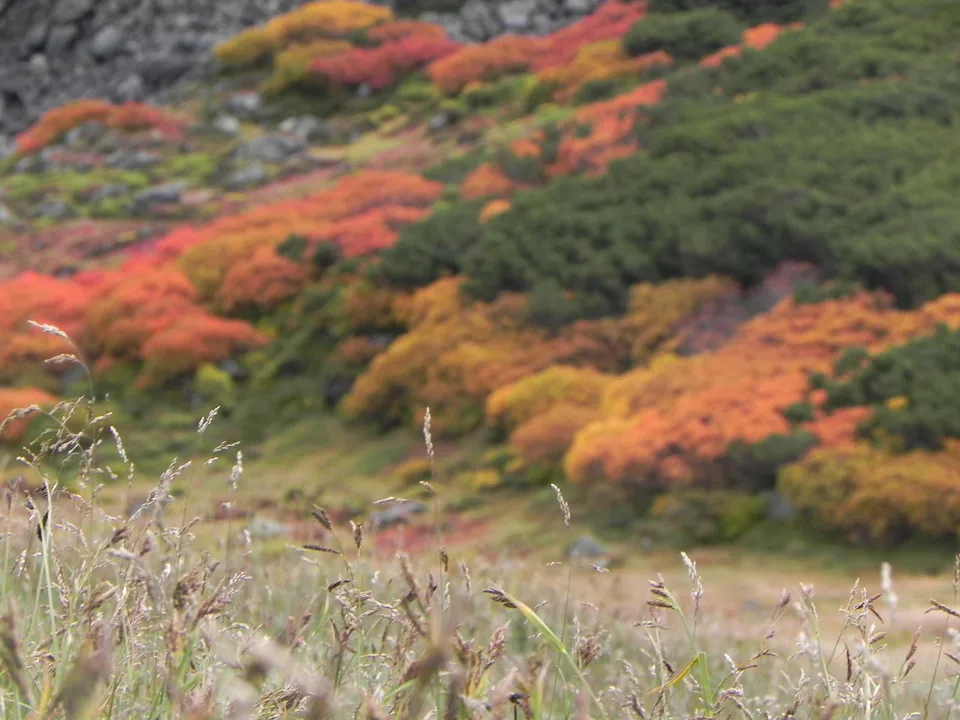
A short stop near the trailhead can give you a first taste of the seasonal landscape, but it does not reproduce the upper-slope views that make Ginsendai famous. Once you continue on the Akadake route, roots, rocks, mud, gradient, weather and hiking speed matter.
Mount Akadake reaches 2,078 metres. You do not need to summit to make the day worthwhile, but you do need a turnaround rule. Photography, wet ground, cold wind and crowds all consume time that the return bus does not give back.
Set the turnaround before starting. A fixed 15:00 or 15:30 bus should create a stop-loss, not a challenge to see how far the group can get.
Build the hike backwards from the return deadline
For the autumn charter, arriving around 07:00 or 08:00 can look like an enormous hiking window. In practice, subtract time for preparation, toilets, photographing the lower slopes, food, changing layers and arriving back at the stop early.
I would keep at least 30–60 minutes of reserve at the trailhead rather than spending every spare minute uphill. That buffer protects a slower descent, wet trail, crowding or a simple navigation delay. The cost of returning early is some waiting; the cost of missing a controlled mountain transfer is much larger.
Sounkyo vs Asahikawa: choose the base from the access product
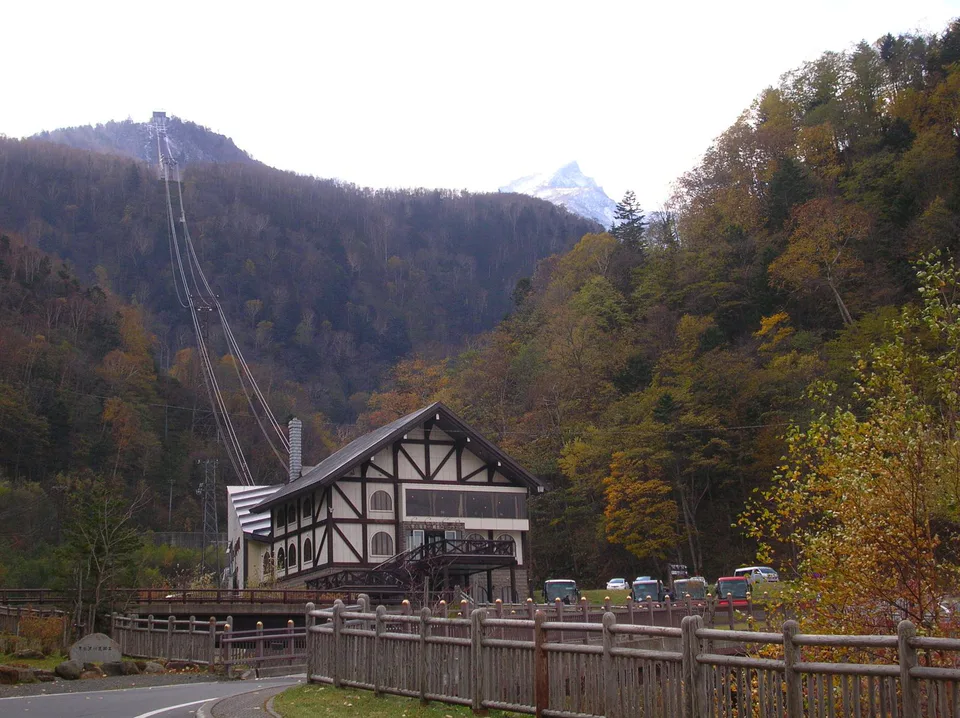
Sounkyo is the cleanest car-free base during the autumn control period because the reserved charter departs from Sounkyo Information Center. Arrive the previous day, leave the main suitcase at the hotel and start the mountain day without a pre-dawn Asahikawa transfer.
Asahikawa is stronger for a self-drive or more weather-flexible trip when you have the correct vehicle-access reservation and want Biei, city facilities, airport access or another mountain as a fallback. The trade-off is more driving and less margin before a hotel dinner or next transfer.
The hotel move needs a job. A Sounkyo night is most defensible when it provides both the early access and a useful onsen/gorge fallback. If Ginsendai is only a “maybe” inside a short Hokkaido trip, keeping Asahikawa can be more resilient.
Search Sounkyo hotels on Booking.com
Compare Sounkyo hotels on Expedia
Ginsendai vs Asahidake vs Kurodake: choose the friction you are willing to pay
↔ Scroll table left or right
Mountain | What you buy | Operational burden |
Ginsendai | Early alpine colour + genuine trail environment | Highest: dated access regime, reservation, fixed return, hiking |
Asahidake | Sugatami, fumaroles, volcanic plateau | Moderate: limited bus if car-free, exposed walking, ropeway weather |
Kurodake | 5th-station viewpoint + optional chairlift + Sounkyo | Lowest stop-loss burden; still weather-sensitive |
For families or older travellers, Kurodake is usually the easier default. For broad volcanic photography, Asahidake often wins. Ginsendai is the specialist choice where the access reservation, walking ability and actual 2026 colour all need to align.
Weather Plan B: a failed access day should not become a failed Hokkaido day
If the road closes, a reserved service is cancelled, heavy fog removes the mountain, or first snow makes the trail unsuitable, change the goal. From Sounkyo, use Kurodake's lower section if operating, gorge scenery, visitor facilities or onsen. From Asahikawa, redirect toward Biei or another lower-risk option.
The road notice itself warns that weather can bring forward closures after the regulation period. A reservation is permission to attempt the day, not a guarantee the mountain or road will be usable.
Final verdict
Choose Ginsendai when the early alpine colour and hiking environment are important enough to justify a transport reservation and fixed return. For 2026, first identify the access regime: the small summer shuttle runs only through 6 September; 12–23 September uses the separate autumn-control system with reserved Sounkyo charters or reserved timed vehicle access.
Stay in Sounkyo for the cleanest car-free autumn-control plan. Use Asahikawa when a correctly reserved car and broader weather fallbacks matter more. If you mainly want mountain colour with lower walking and transport risk, Asahidake or Kurodake is a better use of the day.
References and verification date
Checked 25 August 2026. Reservation portals, road operation, weather, trail closures, first snow and bear notices can change; verify the exact date shortly before travel.