
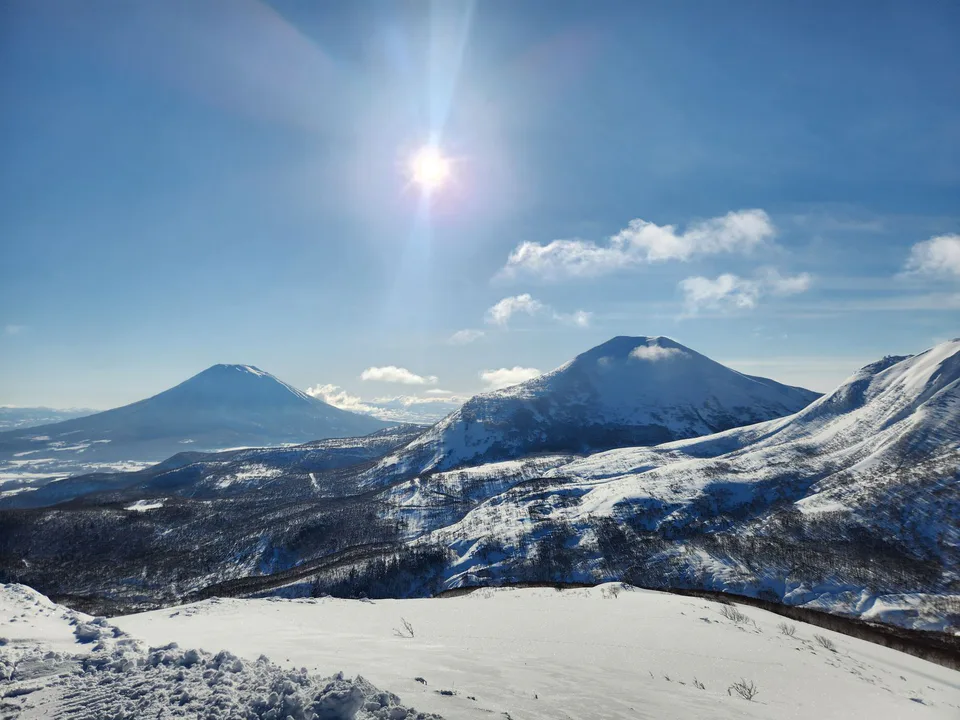
Pack for your coldest outdoor block, not for every city on the itinerary. That is the simplest way to handle Japan in March without bringing two wardrobes. Tokyo, Osaka, Kyoto and Fukuoka can usually share one removable city-layer system. Sapporo can still require snow-ready footwear, gloves and real insulation. Okinawa can make the same heavy coat feel unnecessary. The right suitcase therefore depends less on the word “March” than on whether your route includes Hokkaido, a mountain side trip, an early temple morning or a warm Okinawa finish.
Japan Meteorological Agency 1991–2020 climate normals illustrate the spread: Tokyo averages 9.4°C in March, Sapporo 1.1°C and Naha 19.1°C. Use those long-term figures to choose the type of clothing, then use the actual 7–10 day forecast to decide how much insulation you really need. Climate normals are planning evidence, not a forecast for your dates.
The one-suitcase rule: let the hardest four hours decide the specialist gear
Do not build the packing list from six city averages. Find the hardest four-hour block in the itinerary:
Hokkaido street walking in snow or slush: footwear grip and water resistance become non-negotiable.
Fuji, Hakone, Nikko or another elevated day trip: a warmer mid-layer, gloves or hat can matter even if the Tokyo hotel forecast looks mild.
Early Kyoto temple morning or late outdoor hanami: the low temperature matters more than the sunny afternoon high.
Okinawa-only route: wind protection matters more than carrying a mainland winter coat.
Once that hardest block is solved, every easier day should reuse the same pieces in a lighter combination. This prevents the classic overpacking mistake: one “Tokyo jacket,” one “Kyoto jacket,” one “Okinawa jacket” and a suitcase that is half outerwear.
↔ Scroll table left or right
Your March route | Build around | What not to duplicate | Decision that can reverse it |
Tokyo + Kyoto + Osaka, 7–10 days | Midweight wind-resistant outer layer + removable knit/fleece + light rain protection | Separate coats for Tokyo and Kansai | Fuji/Hakone/Nikko day trips or an unusually cold early-March forecast |
Hokkaido + Tokyo | Hokkaido footwear, gloves and warm outer layer; lighten the layers in Tokyo | A second full Tokyo outerwear system | Late March with thawed urban surfaces and a very mild forecast still requires a ground-condition check |
Tokyo/Kyoto + Okinawa | Mainland jacket + thin removable mid-layer; use the shell alone in Okinawa | A separate warm-weather jacket | An Okinawa-only trip can delete the heavy mainland insulation entirely |
City trip + mountain side trip | City system plus one packable warm layer and small cold-weather accessories | A mountain-specific full wardrobe | Snow/ice conditions may make footwear—not clothing—the specialist item |
The March climate spread is real, but a city table is only the starting point
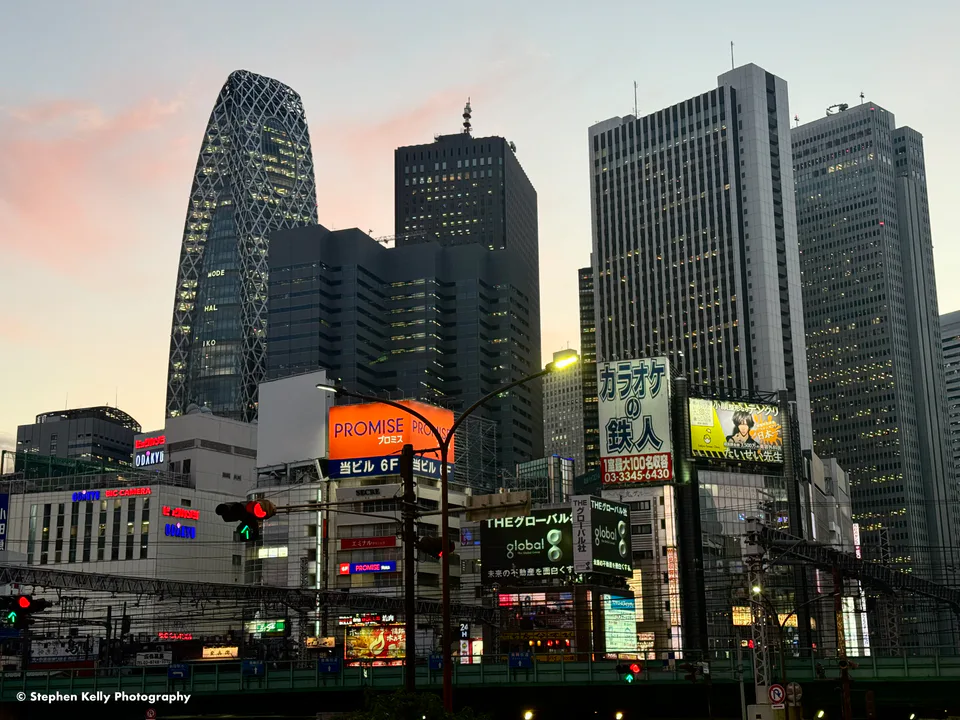
JMA normals show why a single “Japan in March” outfit does not exist. Kyoto is especially date-sensitive, so the figures below use early-to-late March 10-day normals rather than pretending the month is static.
↔ Scroll table left or right
Region | March normal | Average high / low | What should change in the bag |
Tokyo | 9.4°C | 14.2 / 5.0°C | Removable insulation for early/late hours |
Osaka | 9.9°C | 14.2 / 6.0°C | Usually the same system as Tokyo |
Kyoto | 7.5 → 10.1°C* | 12.5/3.4 → 15.5/5.4°C* | Early-March mornings deserve more warmth than late-March afternoons |
Fukuoka | 10.8°C | 15.0 / 7.2°C | Lighter city layers; keep rain protection |
Sapporo | 1.1°C | 4.5 / -2.4°C | Snow/slush-ready shoes, gloves and winter insulation |
Naha | 19.1°C | 21.9 / 16.7°C | Light layers and a windproof shell |
*Kyoto figures show JMA early-March to late-March 10-day normals. Source: Japan Meteorological Agency climatological normals.
Tokyo, Kyoto and Osaka: one layer system is usually enough
Tokyo’s March normal high of 14.2°C and low of 5.0°C describes why removable layers work better than one bulky coat. A day can begin in single digits, become comfortable while walking in the afternoon, then cool again during a riverside evening or long train journey home.
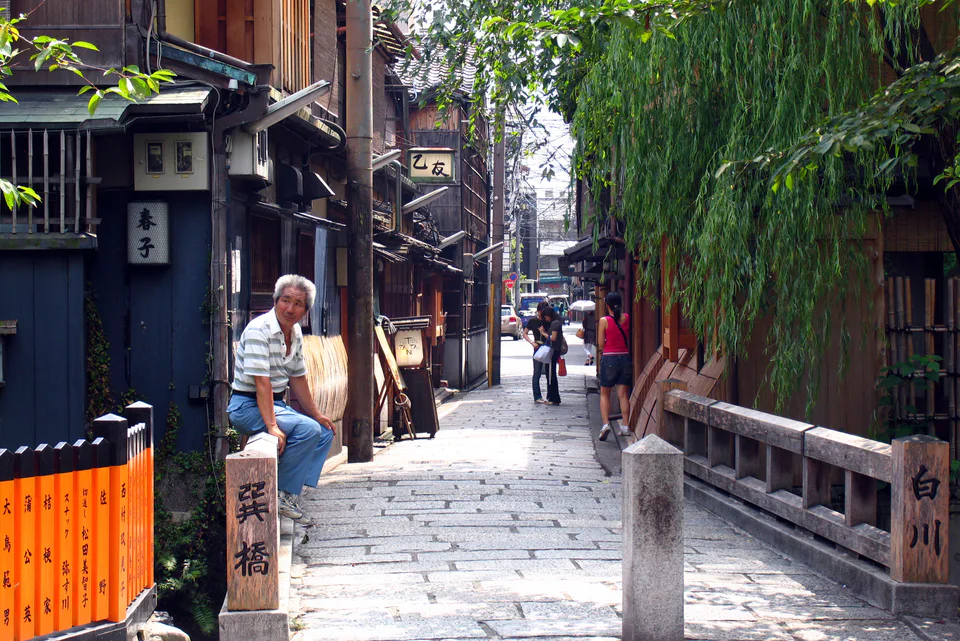
Osaka is similar enough that a separate clothing strategy adds little. Kyoto is the exception inside the same wardrobe: early March is noticeably cooler than late March, and a sunrise start at Fushimi Inari or a long temple morning exposes you to the coldest part of the day before you have warmed up through walking.
For a normal Tokyo–Kyoto–Osaka first trip, I would start with a breathable base, one knit/fleece or light insulated mid-layer and a wind-resistant outer layer that handles light rain. The jacket should have enough room for the mid-layer underneath. If the forecast turns warm, remove a layer; do not add another jacket “just in case.”
The day trip can be colder than the city where you sleep
One of the most expensive packing mistakes is checking only the hotel-city forecast. A Tokyo hotel does not tell you what a Fuji-area viewpoint, Hakone ridge, Nikko lake or exposed observation deck will feel like. Elevation, wind and time outdoors can make the side trip the coldest block of the entire holiday.
This is where a packable layer earns its place. You do not necessarily need a second winter coat. A light insulated layer, gloves and a hat can sit in the day bag and disappear again when you return to the city. If the side-trip forecast shows snow or icy walking conditions, then the answer can reverse: footwear may need to be upgraded for that one day, because no amount of upper-body layering fixes a slippery sole.
ValueNavi rule: pack specialist gear only for a specialist condition you can name. “Japan might be cold” is not a condition. “Hakone at 08:00 with near-freezing temperatures and exposed outdoor walking” is.
Hokkaido: shoes can matter more than adding another coat
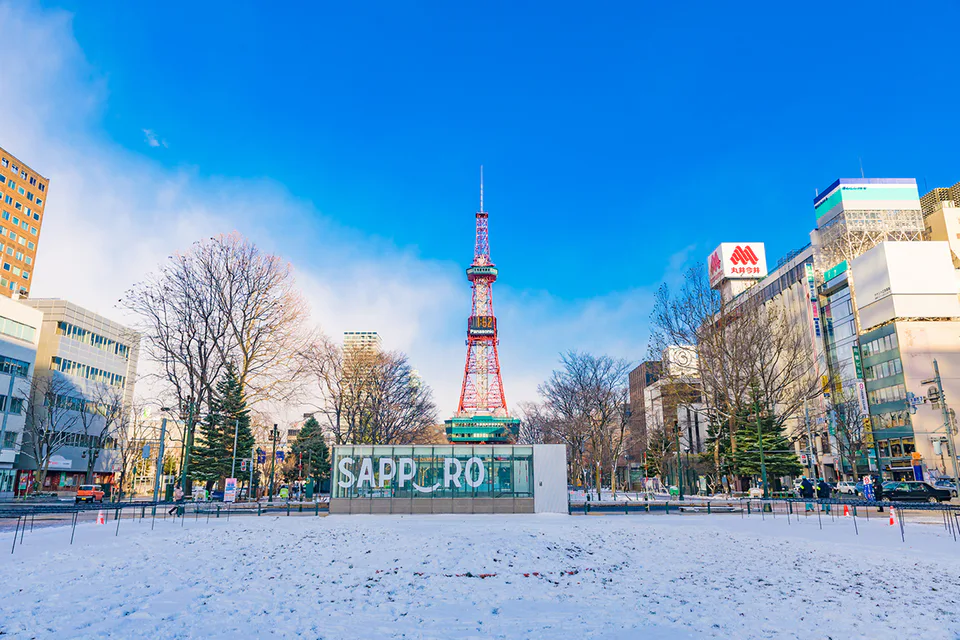
Sapporo’s March normal is 1.1°C, with an average high of 4.5°C and low of -2.4°C. March can therefore be awkward rather than simply cold: daytime thaw, wet snow, slush and refreezing surfaces can appear in the same trip.
That makes footwear the hard veto. Ordinary smooth-soled city sneakers may be fine on a dry Tokyo pavement and a poor choice on an icy Sapporo morning. Check the forecast and current ground conditions shortly before departure. If wintry surfaces remain, prioritise useful grip, water resistance and warm socks. Gloves and a hat are small, high-value additions because they can be removed indoors without taking suitcase space.
If the route is Hokkaido + Tokyo, do not pack a separate Tokyo wardrobe. Pack for Hokkaido, then wear fewer layers in Tokyo. The warm coat is already paid for in suitcase space; carrying a second medium coat to make Tokyo feel more seasonally correct usually creates little value.
Okinawa: do not let mainland March force a winter coat into an island-only trip
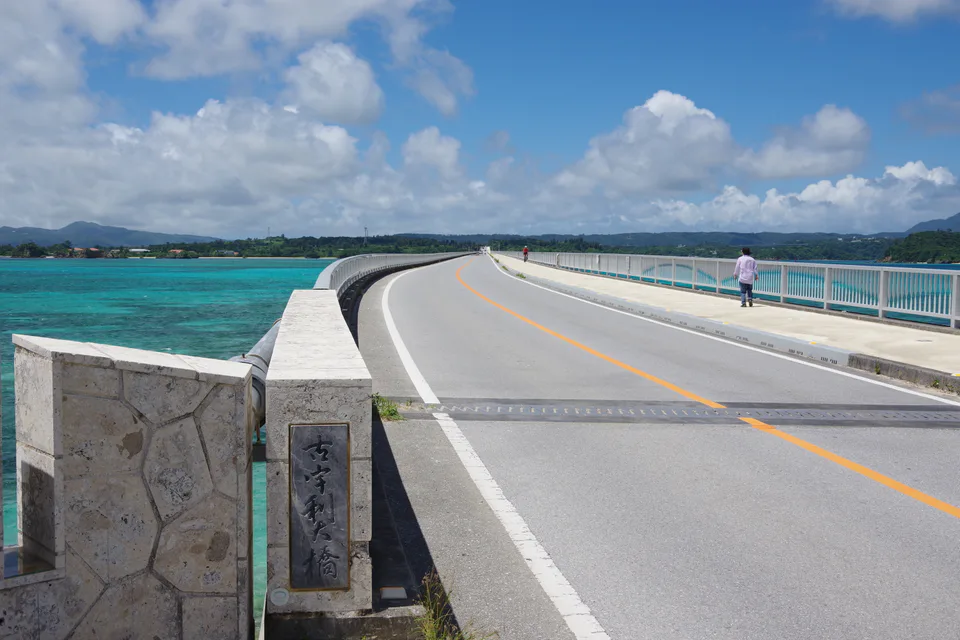
Naha’s March normal is 19.1°C, with an average high of 21.9°C and low of 16.7°C. On an Okinawa-only itinerary, a Tokyo-style heavy winter coat is usually dead weight. Light tops, one removable mid-layer and a wind-resistant shell are more adaptable.
The boundary condition is exposure. A cloudy cape, bridge, boat day or windy waterfront can feel much cooler than a sheltered street. “21°C” also does not guarantee beach-summer comfort for every traveller. Keep a light layer that blocks wind; delete heavy insulation unless the actual forecast says otherwise.
For a mainland + Okinawa itinerary, keep one outer system rather than two. The mainland jacket plus a removable mid-layer can be worn as a shell in Okinawa; the warm layer stays in the suitcase. The only time I would deliberately carry two very different outer layers is when the colder region needs true winter protection that would be impractical as the Okinawa shell.
March rain is a shoe-and-outerwear problem before it is an umbrella problem
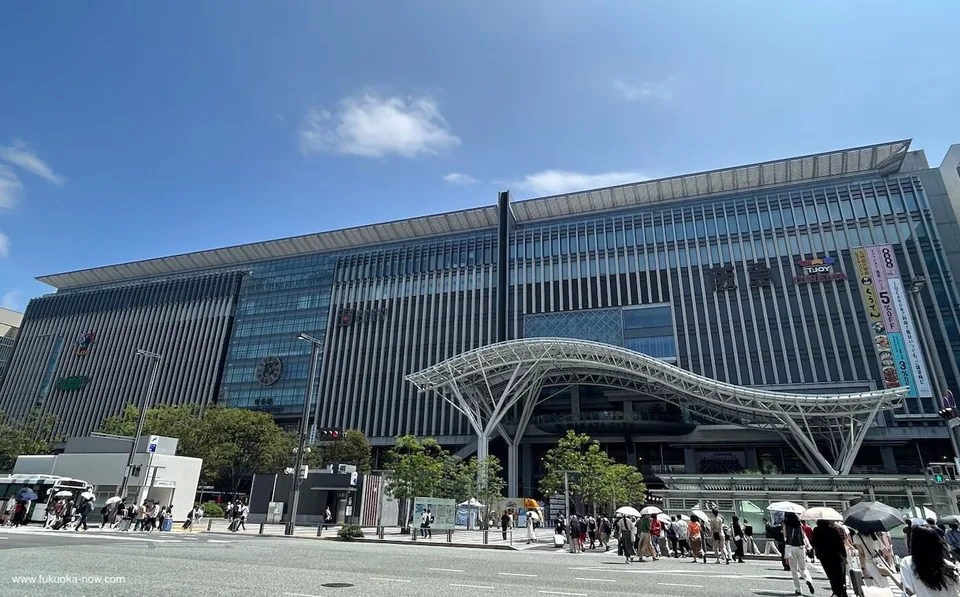
JMA normals show March precipitation increasing from February in several common first-trip cities: Tokyo from 56.5 to 116.0 mm, Osaka from 60.5 to 103.1 mm, Fukuoka from 69.8 to 103.7 mm and Naha from 114.5 to 142.8 mm. These monthly climate totals do not mean your dates will be rainy. They do mean that one bad wet day is normal enough to plan for.
The highest-value rain decision is usually footwear. A compact umbrella is easy to buy in Japan; spending ten hours in shoes that stay wet is harder to repair. Bring shoes you are comfortable wearing on wet pavement. A hooded shell becomes more useful when wind is strong or both hands are occupied with luggage.
For Hokkaido, do not apply the same rain logic mechanically. Wet snow and refreezing create a traction problem as well as a waterproofing problem.
For a 10–14 day trip, laundry is often better than another week of clothing
Long-haul travellers often overpack because they solve trip length by multiplying outfits. March is a poor month to do that because outer layers already consume space.
If the itinerary is 10–14 days and the hotels include a washer-dryer, coin laundry or a planned laundry stop, use that infrastructure. Carry enough base layers and underwear to bridge comfortably to the laundry point, then repeat them. One mid-layer and one outer layer can serve most mainland city days because those pieces do not need the same washing frequency as base clothing.
This is especially useful on multi-city rail trips. Every extra “just in case” outfit is not only suitcase weight; it is something you drag through Tokyo Station, Shinkansen platforms and hotel changes. The hidden cost of overpacking appears during transfers, not in the bedroom where the packing decision was made.
Three real routes and what I would actually pack
Tokyo + Kyoto + Osaka, late March
I would take one water-resistant or wind-resistant city jacket, one light knit/fleece, a mix of short- and long-sleeve bases, comfortable water-resistant walking shoes and a compact umbrella or hooded shell. I would not bring a separate Osaka jacket. I would add a small packable warm layer only if a Fuji/Hakone/Nikko side trip or the forecast justifies it.
Sapporo + Tokyo, early or mid March
I would let Hokkaido determine the specialist gear: warm outer layer, gloves, hat, warm socks and shoes with useful grip/water resistance if current surfaces remain wintry. In Tokyo I would simply remove the gloves/hat and reduce the mid-layer. I would not pack a second full coat just for Tokyo.
Tokyo/Kyoto + Okinawa
I would pack the mainland outer layer so it can also work as a light shell in Okinawa, plus one removable mid-layer. In Okinawa the mid-layer spends more time in the room or day bag. I would not add a separate “summer jacket” unless the mainland coat is genuinely too insulated to function unlined.
Cherry-blossom photos are not a clothing forecast
March travel images create a misleading shortcut: blossoms look like spring, so people pack for warm spring. Bloom timing varies by city and year, and a photogenic late-March afternoon can still turn into a cold riverside evening.
Keep bloom timing and clothing as two separate decisions. Use current flowering information to decide where to go. Use the actual temperature, wind and precipitation forecast to decide what to wear. A late-night hanami can require more insulation than the same day’s lunchtime temple visit.
The seven-day forecast should delete items, not only add them
Do the final packing review 7–10 days before departure. Check:
daily lows, because early starts and late returns often matter more than the headline high;
rain or snow, because shoes and outerwear may need to change;
wind, especially for Okinawa coasts, observation decks and exposed mountain routes;
altitude and side trips, because the hotel-city forecast can hide the coldest block;
ground conditions in Hokkaido or snow regions;
indoor/outdoor ratio, because 10°C on a train-and-shopping day is not the same as six hours of temples and parks.
Then delete as aggressively as you add. If every city on the final forecast is mild and dry, remove the backup heavy layer. If Sapporo is still icy, keep the specialist footwear even if Tokyo reaches the mid-teens. The forecast is most useful when it stops you carrying equipment the route no longer needs.
Final verdict: build one system, then let one hard condition upgrade it
Tokyo, Osaka, Kyoto and Fukuoka usually belong to one March packing system: base layer + removable mid-layer + wind/rain-resistant outer layer. Hokkaido is the main exception because ground conditions can require winter footwear and accessories. Okinawa is the opposite exception because heavy insulation can become dead weight. Mountain day trips can temporarily push a mainland city itinerary toward the colder end without requiring a second wardrobe.
The strongest packing question is therefore not “What do people wear in Japan in March?” It is: what is the coldest, wettest or most exposed block in my actual route, and which single item solves it? Answer that, reuse the rest of the layers, and check the real forecast close to departure.
Sources
Temperature and precipitation figures use Japan Meteorological Agency 1991–2020 climatological normals plus JMA station normals for Kyoto. Climate normals are 30-year averages, not a forecast for a specific date. Re-check current forecasts and weather-sensitive transport or activities before travel.