
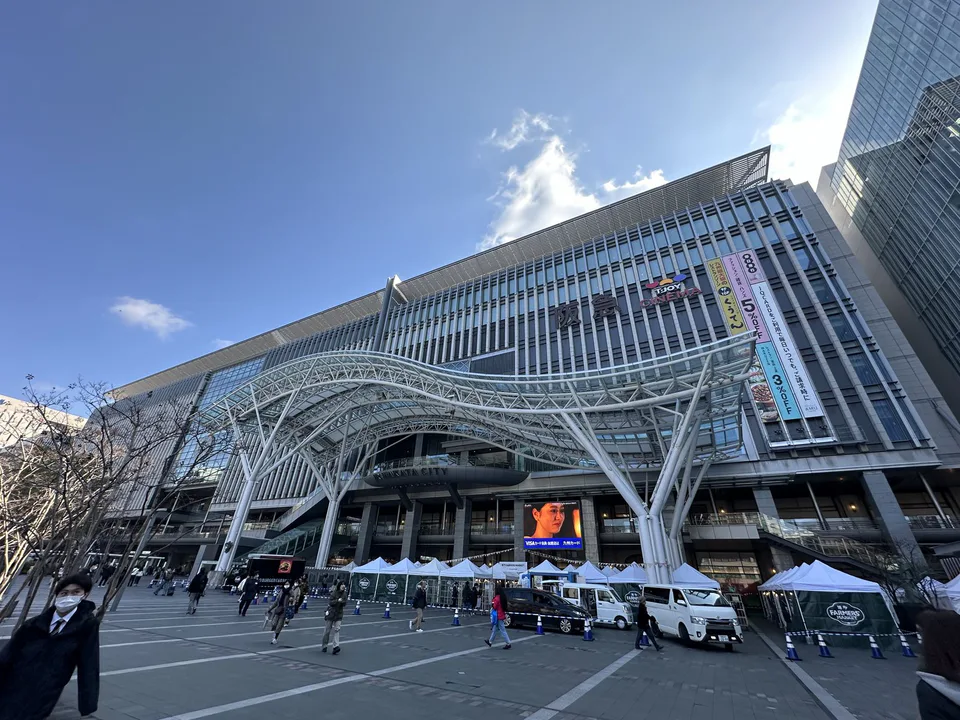
Japan October weather is genuinely autumnal in much of the country, but the biggest packing mistake is still treating Japan as one climate zone. Tokyo averages 18.0°C, Sapporo only 12.1°C, while Naha in Okinawa still averages 25.5°C. A Tokyo–Hokkaido–Okinawa trip does not need one “perfect autumn jacket”; it needs three levels of layering.
For Tokyo, Osaka, Kyoto and Fukuoka, the most useful setup is a T-shirt or light long sleeve plus one packable outer layer. Hokkaido needs a warmer mid-layer and a jacket that can handle single-digit mornings. Okinawa is still closer to late summer: quick-dry clothing, sun protection and a light wind/rain shell matter more than knitwear. October also creates two traps that clothing lists rarely explain: Kyoto foliage timing is not guaranteed by the month name, and typhoon risk is lower than in September but not zero.
30-second answer: what should you wear in Japan in October?
↔ Scroll table left or right
Area | October climate normal | What to wear | What travelers often get wrong |
Tokyo | 18.0°C; 22.0 / 14.8°C; 234.8 mm | T-shirt or light long sleeve + packable layer | Early and late October need different evening layers |
Kyoto | 18.4°C; 23.4 / 14.4°C; 143.2 mm | Light long sleeve + light jacket | October does not automatically mean peak foliage |
Osaka | 19.5°C; 23.7 / 16.0°C; 136.0 mm | T-shirt or light long sleeve + packable outer layer | Comfortable afternoons can still turn cool after dark |
Fukuoka | 19.6°C; 23.7 / 16.0°C; 94.5 mm | Light long sleeve + compact rain layer | Lower rainfall is not zero weather disruption |
Sapporo | 12.1°C; 16.4 / 8.0°C; 109.9 mm | Long sleeve + warmer mid-layer + wind-resistant jacket | Treating Hokkaido as a cooler version of Tokyo |
Naha | 25.5°C; 28.1 / 23.5°C; 179.2 mm | Summer-weight quick-dry clothes + light wind/rain layer | Packing for “autumn” instead of late-summer Okinawa |
These figures are Japan Meteorological Agency 1991–2020 climate normals. Use them to design your luggage, not as a forecast for your exact dates. October changes quickly, so check the 7–10 day trend first, then the 48–72 hour hourly forecast before locking in outdoor plans.
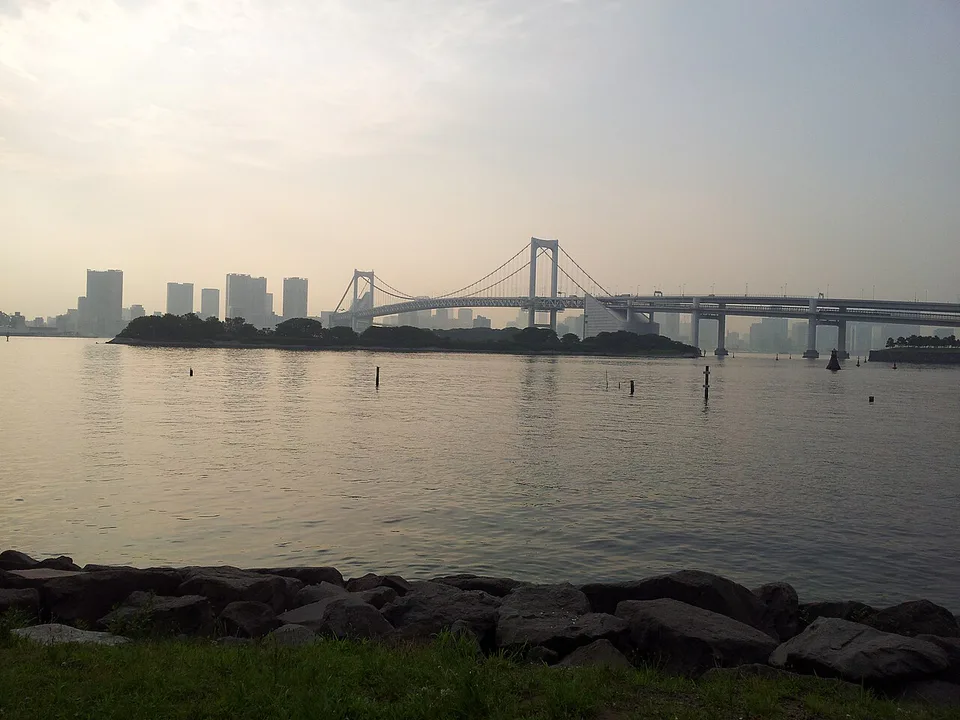
Tokyo in October: 18°C sounds easy, but October 1 and October 31 need different layers
Tokyo’s October normal is 18.0°C, with an average daytime high of 22.0°C, a low of 14.8°C and 234.8 mm of precipitation. The useful number, though, is the month-long slide: JMA daily normals move from roughly 24.5 / 17.4°C on October 1 to 19.6 / 11.7°C on October 31. That is enough to change what you will actually wear after sunset.
Early October can still work with a T-shirt or thin long sleeve and a light jacket in your bag. By late October, a long-sleeve base plus a proper light outer layer is safer. If this is your first visit, use a Tokyo itinerary built around whole areas and then group sights with the Tokyo attractions planning guide. October makes walking easier than midsummer, but it does not magically make three cross-city neighborhoods in one day efficient.
Counterpoint: if late-October lows can reach around 12°C, do you need a down jacket?
Usually not for standard city sightseeing. Around 11–15°C, a sweatshirt, light knit, trench-style layer or lightweight jacket is often more useful because daytime temperatures can still approach 20°C. Travelers who run cold, stay outside for long night views or start before sunrise can step up the insulation without turning the whole suitcase into winter gear.
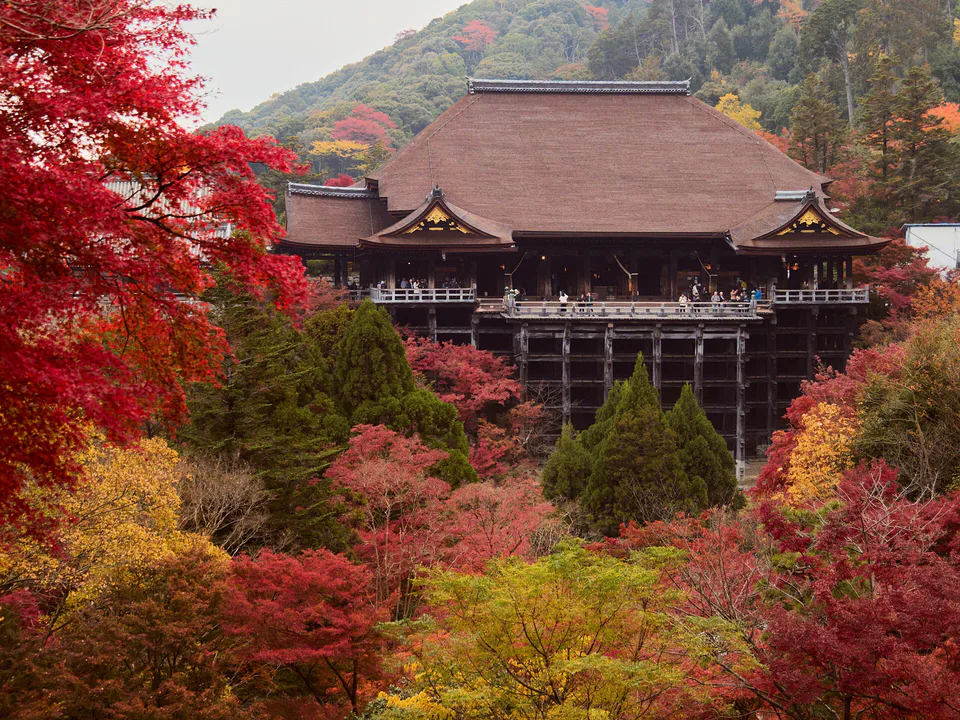
Kyoto in October: 23.4°C afternoons are great for walking, but October is not automatically peak foliage
Kyoto averages 18.4°C in October, with a normal high of 23.4°C, a low of 14.4°C and 143.2 mm of precipitation. This is a much easier range for long temple and hillside walks than September, and mornings and evenings finally justify a real light jacket.
The separate decision is foliage. Kyoto changes color at different speeds by elevation and district, so an October date alone does not guarantee peak color at Kiyomizu-dera, Eikando or Arashiyama. If autumn leaves are the reason for the trip, treat timing as its own planning problem rather than assuming comfortable weather and peak color arrive together.
Counterpoint: if you are not chasing autumn leaves, does the exact October date matter much?
It still matters for clothing. Early October can feel mild enough for daytime short sleeves, while late October makes mornings and evenings more jacket-dependent. For ordinary sightseeing, the date mainly changes your outer layer; for foliage trips, it can change the actual destination.
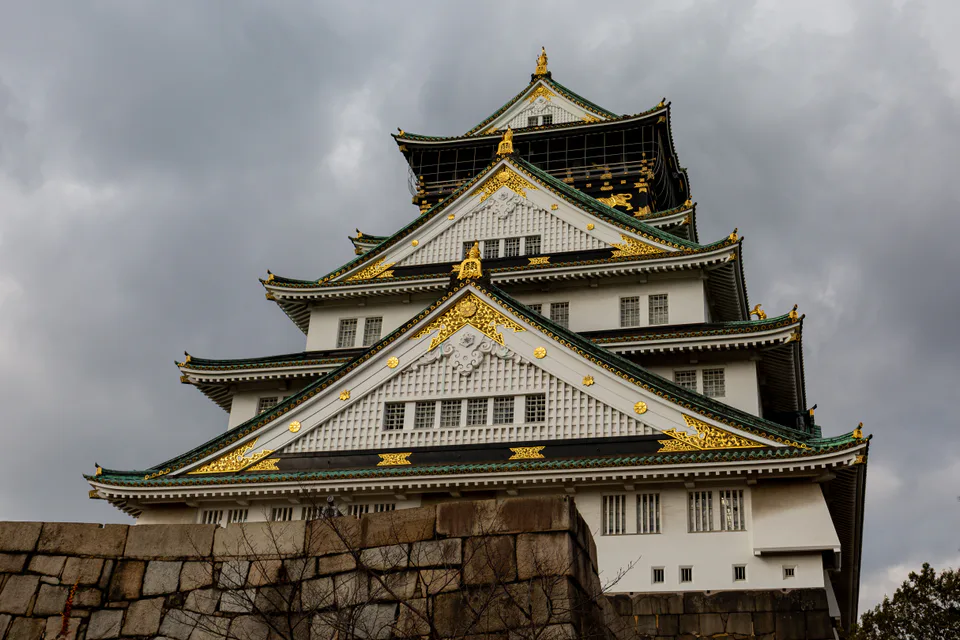
Osaka in October: 23.7°C days make a packable layer more useful than a heavy coat
Osaka’s October normal is 19.5°C, with a daytime high of 23.7°C, a nighttime low of 16.0°C and 136.0 mm of precipitation. This is excellent city-walking weather, but the day-to-night swing is large enough that “just wear a T-shirt all day” becomes unreliable.
A light overshirt, cardigan, sweatshirt or thin windbreaker earns its luggage space because you can actually put it away at midday. Use the Osaka attractions by-neighborhood guide to group Namba, Umeda, Tennoji and Osaka Castle sensibly. If you land at Kansai Airport first, sort out Kansai Airport to Osaka by hotel area before adding sightseeing to an arrival day. Cooler weather is a reason to walk more comfortably, not a reason to bring back inefficient cross-city detours.
Fukuoka in October: rainfall drops, so your rain kit can get lighter — not disappear
Fukuoka averages 19.6°C, with a normal high of 23.7°C, a low of 16.0°C and 94.5 mm of October precipitation. That is a sharp drop from September’s 175.1 mm, so a compact umbrella or ultralight rain layer is usually more sensible than full rainy-season gear.
Lower monthly rainfall does not mean every October trip is dry. If the forecast turns poor, use the Japan rainy-day keep, shorten or reschedule framework before automatically moving everything indoors. The advantage of October is usually greater outdoor flexibility, not immunity from weather systems.
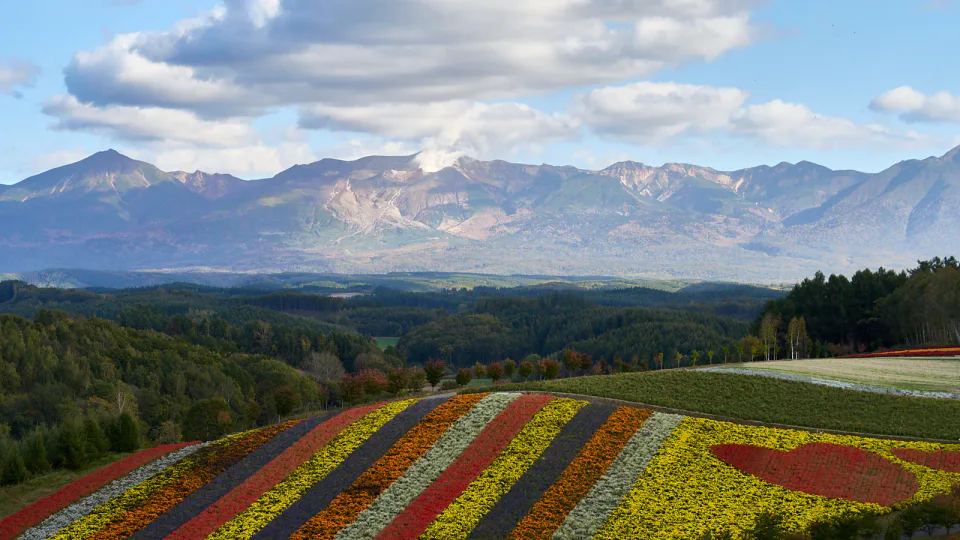
Hokkaido in October: Sapporo at 12.1°C is not just a cooler version of Tokyo
Sapporo averages 12.1°C in October, with a normal high of 16.4°C, a low of 8.0°C and 109.9 mm of precipitation. This is a different clothing problem from Tokyo or Osaka. Long sleeves, a warmer mid-layer and a wind-resistant outer jacket all get much more use.
If your route reaches Sapporo, Otaru, Furano, Biei or higher elevations, use the Hokkaido autumn leaves route guide to understand how quickly conditions change by area. The Hokkaido summer route framework is still useful for understanding Sapporo–Otaru versus Furano–Biei travel friction, but October weather can make the same rural day feel much colder than its summer version.
Counterpoint: if Sapporo afternoons average 16.4°C, is full winter gear overkill?
For ordinary city days, often yes. The useful rule is “one level warmer than Tokyo,” not “wear your heaviest down jacket.” High elevations, eastern Hokkaido, early starts and late-October itineraries can justify stronger insulation, but layering is still more flexible than one oversized winter coat.
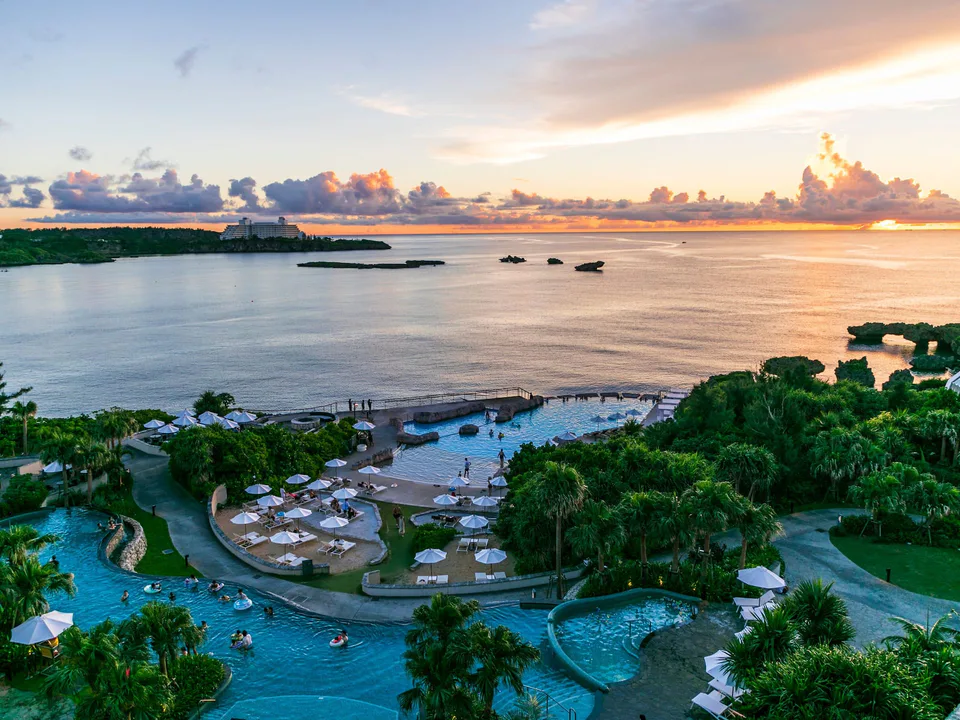
Okinawa in October: 28.1°C afternoons are late summer, even if typhoon risk is lower
Naha averages 25.5°C in October, with a normal high of 28.1°C, a low of 23.5°C and 179.2 mm of precipitation. Clothing is still summer-weight: breathable quick-dry tops, sun protection and spare clothes are more useful than knitwear. A thin wind or rain layer is enough for most travelers.
Typhoon risk is lower than in August or September, but it has not vanished. JMA’s 1991–2020 normals show about 3.4 typhoons forming in October, 1.7 approaching Japan and 0.3 making landfall. Those are long-term averages, not your personal “chance of being hit.” If your trip includes ferries, diving, snorkeling or island transfers, keep the Okinawa rainy-day and typhoon backup plan ready and use the first-time Okinawa travel guide to avoid building the whole itinerary around one weather-sensitive chain.
Shoes and rain gear in October: autumn packing is not only about warmth
Comfortable walking shoes that can handle a wet pavement day are more useful than winter boots for most city trips. Tokyo’s October precipitation normal is 234.8 mm, while Kyoto and Osaka are 143.2 mm and 136.0 mm. October can be pleasant and still be wet. A compact umbrella, quick-dry socks and simple bag protection deserve more attention than a second decorative autumn coat.
If the forecast shows only brief showers, you do not need to cancel outdoor sightseeing. If rain becomes persistent, wind strengthens or transport begins to change, switch to the Japan rainy-day decision guide rather than treating every rainy day as an automatic museum day.
Tokyo + Hokkaido or Tokyo + Okinawa: do not average the suitcase
Tokyo + Hokkaido: one jacket may not be enough
Tokyo afternoons average 22.0°C while Sapporo afternoons average 16.4°C, and the nighttime gap is larger. The space-efficient setup is a shared long-sleeve base, then an extra mid-layer or stronger wind-resistant jacket for Hokkaido. You can remove pieces in Tokyo and use the full system in Sapporo.
Tokyo + Okinawa: one city is in autumn, the other is still close to summer
Late-October Tokyo lows can approach 11–12°C in the climate normals while Naha’s normal high remains 28.1°C. Only some T-shirts and walking shoes overlap. Pack the rest as two modules. If you are moving between regions and need live weather, ferry, rail and activity updates, set up your Japan eSIM before departure instead of depending on public Wi-Fi when plans are changing.
Five common Japan October packing mistakes
First, assuming “October = autumn” applies to Okinawa. Second, reading Tokyo’s 18.0°C monthly mean as if every day needs the same layer. Third, taking a Tokyo-weight jacket straight to Hokkaido. Fourth, assuming Kyoto in October automatically means peak city foliage. Fifth, treating lower typhoon risk as zero risk and booking every Okinawa ferry, island activity or non-refundable plan with no backup.
How to check the forecast before you go: start with the overnight low
Seven to ten days out, check the high-low trend and especially the overnight low because it determines whether you need a light layer or a genuinely warmer jacket. At 48–72 hours, check hourly rain, wind and the day-night swing, then adjust night views, early starts and long outdoor blocks. If a tropical system or strong-wind event develops, airline, railway, ferry and activity-provider notices outrank climate normals.
FAQ: Japan October weather and what to wear
Do I need a jacket in Japan in October?
For Tokyo, Osaka, Kyoto and Fukuoka, yes: bring a light layer you can take on and off. For Sapporo, bring a warmer, more wind-resistant jacket. For Okinawa, a thin wind/rain shell is usually enough.
Can I wear a T-shirt in Tokyo in October?
Often in early October afternoons, yes. JMA daily normals are around 24–25°C at the start of the month, but late-October lows fall toward 12°C, so T-shirts should be a base layer rather than your only option.
Is October peak autumn foliage season in Kyoto?
Not automatically. Some higher-elevation or earlier-turning areas can color first, while famous city temples often peak later. Use current-year foliage reports and area-specific timing rather than the month name alone.
Do I need a down jacket in Hokkaido in October?
Not always in central Sapporo, but an 8.0°C normal low makes a warmer jacket useful. High elevations, eastern Hokkaido, early mornings and late-October dates can require stronger insulation.
Final verdict: Japan in October is three different seasons, not one packing list
If your trip is only Tokyo, Kansai or Fukuoka, October is one of the easiest months for layered clothing: mild afternoons, cooler mornings and evenings, one packable outer layer. Hokkaido needs a stronger jacket system. Okinawa still needs late-summer clothing. The real mistakes are not “forgetting the perfect coat”; they are ignoring late-month Tokyo cooling, Hokkaido’s single-digit mornings, Kyoto’s separate foliage timetable, October rain and the remaining typhoon risk in southern Japan.
Data basis: Japan Meteorological Agency 1991–2020 climate normals and typhoon normals. Actual temperatures, rainfall, foliage progress, typhoon tracks, transport and sea conditions vary by date and must be checked again before departure.