
Do not replace a Japan itinerary just because the forecast shows rain. Replace the parts whose value or safety depends on dry ground, visibility or transport continuing normally. City days usually need reordering, not cancellation. Mountain, gorge, coast and ropeway days need a stricter test: official warnings, wind, visibility, operating status, trail or river conditions, and how difficult the booking is to move.
The useful system is a three-stage decision, not a second itinerary written from scratch: 48 hours out, protect scarce reservations; 12 hours out, decide which outdoor blocks are still worth keeping; on the morning itself, let official operating information and current conditions override sunk cost. A paid ticket is a reason to understand the change rules early. It is not a reason to ignore a closure, river rise or transport suspension.
↔ Scroll table left or right
Trip element | Light rain / stable operation | Wind, poor visibility or safety notice | Default action |
Tokyo / Kyoto / Osaka city day | Keep the district, reduce outdoor hopping | Move indoors and avoid exposed parks/rivers where needed | REORDER |
Garden / temple / coast mainly for atmosphere | Keep one priority outdoor stop | Cut low-priority walking and photo detours | SHORTEN |
Mountain view / ropeway / high-altitude route | Check live camera and transport first | Do not force the original crossing if operation or value collapses | REASSESS / RESCHEDULE |
River / gorge activity | Rain itself may still be acceptable | River rise, official suspension or unsafe footing overrides the plan | SPLIT the activity into independent decisions |
Fixed-time indoor ticket | Usually protect it | Keep it unless transport disruption makes arrival unreliable | ANCHOR Plan B around it |
48 hours before: protect the hard bookings before changing the sightseeing
The first mistake is reacting to a weather icon before you know what can actually move. Forty-eight hours out, classify the next two days into three buckets:
Hard anchors: timed-entry attraction, non-refundable tour, reserved train, restaurant, event or hotel move.
Soft outdoor blocks: neighbourhood walking, park, garden, viewpoint, shrine grounds, shopping street.
Weather-dependent anchors: ropeway, gorge boat, mountain hike, sea activity, photography-led day.
Move the soft blocks first. Keep the hard anchors unless the transport chain or official operating status has become the real risk. For weather-dependent anchors, read the operator’s cancellation and change rules before deciding whether to wait another day.
This prevents a common failure: cancelling a flexible museum day, keeping a fragile mountain day, then discovering the mountain transport was the part that actually needed to move.
12 hours before: replace the forecast percentage with four practical questions
The probability of precipitation does not tell you enough. The evening before, ask:
Is there a JMA warning or advisory relevant to the place? Japan Meteorological Agency’s English warning system distinguishes heavy rain, flood, landslide and storm-surge risk and links those warnings to action levels. An official warning is a different planning input from an ordinary wet forecast.
Is wind likely to affect the transport or activity? Ropeways, boats, exposed highland buses and coastal activities can lose value or stop because of wind even when rainfall is modest.
Does the destination still deliver its core value without the view? A forest walk may still work in mist. A viewpoint chosen almost entirely for a distant panorama may not.
Can you shorten the outdoor block without destroying the day? If yes, keep the district and cut the weakest section instead of moving the entire itinerary.
This is where the plan becomes concrete: KEEP, SHORTEN or RESCHEDULE each block. Do not write a parallel ten-stop itinerary that creates a second planning problem.
Same morning: official operating status outranks the money already spent
The morning decision should use live operator information. A ticket, long transfer or early alarm is already a sunk cost once the operator suspends a service or conditions create an official safety restriction.
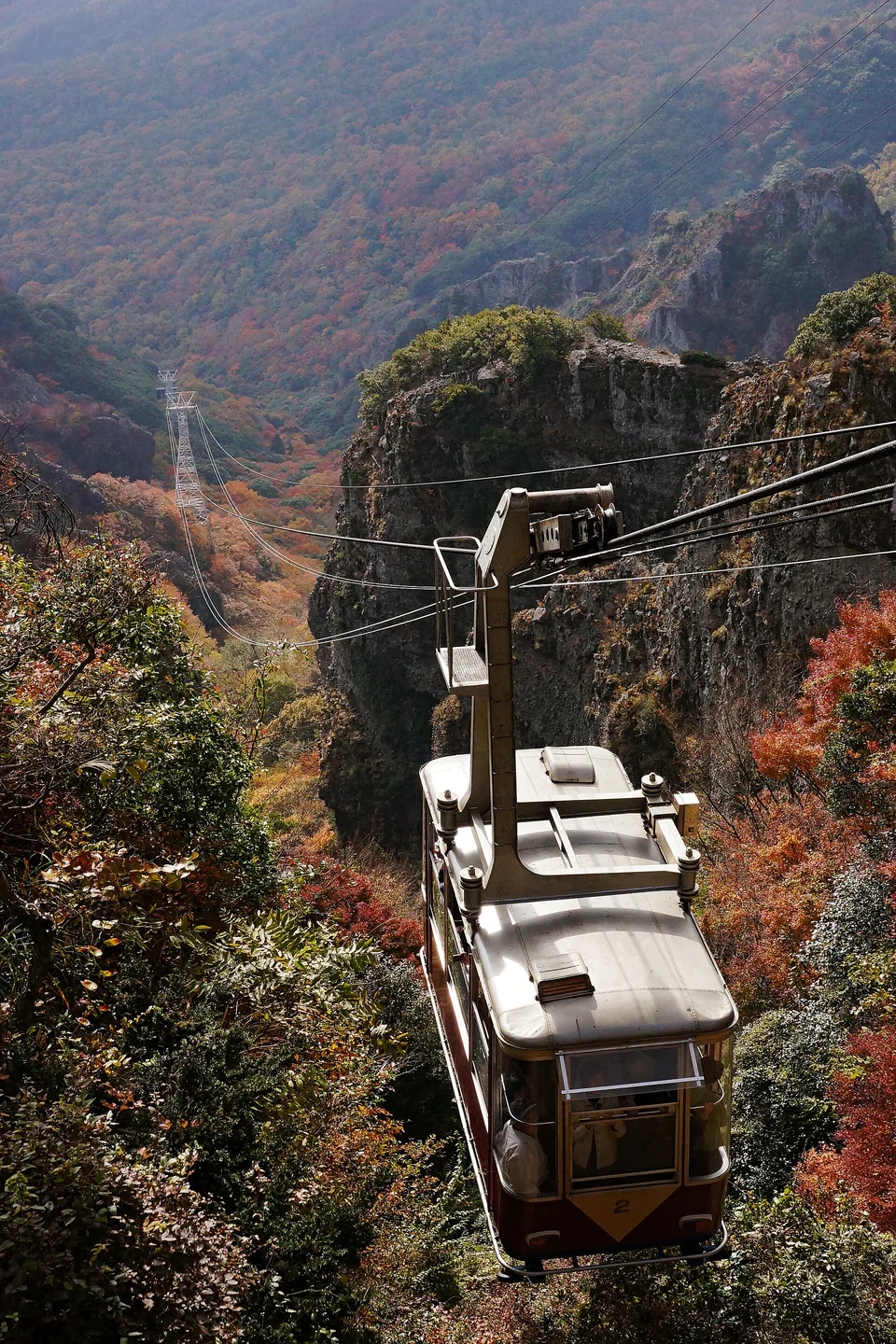
Tateyama Kurobe shows why. The Alpine Route is not one attraction but a chain of cable car, highland bus, tunnel bus, ropeway, cable car and walking sections. In July 2026 the official timetable page recorded a Tateyama Cable Car suspension caused by bad weather and a later resumption after safety was confirmed. The operator also warns that peak demand can prevent travellers from boarding the service they originally hoped to use.
That means a rainy Alpine Route day is not simply “take an umbrella.” Check the current operational status, the first and last useful services, and whether a one-way crossing still has enough time margin. A route that remains fully operational can still be shortened at Murodo; a route with disrupted transport needs a different decision entirely.
City rain: reduce transitions before you replace neighbourhoods
In Tokyo, Kyoto, Osaka, Fukuoka or Hiroshima, ordinary rain usually does not justify crossing the city for a famous “rainy-day attraction.” The hidden cost of a wet day is transition friction: umbrella open/close cycles, wet escalators and station floors, coats, bags, slower walking and the extra time needed to dry or change.
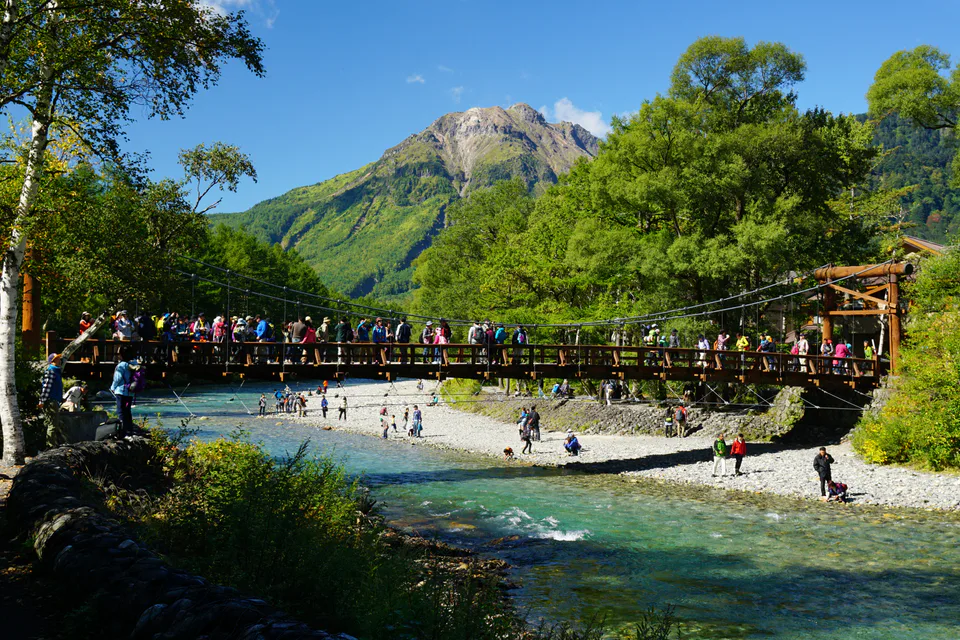
A better city backup keeps the same geographic cluster and reduces the number of stops. If the original day had three outdoor attractions plus two indoor ones, keep the strongest outdoor stop, expand the indoor time and remove one unnecessary transfer.
For families, older travellers or anyone with a hotel in the same district, a midday reset can be worth more than another museum. Returning for dry socks, a shower or a short rest may preserve the evening rather than “waste” it.
Use the Tokyo rainy-day itinerary or the Fukuoka rainy-day guide only after deciding which district you are already in. Plan B should normally reduce travel, not add more of it.
Kamikochi: separate “the valley is open” from “the full walking route is still worth it”
JNTO describes Kamikochi as a highland valley around 1,500 metres and notes that private cars are restricted, so most visitors depend on buses or taxis for the final access. Once you have committed to that transport, it is tempting to complete every planned walking section.
Do not let access effort decide trail length. If light rain leaves the river, forest and nearby scenery enjoyable, a shorter Kappa Bridge-centred walk can still justify the trip. If the mountain views are completely hidden, temperature drops and the boardwalk/trail feels less suitable for the group, cut Taisho Pond or Myojin rather than forcing both because you paid to reach the valley.
The correct question is not “Is Kamikochi open?” It is “which section still gives enough value under today’s conditions, and what return bus must we protect?”
Tateyama Kurobe: transport continuity is more important than rain itself
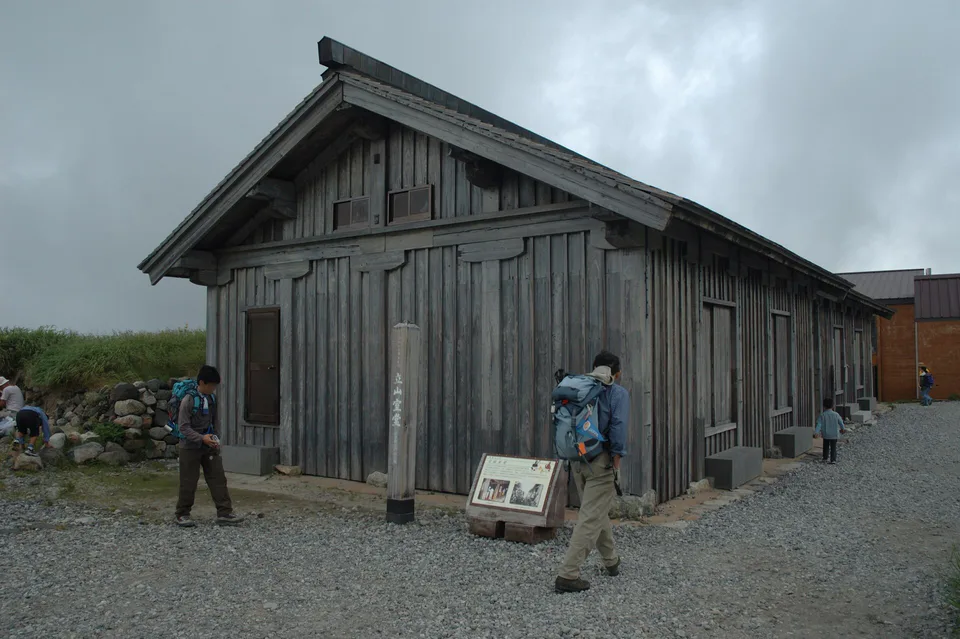
The Alpine Route’s official 2026 information reminds travellers that boarding capacity and service timing matter even in normal operation. The route runs from April 15 through November 30 in 2026, and the operator publishes live operational status, timetables and cameras.
If transport is operating and the crossing itself is part of the experience, light rain does not automatically destroy the day. The trip can still include Kurobe Dam, the engineering sequence and shorter outdoor stops. But when bad weather affects a transport segment or visibility removes the reason for a long Murodo stay, shorten the outdoor layer rather than pretending the dry-day plan still applies.
For a through-route traveller with luggage already forwarded to the other side, the red-team condition is stronger: do not improvise a partial reversal without checking where the bags, hotel and onward train now are. Weather decisions interact with luggage logistics.
Takachiho Gorge: boat status and gorge visit are two separate decisions
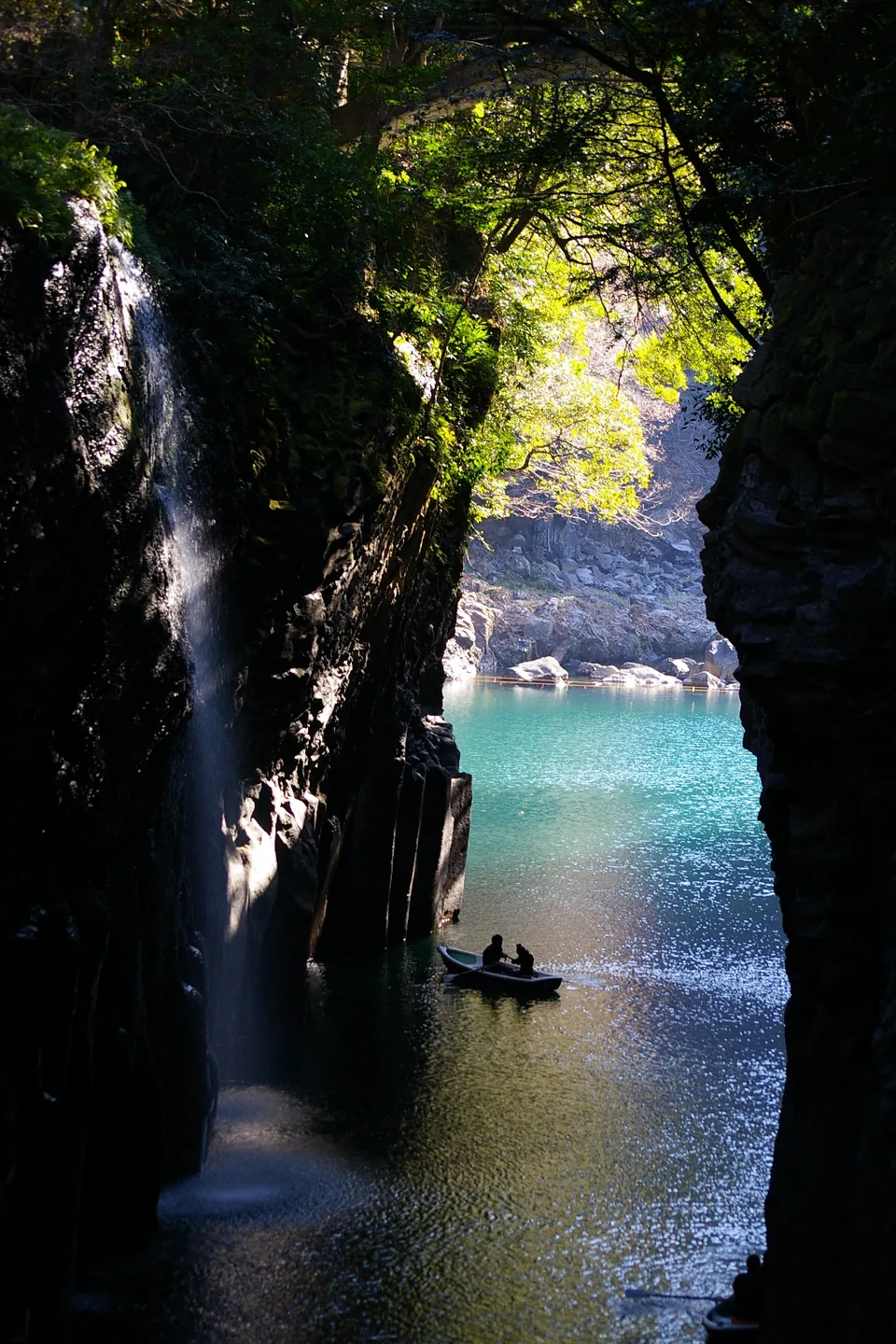
Takachiho’s official boat information is unusually clear: rain itself does not automatically close the boats, but river rise can. The operator says service can be suspended when rainfall raises the river, including sudden suspension during the operating day, and additional safety inspections may follow heavy-rain or typhoon conditions.
That creates two independent questions:
Can the rental boats operate? Check the official same-morning status rather than assuming yesterday’s reservation guarantees today’s ride.
Does the walking portion still suit the group? An operating boat does not guarantee every wet path, stair or viewpoint is a good idea for a child or older traveller.
As of August 25, 2026, the tourism association’s live page was showing normal boat operation but no same-day inventory for August 25–26 because advance reservations had sold out. That is another reason the rainy-day plan cannot be “just book the boat later.” Availability and weather are separate constraints.
If the boat is cancelled, keep Takachiho only when shrines, accommodation, evening kagura or the wider destination still justify the night. If the boat was the entire purpose of a day trip, rescheduling may create more value.
A view-only attraction has a lower bad-weather ceiling
A destination whose value is mostly one panorama deserves a harsher test than a city district or cultural site. Ropeway operating status is only the first gate. The second is whether the view exists.
Before taking a weather-sensitive ropeway or paying for a long viewpoint detour, use the operator’s live camera when available and ask what remains if the distant view is completely obscured. If the answer is “almost nothing I came for,” the ticket being available is not enough reason to ride.
This is why a misty forest walk can still be worthwhile while a fogged-out observation ride can be poor value. Safety and operation decide whether you can go; the trip’s purpose decides whether you should.
Do not let non-refundable tickets control an unsafe day
Non-refundable does not mean non-changeable, and even a genuinely non-refundable product should not overrule an official suspension or warning. Forty-eight hours out, check whether the reservation can move. Same morning, separate money already spent from additional time and risk you have not yet spent.
Use a simple sunk-cost test: if the ticket were free today, would you still choose this activity under the current conditions? If the answer is no because the view is gone, transport is fragile or the group is uncomfortable, the original purchase price should not force the rest of the day.
Families and older travellers need a lower transition count, not just more umbrellas
Rain changes the cost of every curb, stair, station platform and bathroom stop. A dry-day plan with six short stops can become harder than a rainy plan with two longer stops even when total walking distance is similar.
For a family or parents trip, choose one strong indoor anchor and one optional outdoor anchor in the same area. Keep a dry clothing layer in the day bag, not in forwarded luggage. If the hotel is well placed, give the itinerary permission to use it as an afternoon reset.
The objective is not to prove the family “did not lose a day.” It is to protect the next day from fatigue, wet shoes and an unnecessarily late return.
The 48h → 12h → morning protocol
↔ Scroll table left or right
When | What to check | What to decide |
48 hours before | Cancellation/change rules, fixed tickets, hotel moves, reserved transport | Which day can swap without creating a bigger cost |
12 hours before | JMA warning/advisory, hourly rain, wind, visibility, temperature | KEEP / SHORTEN / RESCHEDULE each outdoor block |
Same morning | Operator status, live camera, river/trail/transport notice, first/last useful service | Final go/no-go and exact turnaround point |
During the day | Actual fatigue, soaked clothing, worsening conditions | Delete the weakest remaining stop rather than compress everything |
Final verdict: preserve the purpose of the day, not the original checklist
In cities, keep the area and reduce transitions. In mountains and gorges, let operating status, wind, visibility and water/trail conditions decide the route length. For view-led attractions, ask whether the view still exists. For paid bookings, solve change options early but ignore sunk cost when the same-day safety or value case has collapsed.
A strong rainy-day backup does not contain more attractions. It contains fewer decisions under pressure. The best Plan B is usually the original day with one high-risk block removed, one indoor anchor strengthened and enough margin left for the weather to improve.
More planning
Kamikochi Day Trip · Tateyama Kurobe in Summer · Takachiho Gorge Guide · Japan Luggage Forwarding · Japan Autumn Leaves Calendar
References
Japan Meteorological Agency — current weather warnings/advisories · JNTO — Kamikochi access and highland context · Tateyama Kurobe Alpine Route — live operating status · Tateyama Kurobe Alpine Route — 2026 timetable · Takachiho Tourism Association — live boat status and booking information. Checked August 25, 2026. Weather warnings, transport and river conditions are live information and must be rechecked on the travel date.