
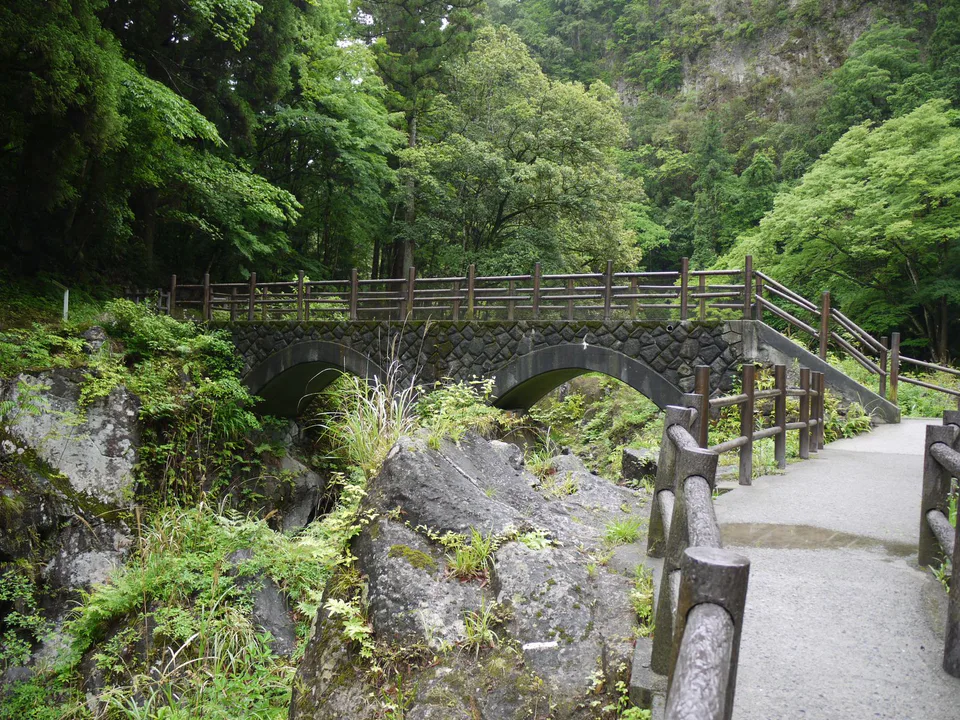
For autumn 2026, plan Takachiho Gorge as a mountain destination first and a rowing-boat reservation second. The boat is the most capacity-constrained piece of the visit, but it lasts only 30 minutes and can still be suspended after heavy rain, a typhoon or an earthquake. The trip is much more resilient when Momiji foliage, the gorge walk, Amanoiwato, Takachiho Shrine and an evening Kagura still make the journey worthwhile even if the boat does not run.
For most first-time visitors coming from Fukuoka or Kumamoto, I would choose an overnight if it performs at least two jobs: it lets you attend the 20:00 Takachiho Kagura, gives you a second morning weather/boat window, or moves the wider route forward through rural Kyushu. I would keep Takachiho as a day trip only when transport is simple, the gorge is the main goal, and a missed boat would not ruin the day.
Takachiho Gorge autumn leaves: the 30-second decision
↔ Scroll table left or right
Your trip | Best default | Why | Main failure mode |
Self-drive, gorge is the main goal | Day trip can work | You control arrival and can leave when the gorge block is complete | Parking queues and road congestion still consume the day |
Public transport from Fukuoka | Overnight | Official access guidance puts the direct highway bus at about 3.5 hours and limited departures | A same-day round trip gives transport more time than the destination |
Public transport from Kumamoto | Overnight gets stronger | Long, limited bus links make a second attraction or evening easier to justify locally | Missing a reserved rural bus can break the route |
Boat is sold out | Keep the trip if the gorge + shrine/Kagura still matter | The boat is one viewpoint, not the whole destination | Going only for the Manai Falls-from-water photo |
Boat + Kagura both matter | One night | The two scarce/timed products sit on different clocks | Trying to squeeze both around a long same-day intercity return |
Heavy rain / post-typhoon conditions | Make the boat optional | River conditions can suspend it even when other Takachiho sights remain usable | Building the entire day around a prepaid 30-minute ride |
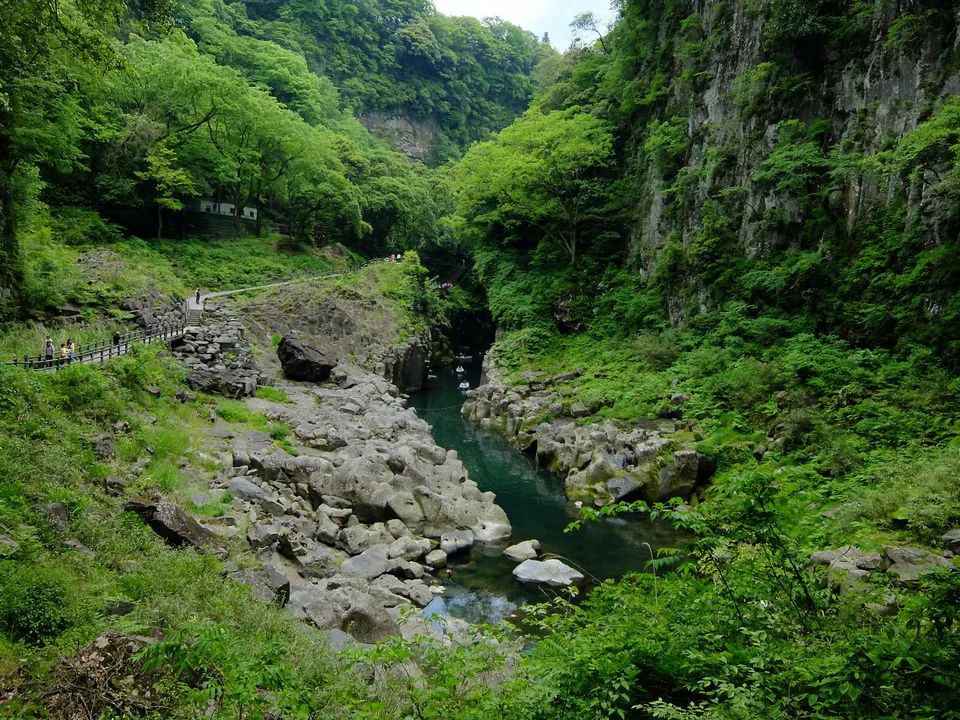
The boat has a two-week booking clock and an 08:00 operating gate
The current official reservation system opens online at 09:00 two weeks before the ride and closes advance sales at 09:00 two days before. There is no telephone or email reservation and no waiting list. Same-day tickets exist only when inventory remains; a sold-out advance day can have zero walk-up tickets.
This is real scarcity rather than generic “book early” advice. On August 25, the official page showed August 25 and 26 already sold out through advance booking, with no same-day tickets and no waitlist. The correct autumn action is therefore to put the actual release time in your calendar if the boat is a priority.
But a reservation does not guarantee operation. The association updates operating status at around 08:00 each morning. Rising water, post-typhoon inspections and local earthquakes can stop service. A local seismic intensity of 3 or above triggers suspension and safety inspection before reopening.
ValueNavi rule: treat the boat booking as a scarce reservation, but treat the boat itself as a weather-dependent bonus. Those two ideas are not contradictory.
November 2026 costs ¥5,100 per boat — not per person
The current official November 2026 calendar lists ¥5,100 per boat on every date shown. At the August 25 exchange rate, that is about US$32. One boat normally carries up to three people; four are allowed only when the group includes a preschool-age child.
The official ride time is 30 minutes. Going over the allotted time costs ¥1,000 (about US$6.30) per additional 10 minutes. The rower must be junior-high-school age or older, life jackets are compulsory, and large luggage, standing, alcohol and changing rowers during the ride are prohibited.
Most importantly, if you miss your reserved boarding time, the official rules do not promise a time change or refund. That makes arrival margin more valuable than trying to optimise every stop before the gorge.
USD conversions are approximate and exchange rates move. The operator charges in yen.
The 30-minute boat needs a much larger planning block
Do not reserve only 30 minutes in the itinerary. The official ride may be half an hour, but the real sequence is:
reach Takachiho Gorge → solve parking or shuttle → walk to the boat area → check in before your slot → 30-minute ride → leave the gorge zone.
For planning, I would protect roughly 60–90 minutes around the boat when arriving from elsewhere. That is an editorial buffer, not an operator-published duration. It is deliberately wider because the failure cost of being late is high.
↔ Scroll table left or right
Clock | Official fact | How to use it |
Advance booking opens | 09:00, two weeks before | Set a reminder if the boat is trip-critical |
Advance booking closes | 09:00, two days before | After that, you are relying on any same-day inventory |
Operating update | Around 08:00 each morning | Check before driving or rearranging the whole day |
Boat ride | 30 minutes | Do not confuse ride time with total gorge time |
Normal operating day | 08:30–17:00, final reception 16:30 | A late slot leaves less recovery margin if the day slips |
Parking is a hidden cost, and a boat reservation does not reserve a space
The official parking system is separate from the boat. Current charges are ¥1,000 at P1 and P2, ¥800 at P3, ¥500 at P4 and free at P5. That is roughly US$6.30, US$5.00 and US$3.10 respectively at the current exchange rate.
The cheaper spaces are not interchangeable with the closest one. Official visitor information puts some alternative parking roughly 15–30 minutes on foot from the gorge area. In peak foliage season, the relevant comparison is therefore not “free parking versus ¥1,000.” It is:
parking price + walking time + queue risk + how close you are to the boat slot.
If you have a fixed boat reservation, I would rather arrive early and accept a longer walk than circle near the gorge hoping a closer lot opens. A cheap parking decision is bad value if it makes the prepaid reservation fragile.
The 2026 autumn shuttle helps only on the dates it actually runs
Takachiho Tourism has published a 2026 gorge-area shuttle for selected busy dates. In November, the announced operating dates are November 1–3, 7–8, 14–15 and 21–23, from 08:30 to 17:00, roughly every 20–30 minutes. The fare is ¥300 for junior-high-school age and above (about US$1.90), ¥200 for elementary-school children and free for preschoolers.
That is useful, but it should not be turned into a daily autumn assumption. If your trip falls on another weekday, solve parking and local movement without relying on the seasonal shuttle. Recheck the official notice because routes, temporary lots and operations can change.
One night is easiest to justify when Kagura gives the evening a job
The regular Takachiho Kagura is not an all-night village Yokagura. The current tourist programme presents four representative dances at Takachiho Shrine from 20:00 to 21:00. Admission is ¥1,000 per person (about US$6.30), with children through elementary-school age free.
Online reservations normally open 30 days before at around 10:00 and remain available until 17:00 on the day, subject to capacity. The current setup allocates 230 places to online reservations and about 50–60 to same-day admission.
This makes the overnight easier to value. A local night can buy:
the gorge without a same-day long-distance return;
Takachiho Kagura from 20:00–21:00;
a second morning if the boat or autumn weather fails on Day 1.
That is three different jobs. By contrast, a hotel night that starts after Kagura and ends with an early bus back to the same gateway may add little.
One November exception matters: the tourism association says the regular nightly Takachiho Kagura is not held on November 22 and 23 because the annual mythology-focused Takachiho Kagura Festival takes its place. If those dates are on your trip, check the festival programme rather than assuming the normal 20:00 one-hour format.
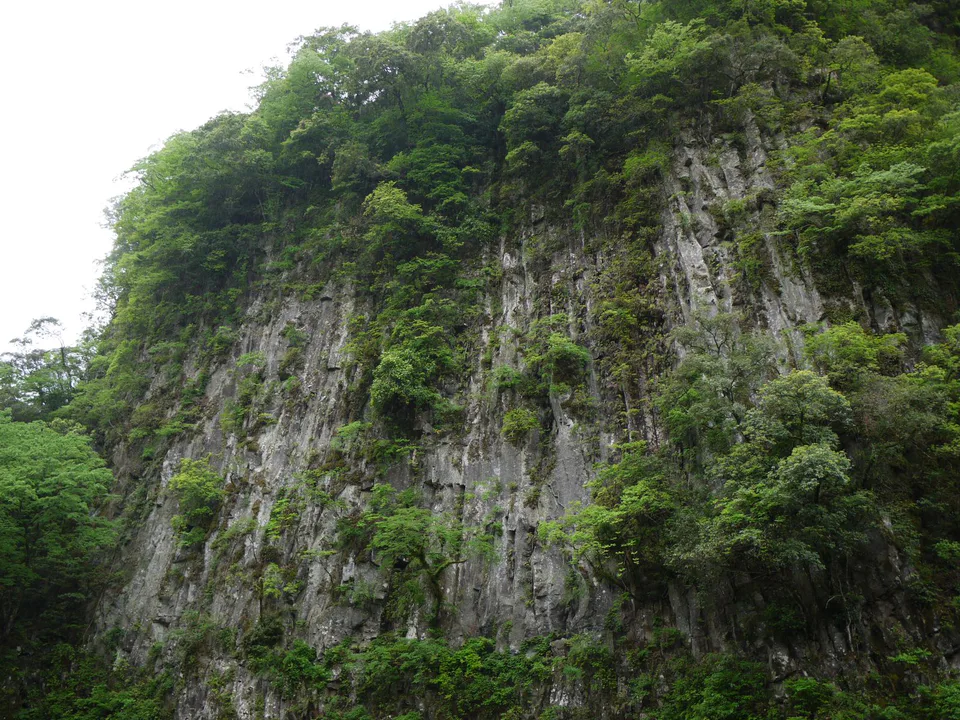
Fukuoka is the clearest case where a day trip can spend too much time in transit
Takachiho Tourism currently lists the direct Gokase highway bus from Fukuoka Airport at about 3 hours 30 minutes, with four services a day and reservations required. From the Kumamoto side, its access page also shows limited reserved intercity bus options; from Nobeoka, the local bus reference is roughly 1 hour 30 minutes.
Those numbers change the hotel decision. A same-day Fukuoka round trip can put roughly seven hours into the long-distance bus before local movement, parking/shuttle equivalents, meals or the gorge. That may be acceptable when Takachiho is the only goal and the schedule lines up perfectly. It is not the default I would recommend for a first visit that also wants Kagura, Amanoiwato or a relaxed autumn walk.
If the wider Kyushu route is still open, use the 5- or 7-day Kyushu itinerary and the Kyushu Odan Bus guide before making Takachiho an isolated out-and-back.
What to do if the boat is sold out or suspended
The answer should depend on why you came.
↔ Scroll table left or right
If you wanted... | Keep... | Drop... |
The gorge landscape | Walking viewpoints, Manai Falls from land, basalt-cliff scenery | Waiting around for a cancellation list that does not exist |
Autumn colour | Gorge + nearby seasonal stops according to live conditions | Assuming the water-level viewpoint is the only foliage experience |
Mythology / culture | Takachiho Shrine, Amanoiwato and Kagura | Letting one closed attraction cancel the entire overnight |
A one-photo bucket-list stop | Reconsider the detour | Paying for a remote overnight when nothing else interests you |
This is the red-team test for the entire article: if the boat is unavailable for both days, would you still be happy you came? If yes, the overnight is robust. If no, the boat reservation should be secured before the rest of the trip bends around Takachiho.
Autumn timing should stay flexible even after the hotel is booked
Historical guidance often places Takachiho's strongest autumn colour around mid to late November, but the gorge floor, surrounding hills and other Takachiho sights do not change colour on one synchronized date. As of August 26, there is no useful live 2026 foliage condition to lock a specific peak day around.
Use the hotel to protect the destination, not to claim a guaranteed peak. Within the stay, move the gorge, Amanoiwato and other outdoor blocks according to weather and live colour. If autumn planning across Japan is still fluid, the Japan autumn reservation strategy explains which parts to lock and which to keep movable.
Final verdict: book the boat early, but make the overnight survive without it
For November 2026, the boat is a ¥5,100 (~US$32) per-boat, 30-minute experience with a two-week advance-booking clock and a same-morning operating gate. Secure it when it matters, arrive with enough margin that parking does not make you late, and check the official status around 08:00.
Stay overnight when the night has at least two jobs: Kagura, a second weather window, an early gorge start or onward rural-Kyushu route progression. Keep the trip as a day visit when the gorge alone is enough and transport is genuinely simple. The strongest Takachiho plan is not the one that guarantees a boat; no itinerary can guarantee weather. It is the one that remains worth the journey when the boat is the first thing nature removes.
References and verification date
Checked August 26, 2026 against the Takachiho Tourist Association boat calendar and reservation rules, 2026 gorge-area shuttle notice, Takachiho Kagura booking information and official access guidance. Boat operation, water level, bus/shuttle schedules, parking and autumn colour can change; recheck the actual travel date.
Kenrokuen Autumn Leaves 2026: Early Entry, Illumination, Transport and Hotels
Asahidake vs Kurodake Autumn Leaves: Ropeways, Hiking and Where to Stay
Japan Autumn Leaves Live Update 2026: Weekly Regional Foliage Status
Hachimantai Autumn Leaves Guide: Scenic Drives, Buses, Onsen and Road Closures
Japan Autumn Leaves Early October: Hokkaido, Tohoku and Kamikochi