If your early-October Japan trip is already Tokyo–Kyoto–Osaka, do not add a distant mountain region just to force autumn leaves into the itinerary unless foliage is one of the top two reasons for the trip. JNTO currently says travellers generally need to wait until November for the best colours in Tokyo, Kyoto and other warmer regions; early October belongs mainly to Hokkaido, northern/high Tohoku and high-elevation Central Japan.
The best strategy is therefore not “find the reddest place in Japan.” It is decide whether foliage deserves a reroute at all. If yes, pick one mountain corridor, protect its scarce transport and build one lower-elevation/weather-recovery day in the same region. If no, keep the Golden Route and enjoy October for comfortable travel rather than spending a large transfer cost chasing colour that your original cities are not supposed to have yet.
Checked August 25, 2026. A comprehensive 2026 nationwide city-level autumn-colour forecast is not yet published on JNTO’s current forecast pages, so the date bands below remain planning ranges rather than a promise of peak colour. Use live cameras, current photos, official access notices and the final weather forecast shortly before travel. Operating dates and extra transport are not foliage forecasts.
↔ Scroll table left or right
Your trip | My call | Why | What can reverse it |
7–10 days, first trip, Tokyo + Kyoto/Osaka | Do not reroute solely for leaves | Tokyo/Kyoto are normally too early, while a northern/alpine detour consumes scarce first-trip days | Autumn foliage matters more than one of the Golden Route cities |
12–14 days and foliage is a top-two priority | Add one specialist corridor | You have enough calendar to protect weather and still keep the core trip | The extra region creates too many hotel moves or domestic-flight/rail transitions |
Already visiting Hokkaido in early October | Prioritise Daisetsuzan / Sounkyo timing | You are not paying a separate national-level detour cost just for foliage | Live colour/weather shows the high zone is already past or unsafe |
Tokyo-based and willing to add one mountain block | Central Japan can be more efficient than flying north | Kamikochi or Tateyama can fit a wider Honshu route | Transport reservations, early snow or the next city make the route too brittle |
You want several “best” foliage regions in one week | Delete all but one | Overlapping historical colour windows do not make Hokkaido, Tohoku and the Alps geographically compatible | You have a much longer trip and those regions were already on the route |
Early October is a mountain problem, not a Tokyo-versus-Kyoto problem
JNTO’s current October guidance is useful because it removes a common planning mistake. It says travellers generally have to wait until November for the best colours in Tokyo, Kyoto and other warmer regions, while Hokkaido, Tohoku and more northerly or higher-altitude places change through October.
That means moving Tokyo from October 4 to October 9 will not magically turn it into a classic autumn-leaf trip. The meaningful lever is elevation and latitude, not rearranging three warm-city dates inside the same week.
For a first-time visitor, this creates an opportunity-cost test. Adding Hokkaido, Hakkoda or an Alpine Route block can require another long transport leg, another hotel base and another weather-sensitive day. That is rational if the foliage experience is a major purpose of the journey. It is poor value if you only wanted “one nice red-leaf photo” and would rather protect Kyoto, Hiroshima, Disney or another first-trip priority.
Use three decisions before choosing a foliage corridor
How important are the leaves? If foliage is not a top-two trip goal, keep the existing national route.
Which gateway already fits? Asahikawa, Aomori, Morioka, Matsumoto and Toyama lead to very different routes. Pick the corridor that creates the fewest national-level transfers.
What is the recovery day? Every mountain plan needs a lower-altitude, city or onsen day that still works if wind, rain, early snow or poor visibility removes the high zone.
A corridor without a recovery option is not a foliage plan; it is a weather bet.
October 1–5: start with Daisetsuzan or the highest Central Japan zones
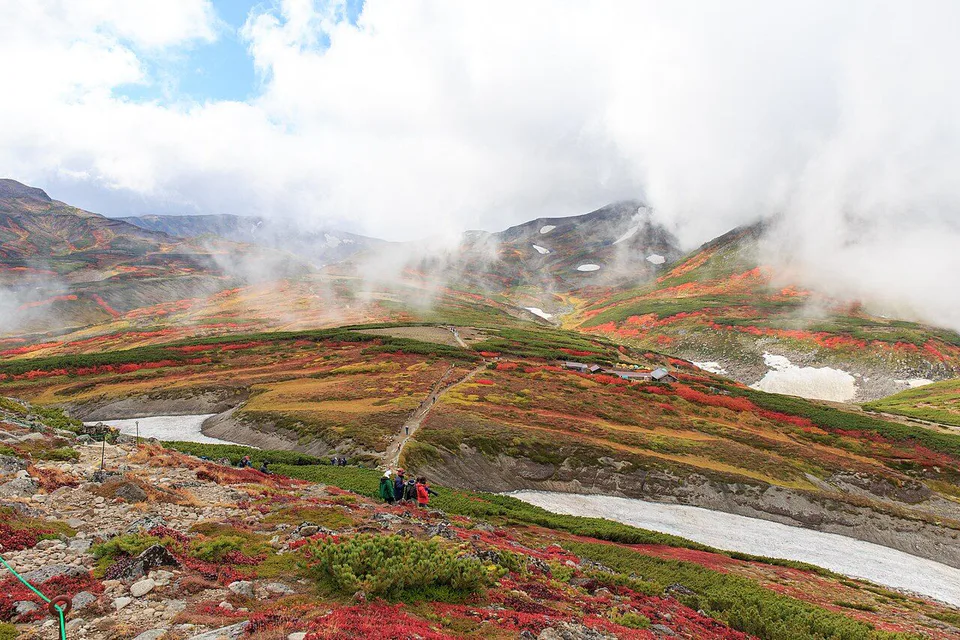
Historically, the highest parts of Daisetsuzan—such as Asahidake, Kurodake and Ginsendai—are among the earliest major foliage areas in Japan. Upper Tateyama can also be relevant. But an “early” colour window has a different failure mode from a late one: by the time you arrive, the highest slopes may already be past their best while lower elevations are still developing.
That makes an elevation ladder more useful than one target. In Hokkaido, do not make Asahidake, Kurodake and Ginsendai one frantic checklist. Build one or two independent mountain days from an Asahikawa/Sounkyo structure, then move lower if the live colour has already descended.
For Tateyama, the operator has already published extra 2026 cable-car capacity for early October. Special early departures are scheduled on October 3–4 and October 10–12, and a newer August 17 notice adds 07:10 and 07:30 departures on October 5–9. That is useful transport capacity, not a guarantee that foliage will peak on those dates.
October 6–10: Hakkoda, Hachimantai, Kurikoma and Kamikochi get stronger
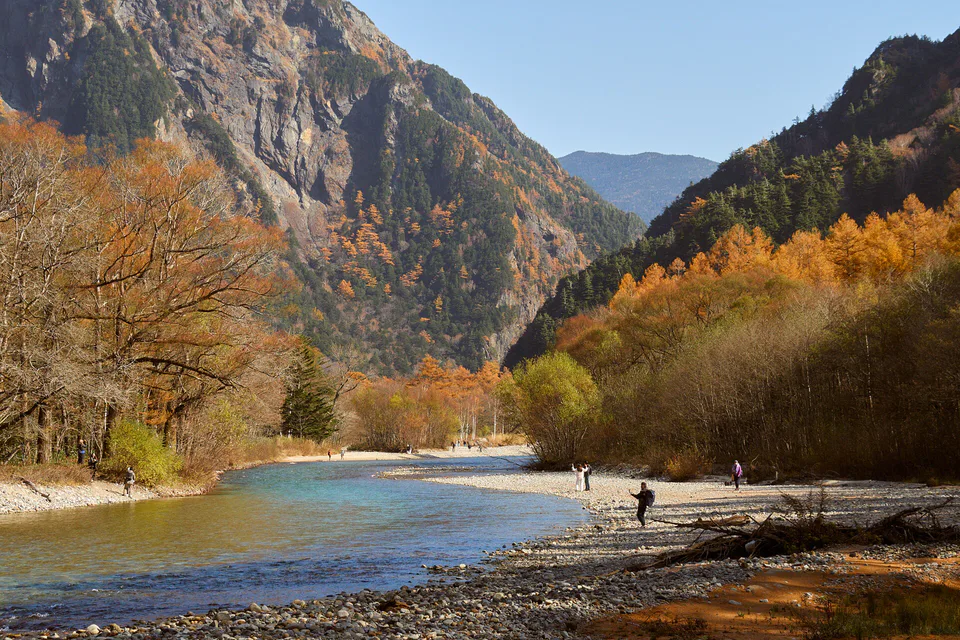
This part of the month broadens the choices, but the correct itinerary still uses one gateway. Hakkoda pairs naturally with Aomori and can fall back to Sukayu, lower roads or city time if the ropeway is affected. Hachimantai or Kurikoma make more sense from their own Tohoku rail/road structure. Kamikochi works from Matsumoto and requires authorised bus/taxi access into the valley.
The decision should be based on failure cost. A ropeway wind closure from an Aomori base is inconvenient but recoverable. A multi-transfer Alpine crossing with luggage and a fixed onward hotel has more ways to break. The visually most dramatic option is not automatically the best use of a short international trip.
October 11–15: stop chasing the highest zone automatically
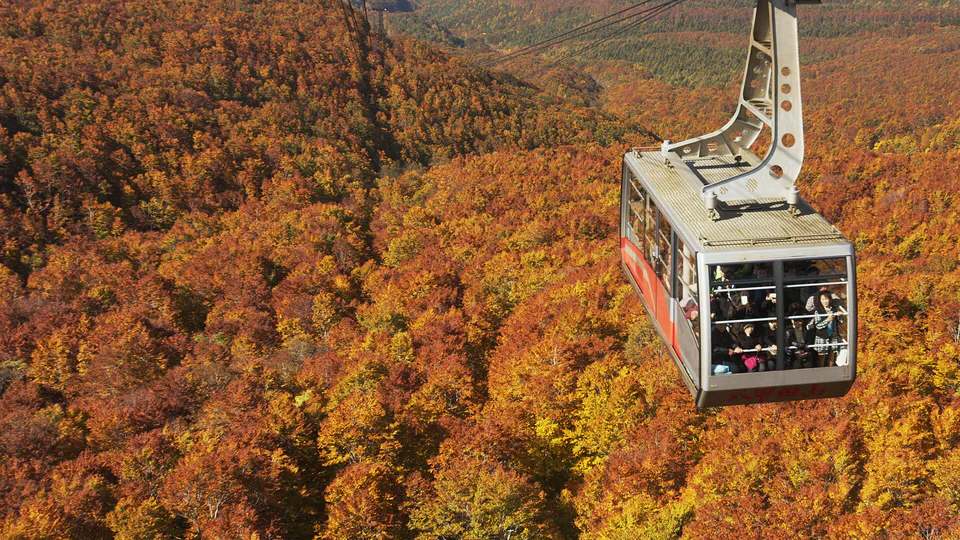
By mid-October, a high-altitude location can already be moving beyond its best colour even while a lower valley is improving. Until live images confirm otherwise, plan to descend rather than keep moving north or higher.
Examples include lower Hakkoda / Oirase, lower Sounkyo and the Kamikochi valley. The correct response to “the summit is past peak” is often change elevation inside the same corridor, not “book another train or flight to a completely different region.”
This is one of the biggest advantages of a well-chosen gateway. It lets you adjust altitude without destroying the national itinerary.
If your trip is Tokyo–Kyoto–Osaka, use a burden-of-proof test before adding Hokkaido
Suppose a 10-day first trip already contains Tokyo, Kyoto and Osaka. Adding a Hokkaido foliage block does not merely add “two days of leaves.” It adds another airport/rail transfer, another hotel base, baggage movement and another weather-sensitive schedule. The lost time usually comes from a city you already decided mattered.
I would only make that trade when you can finish this sentence clearly: “I would rather lose ___ from the Golden Route than lose the chance to see high-altitude autumn colour.” If there is no easy answer, do not reroute.
For a 12–14 day trip, the burden becomes easier to meet. One three- or four-night northern/alpine block can coexist with a shortened Golden Route, especially if the trip is open-jaw or already includes a domestic flight. Still choose one corridor rather than collecting regions.
Hokkaido: use two independent mountain chances instead of one heroic day
A strong five-day Hokkaido structure is Asahikawa → Asahidake → Sounkyo/Kurodake → recovery/return. The point is not the exact five-day template; it is the existence of two separate mountain windows. If Day 2 is poor, Day 3 or 4 may still work.
Sapporo is an excellent city but a weaker sole base when early-morning mountain light is the whole purpose. The extra transfer consumes the exact visibility window you travelled north to protect. Use Asahikawa or Sounkyo strategically and keep the main suitcase at a convenient gateway when possible.
A car can increase flexibility, but early frost or snow can arrive at elevation before lowland roads feel wintry. Do not let a non-refundable room become a reason to drive beyond your experience or equipment.
Tohoku: Aomori is stronger when you need a low-cost Plan B
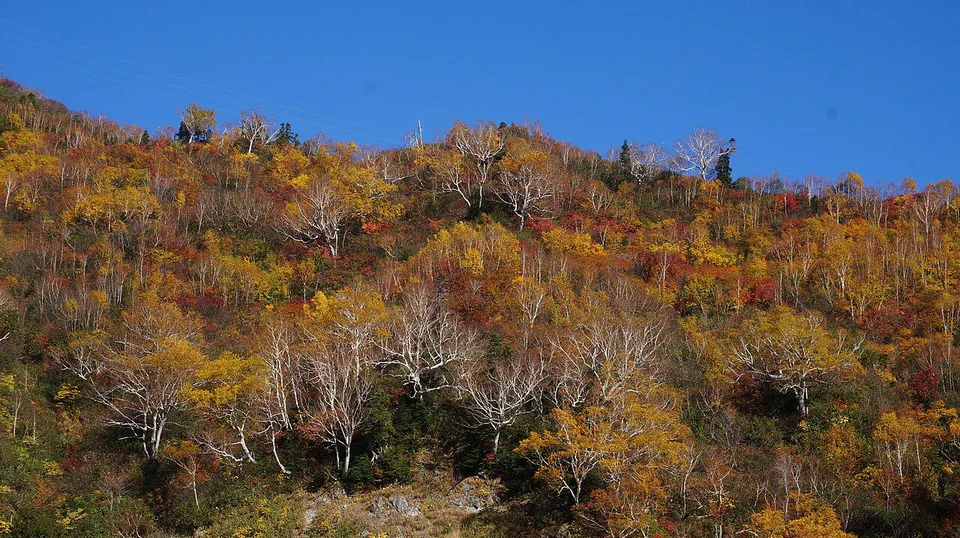
For an early-October foliage trip, Aomori works well because Hakkoda, Sukayu, Oirase/Lake Towada and city/Hirosaki options can form one regional system rather than separate expeditions.
Keep Hakkoda and Oirase on different days. A ropeway queue, wind suspension or bus delay can consume the second half of a tightly stacked day. A mountain/onsen overnight can improve first-light access, but it also creates check-in, dinner and shuttle deadlines that need to be verified before payment.
A Morioka-side plan can work for Hachimantai or Kurikoma, but choose one main mountain. If the seasonal bus does not fit, change the transport or the mountain—not the laws of the timetable.
Central Japan: Kamikochi and Tateyama solve different travellers
Kamikochi is the more contained valley decision. A Matsumoto base can give you one full mountain day and one weather-recovery day. An overnight in Kamikochi becomes valuable when dawn light, a slower walk or a second forecast window justifies the higher accommodation friction.
Tateyama is a transport-chain decision. Decide between a round trip and a full crossing before booking hotels, and forward the main suitcase when the crossing would otherwise turn every transfer into a luggage task. Extra 2026 early cable-car departures improve capacity on popular October dates, but they do not remove queues elsewhere on the route or guarantee mountain conditions.
Book the scarce mountain edge first, not every hotel first
For early October, the scarce item may be a mountain hotel, seasonal bus, ropeway/web-ticket slot or hotel shuttle. Secure the element that can make the day impossible, then build flexible trunk rail and gateway accommodation around it.
For international travellers with large luggage, use a gateway such as Asahikawa, Aomori, Matsumoto or Toyama as the heavy-bag base and carry a compact overnight bag when the mountain section supports that strategy. Verify forwarding acceptance, arrival date, dinner cutoff and the final connection before sending anything.
Do not book several non-refundable mountain hotels simply because a historical colour chart shows overlapping dates. That turns weather uncertainty into cancellation risk across multiple regions.
Five failure modes and the correct response
↔ Scroll table left or right
Failure | Better response |
High zone already past peak | Drop elevation inside the same corridor |
Leaves still green | Only move higher when current access and weather make it safe |
Ropeway closed by wind | Use the lower valley, onsen or gateway-city day instead of transferring regions |
Early snow/frost | Change route or transport; do not defend a self-drive plan beyond your experience |
Bus/hotel sold out | Stay at the gateway and choose a different regional day rather than improvising a fragile mountain transfer |
Final verdict: early October foliage is worth rerouting for only when it deserves the calendar
Keep a normal Tokyo–Kyoto–Osaka first trip intact if autumn colour is a bonus. JNTO’s current guidance supports the basic timing reality: the warmer major cities are usually a November foliage story, while early October requires going north or high.
If foliage is a major trip objective, choose one specialist corridor. Hokkaido gives the earliest/highest-latitude option and benefits from multiple mountain windows. Tohoku can offer a strong gateway-and-fallback structure. Kamikochi/Tateyama can fit a wider Honshu trip with less national-level detour, but mountain transport becomes part of the risk.
The most important booking is not “the reddest place.” It is the route that still gives you a good day when the colour, visibility or transport is not exactly what the historical calendar suggested.
Related planning and official checks
References
Japan National Tourism Organization — Japan in October · JNTO — Japan in November / Tokyo and Kyoto foliage timing context · Tateyama Kurobe Alpine Route — current 2026 transport announcements. Checked August 25, 2026. Nationwide 2026 peak-colour forecasts and mountain conditions can change after publication; recheck current colour reports, live cameras, weather and transport before travel.