
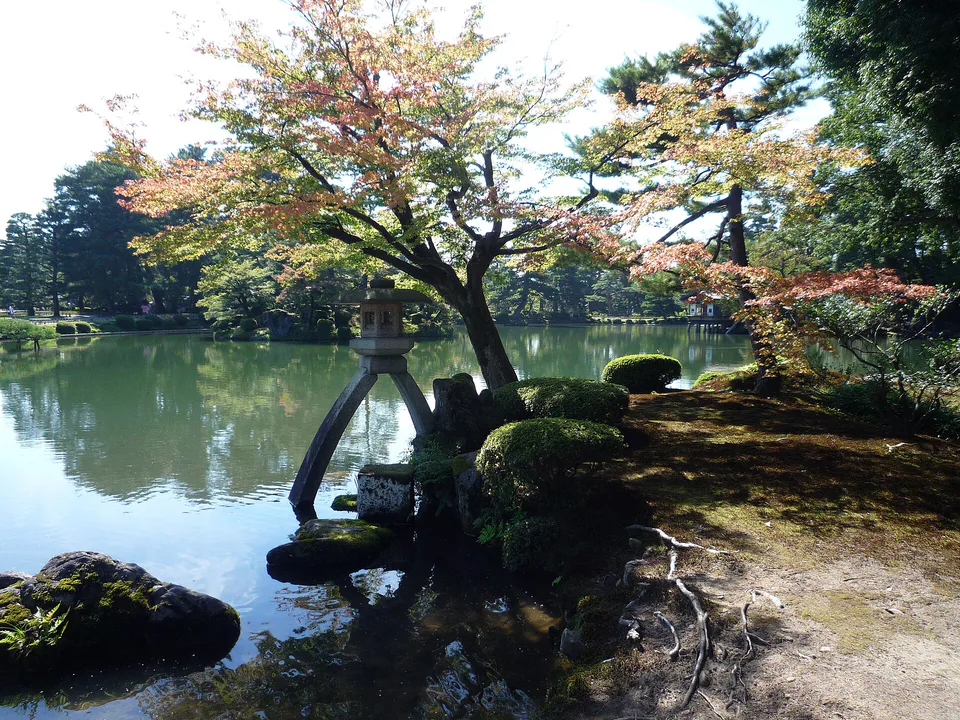
For a first autumn visit to Kenrokuen, I would use normal daytime admission as the default and add either free early entry or the 2026 illumination only when that second session buys something specific. Early entry buys quiet and soft light; daytime buys the clearest read on actual leaf colour and the full garden experience; illumination buys a different visual composition, not “better foliage.” Doing all three in one day is rarely necessary.
The useful decision is therefore not simply when is Kenrokuen at peak? It is which session gives you the highest return for the extra wake-up, hotel location, waiting time and evening transport it requires. The garden currently costs only ¥320 for daytime adult admission — roughly US$2 at late-August 2026 exchange rates — so the real scarce resource is your Kanazawa time, not the ticket price.
Checked August 26, 2026. From October 16 through the end of February, normal hours are 08:00–17:00 with last admission at 16:30. From November through February, free early entry runs from 06:00 until 15 minutes before normal opening, and visitors must leave before the paid session begins. The 2026 autumn illumination schedule currently lists November 7, 14, 15, 21, 22, 28 and 29; the schedule remains subject to change.
ValueNavi Session ROI: what does each Kenrokuen visit actually buy?
This is a ValueNavi decision model, not an official Kenrokuen score. I rate each session by the benefit it adds compared with simply visiting once in daylight.
↔ Scroll table left or right
Session | What it buys | Hidden cost | Best for | Skip if |
Free early entry | Lowest crowd pressure, reflections, quiet photography | 06:00 start, cold/dark approach, fewer services, mandatory exit before 08:00 | Photographers and travellers staying nearby | You need breakfast, slow mobility or are based far from the garden |
Normal daytime | Best visibility of colour, paths, terrain and garden structure | More visitors at famous viewpoints | Almost every first-time visitor | Only if you have already visited Kenrokuen deeply before |
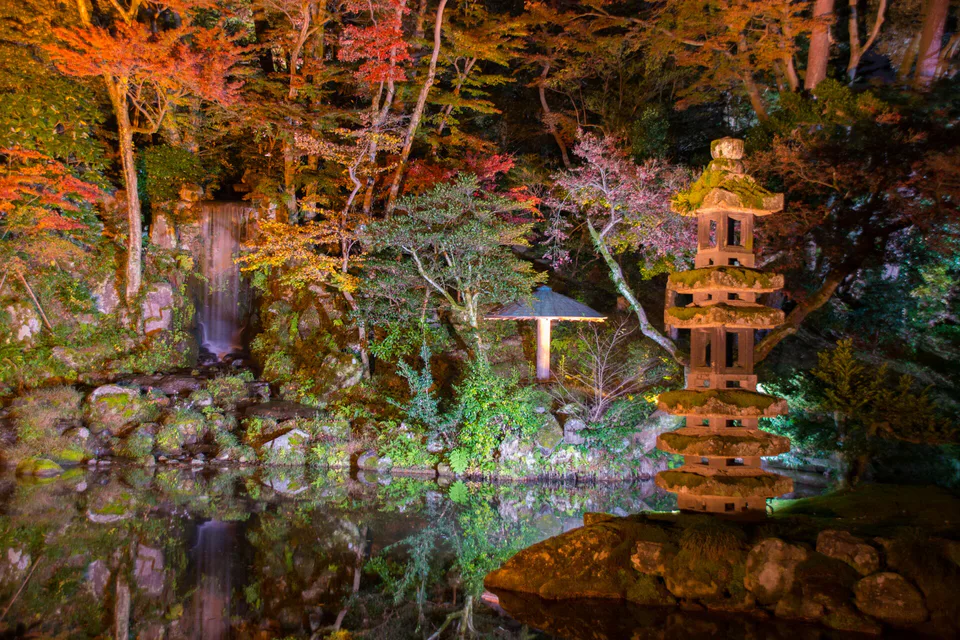
2026 illumination | Lighting, reflections and a distinct evening atmosphere; event admission is free | Selected dates only, evening crowd concentration, darker paths, another trip to the garden | Travellers staying central who value night photography or atmosphere | Your evening is already tight or foliage itself is the only goal |
Early + day + night | Three different presentations of the same garden | High repetition and a day structured around returning to one site | Dedicated garden/photography trips | Kanazawa is only a one- or two-day stop and you still want the city |
My default ranking for a first visit is daytime first, then one optional second session. The low ¥320 daytime fee is not a reason to squeeze in every access window. It is a reason to protect the most informative session and spend the remaining hours on Kanazawa Castle, Gyokusen’inmaru, Omicho, Higashi Chaya or another experience that adds something different.
Do not let the illumination calendar become your foliage forecast
The 2026 autumn illumination is scheduled for November 7, 14, 15, 21, 22, 28 and 29. Those dates are useful for itinerary planning, but they do not mean every date is expected to be peak foliage. The Kenrokuen Tourism Association describes November broadly as the autumn-colour season and notes that the garden contains around 300 maples, but individual areas and species do not change at exactly the same pace.
This creates an important planning distinction:
Use illumination dates to decide whether a night session is available.
Use current foliage reports and recent photos to decide whether autumn colour is worth prioritising.
Use weather to decide whether the session remains enjoyable and safe.
If your trip is on November 7 and the leaves are still early, I would still consider the illumination if the night atmosphere interests you — but I would not describe the day as “peak Kenrokuen autumn.” If a non-illumination weekday has excellent colour, I would prioritise the daylight garden rather than move the whole trip simply to obtain lighting.
Early November, mid-November or late November: what changes in the decision?
↔ Scroll table left or right
Period | What I would assume | What I would verify | Best fallback if colour disappoints |
Nov 1–10 | The garden may be mixed rather than uniformly red | Current maples around Yamazakiyama and key viewpoints | Castle, Gyokusen’inmaru, Omicho, Higashi Chaya, museums |
Nov 11–20 | Strongest broad historical bet, not a guarantee | Wind/rain damage and the exact areas looking best | Keep the garden, but shorten weak zones and deepen the central cluster |
Nov 21–30 | Some areas may still hold colour while exposed trees decline | Recent storm/wind conditions and lower sheltered areas | Yukitsuri, garden structure, castle stonework and indoor culture |
Early December | Treat the trip as early-winter Kanazawa first | Any remaining leaves as a bonus | Yukitsuri, museums, food and historic districts |
Yukitsuri work begins in November and continues into the approach to winter. Its appearance can overlap with foliage, but the ropes are a winter-protection process, not a signal that the leaves are at peak.
Free early entry is valuable only if your hotel and morning routine support it
From November through February, official early admission begins at 06:00 and runs until 15 minutes before the normal 08:00 opening. Visitors must leave before the paid session starts. This creates a clean 06:00–07:45 framework, but the practical value depends heavily on where you sleep.
I would do it from Korinbo or the Kenrokuen/castle area. The journey is short enough that waking early translates into actual quiet garden time. From Kanazawa Station, I would calculate the taxi/bus/walking plan first rather than assuming “free entry” automatically makes the morning better.
The hidden cost is the gap after 07:45. If you want a full daytime visit too, you cannot simply stay inside. You must leave, then decide whether to wait, eat breakfast or return later. For a first-time traveller, that interruption often makes one normal 08:00 entry more efficient than a 06:00 visit plus re-entry.
The recommendation reverses for photographers: the quiet itself may be the product, so the forced exit is an acceptable trade-off.
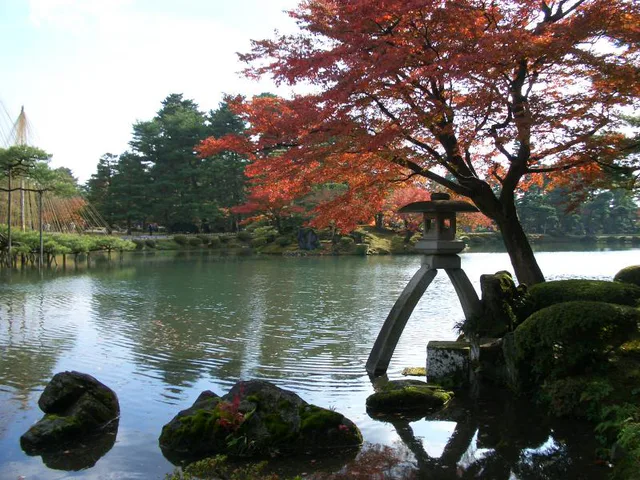
ValueNavi double-visit test: is returning at night worth it?
I would return for the illumination only when at least two of these conditions are true:
you are staying within the central Kanazawa / Korinbo area;
the illumination itself is one of your trip priorities;
daytime foliage is strong enough that seeing the same composition under lighting still feels additive;
your dinner and evening transport remain flexible;
you are staying at least two nights, so the second session does not consume your only Kanazawa evening.
If only one condition is true — for example “the event is free” — I would usually skip the repeat. Free admission does not make the second visit free in time.
The 2026 annual schedule lists the autumn illumination dates above and notes that schedules can change without notice. Treat the official page as the final source before travel.
Which Kenrokuen zones deserve your limited walking time?
↔ Scroll table left or right
Area | What it adds | Walking cost | Cut first when... |
Kasumigaike + Kotoji-toro | Iconic pond, lantern, pine and reflections | Relatively low, but crowd pressure high | Almost never on a first visit |
Yamazakiyama | Denser autumn layering and different elevation | More slope/stairs | Mobility is limited or current colour is weak there |
Hisagoike | Waterfall and older garden composition | Uneven/sloping sections | Rain makes footing poor and time is short |
Shigure-tei area | Rest and tea atmosphere | Low | You are assuming tea service during a session when it is not operating |
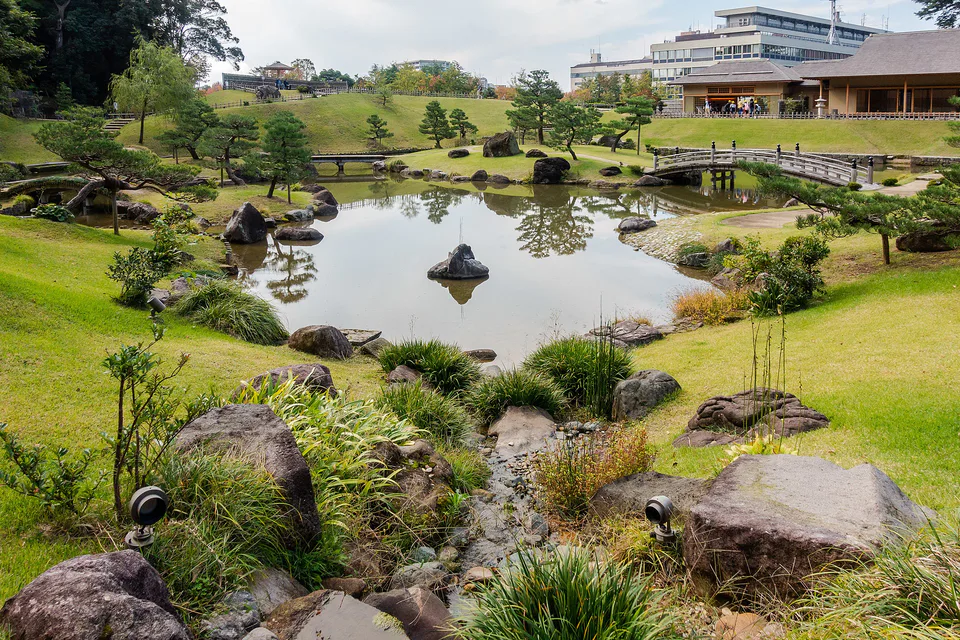
Ishikawa-mon → Castle → Gyokusen’inmaru | A different visual product: gates, stone walls and compact garden | Moderate continuation | Only if Kenrokuen itself has already exceeded the walking budget |
This is more useful than trying to “complete” the garden map. A traveller with older parents can preserve the pond core and castle edge while dropping steeper optional zones. A photographer can do the reverse if a specific maple area is currently strongest.
One day in Kanazawa: do not spend both prime daylight blocks inside Kenrokuen
If Kanazawa is a one-day stop, I would use Kenrokuen once in daylight for roughly 90–120 minutes, then continue into Kanazawa Castle and Gyokusen’inmaru. After lunch, choose one historic district — Higashi Chaya or Nagamachi — rather than racing through both.
On an illumination date, the night visit becomes an optional add-on only after the daytime city route is complete. I would not sacrifice Omicho, a historic district and dinner simply because the garden can be entered twice for little money.
This is the opportunity-cost test: the second Kenrokuen session should beat the best different experience you would otherwise have in Kanazawa.
Two nights in Kanazawa: this is where the garden can justify a second session
Two nights create enough slack to separate functions:
Day 1: Omicho, Higashi Chaya, Castle/Gyokusen’inmaru; illumination if it operates and weather is good.
Day 2: 08:00 Kenrokuen — or early entry for photography — then Nagamachi and an indoor cultural stop.
This structure survives weather much better than forcing every autumn attraction into the first day. If the first evening is wet, you still have daylight. If the first morning is windy after leaf fall, Kanazawa still has food, architecture, castle spaces and museums.
Kanazawa Station or Korinbo: choose the base by repeated friction
Kanazawa Station wins when Shinkansen, airport buses, luggage storage or a Shirakawa-go coach are the dominant constraints. Korinbo wins when you will repeatedly walk to the garden/castle cluster, eat centrally and return after an evening illumination.
I would not pay a central-area premium for one night just to save one garden transfer if the next morning starts with an early intercity departure. Conversely, I would not stay at the station for three nights solely because the Shinkansen arrives there if most mornings and evenings are around Kenrokuen, Korinbo and Nagamachi.
ValueNavi rule: hotel-location value should be multiplied by how many times you use the advantage. One saved taxi is small; four saved cross-city transfers can justify a meaningfully higher room rate.
Shirakawa-go on the same day: use it as a transfer, not a second full destination
I would not combine a deep Shirakawa-go visit and a full Kenrokuen visit on the same day. The mountain-bus segment is schedule-sensitive, while Kenrokuen’s autumn value depends on daylight and unhurried walking.
If Shirakawa-go sits between Takayama and Kanazawa, it can work as a transfer stop: forward the main suitcase, visit the village for a defined block, then continue to Kanazawa. But that day should not also carry a hard illumination reservation unless your bus timing and delay buffer are unusually generous.
For the full routing decision, use Takayama, Shirakawa-go and Kanazawa in four days.
Rain, wind or leaves past peak: downgrade the foliage goal, not the whole Kanazawa stay
Heavy rain: shorten exposed or sloping garden sections and shift more time to castle interiors, Omicho and museums. Strong wind after peak: expect exposed colour to deteriorate faster; prioritise sheltered zones and garden structure. Early snow: treat the mix of residual leaves, stonework and yukitsuri as an early-winter experience rather than insisting on a “red maple” day.
The garden’s official November guidance itself highlights both autumn colour and the start of yukitsuri. That is useful because it gives late-November trips a second visual reason to exist even when leaf condition is weaker than hoped.
Final verdict
For a first visit, buy one good daylight session with your time, not three access windows with your schedule. Daytime is the highest-information visit and costs only ¥320 (about US$2). Add free early entry if quiet photography is the product. Add a 2026 illumination if the night atmosphere is the product and you are staying centrally enough that the second trip is cheap in time.
The recommendation reverses for dedicated photographers or garden-focused repeat visitors: for them, early + night can be the point of the Kanazawa stay rather than repetition.
That is the ValueNavi Session ROI test: each return to Kenrokuen should add a genuinely different experience, not just another chance to say you were there.