
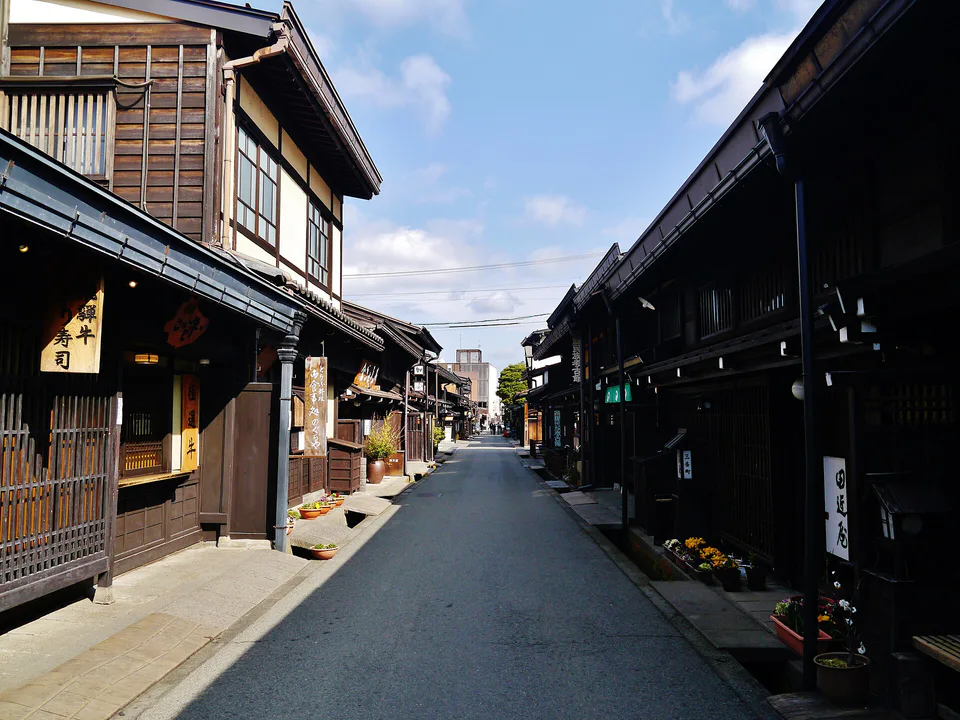
The cleanest four-day car-free route is usually two nights in Takayama, a four-to-five-hour Shirakawa-go stop on the transfer day, and one night in Kanazawa. But book it in the opposite order from a normal city trip: first secure the Shirakawa-go bus pair that makes the transfer work, then book the hotel nights around those seats. The route fails more often from a missing rural bus connection than from choosing the “wrong” Takayama hotel.
The direction should follow the wider Japan itinerary. If you are coming from Nagoya or moving from Tokyo through Toyama, Takayama → Shirakawa-go → Kanazawa is coherent. If you are coming from Kyoto/Osaka and continuing toward Toyama/Tokyo, the reverse can be cleaner. Do not add a return journey simply to preserve one preferred direction.
↔ Scroll table left or right
Your wider route | Better direction to test first | Why |
Nagoya → Japanese Alps → Hokuriku | Takayama → Shirakawa-go → Kanazawa | Natural progression with no return to Nagoya |
Tokyo → Toyama → Alps → Kyoto/Osaka | Takayama → Shirakawa-go → Kanazawa after entering via Toyama | Keeps the route moving west/south rather than backtracking |
Kyoto/Osaka → Hokuriku → Alps → Nagoya | Kanazawa → Shirakawa-go → Takayama | The reverse direction follows the national itinerary instead of fighting it |
Four days only, no photography or gassho-inn goal | Do not sleep in Shirakawa-go | A daytime transfer stop preserves two stable hotel bases |
Shirakawa-go dawn / gassho stay is a core experience | Overnight becomes defensible | You are buying hours day-trippers cannot use, not just a closer bed |
Book the two Shirakawa-go bus legs before the non-refundable hotels
This is the most important booking-order decision in the route. Nohi Bus currently marks individual Takayama–Shirakawa-go–Kanazawa/Toyama services with R when a reservation is required; other departures are non-reserved. Its current timetable has both types rather than one universal rule. The Takayama–Shirakawa-go ride is roughly 50 minutes, and the same corridor continues toward Kanazawa, Toyama and Takaoka.
For a four-day itinerary, the two seats that matter are not merely “a bus to Shirakawa-go.” They are:
a Takayama/ Kanazawa-side departure that reaches Shirakawa-go early enough to leave a useful village window; and
an onward departure four or five hours later that still gets you to the next hotel at a sensible time.
If either leg only works on a reservation-required service, secure it before committing to a non-refundable hotel sequence. A beautiful Kanazawa room does not rescue a transfer day whose onward bus is sold out.
Non-reserved services are not a guaranteed backup. Nohi Bus says boarding is first-come, first-served; extra buses may be operated in busy periods, but if those also fill you may need to wait for the next service. In autumn weekends, holidays, snow periods or other busy dates, “we will take the non-reserved bus if needed” is therefore a weaker Plan B than it looks.
Takayama-Hokuriku Pass holders have a reservation trap
The current Takayama-Hokuriku Area Tourist Pass costs JPY 19,800 for an adult and is valid for five consecutive days. It covers specified JR trains, the Hokuriku Shinkansen between Toyama and Tsuruga, and selected buses through Takayama, Shirakawa-go and Kanazawa/Toyama. It also includes up to six reserved-seat uses on eligible JR limited-express and Hokuriku Shinkansen services.
The hidden operational catch is the bus reservation channel. Nohi Bus's current FAQ says the pass is valid on reservation-required buses, but pass holders cannot make those bus reservations through the normal online booking system because it requires immediate payment. They must reserve by telephone, then show the pass at the ticket counter before boarding to receive the seat ticket.
This means buying the pass does not automatically solve the most fragile seat in the itinerary. In fact, a traveller who buys the pass first and assumes “covered = reserved” can be worse prepared than someone who has already locked the two point-to-point bus seats.
There is another 2026 date-specific constraint: from September 18 through September 23, all Limited Express Hida seats are reserved only. Pass users travelling on those dates need a reserved-seat ticket; those JR reservations count toward the pass's six free reserved-seat uses.
The pass is not worth JPY 19,800 just because it covers Shirakawa-go
Current Nohi fares put Takayama → Shirakawa-go at JPY 2,800 and Shirakawa-go → Kanazawa at JPY 2,800. The two bus legs at the centre of this itinerary therefore total JPY 5,600 one way. That is well under one third of the JPY 19,800 pass price.
So the correct pass question is not “Does the pass cover Shirakawa-go?” It does. The question is whether the other covered JR sectors in your five-day window provide enough additional value.
The pass gets stronger when the wider route genuinely uses its covered Nagoya/Takayama, Toyama/Tsuruga, Kyoto/Osaka and Kansai Airport sectors. It gets weaker when you fly or use unrelated tickets around the edges and only need the two rural buses plus a short rail sector. Price the exact gateway travel before buying; do not backtrack merely to force a pass to look economical.
Also note that the Tokaido Shinkansen between Kyoto and Shin-Osaka is not covered by this pass. A map showing both cities inside the wider route is not the same as every fast train between them being included.
Why two Takayama nights are still the best default
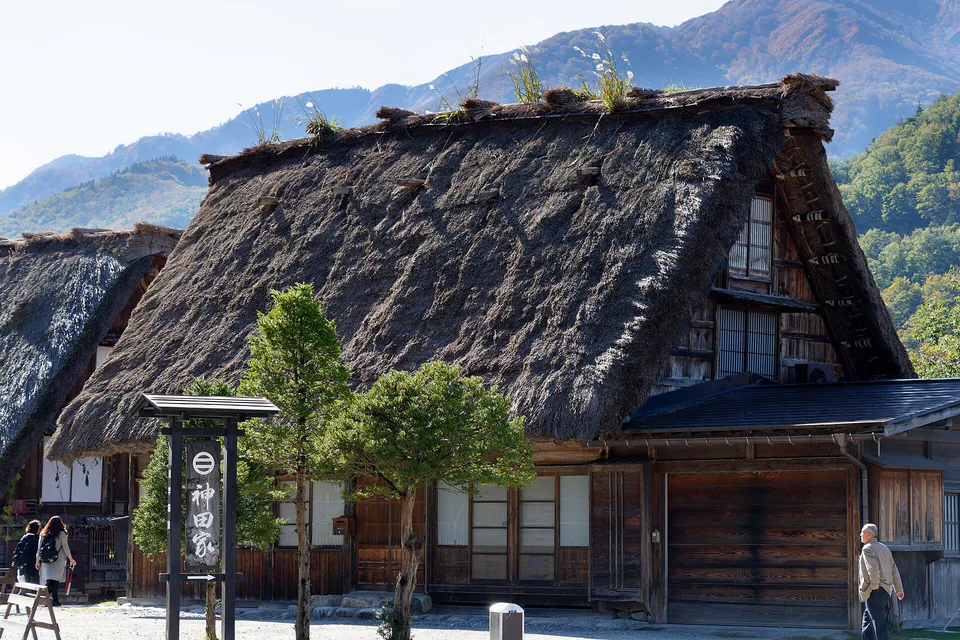
Two Takayama nights give this short route one stable base before the rural transfer. Day 1 can absorb the arrival from Nagoya or Toyama and still leave time for Sanmachi, Takayama Jinya, Nakabashi or a slower old-town evening. Day 2 becomes a full Takayama day instead of another checkout morning.
The value is not simply “more Takayama.” It is that Day 3 can begin from the same room with the bus seats already fixed and the main suitcase already handled. For families, older travellers or anyone carrying long-haul luggage, that stability is worth more than splitting the first two nights between Takayama and another nearby base.
The answer reverses when Takayama is only a transit point. If you arrive very early, care little about the town and Kanazawa needs two full days, a 1 Takayama + 2 Kanazawa split can be more useful. The default 2+1 allocation is strongest when Takayama itself is a meaningful destination rather than simply the bus gateway to Shirakawa-go.
Shirakawa-go should be a transfer-day stop, not a suitcase day
Four to five hours is usually enough for a first visit to Ogimachi: walk the village, enter one gassho house, eat lunch and use the viewpoint if weather, walking ability and crowd conditions support it. The itinerary becomes fragile when you try to add every museum or treat the village as an all-day stop before another hotel.
The main suitcase is the operational issue. The ideal solution is to forward it from the first hotel to the next hotel when the carrier and both hotels can support the delivery date, then carry a 24–48-hour bag through Shirakawa-go. Keep medication, documents, chargers, warm layers and anything needed for the next morning with you.
If forwarding is not practical, Shirakawa-go Tourist Association currently lists coin lockers at the bus terminal from 08:00 to 17:00: JPY 500 for small/medium and JPY 1,000 for large. An adjacent luggage-storage service is also available until 17:00; when those are full, the Tourist Association says it can accept same-day luggage as overflow. All of these are same-day services.
That 17:00 cutoff is an important failure mode. If your onward bus leaves in the late afternoon or evening, retrieve the luggage with margin rather than treating 17:00 as the time you start walking back to the terminal. Storage availability should be the backup; the route itself should still work if the largest locker is already occupied.
Nohi Bus also states that highway and some limited-express buses have underfloor trunk space, with passengers loading and unloading their own bags. Do not place valuables, fragile items or perishables there.
Do not choose route direction from foliage or hotel price alone
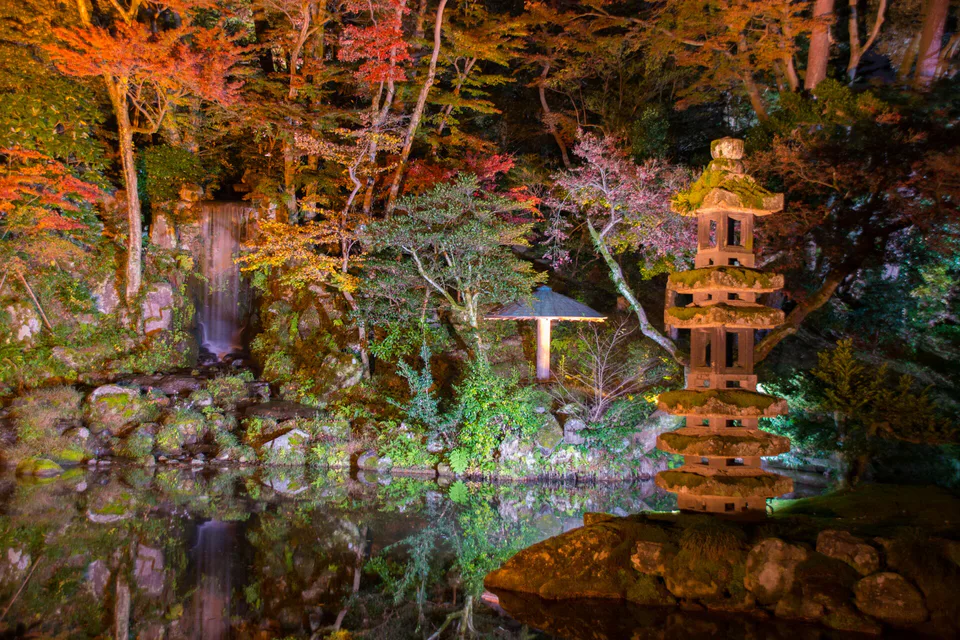
Takayama, Shirakawa-go and Kanazawa sit in different terrain and can look very different on the same autumn dates. That is useful for a seasonal trip, but it is a weak reason to reverse the whole route.
Choose direction in this order:
National itinerary: where are you arriving from, and where do you need to continue after Day 4?
Bus seat pair: which direction gives you a useful four-to-five-hour Shirakawa-go stop with reservable onward transport?
Departure edge: which final city gives the safer flight or Shinkansen departure?
Seasonal preference: only after the transport spine works should foliage, illumination or hotel price break a tie.
This prevents a common over-optimisation: reversing the trip to chase one seasonal forecast, then paying for worse luggage handling or a harder final airport connection.
One Kanazawa night is enough only when Day 4 has a protected exit
After Shirakawa-go, stay near Kanazawa Station when the next morning includes a Komatsu Airport bus, Hokuriku Shinkansen or another luggage-heavy departure. The station location makes the forwarded-bag hand-off and final transfer easier.
With only one Kanazawa night, give Day 4 a clear hierarchy: Kenrokuen and Kanazawa Castle first, then add Omicho Market, Higashi Chaya or another district only if the departure time genuinely allows it. Do not build the last day from “everything left on the list.”
If museums, tea districts, food and evening Kanazawa matter as much as Takayama, the answer is not to squeeze them into one morning. Shift a night from Takayama or add a fifth day. The 2 Takayama + 1 Kanazawa structure is a default, not a rule that every traveller must protect.
What to cut when a bus is delayed
The transfer day needs a deletion order because mountain roads are not a place to improvise with a hard onward reservation.
Keep: Ogimachi village, one gassho house and enough time to retrieve luggage and board the confirmed onward bus.
Cut first: extra museums, a second house interior or a long lunch.
Cut next: the viewpoint when weather is poor, walking is slow or the return to the bus terminal is becoming tight.
Never cut: the buffer needed to collect stored luggage before the 17:00 service cutoff and reach the reserved bus.
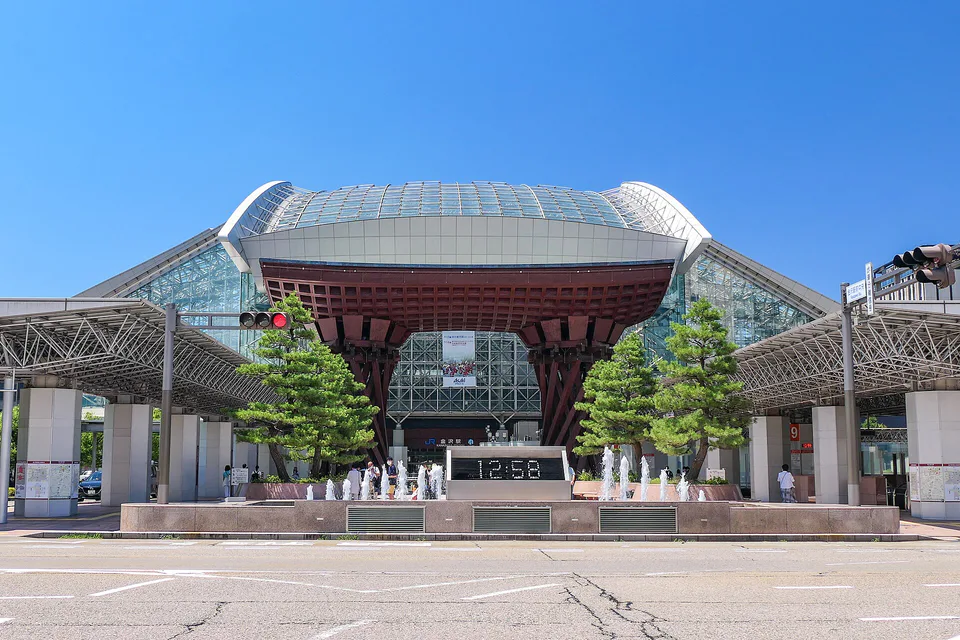
If the inbound delay is severe, notify or recheck the onward operator rather than assuming the ticket automatically moves to a later service.
Four-day verdict
Default: two Takayama nights → Shirakawa-go for four to five hours → one Kanazawa night.
Reverse it when the wider Japan route naturally runs Kyoto/Osaka → Kanazawa → Shirakawa-go → Takayama → Nagoya/Toyama.
Do not sleep in Shirakawa-go by default unless dawn, a gassho inn or photography is one of the reasons for the trip.
Do not buy the Takayama-Hokuriku Pass merely because it covers the two Shirakawa-go buses. Those two current point-to-point fares total JPY 5,600; the pass needs substantial value from the rest of its covered network.
Most important: lock the bus-seat pair before the hotel sequence. If you use the tourist pass, remember that reservation-required Nohi buses must currently be reserved by phone for pass holders rather than through the normal online payment system. In a four-day rural itinerary, that booking detail matters more than shaving ten minutes off a station walk.
Compare Takayama and Kanazawa hotel dates after fixing the bus seats
Sounkyo Kurodake 2 Day Itinerary: Ropeway, Chairlift, Onsen and Hotels
USJ Halloween 2026 One-Day Itinerary: Opening to Horror Night
Tokyo First & Last Day Itinerary: What to Do With 3, 5 or 7 Usable Hours
Misasa Onsen vs Kurayoshi: Which Base Works Better Without a Car?
Sources
Nohi Bus — current Takayama/Shirakawa-go/Kanazawa timetable and reservation markers · Nohi Bus FAQ — pass-holder and non-reserved boarding rules · Official Takayama-Hokuriku Area Tourist Pass · Shirakawa-go Tourist Association — luggage storage. Checked August 25, 2026. Bus reservation status, fares, pass rules, road operations and storage availability can change; recheck the exact travel date before paying for a non-refundable route.