
For a first 5-day, 4-night Okinawa trip, the safest plan is usually neither “stay in Naha and drive north every day” nor “pick up a rental car the moment you land and keep it until departure.” Keep the flight day in Naha, use the monorail and walking for the city, then rent a car when the trip actually leaves Naha. Split central Okinawa, Onna and the Churaumi/Motobu area by direction. The real decision is not how many attractions fit; it is how many hotel bases you need, which days genuinely need a car, and whether your final flight is early enough to justify moving back to Naha.
If you are still deciding whether to drive at all, start with the practical trade-offs in Okinawa transport rather than treating a rental car as automatic. For the accommodation side, compare where to stay in Okinawa before locking the route.
The 30-second route: two bases are usually enough
Day 1 — Naha: airport transfer, Shuri or Kokusai-dori depending on arrival time, dinner and supplies. No need to pay for a car that mostly sits at the hotel.
Day 2 — Central Okinawa: pick up the car after breakfast, choose Chatan or a Yomitan activity as the main stop, then continue to Onna and check in.
Day 3 — Onna: choose one weather-sensitive premium activity, not three. Leave real time for the beach, pool, room and dinner you are paying resort prices for.
Day 4 — Northern Okinawa: Churaumi Aquarium plus one extension around Motobu, Kouri or Nakijin. Keep the whole day north instead of bouncing back south.
Day 5 — Departure: a late flight can work from Onna with a southbound return-car route. An early flight is the case where moving the fourth night back to Naha becomes useful.
Day 1|The flight day belongs in Naha, not on Highway 58
If you arrive in the morning, drop the bags first and add Shuri only if energy and weather cooperate. An afternoon arrival is better used for Makishi, Kokusai-dori and one proper dinner. A late arrival needs nothing more than check-in, food and basic supplies. The first day is a logistics day; using it to “make back” lost sightseeing time is how a five-day itinerary becomes fragile before it has started.
The common overpacked version is airport rental counter → Senaga Island → Shuri → Chatan → back to Naha. Every stop looks individually reasonable, but immigration, car pickup, parking, navigation and hotel check-in all depend on the previous step running on time. There is no decision advantage in putting four different directions on the least predictable day.
For Naha-only movement, Yui Rail’s official QR passes are currently ¥1,000 for 24 hours and ¥1,800 for 48 hours. That does not mean you should automatically buy one: airport-to-city plus one short ride may still cost less on ordinary fares. Count rides first.
Shuri also needs a date check in late 2026. The reconstructed main hall is scheduled to open to the public from 23 November 2026 with timed entry for the interior. Trips before that date should not plan around an interior visit that is not yet available.
Day 2|Rent the car when you leave Naha; one marine activity is enough
After breakfast, pick up the car and solve the boring-but-important parts once: insurance coverage, car condition, child seats and whether all luggage actually fits. Then head north. If a Yomitan activity has a fixed meeting time, that becomes the anchor; Chatan is the flexible stop around it, not an equal second commitment.
A whale-shark session can consume far more than the advertised water time once check-in, briefing, changing and rinsing are included. In that case Chatan should be optional. Likewise, “Chatan breakfast → whale shark → parasailing → Onna check-in → Naha at night” is technically possible but has almost no recovery room when sea conditions, traffic or changing time runs late.
For location-specific planning, compare parasailing departure areas in Naha, Motobu, Uruma and Ginowan. If whale sharks are the real reason for the day, first choose between snorkelling, introductory diving and certified Fun Dive in the Okinawa whale-shark guide.
If Day 3 is deliberately a resort day, continuing to Onna on Day 2 usually makes more sense than spending one night in Chatan and moving again the next morning. Chatan earns a stay when American Village nightlife, shopping and walkable dinner options are part of the trip itself. If shopping is the question, compare Chatan vs Naha for your final nights.
Day 3|If you pay for Onna, actually use Onna
The purpose of this day is to reduce movement. Pick one major weather-dependent experience in the morning, return to the same accommodation area for lunch, and deliberately leave a long empty block in the afternoon. Manzamo or a nearby coast stop can be added if the weather is good, but a second expensive activity should not be the default.
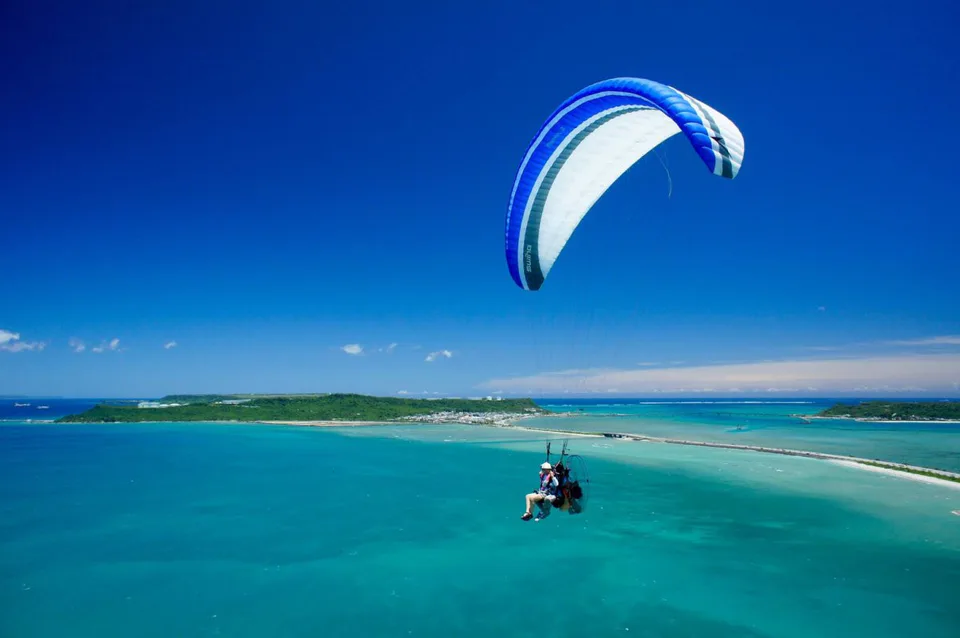
Powered paragliding, a helicopter sightseeing flight and fishing all compete for the same scarce resource: a good weather window plus your physical energy. They are not three painless add-ons. Compare powered paragliding vs parasailing if you want a short flight, or use the separate helicopter and fishing guides only if one of those experiences is the actual centrepiece.
This is also why Churaumi does not belong here by default. If you are paying resort rates in Onna but leave after breakfast and return only to sleep, the hotel is not functioning as a resort for you. In that case, reconsider the accommodation rather than forcing an expensive room into an itinerary that never uses it.
Day 4|Give Churaumi a northern day, not a two-hour slot between road trips
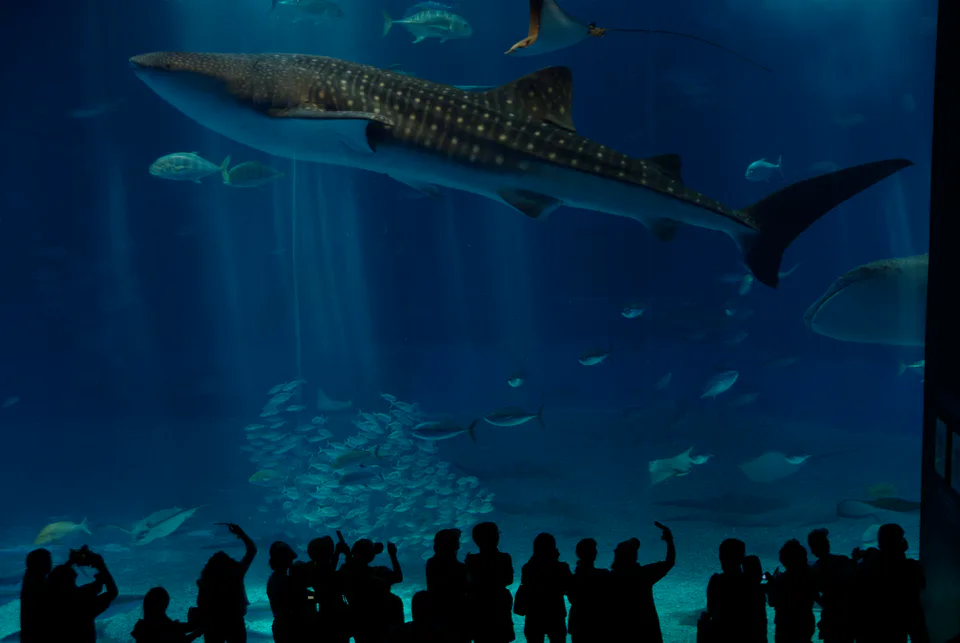
Leave Onna northbound and make Churaumi Aquarium the first major stop. Eat in the Motobu area, then choose one extension: Kouri Island, Nakijin, or the Motobu coast. If the morning has already involved a lot of walking, remove the extension rather than compressing the aquarium.
In August 2026 the aquarium’s official busy-season hours are 8:30–21:00, with final admission at 20:00; the normal period is 8:30–18:30 with final admission at 17:30. Longer summer hours are useful as buffer, not permission to schedule Kouri, Nakijin and lunch first and hope the aquarium still fits. Typhoons can also cause temporary closure.
If Churaumi is your first full sightseeing day or you want two consecutive days around Motobu/Nago, a northern hotel may become worth the extra move. With only one northern day, Onna as the base is usually enough.
Day 5|Flight time decides the last hotel, not a template
For a late flight, check out from Onna and move south with only low-risk stops that can be shortened or deleted. Work backwards from rental-car return, shuttle time and airport procedures. For a noon or early-morning flight, the fourth-night move back to Naha can be sensible because it removes a long departure-morning drive.
This is a risk-management decision, not a ritual. The detailed comparison is in Onna vs Naha for the last night. An early flight, young children or a rental office with a slow shuttle can make Naha more valuable than one final resort sunset; a late flight can make the move pure inconvenience.
You do not need a rental car for every hour of the trip
The car is doing useful work on the central, Onna and northern days. In Naha it can add parking, pickup/return friction and city driving without solving a meaningful problem. Once the car days are fixed, compare Okinawa rental-car insurance, ETC, child seats and car size rather than choosing by the lowest daily headline price.
The CTA below is most useful after you have fixed the pickup and return days. Compare the same insurance level, vehicle class, child-seat requirement and cancellation terms; otherwise a “cheaper” quote is not the same product.
Check Okinawa rental-car prices, insurance and vehicle types for your dates
This article may contain affiliate links. If you complete an eligible booking through a link, ValueNavi may receive a commission at no additional cost to you. Vehicle class, insurance, cancellation rules, child seats and pickup/return arrangements should be rechecked for your dates.
With kids, deleting one activity usually helps more than finding a “more family-friendly” hotel
If naps, a stroller, laundry and early bedtimes matter, reduce movement before upgrading the hotel. On Day 2 make Chatan optional if there is already a marine activity; on Day 3 keep the hotel plus one short experience; after Churaumi add only one northern stop. “Nap in the car” should not be the default assumption for a child who needs a reliable rest.
Use the Okinawa family road-trip guide and family hotel decision guide to decide whether beds, laundry, pool time or the ability to return to the room matters most.
Without a car, keep the geography but rebuild the logistics
Day 1 in Naha still works. Days 2–4 cannot simply replace driving with local buses stop by stop. Rebuild them around tour meeting points, hotel shuttles and activities with pickup. A practical no-car version often keeps Naha as the main base, gives one day to a northern tour, one day to a water activity with a clear meeting point, and accepts that spontaneous beaches and roadside cafés are no longer free additions.
Weather is a scheduling variable, not a footnote
Do not book three consecutive outdoor activities with no swap day. Sea conditions, wind, lightning and typhoons can affect parasailing, diving, fishing and aerial activities; the aquarium can also close temporarily in severe weather. Keep Day 3 and Day 4 partially interchangeable until the forecast is clearer.
That flexibility should carry into hotel rates. If the route is still movable, compare Okinawa hotel cancellation policies before saving a small amount on a non-refundable rate. Breakfast is similar: check your early-departure days first, then decide whether hotel breakfast is worth adding.
Final verdict|Plan the direction first; the attractions follow
A strong first-timer route is simple: Day 1 Naha, Day 2 central Okinawa and check in to Onna, Day 3 Onna plus one headline experience, Day 4 Churaumi and one northern extension, Day 5 southbound according to flight time. A late flight does not automatically require a final night in Naha; an early flight is the condition that makes the move useful.
The gain is not just fewer kilometres. You avoid paying for unused rental-car days, reduce repeated north–south driving, unpack less often and give weather-dependent activities room to fail without destroying the whole trip.
Sources and date-sensitive checks
Checked 20 August 2026. Yui Rail currently lists the QR 1-day/2-day passes at ¥1,000/¥1,800 and valid for 24/48 hours. Shuri Castle’s reconstructed main hall is scheduled for general public opening from 23 November 2026 with timed interior admission. Churaumi Aquarium uses seasonal opening hours; August 2026 is 8:30–21:00 with final admission at 20:00, while the normal period is 8:30–18:30 with final admission at 17:30.
Yui Rail official ticket information · Shuri Castle official information · Churaumi Aquarium official opening hours