
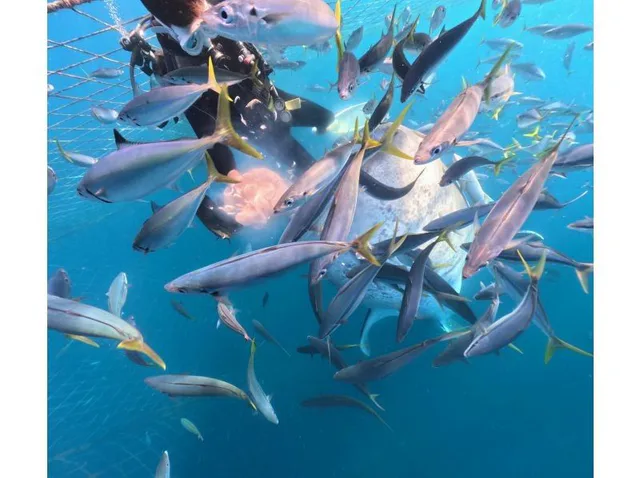
If your only goal is to see the whale shark clearly, start with snorkeling—not scuba. Upgrade to introductory scuba only when being underwater beside the animal is the reason you are paying more. Choose a certified Fun Dive only if you are already an active qualified diver. And before any of those choices, decide whether you are comfortable with the Yomitan sea-pen format, because this is not a wild-ocean search for a free-ranging whale shark.
Okinawa whale shark diving in 30 seconds: three gates before price
There are three decisions in the right order. First: are you comfortable with a whale shark kept in an offshore marine enclosure near Toya Fishing Port? Second: do you actually want scuba, with its medical and post-dive flight constraints, or only the view of the animal? Third: does a local Yomitan half-day or a Naha pickup/Blue Cave combo fit the route better?
The Yomitan Fisheries Cooperative explicitly describes the whale shark in an underwater sea pen and says introductory divers can observe it at close range. That high encounter reliability is the practical appeal for some travelers; the captive setting is a reason to skip the activity for others. Decide that boundary first. Price is irrelevant if the basic encounter format is not one you want.
If you have not decided which marine experience should be the star of the trip, start with our things to do in Okinawa comparison and compare the whale shark with the Blue Cave, Kerama and other day tours. The biggest waste is not paying too much. It is paying for the wrong kind of sea day.
ValueNavi decision table: what does each upgrade actually buy?
↔ Scroll table left or right
Product | Current reference price | Listed total time | What the upgrade buys | What it does not buy |
Whale shark snorkeling | ¥9,300 (about US$58) + ¥500 facility fee (about US$3) | About 150 min | Surface view, simpler participation, no scuba-specific no-fly interval | Underwater eye-level perspective |
Introductory scuba | ¥15,000 (about US$94) + ¥500 facility fee (about US$3) | About 150 min | Underwater immersion without prior certification | A longer listed session or a more reliable shark encounter |
Certified Fun Dive | Varies by operator / equipment inclusion | Check exact product | A session structured for an already qualified diver | Automatic suitability if your certification is old and you are rusty |
Blue Cave + whale shark combo | Varies by package | Full-day structure | Transport consolidation and a second marine objective | Value if you never wanted the Blue Cave in the first place |
Kafuu’s current local reference creates a useful derived comparison: introductory scuba costs ¥5,700 more than snorkeling, or about US$36 more, before the same ¥500 facility fee. Both are listed at roughly 150 minutes. That premium therefore buys the underwater perspective and scuba handling—not more scheduled time and not a more reliable animal sighting. Approximate USD conversions use about ¥1 = US$0.00628 for orientation.
Next decision: compare whale sharks, Blue Cave and Kerama before choosing a package
This is a sea-pen encounter in Yomitan, not a wild whale shark safari
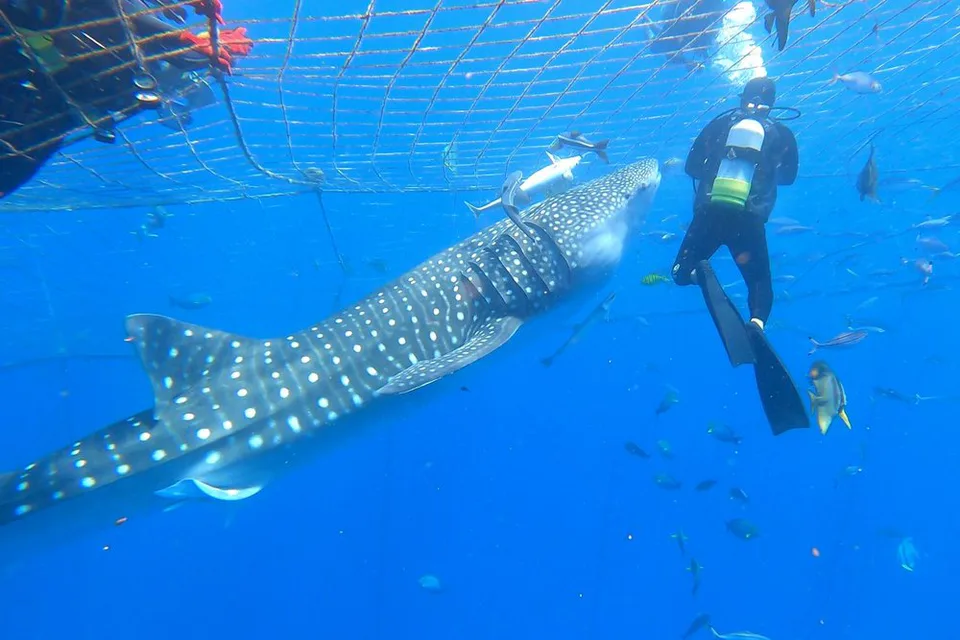
Toya Fishing Port sits in Yomitan on the central-west side of Okinawa Main Island. The fisheries cooperative describes a whale shark held in an offshore marine enclosure. That gives the product a very different risk profile from a wild-animal search: you are not paying a boat to roam the ocean and hope a shark appears.
High encounter reliability does not make the boat weather-proof. Wind, waves, typhoon conditions and operator safety decisions can delay, alter or cancel the session. The shark being in the pen and the boat being able to operate are two separate questions. Treat the enclosure as an animal-sighting advantage, not a guarantee that your exact booking time will run.
There is also no universal rule for how close guests may get, whether divers remain outside the net, whether feeding forms part of a session or what media is included. Operators can use the same Yomitan site with different guide ratios and procedures. Read the exact package rather than assuming every “Yomitan whale shark” product is operationally identical.
If your only goal is to see the whale shark, snorkeling is not the “cheap beginner version”
Snorkeling gives you a different viewpoint, not an incomplete one. Kafuu’s current listing describes a roughly 150-minute whale shark snorkeling activity, from age six, meeting at Toya Fishing Port with no hotel transfer. The current reference price is ¥9,300 (about US$58), plus a ¥500 facility fee (about US$3).
Snorkeling makes most sense when the animal is the highlight but you do not want to learn regulator breathing, equalization and basic scuba procedures for one short activity. It is also the cleaner choice for mixed groups where one person is comfortable in the sea and another is nervous about scuba.
Do not let “I came all this way” pressure you into upgrading. If the visual goal is simply to see the shark clearly, a surface session can be the more rational purchase. Spend the extra ¥5,700 (about US$36) only if the underwater perspective itself matters to you.
Introductory scuba buys immersion — and a second layer of restrictions
Kafuu’s current Yomitan introductory-dive reference is ¥15,000 (about US$94), around 150 minutes, from age ten, meeting at Toya Fishing Port with no hotel transfer and a separate ¥500 facility fee (about US$3). The important difference is not that scuba is automatically “better.” You exchange simplicity for being underwater.
That exchange includes a medical questionnaire, ear equalization, regulator breathing, more equipment and stricter scheduling around air travel. If this would be your first ever scuba experience, read our Kerama first-dive and seasickness guide before deciding whether a whale shark should also be the place where you learn the basic mechanics of scuba.
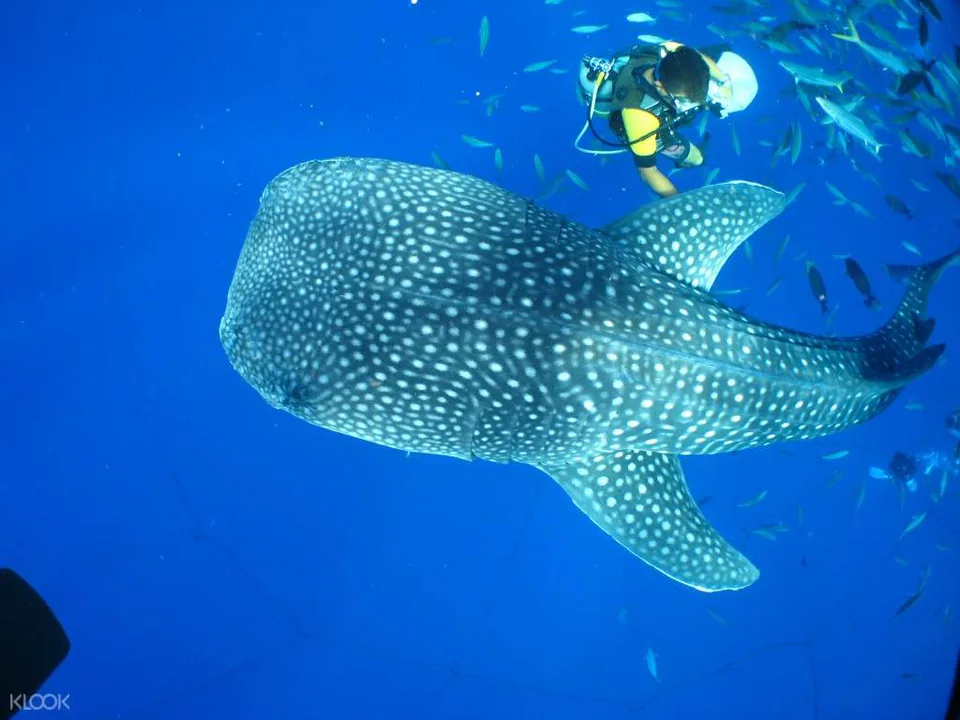
Flight timing matters. Divers Alert Network recommends a minimum preflight surface interval of at least 12 hours after a single no-decompression dive and at least 18 hours after multiple dives in a day or multiple diving days; longer intervals further reduce risk. Operators, dive computers or medical advice can be stricter. This is why introductory scuba is not a sensible departure-day filler before an afternoon flight.
Certified Fun Dive is not simply “the deepest and therefore the best” option
Fun Diving belongs to a different qualification tier. Current products distinguish certified Fun Dive packages from introductory scuba, and equipment inclusion can differ. That should stop you comparing a certified-diver headline price with an all-equipment introductory package as if the only variable were depth.
Certification is only the first filter. Recent dive experience matters. If you earned a card years ago and have not dived since, the sensible question is whether the operator accepts your recency, whether a refresher is recommended, what buoyancy skill is expected and what equipment is included. A rusty certified diver can be less comfortable than a first-timer being closely controlled by an instructor.
Use Fun Dive when you already dive actively and want the session to feel like a dive. Do not buy it as a prestige upgrade.
A 150-minute local session and a full-day Blue Cave combo are different purchases
The local Yomitan products are compact enough to fit a half-day when you already have transport or stay in central Okinawa. The listed 150 minutes does not mean 150 minutes beside the shark; it includes check-in, changing, briefing, boat movement, equipment handling and return.
A Blue Cave + whale shark day tour is a logistics product as much as an activity bundle. Current marketplace packages can combine Blue Cave snorkeling with whale shark snorkeling or an introductory-dive upgrade, plus lunch and fixed-point Naha pickup/drop-off. Its real value is removing a transport decision and joining two marine objectives into one day.
If the Blue Cave is already a must-do, compare the combo with booking separately. If you already booked the cave on another day, buying it again creates fake bundle value. Read our Okinawa Blue Cave boat vs shore guide first and check whether the second activity solves a real need.
Price comparisons only work after you separate transport, equipment and facility fees
For the Kafuu reference products, both snorkeling and introductory scuba add a ¥500 facility fee (about US$3) and do not include hotel transfer. Certified-dive products can have different equipment structures, while other operators may include photos, videos, prescription masks, private guiding or transport.
Build a total-cost line before deciding: activity fee + facility/boat fee + equipment + insurance + photos + parking + hotel transfer + seasonal surcharge + your own transport to Toya Fishing Port. Two people staying in Naha without a car can reach a different conclusion from two people in Onna with a rental car even when the water activity is identical.
If you are driving anyway, fix the rental layer first with our Okinawa car rental guide. Paying a Naha-transfer premium while a rental car sits unused can make little sense. If you are not driving, the transfer can be exactly the service that makes the activity practical.
Where you stay changes whether this feels like a half-day or a full-day commitment
Yomitan is in central Okinawa. From Chatan, Yomitan or Onna, a morning session can leave a useful afternoon for the resort or another central stop. From Naha without a rental car, the transport layer can become larger than the 150-minute activity itself.
I would not move hotels just for the whale shark. First compare Naha, Chatan, Onna, Nago and Motobu as complete bases. One half-day tour should fit the hotel plan; the hotel plan should not be rebuilt around one half-day tour.
If you already know you want two nights in Onna, the Monterey vs Manza vs Hyatt Seragaki comparison helps you see how a Yomitan marine morning fits around resort time. An expensive resort night is easy to waste if every day starts before breakfast and ends after sunset.
Whale shark vs Kerama: one star animal or the whole marine environment?
A Yomitan whale shark session has a concentrated objective: the whale shark is the reason you go. Kerama is the opposite kind of purchase. Its value usually comes from water clarity, coral, fish, multiple sites and the feel of spending a broader day in a marine environment.
If your answer is “the whole ocean day,” compare the Kerama Islands snorkeling, diving and marine-activity options before committing to Yomitan. If the whale shark itself is a personal bucket-list subject and the sea-pen format is acceptable to you, Kerama is not a direct substitute just because it may provide a broader natural environment.
Weather still matters even when the shark encounter is highly reliable
The sea pen reduces uncertainty about locating the animal, not uncertainty about operating the boat. Wind direction, wave height, typhoon conditions and local safety decisions can still change the day. Do not schedule a non-refundable high-end dinner, airport transfer or hard timed event immediately after the planned finish, especially with a full-day two-location package.
During unstable-weather months, keep one city or indoor day flexible. Our Okinawa rainy-day and typhoon backup guide is useful precisely because marine days are easier to move when you already know what can replace them.
Five traveler profiles: the simple answer for each one
1. You do not scuba and mainly want to see the whale shark: choose snorkeling.
2. You are not certified but the underwater perspective is the whole reason you are booking: choose introductory scuba after clearing the health requirements and building a safe post-dive flight interval.
3. You are certified and still dive regularly: compare Fun Dive rules and equipment inclusions rather than paying for the label alone.
4. You stay in Naha, do not rent a car and also want the Blue Cave: a full-day pickup package deserves serious comparison because logistics are genuinely part of what you need.
5. You stay in Onna, Chatan or Yomitan and already have a car: a local meet-at-port half-day product is usually the cleaner structure. Buy the water activity, not another transport layer.
Five NO-GO cases: stop before payment
NO-GO 1 — You thought this was a wild whale shark safari and only discovered the sea-pen format after choosing a package.
NO-GO 2 — You selected certified Fun Dive without the certification or recent experience the operator expects.
NO-GO 3 — You put introductory scuba on departure day without checking the required no-fly surface interval.
NO-GO 4 — You already have a rental car and central-Okinawa hotel but are paying a large premium purely because a Naha pickup sounds convenient.
NO-GO 5 — You only want the whale shark but buy a full-day Blue Cave combo because “two attractions must be better value.”
Eight checks before you pay
1 — Confirm snorkeling, introductory scuba or certified Fun Dive. 2 — Confirm you understand and accept the Yomitan sea-pen format. 3 — Separate total tour duration from actual water time. 4 — Check the exact meeting point, transfer area, parking and arrival time. 5 — Check equipment, facility fees, insurance, media and surcharges. 6 — Read the exact operator’s age, medical and recent-dive rules. 7 — For scuba, plan the post-dive flight interval before booking the activity time. 8 — Read weather cancellation and change rules, then protect the rest of the day with buffer.
Where this fits in a five-day Okinawa itinerary
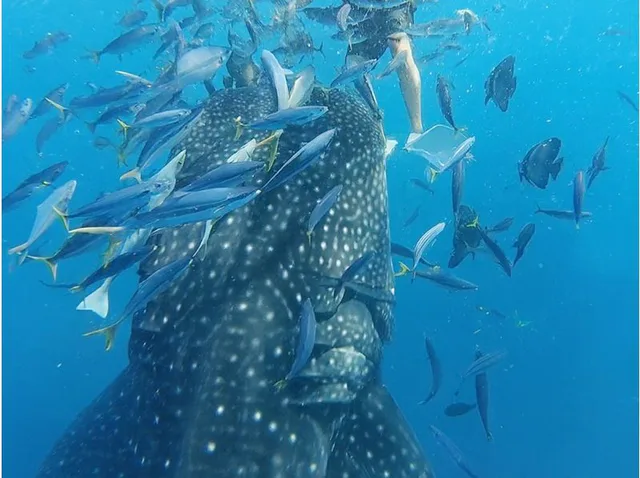
For a self-drive trip, I would usually place the whale shark on a central-Okinawa day rather than drive from Naha to Yomitan and then continue all the way to Motobu because the map looks linear. A marine morning includes arrival, changing, briefing and cleanup, and wet travelers often move more slowly than a map itinerary assumes.
Our five-day Okinawa self-drive route gives a cleaner framework. If hotel nights already move north from Naha toward Onna or Motobu, place Yomitan where it naturally falls between bases rather than forcing it onto the airport day or the Churaumi-heavy north-coast day.
Next decision: place the whale shark half-day into your 5-day Okinawa route
Final decision: the best package is not the deepest one
If you only want a clear, memorable view of the animal and accept the sea-pen setting, snorkeling is already a complete product. Upgrade to introductory scuba when being underwater at the same level is what you genuinely want. Choose Fun Dive only when you are already an active certified diver. Pay for Naha pickup and a Blue Cave combo only when transport and the second stop solve problems that are already in your itinerary.
Every price increase should buy a function you will use: underwater immersion, certified-diver structure, transport, a second site or reduced planning friction. If it does not, it is not an upgrade—it is just a more expensive package.
Staying in Tokyo for 5–7 Nights? Don’t Pick a Hotel for the Washer
Okinawa Prince Hotel Ocean View Ginowan: Are Two Ginowan Nights Worth Giving Up Yui Rail?
Munakata Shrine & Izu Honten Day Tour: I’d Pay for the Route, Not the Four Stops
Minna Island Okinawa: Snorkeling, Parasailing or Just the Beach?
Sources
Klook — Snorkeling, Diving and Fun Diving Experience with Whale Sharks
Klook — Whale Shark Diving & Snorkeling at Toya Fishing Port
Klook — Blue Cave Snorkeling + Whale Shark Swimming/Diving Day Trip
Divers Alert Network — Flying After Diving guidelines
Image sources: Activity Japan and Klook product/editorial imagery for Yomitan whale shark snorkeling and diving. All four images were freshly imported for this English article and do not reuse the Chinese mother-draft media IDs.