
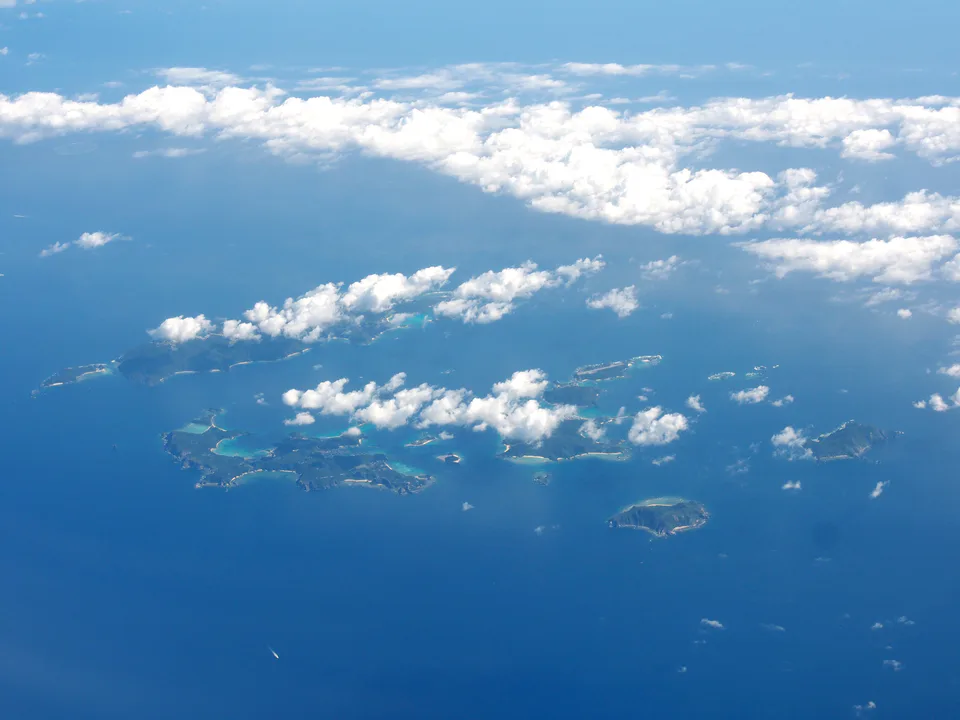
For a first Kerama day from Naha, choose an activity boat when the water itself is the product; choose a scheduled ferry when you want the island to be the product. A Naha snorkeling or discovery-diving boat removes most of the local-transport decisions and lets the operator choose workable marine sites. A Zamami or Aka landing gives you beaches, village time and your own pace, but you take responsibility for the ferry, the correct Tomari pier, local beach conditions and the return sailing.
The most important planning correction is that the ferry ticket changes far more than crossing time. On the published August 2026 Zamami timetable, a same-day traveller using Queen Zamami can arrive at Zamami at 09:50 and leave at 17:20—about 7.5 hours between arrival and departure. The car ferry arrives at 12:00 and leaves at 16:00—about four hours. On that timetable, the high-speed boat can buy roughly 3.5 additional hours of island time, before local transfers. That is a much bigger decision than simply “50 minutes versus two hours on the boat.”
↔ Scroll table left or right
Your real priority | Start with | What you gain | Main failure mode |
Snorkeling / discovery diving at several marine sites | Naha activity boat | Operator handles boat, equipment and site selection | Sea conditions can still cancel or relocate the day; you get little independent island time |
Beach + village + viewpoint day on Zamami/Aka | Queen Zamami when the timetable fits | Much larger island-time window than the slower ferry on some months | High-speed services can sell out or be cancelled separately in rough seas |
Budget-first island landing | Ferry Zamami | Lower-speed ferry product and more luggage capacity | On some schedules the usable island window becomes too short for a relaxed beach day |
Winter whales are the main reason for the boat | Dedicated whale-watching half-day | The schedule is built around searching for whales | Wildlife is not guaranteed, and the half-day competes with the same Naha daylight window as an island ferry |
Very motion-sensitive traveller | Reconsider the boat-heavy day before paying | You protect the rest of the Okinawa trip | Every Kerama option still depends on sea conditions; a shorter itinerary elsewhere may fit better |
Activity boat vs island landing: choose who should manage the uncertainty
A Naha activity boat and a ferry day are not two ways to buy the same experience. Marine House SEASIR currently separates its Naha day-trip model from its Aka Island model: Naha is built around boat-based diving and marine activities; Aka lets travellers physically stay or land in the Kerama National Marine Park and join activities from the island.
That distinction gives you a useful decision rule. If the best part of the day is underwater, outsource the island logistics to the operator. You do not need to pick a beach, understand the island bus or protect a public-ferry return while wet and tired. The operator still has to respond to sea conditions, but your job is mostly to meet the boat and follow the briefing.
If the best part of the day is being on Zamami or Aka, take the public ferry and accept the extra decisions. You gain beach time, lunch, village streets and the ability to slow down. In exchange, the ferry departure becomes a hard deadline rather than background transport.
The fast ferry can buy hours, not minutes
Zamami Village’s August 2026 timetable makes the value of Queen Zamami unusually clear. The published morning high-speed service leaves Naha Tomari at 09:00 and reaches Zamami at 09:50. A traveller already on Zamami can use the third high-speed service back at 17:20, arriving Naha at 18:10. That creates roughly 7 hours 30 minutes between arrival and departure.
By comparison, the August Ferry Zamami leaves Naha at 10:00, reaches Zamami at 12:00 after Aka, and departs Zamami at 16:00. That creates only about four hours on the island before the return journey. Subtract the bus or transfer to the beach, changing, lunch and the need to be back at the port early, and the slower-ferry day can become much tighter than its cheap fare suggests.
ValueNavi analysis: on a one-day landing, the relevant premium is therefore extra usable island hours per yen, not simply fare per kilometre. If the high-speed boat gives you several more usable hours on your exact month, it can be the better-value ticket even before you value the faster ride itself.
This is not a permanent year-round promise. Zamami publishes monthly schedules, maintenance suspensions and operating changes. Compare your actual month rather than copying the August pattern into another season.
Tomari Port has a pier trap that matters when you are running late
“Tomari Port” sounds like one boarding point. It is not. Zamami Village currently lists Ferry Zamami from the side next to the Tomarin building, while Queen Zamami boards from the north bank. Its same-day operating notice has warned that the Queen berth is roughly a 7–8 minute walk from the Tomarin building.
That distance is trivial when you arrive early and expensive when a taxi drops you at the wrong place ten minutes before departure. The official schedule asks passengers to board at least ten minutes before sailing. For the high-speed boat, the failure mode is therefore not just “missed ferry”; it can be correct port, wrong pier.
Use the current boarding-location notice on the morning of travel and give yourself enough margin to walk between the Tomarin area and the north-bank berth if necessary.
A ferry running does not mean your chosen beach is fully usable
This is the second go/no-go layer many itineraries miss. Zamami Village publishes both vessel operations and current swimming status. On the official site, beach conditions can be listed separately as swimmable, caution, restricted or otherwise changed by weather.
That means “the ferry is operating” answers only the transport question. If the whole reason for landing is Furuzamami, Ama or Nishibama Beach, check the current beach/swimming status as well. A public ferry can run while your preferred swimming plan is degraded.
An activity boat handles this problem differently: the operator chooses or changes marine sites within its operating limits. That is one reason the activity-boat premium can be rational for a traveller whose only goal is to get into the water, not to visit a specific island beach.
Rough seas do not affect every sailing in the same way
Do not build a “backup” by assuming the slow ferry and high-speed boat will always cancel together or that one automatically replaces the other. Zamami’s official August 24, 2026 operating notice is a useful real example: rough seas caused Ferry Zamami to bring its return forward, while Queen Zamami’s first and second services operated and its third service was cancelled.
That is exactly the kind of disruption that can strand a rigid day-trip plan. A traveller who expected the late Queen return could suddenly lose the return sailing that created the long island day. A traveller using the ferry could find the island window shortened by an earlier departure.
Red-team rule: if a same-day return is essential, check the live vessel notice before leaving the hotel and again if sea conditions deteriorate. Do not treat the printed monthly timetable as a guarantee.
High-speed availability can be the real constraint in peak periods
Zamami’s current reservation system publishes live seat availability. As a snapshot of the risk rather than a prediction, the August 25, 2026 screen showed some same-day Queen Zamami services sold out. The lesson is not that every summer boat sells out; it is that the high-speed boat’s extra island time is only valuable if you can actually secure the outbound and return combination.
Book the transport before building a non-refundable island activity around a specific sailing. Zamami’s monthly schedule says reservations are accepted from one month before the departure date, while its web system may display inventory further ahead; follow the live booking rules for the channel you use.
Snorkeling is the lower-friction first Kerama water activity
If you want Kerama water but are uncertain about scuba, snorkeling remains the simpler default. Discovery diving adds regulator breathing, equalising and a medical/participation check; it should be chosen because you specifically want the first scuba experience, not because a bundle happens to include it.
For a first dive, use the Kerama discovery-diving guide before booking. If even the boat crossing sounds like the hardest part, compare Blue Cave snorkeling or another Okinawa activity rather than treating Kerama as compulsory.
Winter whale watching should stay a separate half-day
Sea World’s current Naha whale-watching page lists the 2026 season from January 10 through the morning of March 31, with an 08:30 meeting for a 09:00 departure and a 13:00 meeting for a 13:30 departure. The morning trip returns around 12:00–12:30; the afternoon trip around 16:30–17:00.
Those timings are why I would not try to combine a dedicated Naha whale-watching half-day with a meaningful same-day Zamami landing. The activities compete for the same port/daylight window, and any whale-search delay or ferry disruption makes the connection fragile. If whales are the trip priority, give them the half-day and pair them with Naha rather than another offshore deadline.
Wildlife is never a guaranteed close encounter. For 2027 travel, wait for the operator’s new season page rather than assuming the 2026 dates and prices repeat unchanged.
Seasickness changes which kind of Kerama day is rational
Motion sensitivity does not disappear because the destination is beautiful. An activity boat can involve long periods on the water plus movement between sites. A ferry landing reduces the amount of time you are continuously on an activity boat, but the public crossing can still be rough. Whale watching adds searching time offshore.
If you know you are prone to motion sickness, discuss prevention with a pharmacist or clinician before the trip and avoid stacking a boat day immediately before a long self-drive or fixed evening reservation. The cost of a bad marine day is not only the ticket; it can consume the following evening as well.
Where you sleep should protect the morning departure
For a Naha departure, a Naha base is normally the resilient choice. A resort in Onna or Motobu may be excellent for the rest of the trip but creates an extra early transfer before a boat whose departure will not wait for cross-island traffic.
If the trip is split between Naha and the north, place the Kerama day on a Naha night. Use the Naha 2-day no-car itinerary and the 5-day self-drive route to avoid finishing a marine day and then forcing a tired long drive north.
Final verdict: choose the failure mode you are willing to manage
Choose a Naha activity boat when snorkeling or discovery diving is the reason for the day. You give up independent island time but outsource more of the marine logistics.
Choose Queen Zamami plus an island landing when a beach/village day is the goal and the monthly timetable gives you a large usable-island window. On the August 2026 pattern, that extra time is substantial enough to justify comparing the high-speed premium seriously.
Choose Ferry Zamami when the slower schedule still leaves enough island time for your actual plan and the fare/boat format fits better. Do not choose it by price alone if the four-hour island window turns the day into a rushed transfer exercise.
Choose a dedicated whale-watching half-day in the confirmed winter season rather than trying to bolt whales onto a full Kerama island day.
The answer reverses whenever the live vessel notice, seat availability or beach status changes. In Kerama, the most resilient itinerary is not the one with the most activities; it is the one whose single main purpose still works after one transport or sea-condition assumption fails.
Nikko vs Okunikko in Autumn: Day Trip, Overnight and Where to Stay
Korankei Autumn Leaves Day Trip: Buses from Nagoya, Illumination and Traffic
Japan Autumn Leaves Early or Late: 30-, 14- and 7-Day Adjustment Plan
References
Zamami Village — monthly Ferry Zamami / Queen Zamami schedules and boarding rules · Zamami Village — same-day vessel operating notice · Zamami Village — current vessel and beach/swimming status · Marine House SEASIR — Naha and Aka activity models · Sea World Okinawa — 2026 Naha whale-watching season and schedules. Checked August 25, 2026. Ferry timetables, pier assignments, swimming status and marine programs can change; recheck the exact travel date.