
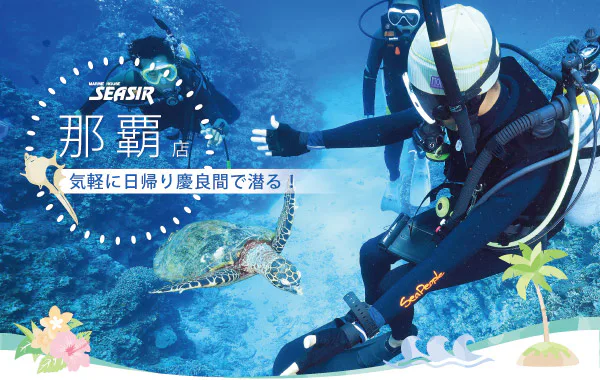
Choose a Kerama discovery dive because you specifically want to try scuba, not because scuba happens to be bundled into a beautiful Kerama boat day. Before paying, clear four gates in this order: the operator’s health/participation screen, your flight timing after the dive, your willingness to breathe through a regulator and equalise your ears, and your tolerance for a boat day. If any of those fail, snorkeling can be the better first Kerama purchase without being a “lesser” trip.
The biggest itinerary trap is adding an optional second dive without recalculating the flight home. Divers Alert Network currently suggests at least 12 hours before flying after a single no-decompression dive, and at least 18 hours after multiple dives in a day or multiple days of diving. PADI often presents 24 hours as a conservative easy-to-remember buffer. The practical rule for a first-time visitor is therefore simple: decide the flight buffer before deciding whether to add another dive.
↔ Scroll table left or right
Your situation | Start with | Why | What can reverse it |
You specifically want your first scuba experience and have a clear post-dive day | Discovery diving | The skills themselves are part of what you want to learn | Health screen, ear equalisation or boat sickness makes the activity a poor fit |
You mainly want Kerama scenery and fish | Snorkeling | Lower skill load and no scuba no-fly interval | You genuinely want to experience breathing underwater, not only see the reef |
Flight is the next morning | Move the dive earlier or choose snorkeling | An optional second dive can move the relevant minimum preflight guideline from 12 to 18 hours | A sufficiently later flight plus operator/computer clearance may create a safe interval |
Strong motion-sickness history | Do not make scuba the non-refundable centrepiece until you have a prevention plan | Nausea consumes the concentration needed for breathing, instructions and equalising | A shorter/local-water product may fit better than a Kerama day boat |
Health form raises any issue | Resolve it with the operator before travel | Payment does not override the operator’s participation rules | Only the operator/required medical clearance can determine eligibility |
Discovery diving is a skills purchase first and a scenery purchase second
An introductory or discovery dive is designed for people who do not already hold a scuba certification, but it is still scuba. The instructor manages the dive plan and close supervision; you still have to breathe calmly through a regulator, communicate underwater, clear pressure in your ears and stop the descent when something does not feel right.
That is why “I am not a strong swimmer” should not be replaced by another simplistic rule such as “swimming ability does not matter.” Water comfort, operator requirements and the exact program matter. If you are uncomfortable keeping your face in the water or the regulator already feels like the main fear, ask the operator about its participation standard before booking rather than using a paid Kerama day as the test.
If the main goal is simply clear water and marine life, the Kerama Islands day-trip comparison gives snorkeling a much stronger case.
SEASIR Naha is an operator example, not a guarantee that every Kerama dive works the same way
Marine House SEASIR currently offers Kerama day trips and introductory diving through its Naha operation, while SEASIR Aka offers diving and snorkeling after travellers reach Aka Island. The important planning point is the operating model: a Naha product includes the shop/meeting process, boat time, briefing, equipment and return; an island-based product starts after you have already solved the public-ferry journey.
Do not copy duration, pickup or inclusion rules from one operator to another. Some Okinawa operators sell half-day introductory products as well as full-day Kerama programs. Verify the exact meeting time, return time, number of dives, equipment, hotel transfer and cancellation policy on the product you actually book.
For a Naha boat, sleeping in Naha the night before normally creates the most resilient morning. Starting from an Onna or Motobu resort adds a road journey before a marine departure that will not wait for cross-island traffic.
The optional second dive can change your flight plan
DAN’s current flying-after-diving guidance distinguishes the dive profile rather than using one universal number:
↔ Scroll table left or right
Dive profile | DAN suggested minimum before flying |
One no-decompression dive | 12+ hours |
Multiple dives in one day | 18+ hours |
Multiple days of diving | 18+ hours |
Dive requiring decompression stops | Substantially longer than 18 hours |
Longer intervals reduce risk further, and these are guidelines rather than guarantees. Follow the operator’s instructions and any longer no-fly time shown by the dive computer.
ValueNavi decision point: an “add one more dive” button can have more itinerary cost than its cash price. If the first discovery dive would leave 14 hours before your flight but a second dive leaves only 11 or moves you into the multiple-dive 18-hour category, the extra underwater time is competing directly with your departure plan.
For a long-haul visitor, the easiest robust pattern is often dive day → full non-flying day or overnight buffer → flight. It costs itinerary time, but it removes the need to optimise around a minimum interval on your first scuba experience.
Do not use the 12-hour number as permission to book a next-morning flight blindly
The 12-hour DAN guideline applies to a single no-decompression dive in an asymptomatic diver before flying at typical commercial-aircraft cabin altitudes. Your actual discovery package may include more than one dive, and the operator may use a more conservative rule. PADI also presents 24 hours as a simple conservative general recommendation for recreational travel.
So if the flight is next morning, first ask: how many dives are included or likely? What is the expected final surfacing time? What no-fly rule does the operator use? Only then judge the flight.
Same-day flying after scuba should not be part of an ordinary Kerama itinerary. SEASIR’s own course information also warns participants not to fly on the day they dive.
Equalising is a stop/go decision, not a test of pain tolerance
PADI’s current safety guidance is straightforward: equalise early and often. If you cannot clear your ears, tell the instructor, ascend slightly and try again. If it still does not work, end the descent rather than forcing through pain.
This creates an important expectation for a first dive: you are buying the attempt and supervised experience, not a guaranteed depth. A shorter or aborted descent can still be the correct outcome. Do not let the fact that the boat, hotel and activity were prepaid turn ear pain into a reason to continue.
If ear-pressure control is already a known issue, resolve the question before the trip with appropriate professional advice rather than planning around a specific underwater depth.
Seasickness can consume the attention scuba needs
Discovery diving adds several unfamiliar tasks at once: equipment, breathing, hand signals, buoyancy support and equalising. Motion sickness competes for the same attention. A traveller who reaches the first dive site already nauseated may technically still be on the boat but no longer have a good first-scuba learning environment.
If you are motion-sensitive, make prevention decisions before the boat day with a pharmacist or clinician who can account for your own health and any medication effects. Tell the crew early if you become unwell. Do not wait until the first water entry to admit that the crossing has already changed the day.
This is also a reason not to schedule the Kerama dive before a long evening drive north. Even without a medical issue, a tiring boat day plus a long first-time Okinawa drive can be poor sequencing.
The operator health form is a hard eligibility gate
SEASIR currently requires participants in underwater activities to complete a health check and states that some health conditions can prevent participation. That is not paperwork to solve at the dock. Read the form before the cancellation deadline, answer it accurately and resolve any required medical clearance in advance.
Do not rely on a travel article—including this one—to decide individual medical fitness for diving. The operator’s current form and any required clinician or dive-medicine advice govern the booking.
One dive vs two dives: use an experience-value test
A second discovery dive can be worth it when the first descent was comfortable and the traveller specifically wants more time practising and exploring. It is weak value when the first dive already answered the main question—“Do I like scuba?”—or when fatigue, nausea, equalising or a flight buffer has become the new constraint.
I would use three questions before adding the second dive:
Did the first dive feel controlled rather than endured?
Does the second dive add experience you actually want rather than only fill the package?
Does the later final surfacing time still leave the flight buffer you deliberately chose?
If any answer is no, keeping the remainder of the day as snorkeling or boat time can be the better purchase.
Wildlife is a bonus, not the success metric
Do not judge a first dive by whether you see a turtle, manta ray or a particular fish. Wildlife, visibility and site choice depend on conditions. The useful success test is more basic: could you breathe calmly, equalise without pain, communicate with the instructor and finish wanting to dive again?
If the scenery is the only metric that matters, snorkeling often gives you more freedom with fewer physiological and scheduling constraints.
Final verdict: book the dive only when the scuba part is the reason
Choose Kerama discovery diving when you genuinely want a supervised first scuba experience, can clear the operator’s health screen, have enough post-dive flight margin and are comfortable accepting that depth/site/wildlife are not guaranteed.
Choose snorkeling instead when the real goal is Kerama scenery, when regulator breathing or equalising is the part you do not want, when motion sickness is likely to dominate the boat day, or when the flight schedule makes the scuba interval awkward.
Do not let an optional second dive make the decision for you. Recalculate the no-fly window first. A small activity upgrade can cost far more than its price if it forces a flight change or turns the last Okinawa night into a minimum-interval calculation.
35 Best Things to Do in Osaka 2026: What’s Worth Your Time by Area, Budget and Trip Style
Tokyu Stay Okinawa Naha: Is It the Right Final Night Before Your Flight?
Okinawa 5-Day Itinerary: Don’t Rent a Car on Day 1 — Naha, Onna and Churaumi Without Hotel Hopping
Hakone vs Kawaguchiko: Which Is Better for Your First Japan Trip?
Fukuoka Tower: Is the ¥1,000 Ticket Worth the Detour? Timing Changes the Answer
References
Marine House SEASIR — Naha/Aka Kerama diving and activity models · SEASIR Naha — current underwater-activity health-screen guidance · Divers Alert Network — flying-after-diving guidelines · PADI — conservative flying-after-diving guidance · PADI — equalising and first-dive safety guidance. Checked August 25, 2026. Participation rules, dive counts, meeting times, medical forms and no-fly instructions vary by operator and product; verify the exact booking.