Miyakojima diving in 30 seconds: choose your uncertainty before you choose your dive count
The easiest way to overspend on Miyakojima diving is to treat one dive, two dives and three dives as a simple price ladder. They are not. A first-time diver is paying to discover whether breathing through a regulator, equalising and being on a boat actually feel comfortable. A certified diver is paying for access to Miyakojima’s famous arches, caves and limestone topography. A traveller fixated on Yabiji is making a third decision again: whether the day’s route will actually head toward that reef system.
For a first scuba experience with no certification, one introductory boat dive is the safest default. If you have already tried scuba and know you adapt quickly, two introductory dives can make sense because the second descent starts after you have already learned how your body reacts. If you are certified and current, two fun dives are the stable baseline; three dives make sense only when diving itself is the day’s main purpose and your flight, stamina and seasickness risk leave enough margin.
Before comparing dive products, put the activity back into your Miyakojima 4-day itinerary. On a short island trip, a 5–7 hour boat-diving product is not just another attraction. It competes with Irabu and Shimoji Island driving, beaches, bridges, meals, car-return timing and the flight home. The wrong dive count can cost more in itinerary flexibility than it saves in package pricing.
If you are comparing things to do in Miyakojima rather than planning a dive-only trip, protect the dive day from the rest of your island transport. A useful cross-check is the broader Okinawa 5-day self-drive route: it shows why car pickup, hotel moves and fixed transport should be separated from weather-dependent marine activities whenever possible.
↔ Scroll table left or right
Plan | What you are really buying | Best fit |
1 introductory boat dive | A lower-commitment first scuba experience | No certification, first dive, uncertain about equalising or seasickness |
2 introductory boat dives | A second descent after the first-round learning curve | Uncertified but already comfortable in scuba or highly confident after prior try-dives |
2 certified fun dives | Two site chances with a more manageable full-day load | Certified, recently active, wants Miyako topography without automatically maximising dive count |
3 certified fun dives | A diving-first day with more underwater repetitions and nitrogen load | Certified, current, physically ready, no tight flight or evening deadline |
Next decision | Put the dive day into a realistic Miyakojima 4-day itinerary
One introductory dive vs two: the second dive buys mental bandwidth, not twice the scenery
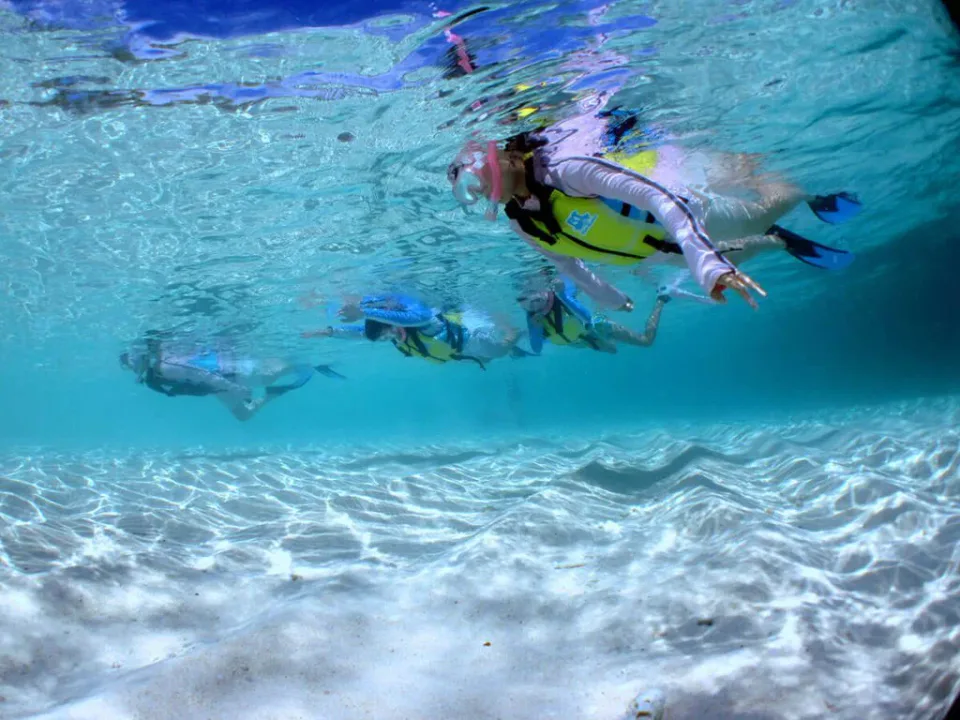
On a first-ever scuba dive, the biggest unknown is not the reef. It is your own response. Some people settle into regulator breathing and ear equalisation within minutes. Others spend much of the descent concentrating on pressure, buoyancy, mask comfort or nausea from the boat. You cannot know which version of yourself will show up simply by reading reviews.
That is why a single introductory dive is not the “cheap” option. It is the option with the lowest commitment. You still go through the boat, equipment, briefing, descent and controlled underwater experience, but you do not pre-commit to repeating it after discovering that your ears hurt or the boat makes you miserable. For a genuinely first dive, that is often a better risk profile than buying two descents simply because the per-dive arithmetic looks nicer.
Two introductory dives become more persuasive when the first descent is unlikely to consume all your attention. If you have done Discover Scuba or another try-dive before, know that equalisation works for you, and are comfortable on boats, the second dive can be the point where you stop thinking about the regulator every few seconds and start looking at the environment. The value is not “two times the fish.” It is a second attempt after the steepest part of the learning curve.
There is still an important limit: paying for the second dive does not obligate you to make it. If the first dive produces ear pain, persistent anxiety, vomiting or another safety concern, the correct decision may be to stay on the boat. A high-conversion travel decision should make it easier to buy the right product, not make you feel you must consume every paid minute.
Certified two-dive vs three-dive days: a C-card does not make the third dive free
For certified divers, two dives are usually the easiest Miyakojima day to control. You get two site opportunities while preserving more recovery time, a less aggressive nitrogen load, and a better chance of returning with enough energy for dinner or a relaxed evening. Three dives suit a narrower traveller: someone whose reason for being in Miyakojima that day is diving, who is recently active, handles boat days well and has no tight transport deadline afterward.
The third dive is not just “one more attraction for a little more money.” It means another cylinder change, another exposure period, another descent and ascent, more time in wet gear, and a later return. It also changes the flying-after-diving calculation because DAN recommends at least 18 hours before flying after multiple dives in a day or multiple days of diving. Longer intervals reduce risk further. If tomorrow’s flight is early, the most expensive part of a third dive can be the itinerary constraint it creates.
Certification level matters as well. Okinawa’s official tourism guide describes Miyako as a destination defined by arches, caves and caverns, but it also makes clear that some sites require advanced credentials and skills. A generic “fun dive” label does not promise that every diver on the boat will be taken through every famous cavern. Operator judgement, current, depth, recent experience and the actual group still control site choice.
A 5–7 hour boat-diving product is not five to seven hours underwater
The currently listed Klook product for Miyako Blue boat diving shows an overall duration of about 5–7 hours and offers one introductory dive, two introductory dives, two licensed fun dives and three licensed fun dives. That duration includes meeting, equipment checks, briefing, boat travel, surface intervals, cylinder changes, rest and the return to port. It is a day structure, not an underwater-time promise.
This matters because travellers often compare activities by duration and assume the longer product provides proportionally more “experience.” In scuba, surface intervals are part of the safety and operational reality. A three-dive day may occupy almost all of your daylight while the actual bottom time depends on depth, gas consumption, group pace, site conditions and the operator’s plan. Do not buy a 7-hour listing because seven sounds more valuable than five.
The same principle helps when comparing diving against other things to do in Okinawa. A snorkelling or SUP activity may leave most of the day free. Boat diving consumes a larger block because the boat schedule controls your return. If the rest of your island itinerary matters equally, the dive product has to earn that time, not merely justify its ticket price.
Yabiji is a route decision, not a guaranteed checkbox
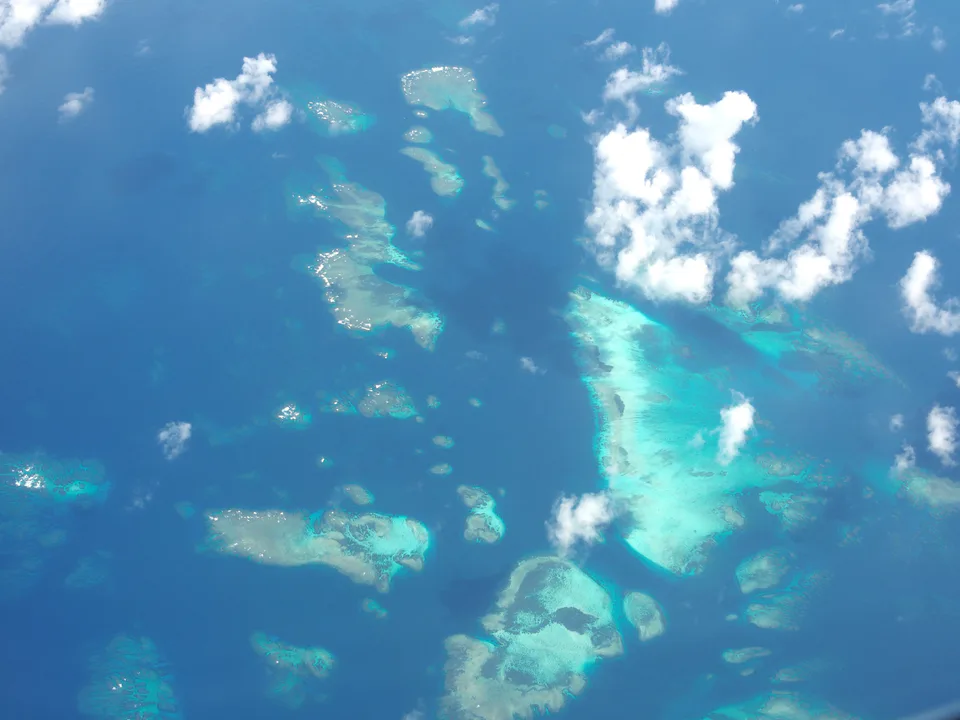
Yabiji, north of Miyako Island, is one of the region’s best-known coral reef systems. It is easy to see the word on an activity page and mentally convert it into a guaranteed stop. Do not do that. The current boat-diving listing presents Yabiji as one of the experiences associated with the product, while the Chinese mother research also noted that Yabiji expeditions are particularly seasonal and route-dependent. Sea state, wind, group ability and the operator’s decision can change where the boat actually goes.
If Yabiji itself is the reason you are paying, ask a different pre-purchase question: “On my date, is Yabiji the planned operating area, and what replaces it if conditions change?” That answer matters more than whether the package contains one extra dive. If your real goal is bright shallow coral rather than cave topography or scuba itself, a dedicated Yabiji snorkelling day may satisfy the objective with less certification, nitrogen and recovery burden.
Caves are the reason certified divers fly to Miyako — but they should not be the goal of your first descent
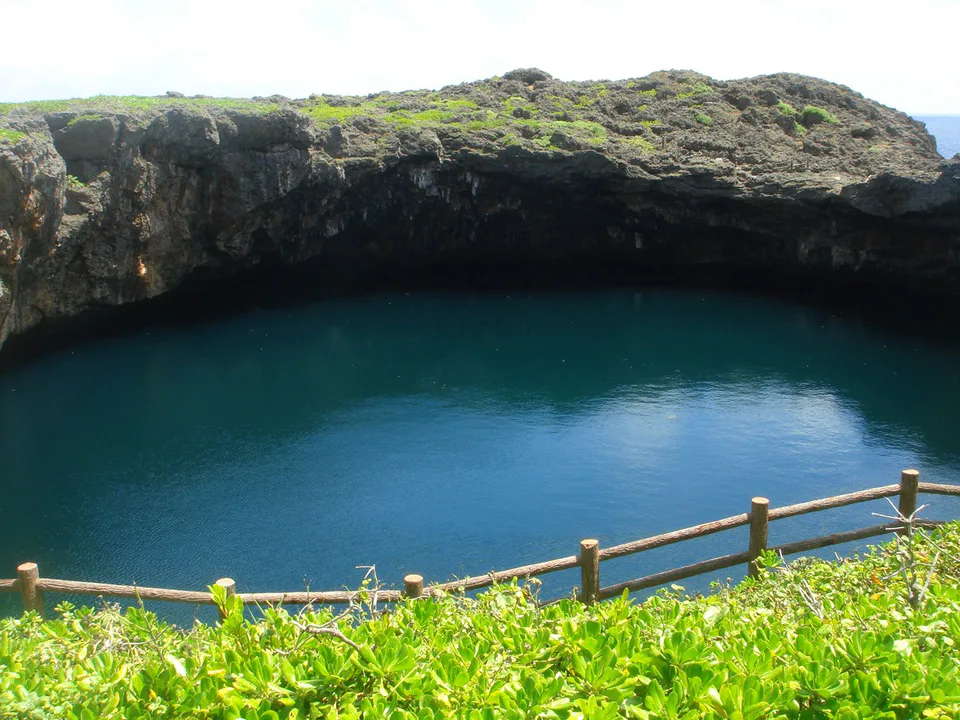
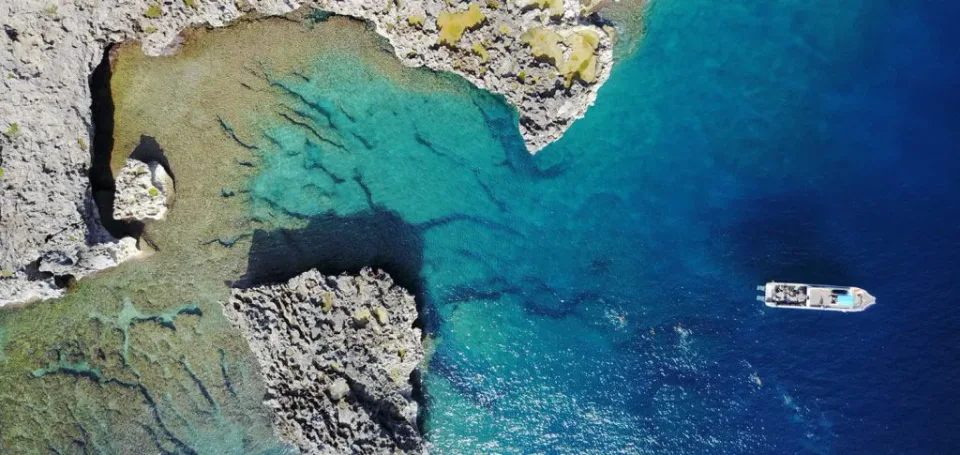
Miyakojima’s strongest differentiation from many Okinawa dive areas is geological. The official Okinawa guide highlights arches, caverns, crevasses and tunnel-like formations. W-Arch off Irabu Island is listed around 18 metres and described as suitable for divers new to cave-style topography. Satan’s Palace is around 27 metres with moderate-to-strong current and an Advanced requirement. Antoni Gaudi reaches roughly 33 metres and is also classed intermediate/advanced. Toriike is deeper still, with a tunnel leading toward the famous pond on Shimoji Island.
Those names are useful because they show why “Miyako cave diving” is not one difficulty level. They are not a shopping checklist. A newly certified diver may reasonably enjoy a simpler topographical site, while a diver with advanced training and stable buoyancy may be routed toward more complex terrain. Conditions can still overturn the plan on the day.
For an uncertified first-timer, the best first dive is not the one with the most dramatic cave. It is the one where you can equalise, breathe calmly, follow the instructor and still have enough attention left to notice fish and light. If you finish wanting to dive again, the activity succeeded. Turning the first descent into a famous-site chase can make the most distinctive part of Miyako the wrong goal for the person buying the ticket.
Miyakojima vs Kerama for a first dive: choose the type of uncertainty you want
A first-time diver deciding between Miyakojima and the Kerama Islands should not ask which sea is “better.” Kerama day tours are often structured around a full-day boat, high-visibility reef scenery and a broad snorkelling/diving audience. Miyako’s standout identity is more strongly tied to underwater topography. That difference changes what you are paying attention to.
If your first priority is simply completing scuba comfortably in blue water, our Kerama discovery-diving guide is a useful counterpoint because it focuses on seasickness and first-dive logistics. If the idea of caves, arches and future certified diving is what excites you, Miyako makes more sense as the longer-term destination. Neither answer requires buying the longest package on the first try.
Next decision | Compare Miyakojima with a first Kerama discovery dive
If you are not committed to scuba alone, compare the full-day structure with a Kerama Islands day trip covering snorkeling, diving, SUP and whale watching. The point is not to declare one island better; it is to see whether you want a diving-first topography day or a broader marine-activity day.
No car? Check the meeting point before you compare prices
The current Miyako boat-diving listing is meet-at-location rather than a promise of pickup from every island hotel. That small line can change the whole booking. Miyako activities use different ports and meeting points, and the cheapest product is not cheapest if you need an expensive last-minute taxi at 7 a.m. or cannot reach check-in on time.
If you are renting a car, do not turn that into permission to leave the hotel at the mathematically latest minute. Add time for parking, finding the operator, unloading personal gear and paperwork. If you are still deciding how much of Okinawa to drive, use the broader Okinawa car-rental guide for the transport layer, but make the dive-day decision from the actual voucher address rather than a generic “Miyakojima” map pin.
A diving day is one of the worst days to discover that your accommodation, port and return schedule do not line up. The boat will not operate like a city attraction with continuous entry. Fix the meeting location first, then evaluate the product around it.
Do not put scuba on the last half-day before your flight
Flying after diving is not a footnote on an island itinerary. DAN’s current recreational guidance recommends a minimum preflight surface interval of 12 hours after a single no-decompression dive and at least 18 hours after multiple dives in a day or multiple days of diving. Longer intervals further reduce decompression-sickness risk, and diving that requires mandatory decompression needs a more conservative interval.
This is why a one-dive introductory activity and a three-dive certified day are not interchangeable itinerary blocks. A short flight from Miyako to Naha, Ishigaki or mainland Japan is still a flight with cabin-altitude considerations. The fact that the aircraft is in the air for less than an hour does not convert a multiple-dive day into a safe last-morning activity.
The simplest plan is to put scuba in the middle of your Miyako stay and leave a non-diving day, or at least a generous surface interval, before flying. If your wider trip includes other islands, compare this with an Ishigaki, Taketomi and Iriomote itinerary before deciding where the final flight and car-return day should sit.
Weather failure needs a swap day, not ten attractions scheduled on the same day
For boat diving, rain is not the only weather variable and often not the decisive one. Wind direction, swell, thunderstorms, port conditions and route judgement can change the site or cancel the departure even when the sky looks acceptable. A sunny day can still produce an unsuitable sea state; a cloudy day can still be diveable.
On a three- or four-day Miyako trip, the best backup is a day you can swap, not a list of indoor attractions that are all booked for the same time. Put the boat activity earlier in the stay when possible. If it moves, your beach, bridge or land-driving day shifts later. The Okinawa rainy-day and typhoon guide is useful here as a framework for recoverability rather than as permission to overbook the original day.
If the operator changes from an ambitious cave route to a protected area, that is not necessarily a failed product. The decision standard is whether the alternative still matches what you wanted: first-dive confidence, coral scenery, topography practice or certified site variety. Define that goal before paying so you know which route changes are acceptable.
Four NO-GO signals: if one applies, do not jump straight to the longest package
NO-GO 1: you have never scuba-dived, have never tested equalisation, and are selecting two introductory dives only because the per-dive price looks better. Start with the lower commitment.
NO-GO 2: you hold an Open Water card but have not dived for years, then assume a three-dive Miyako day automatically means advanced cavern sites. Recent experience and operator assessment matter more than the plastic card.
NO-GO 3: Yabiji is your only acceptable outcome, but you have not asked whether it is the planned route on your date or what happens when wind and sea conditions force a change.
NO-GO 4: the dive finishes close to a flight, ferry, non-refundable dinner, rental-car deadline or another fixed transport node. Marine activities need return-time margin. When the next step is irreversible, an extra dive can be the wrong upgrade even for a capable diver.
Eight checks before payment: none of these should be guessed
1. Confirm whether the product is one introductory dive, two introductory dives, two certified fun dives or three certified fun dives. 2. Confirm the certification level and recent-log requirements for the likely sites. 3. Ask the approximate meeting and return window rather than treating the 5–7 hour listing as exact.
4. Confirm the actual port or meeting location and whether any pickup is included. 5. Check what the price includes: full rental equipment, cylinders, weights, photos, drinks, lunch or other fees. 6. If Yabiji matters, ask whether it is a planned route, a seasonal possibility or only an alternative.
7. Read both operator-cancellation and traveller-cancellation rules. Weather cancellation and “I changed my mind” are not the same thing. 8. Count the surface interval from the end of the final dive to the next flight, not from the morning meeting time. These checks reduce the chance of buying a perfectly legitimate dive product that is wrong for your actual trip.
Final verdict: spend on the layer of uncertainty you actually need to remove
If this is your first scuba dive and your biggest unknown is whether you will enjoy breathing and equalising underwater, choose one introductory dive. If you already know you are comfortable and want the second descent to be less about equipment and more about scenery, two introductory dives are easier to justify.
If you are certified and current, two fun dives are the most balanced Miyako baseline. Move to three only when the entire day is genuinely a diving day, your recent experience supports it and the next flight leaves a conservative interval. If Yabiji is the real objective, confirm Yabiji instead of using dive count as a substitute for route certainty.
Miyakojima’s value is not that you can buy the largest number of descents. It is that a skilled diver can access a distinctive limestone underwater landscape while a new diver can still experience exceptionally clear Okinawan water at an appropriate level. The best purchase is the one where your skill, the likely sea conditions and the scenery you actually came to see all point to the same plan.
HOTEL STRATA NAHA: For Two Nights, Is a Twin Room Worth More Than a Compact Room?
Sapporo Solo Hotels: Late Returns, Snowy Walks and Laundry Matter More Than the Cheapest Room
MIMARU Osaka Namba Station: Is One 35 m² Apartment Better Than Two Rooms for Four?
Fukuoka Tower: Is the ¥1,000 Ticket Worth the Detour? Timing Changes the Answer
Nada no Kenka Matsuri 2026: If You Only Go One Day, Choose Oct 15
Sources
VISIT OKINAWA JAPAN | Miyako Islands Diving
Divers Alert Network | Flying After Diving
Klook | Boat Diving to Enjoy Miyako Blue and Topography (activity 201434)
Wikimedia Commons | Ocellaris clownfish, photographed at Miyako Island


.jpg)