
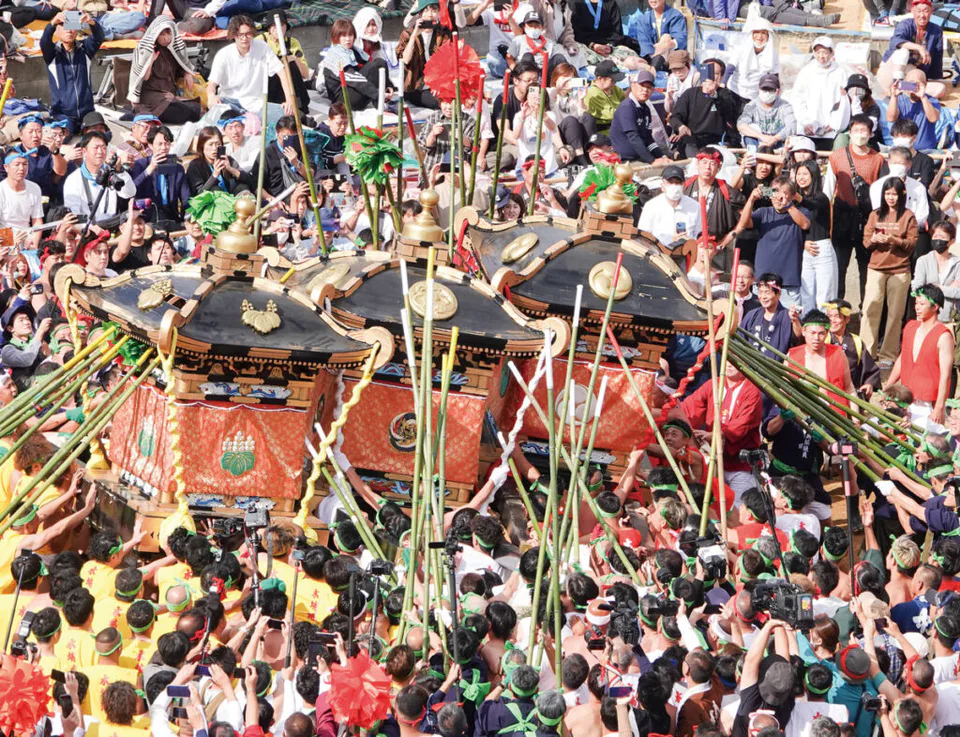
For a first visit to Nada no Kenka Matsuri 2026, I would prioritise October 15. The reason is not simply that it is the “main day.” Honmiya contains the event component that is hardest to replace elsewhere: three mikoshi are deliberately driven into one another around Matsubara Hachiman Shrine and again as the ritual progresses toward the foot of Mt Otabiyama, followed by the seven districts’ ornate yatai. October 14 is still a strong choice when you value close yatai detail, less hill movement and a more controllable crowd day.
The real decision is therefore uniqueness versus resilience. October 15 has the higher experience ceiling, but it also asks more from your legs, crowd tolerance and return plan. October 14 has less of the signature mikoshi impact, but its lower friction can produce a better day for families, older travellers or anyone who does not want to follow a moving festival deep into the afternoon.
ValueNavi decision table: choose the day by what you are willing to pay in friction
↔ Scroll table left or right
Your priority | Choose | What you are buying | What reverses the answer |
First visit, one festival day | Oct 15 | Mikoshi-awase + yatai + Otabiyama progression | Low crowd tolerance or limited standing/walking endurance |
Float craftsmanship, costumes and carrying teams | Oct 14 | More controllable yatai-focused day | The mikoshi clashes are your primary reason for travelling |
Older traveller / knee issues / young child | Oct 14 | Less need to follow the procession toward the hill area | You have a conservative Oct 15 exit plan and can stop early |
Action photography | Oct 15 | The ritual sequence most specific to the fighting festival | You are unwilling to accept the crowd pressure required for close angles |
Fixed Osaka dinner / fragile same-night connection | Either day, with an early exit threshold | Protect transport before the final sequence | Staying locally removes the hard return deadline |
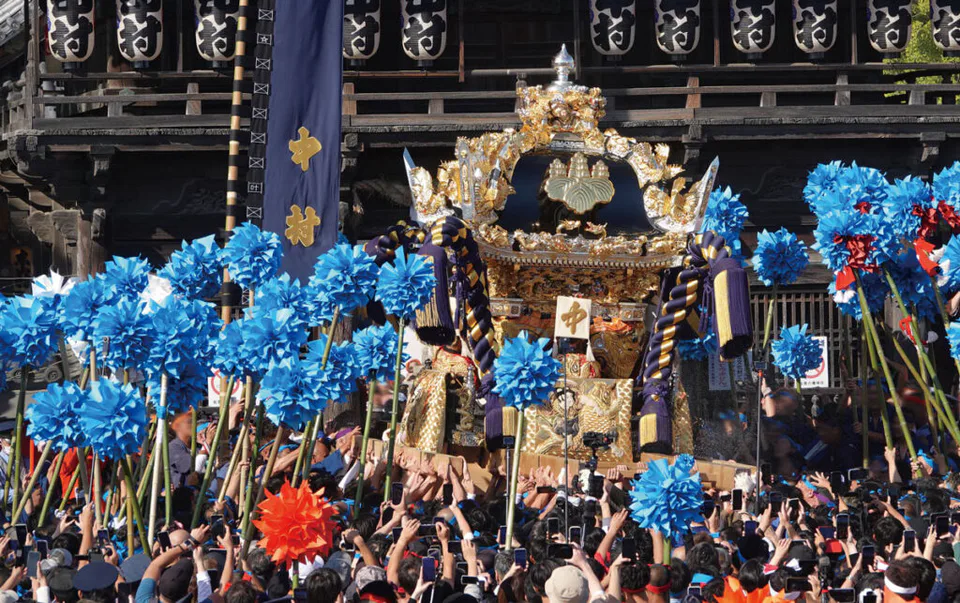
October 15 wins on uniqueness, not simply on duration
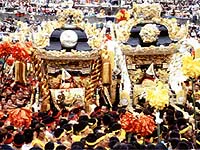
Himeji City lists Nada no Kenka Matsuri on the fixed annual dates of October 14 and 15. On October 14, the seven traditional districts bring their yatai into Matsubara Hachiman Shrine and lift them around the gate. On October 15, the ritual changes: after early purification at the sea, three mikoshi are carried out, clash at several points and move with the yatai toward the otabisho and the ground below Mt Otabiyama.
That is why I would not describe October 14 as “practice” and October 15 as “more festival.” They are different products. The 15th contains the ritual that gives the event its “fighting festival” identity. The 14th is the more resilient product when the yatai themselves are enough.
The ValueNavi Festival Yield model
I use this editorial model for mobile, crowd-heavy festivals:
Festival Yield = irreplaceable sequences actually seen ÷ crowd + walking + exit friction.
October 15 has a higher ceiling because the mikoshi-awase is difficult to substitute with another parade. But its yield falls sharply if you spend the day fighting for position, leave before the clashes you came to see, or attach a same-night booking that forces you out too early. October 14 has fewer signature components but can deliver a higher personal yield for a traveller who wants yatai detail without the full Honmiya load.
↔ Scroll table left or right
Traveller | Likely higher yield | Reason |
Festival enthusiast with good endurance | Oct 15 | You can use the full signature ritual sequence |
Craft / float-detail photographer | Oct 14 | The yatai are the product, not a prelude |
Family with unpredictable fatigue | Often Oct 14 | The day is easier to shorten without deleting its main value |
Tight Osaka day trip | Conditional | The hard return deadline can erase the extra value of Honmiya |
Shirahamanomiya is close to the shrine, but the festival exit is not a five-minute problem
Official tourism material places Matsubara Hachiman Shrine only a few minutes on foot from Sanyo Railway’s Shirahamanomiya Station. On a normal map, access looks unusually easy. Festival-day friction comes after that: crowd control, temporary road restrictions, the walk toward Otabiyama and the return flow when many spectators leave at once.
Separate geographic walking time from event exit time. Being five minutes from a station does not mean you will be standing on the platform five minutes after deciding to leave.
ValueNavi Crowd/Exit Cost: the real deadline is when you must start leaving
Do not compare a train departure directly with “festival ends at X.” Work backwards from the connection:
platform buffer;
walk from the place where you are actually watching;
crowd-exit delay and time to regroup;
interchange margin at Himeji or elsewhere;
the cost of missing the planned service.
Exit Cost = normal travel-to-station time + crowd friction + consequence of the missed connection. A missed train that merely makes dinner later has a low consequence. A missed last practical service, prepaid event or early-morning onward plan has a high one. Your exit threshold should move earlier as that consequence rises.
Set a Festival Success Threshold before the crowd sets it for you
For October 15, a useful first-visit success condition is one complete mikoshi-awase sequence plus one substantial yatai sequence. Once those two goals are achieved, following the event deeper toward the most compressed Otabiyama crowd becomes a bonus rather than proof that you “did the festival properly.”
This protects both extremes. Leaving after a few distant yatai when you came for mikoshi-awase means you absorbed the Honmiya cost without using its payoff. Staying indefinitely because everyone around you is still waiting can turn a successful visit into an exhausting exit.
October 14 is the better day when you want to watch rather than pursue
Yoimiya is a coherent choice for carving, metalwork, ropes, costumes and the coordination of the seven districts’ carrying teams. You can build a successful day around the shrine-side yatai action without treating the progression toward Otabiyama as mandatory.
That makes the 14th more than a fallback. It exchanges some uniqueness for control. For travellers who tire quickly in dense crowds, that trade can improve the actual festival experience rather than merely making it “easier.”
Avoid the Himeji Castle + Honmiya + fixed Osaka dinner trap
A day trip from Osaka or Kobe is workable, but the festival is not at JR Himeji Station. You still need to connect to Sanyo Railway, reach Shirahamanomiya and then move with or around a festival whose centre of gravity changes during the day.
Himeji Castle in the morning is not automatically impossible. The brittle version is making the castle mandatory, then following Honmiya deep into the afternoon and attaching a non-refundable dinner in Osaka. One extra yatai or mikoshi sequence can push every later leg of that plan.
↔ Scroll table left or right
Combination | Conflict risk | ValueNavi verdict |
Festival only + normal Osaka/Kobe return | Medium | Good default |
Castle morning + Oct 14 Yoimiya | Medium | Possible with margin |
Castle + Oct 15 Honmiya + fixed Osaka dinner | High | Avoid |
Honmiya + hotel transfer with full-size luggage | Very high | Store or forward the bags first |
ValueNavi Score: October 14 vs October 15
Editorial score, not an official rating. 10 means lower friction or stronger usefulness. I leave Money Cost unscored because the meaningful cost depends on your transport and accommodation rather than a single comparable admission product.
↔ Scroll table left or right
Dimension | Oct 14 | Oct 15 |
Money Cost | N/A — route-dependent | N/A — route-dependent |
Time Cost | 7.5/10 | 5.5/10 |
Booking Risk | 8/10 | 7/10 |
Weather Risk | 5/10 | 5/10 |
Crowd Risk | 6.5/10 | 3.5/10 |
Route Fit from Osaka/Kobe | 7/10 | 6/10 |
Uniqueness | 8/10 | 10/10 |
The scores are not meant to produce one average winner. They make the reversal condition visible: Oct 15 wins on uniqueness; Oct 14 wins on resilience.
Do not copy 2025 minute-by-minute schedules into a 2026 itinerary
As of August 26, 2026, the stable facts are the annual October 14–15 dates and the documented ritual structure. Detailed pages still circulating with exact minute-level sequences include material from the previous edition. Past schedules can explain the pattern of “shrine earlier, Otabiyama later,” but they are not a 2026 operating notice.
The same caution applies to temporary Sanyo Railway stops and traffic controls. Recheck the 2026 Himeji/Sanyo announcements shortly before travel. A special-train change can alter your exit calculation more than changing one viewing spot.
ValueNavi last-minute card
Oct 14 or 15? Choose by crowd tolerance and ritual goal, not “main day must be better.”
What counts as success? Define your minimum festival sequence before entering the crowd.
Where will you be when you leave? Station time depends on the real viewing area, not the shrine pin.
No full-size luggage. Store or forward bags before a mobile festival day.
Recheck 2026 operations. Do not reuse last year’s special train or minute schedule as current fact.
Final verdict
One day, first visit: October 15. It maximises the part of Nada no Kenka Matsuri that is genuinely difficult to replace. Choose October 14 when yatai detail, lower crowd pressure, less hill movement or a more predictable exit matter more than the mikoshi clashes.
The worst outcome is not choosing the “wrong” date. It is going on October 15 specifically for mikoshi-awase, then leaving before the defining sequence because a dinner, hotel move or transport plan was scheduled too tightly.
Official sources
Himeji City — festivals of Himeji / Nada no Kenka Matsuri · Himeji City — Matsubara Hachiman Shrine autumn festival cultural property · Sanyo Railway — Shirahamanomiya Station
The festival dates are fixed, but 2026 detailed timings, temporary train stops and traffic controls should be rechecked when the current operating notices are published.