
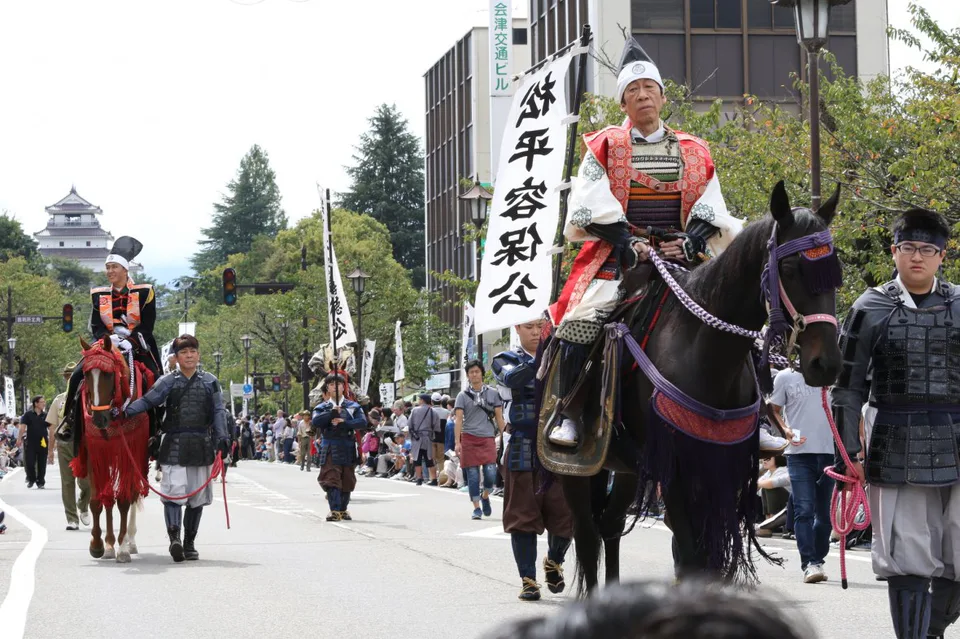
If you only have one Aizu Festival day in 2026, choose Sunday, September 20. If you can afford exactly one hotel night, make it September 19. That sequence buys two event windows with one room night: the September 19 lantern procession and Aizu Bandaisan Dance, then the September 20 memorial ceremony and headline Aizu Domain Procession.
The important exception is the second festival night. September 20 is not “over” when the samurai procession finishes: the official programme schedules Aizu Bandaisan Dance again from 19:00 to 20:30. A second hotel night is therefore worth considering only when that evening participation, a slow Aizu day, or the next morning's route is valuable enough to justify another night. Do not add it simply because a three-day festival sounds like a two-night trip.
Checked August 25, 2026. The official festival dates remain September 19–21. JR East says the Ban-etsu West Line between Inawashiro and Aizu-Wakamatsu, suspended after heavy rain earlier in August, resumed from the first train on August 21. Recheck live rail operations and final festival traffic-control notices before travel.
↔ Scroll table left or right
Your real constraint | Best 2026 choice | Why |
One festival day only | September 20 | Main Aizu Domain Procession plus memorial/departure ceremonies |
Exactly one hotel night | Sleep in Aizuwakamatsu on September 19 | One room night unlocks the Sep 19 evening and protects the Sep 20 morning |
Two hotel nights | Sep 19 + Sep 20 only with a second purpose | The Sep 20 dance runs 19:00–20:30; stay only if that evening, a slower city day or the onward route earns the extra night |
Prefer a relaxed sightseeing-to-festival day | September 19 | Daytime sightseeing can flow into the 18:00 lantern procession and 19:00 dance |
Children / community programme is the priority | September 21 | Nisshinkan children’s procession and marching-band parade |
Tokyo-based traveller unwilling to move hotels | Accept a partial Sep 20 or choose another date | Same-morning Tokyo travel is a poor fit for the early castle programme |
September 20 is the first-time priority because the morning cannot be recreated later
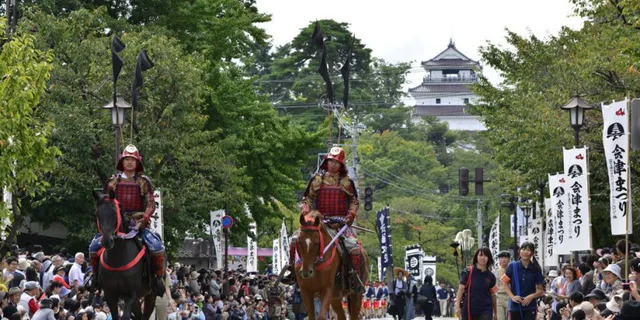
The official 2026 programme lists the memorial ceremony at Tsurugajo from 08:30 to 09:10. The Aizu Domain Procession then has a planned departure ceremony at 09:30 and procession departure at 10:30. The organisers describe the historical procession as roughly 600 participants in the successive-lords formation.
That is the festival's least replaceable block. You can visit Tsurugajo on an ordinary day, but you cannot recreate the castle assembly and historical units leaving into the city. If seeing that full transition matters, sleeping locally is much more valuable than proving that Aizu can technically be reached from Tokyo in one morning.
If you only care about seeing part of the procession somewhere along the city route, a later arrival is less damaging. That is a valid lower-effort version, but it is a different product from the full castle morning.
Why September 19 is still the best single hotel night
September 19 has its own evening programme. The lantern procession is scheduled to depart Tsurugajo at 18:00 after a planned 17:45 departure ceremony. The Aizu Bandaisan Dance then runs on Shinmei-dori from 19:00 to 20:30.
That creates a high-efficiency one-night sequence:
September 19 afternoon: arrive without a dawn transfer, leave luggage and do ordinary Aizuwakamatsu sightseeing.
September 19 evening: lantern procession, then the Bandaisan dance.
September 20 morning: be in position at Tsurugajo before the 08:30 memorial programme.
September 20 after the main procession: either continue the wider Tohoku route or deliberately stay for the second 19:00–20:30 dance.
The accommodation premium is therefore buying access to two time-sensitive event windows. Sleeping on September 20 instead protects the night after the headline event, but it does not repair a missed September 20 morning.
When is a second Aizu hotel night actually worth it?
The answer is not “because the festival lasts three days.” A second night should perform a second job.
I would keep September 20 as a second hotel night when at least one of these is true:
You want to participate in or watch the second Aizu Bandaisan Dance from 19:00 to 20:30 rather than treating the daytime procession as the end of the trip.
You want a proper hotel reset after the procession, followed by dinner and the dance, instead of turning the day into a station-to-station transfer.
Your next destination works better from Aizu on September 21 than from wherever you would otherwise sleep.
You want a slower Aizuwakamatsu day and would use the hotel for more than luggage storage and sleep.
I would cut the second night when the only reason is “festival trips should be two nights,” when you are indifferent to the evening dance, or when the next Tohoku destination is easier to reach by continuing on September 20. That is the red-team condition missing from a simple one-night recommendation: September 19 is the best default night, but September 20 can earn its own room if the evening has a purpose.
Tokyo day-trip logic fails at the exact hour that matters most
Aizuwakamatsu's official tourism site gives the Tokyo rail chain as about 1 hour 22 minutes by Tohoku Shinkansen to Koriyama plus about 1 hour 5 minutes on the Ban-etsu West Line to Aizu-Wakamatsu. That is before the transfer at Koriyama and the final trip from Aizu-Wakamatsu Station to Tsurugajo.
The castle programme begins at 08:30. So “Tokyo to Aizu is possible in a day” and “Tokyo is a sensible base for the September 20 morning” are different statements. A same-morning rail plan spends the exact hours that contain the memorial ceremony, assembly and procession departure.
The hotel night is not buying luxury. It is deleting the largest timing risk from the festival block with the highest unique value.
September 21 is a real festival day, but it solves a different visitor goal
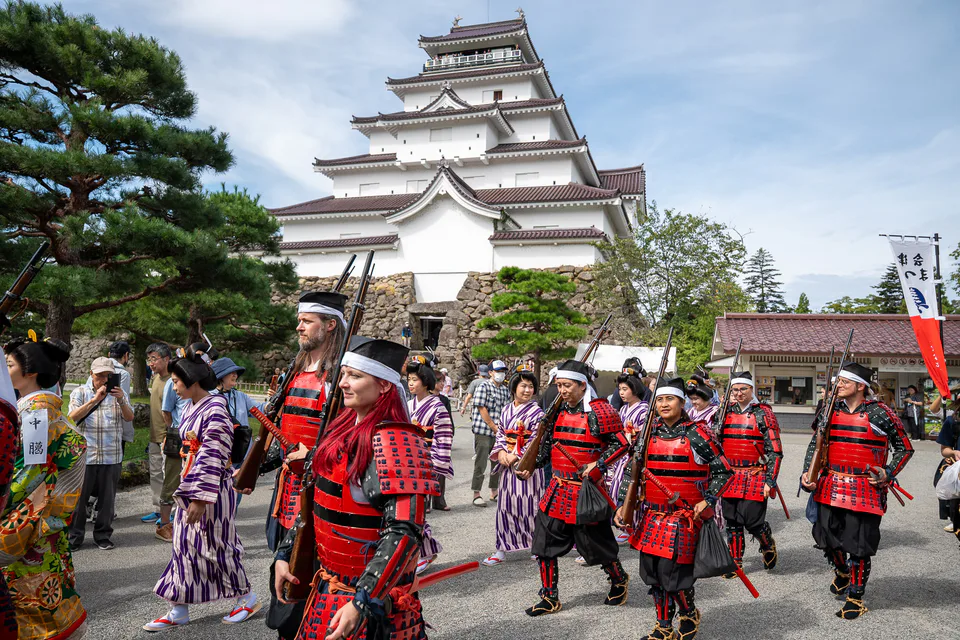
The final day shifts toward the Nisshinkan children's procession and marching-band parade. The current official programme gives a 09:30 departure ceremony and a 10:10 marching-band departure.
This can be the better date for families, visitors with a local connection or people more interested in community participation than a large historical procession. It is not the date I would use as a like-for-like substitute for September 20 on a first visit, because the roughly 600-person Aizu Domain Procession is the element hardest to reproduce elsewhere in the itinerary.
The hotel location should protect the event windows you are actually buying
For the September 19 night, the best hotel is not automatically the cheapest station-front room. Ask which movements you want to eliminate.
A station-area hotel makes arrival, departure and luggage easier. A central-city or Tsurugajo-oriented hotel can reduce the September 19 evening return and September 20 morning transport. If the rate premium is modest, I would pay it when it removes two festival-day movements, not simply because the address looks central on a map.
If you add September 20 as a second night specifically for the 19:00 dance, the same logic becomes even stronger: a hotel that works for Tsurugajo, Shinmei-dori and the next morning may earn more than a scenic rural ryokan that requires another timed bus or taxi.
Do not move to an onsen outside central Aizu before a fixed evening programme unless its transport is part of the plan. Put the onsen night after the last festival block you refuse to miss.
Local buses are useful, but festival road controls can make walking the resilient fallback
On normal days, the Haikara-san and Akabee loop buses connect Aizu-Wakamatsu Station, Tsurugajo and central sights. The festival occupies central roads, so detours and stop changes can affect exactly the trips visitors normally make.
For the September 20 morning, I would choose a hotel where the plan still works on foot or by a short taxi if bus routing changes. That is more resilient than choosing a distant room and making one festival-day bus connection non-negotiable.
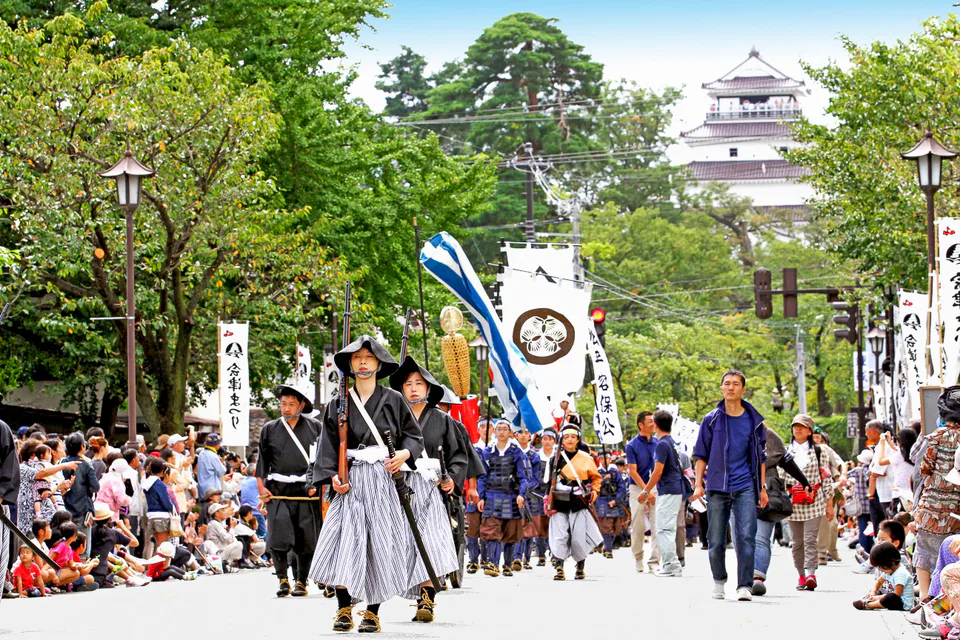
Final 2026 traffic-control maps should be checked close to September 19–21. An old festival map is not a current timetable.
The August rail disruption is a reminder to verify the actual September journey
Earlier in August 2026, heavy rain caused an embankment collapse and suspended the Inawashiro–Aizu-Wakamatsu section of the Ban-etsu West Line. JR East now states that service resumed from the first train on August 21.
That restores the normal planning route, but a fixed-date festival is less forgiving than ordinary sightseeing. Recheck JR East shortly before departure and do not build the trip around the last connection that can theoretically deliver you to Aizu.
JR East's current September timetable includes Rapid Aizu services on the festival weekend, but operating patterns and reserved-seat arrangements can vary by date. The September 19 hotel night removes more real risk than chasing the fastest possible September 20 Tokyo departure.
Rain should change which blocks you protect
The festival association can issue separate decisions for individual events when weather is poor. A three-day festival is therefore not necessarily “all on” or “all off” at once.
If September 20 is the reason for the trip, keep the surrounding day flexible enough to absorb a delayed or altered procession. Do not stack a non-refundable rural tour immediately after the parade. The more fixed the festival date, the more flexible the surrounding itinerary should be.
Do not let free admission hide the real cost
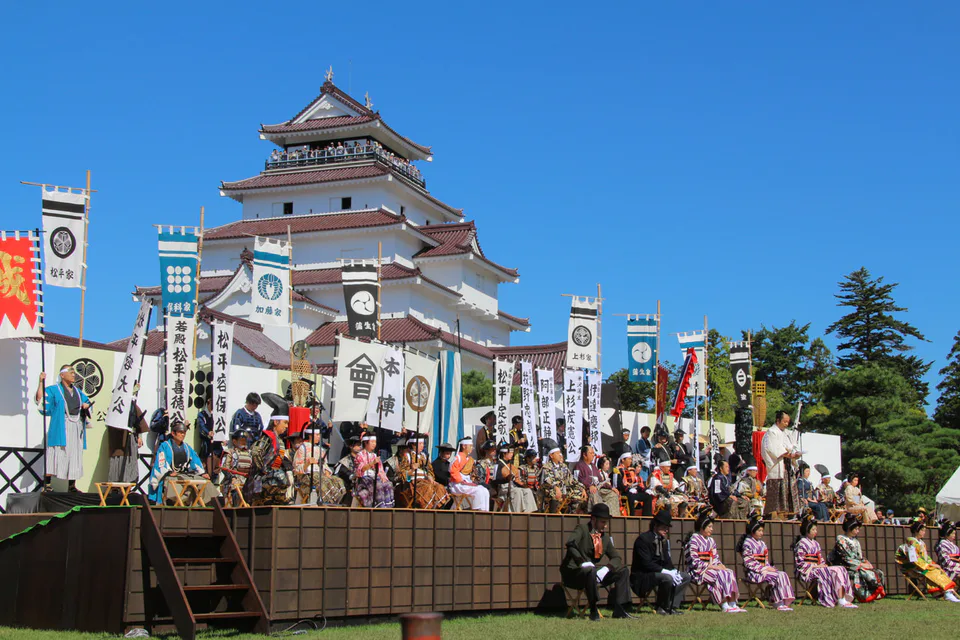
The festival events are free. The real purchase is hotel nights, transport and the Tohoku time allocated to Aizu instead of another city.
That is why September 19 is such an efficient hotel night: one room protects the next morning and also buys an evening programme. A second night must beat the opportunity cost of continuing the trip. The repeated 19:00–20:30 dance gives September 20 a legitimate reason to win that test—but only for travellers who will actually use it.
Final verdict
One day: September 20. One hotel night: September 19. That remains the highest-value first-visit combination because the hotel protects the 08:30–10:30 castle sequence and gives you the lantern procession plus dance the previous evening.
Two nights: add September 20 only deliberately. The strongest reason is the second Aizu Bandaisan Dance from 19:00 to 20:30, especially if you also want a hotel reset after the main procession or your September 21 route starts cleanly from Aizu. If you do not care about that evening, use the main procession as your exit point and put the extra night somewhere else in Tohoku.
Choose September 19 alone if you prefer a relaxed sightseeing-to-evening flow. Choose September 21 when the children's/community programme is the priority. And if you insist on a Tokyo day trip on September 20, accept that you are optimising hotel convenience at the cost of the festival's hardest-to-replace morning.
Sawara Grand Festival Autumn 2026: Day Trip or Stay After Dark?
Akita Kanto Festival 2026 Guide: Dates, Seats, Day Contest and Hotels
Sendai Tanabata Festival 2026: Fireworks, Three-Day Plan and Where to Stay
Okutama Rafting 2026: Tokyo Full-Day Tour vs Local Half-Day — You're Paying for Transport
Tokyo Game Show 2026 Fast Ticket Is Not a Fast Pass — Buy It Only If You Know Your First Booth
References
Aizu Festival Association — 2026 festival dates · Aizu Festival Association — Aizu Domain Procession · Aizu Festival Association — lantern procession and Bandaisan Dance times · Aizuwakamatsu Tourism — official access times · JR East — current Tohoku rail status. Checked August 25, 2026; festival times remain planned and may change.