
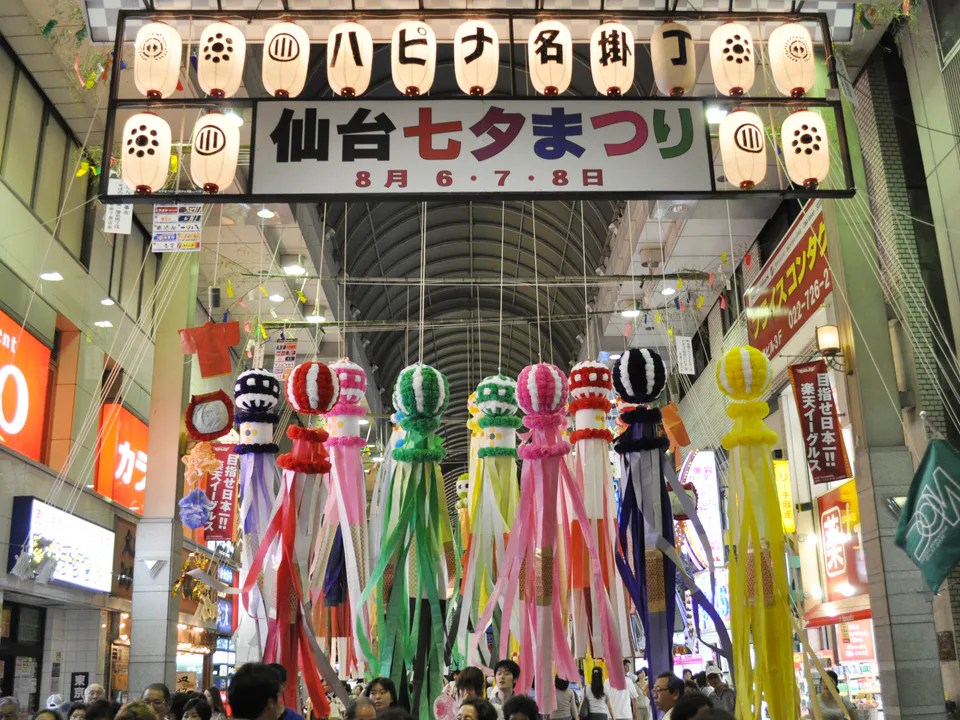
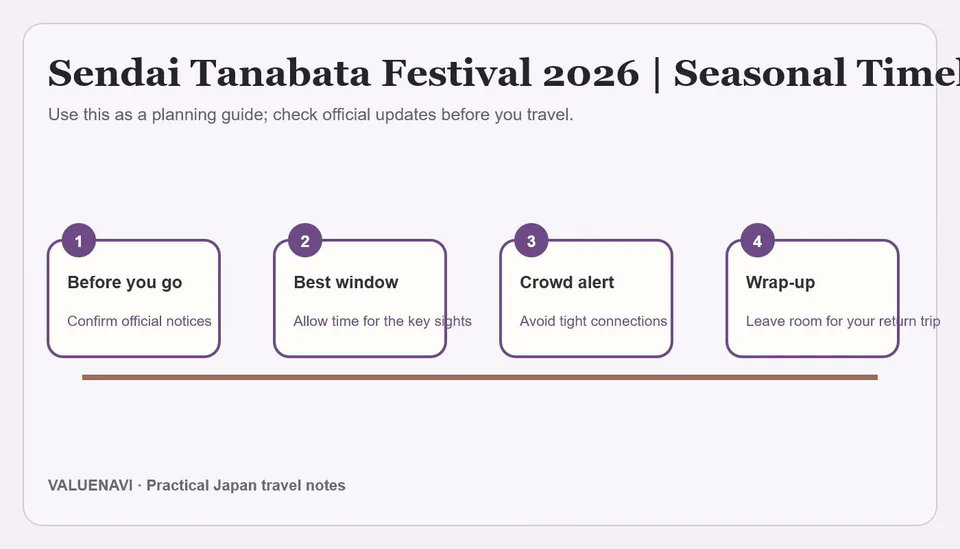
Sendai Tanabata Festival 2026 is easiest to plan when you separate two events that are often bundled together. The 57th Sendai Tanabata Fireworks Festival is on August 5 from 19:30 to 20:30 around Aobayama Park and the Hirose River, with about 16,000 fireworks. The main Sendai Tanabata Festival then runs August 6–8 across central Sendai’s shopping arcades and surrounding districts.
If Sendai is one stop in a larger northern-Japan trip, use the Tohoku summer festival one-week itinerary before booking hotels. It shows why August 5 in Sendai and August 6–8 in the arcades need to be weighed against Aomori, Akita and Morioka rather than treated as isolated dates.
Choose your Sendai Tanabata plan in 30 seconds
Only one night: prioritise August 6–8 if the Tanabata decorations are the reason for the trip.
Two nights and arriving August 5: use the fireworks as the first evening, then keep August 6 for the arcades.
First visit: stay centrally enough to walk back from the arcades without depending on a late taxi.
Arcades already completed by late afternoon: consider Aobayama Night Fest instead of another full loop downtown.
August 5 fireworks and August 6–8 Tanabata solve different travel goals
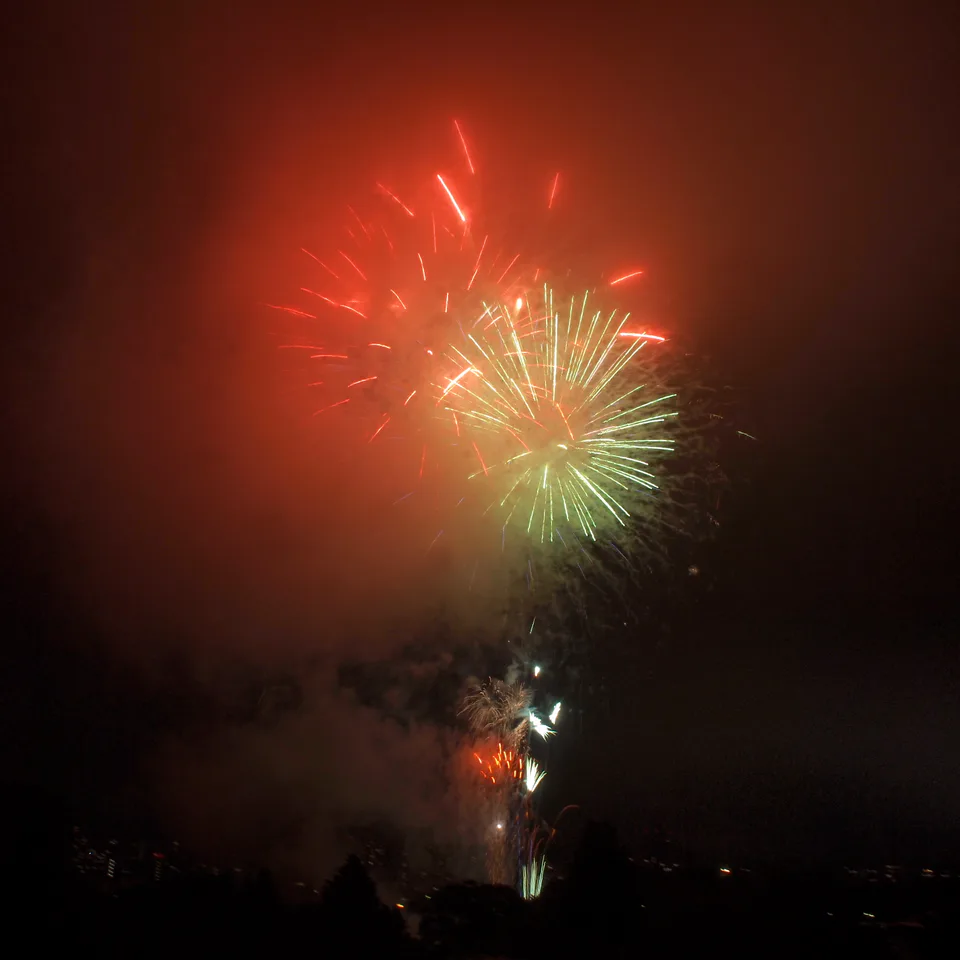
The August 5 fireworks are a one-hour night event with concentrated arrival and exit pressure. The main festival is a city-centre walking experience built around paper-and-bamboo decorations. If you only have enough time for one, choose based on the experience you actually want rather than assuming the fireworks are simply the first night of the same programme.
If fireworks-night transport is the concern, compare it with the Omagari Fireworks transport guide to see why the journey home can matter as much as the show. For a broader event-style decision, the Japan summer festivals comparison separates decoration festivals from parades, dance events and fireworks.
Chuo-dori is the easiest first route from Sendai Station
Chuo-dori gives first-time visitors the clearest entry into the festival because it connects naturally from Sendai Station and places food, shops and indoor breaks directly on the route. Use the more detailed Sendai Tanabata itinerary when the real decision is how to pace the arcades, hotel break and Matsushima rather than which festival dates to attend.
Ichibancho works better as the second half of the walk
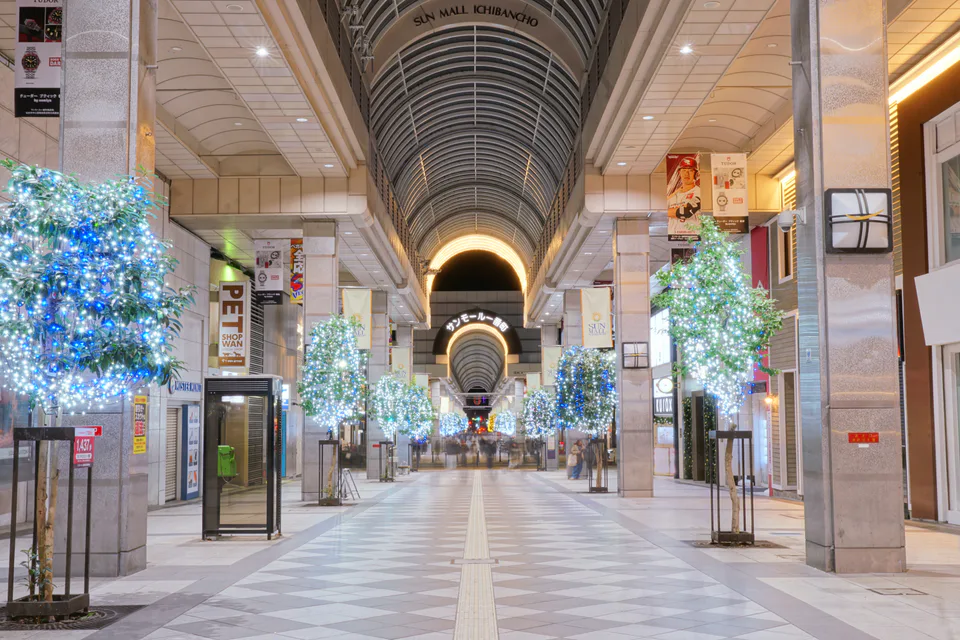
Ichibancho extends the decoration route without forcing you to retrace the same arcade. The better strategy is one-directional: start near the station, move through Chuo-dori, continue toward Ichibancho, then use rail or a different walking route back when the group is tired.
Pair this with: Sendai Tanabata Night Itinerary 2026: Arcades vs Aobayama
Where to stay: protect the walk home and the afternoon break
For a first festival visit, a central Sendai hotel is worth more than the cheapest room on the edge of the city. The practical value is not luxury; it is the ability to drop luggage, cool down in mid-afternoon and walk or make one simple rail move back after the evening crowds.
If luggage is making a central hotel feel too expensive, the Japan luggage-forwarding guide can remove the suitcase from the festival day. If local buses enter the hotel plan, review how to ride buses in Japan instead of assuming every regional bus uses the same door and payment pattern.
Matsushima is a separate half-day, not part of the core festival loop
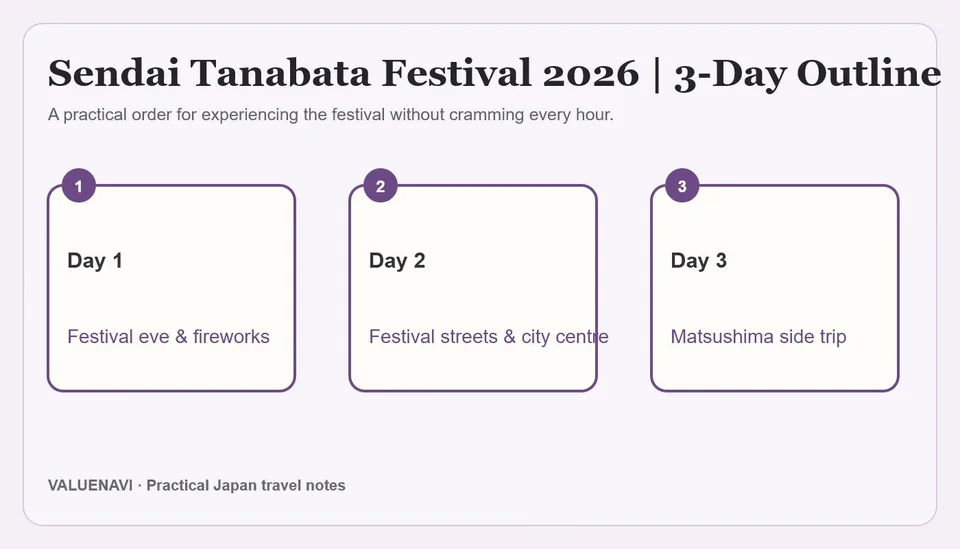
With one festival day, do not force Matsushima between the morning arcades and evening return. Use the previous afternoon or following morning so a delayed train, lunch queue or heat break does not quietly erase the Tanabata experience. That separation is the main reason the itinerary page and this festival-overview page should remain distinct rather than compete for the same search intent.
A practical two-night structure
August 5: arrive early enough to check in, attend the 19:30–20:30 fireworks and sleep in central Sendai.
August 6: start the arcades from the Sendai Station side, take a hotel break in the hottest part of the afternoon, then return downtown in the evening.
August 7 or 8: use Matsushima as a separate half-day, finish missed arcades, or leave Sendai without another forced night event.
If the previous night is Aomori Nebuta or Akita Kanto, protect the Sendai afternoon rather than adding one more attraction. The same applies after Morioka Sansa Odori if the route is already crowd-heavy.
Heat, rain and the night decision
August heat makes shade, water and a hotel rest part of the schedule. The arcades help in ordinary rain, but wet entrances and crowd density still slow the walk. For a trip-wide fallback, use the Japan rainy-day itinerary backup guide rather than improvising after the weather changes.
If the central decorations still feel unfinished after dinner, stay downtown. If the main route is already complete, the Aobayama Night Fest decision guide explains when moving uphill is actually worth the transfer.
Final verdict
Treat August 5 fireworks and August 6–8 Tanabata as two separate decisions. For a first visit, stay central, give the arcades one proper day, and only add Matsushima or Aobayama after the core festival experience is protected. If the whole Japan route is still unsettled, use How to Plan a Trip to Japan before letting one festival week dictate too many hotel changes.
5-Day Hokkaido Autumn Leaves Itinerary: Driving, Public Transport and Where to Stay
Where to Stay in Fukuoka: Hakata or Tenjin for Trains, Food and Day Trips
Hachinohe Sansha Taisai 2026: Aug 1, 2 or 3? Which Main Festival Day Should You Choose?
Tateyama Kurobe Traverse or Round Trip? Transport, Luggage and Where to Stay
Where to Stay for Naoshima and Shodoshima: Uno, Takamatsu or Okayama?