A 7-day Tohoku summer festival itinerary works only when the festival nights are treated as fixed anchors and the sightseeing between them stays flexible. In 2026, Morioka Sansa Odori ran August 1–4, Aomori Nebuta August 2–7, Akita Kanto August 3–6, Sendai Tanabata August 6–8, and Yamagata Hanagasa August 5–7. The cleanest week is built around those overlaps rather than around a simple northbound map.
For most travellers, the strongest sequence is Morioka → Aomori → Akita → Sendai, with Yamagata only as an optional final-night extension. Before committing, compare the wider Japan summer festivals first; this route is worth the hotel churn only when several of these events are genuinely priorities.
Choose the route in 30 seconds
Want the cleanest 7 days: Morioka Aug 1, Aomori Aug 2, Akita Aug 3–4, Sendai Aug 5–7.
Want more recovery: drop Yamagata and keep two nights in Akita plus two or three nights in Sendai.
Travelling with children or older relatives: buy certainty selectively and reduce hotel changes before adding another festival.
Large luggage: forward or store it before festival nights instead of treating every station transfer as normal sightseeing.
Day 1 — Morioka Sansa Odori is the right opening night
Morioka Sansa Odori runs August 1–4, with the main parade starting at 18:00. Use August 1 as the opening because it begins before the other major festivals and lets the route move north without sacrificing a later headline event. Keep the afternoon light and eat before the evening crowd builds.
The Morioka Sansa free-viewing guide explains when a ¥4,000 reserved seat is worth buying back the afternoon and why the ordinary 15-minute station walk should not be treated as a guaranteed post-parade connection.
Day 2 — Aomori Nebuta deserves the evening to itself
Aomori Nebuta runs August 2–7. On August 2–3 the night procession starts at 19:00; August 4–6 starts at 18:45. Move from Morioka during daylight, check in and leave enough time for food and the walk into the route before the audience thickens.
Use the Aomori Nebuta 2026 main guide for the festival structure, then the free-viewing vs reserved-seat guide if the real decision is whether ¥4,000 is worth paying. Families should use the Aomori Nebuta with kids guide because August 7 daytime changes the trade-off completely.
Day 3 — Move to Akita early enough that Kanto is not a race
Aomori to Akita is the transfer that most punishes over-planning. Reserve a daytime connection, check in before the evening and treat the first Kanto night as the only required event after arrival. In 2026, Akita Kanto runs August 3–6; on August 3 and 6 the performance starts at 19:10, while August 4–5 starts at 19:15.
The Akita Kanto Festival guide covers the current reserved-seat tiers, daytime skill competition and why a two-night Akita stay is usually better than another rushed hotel change.
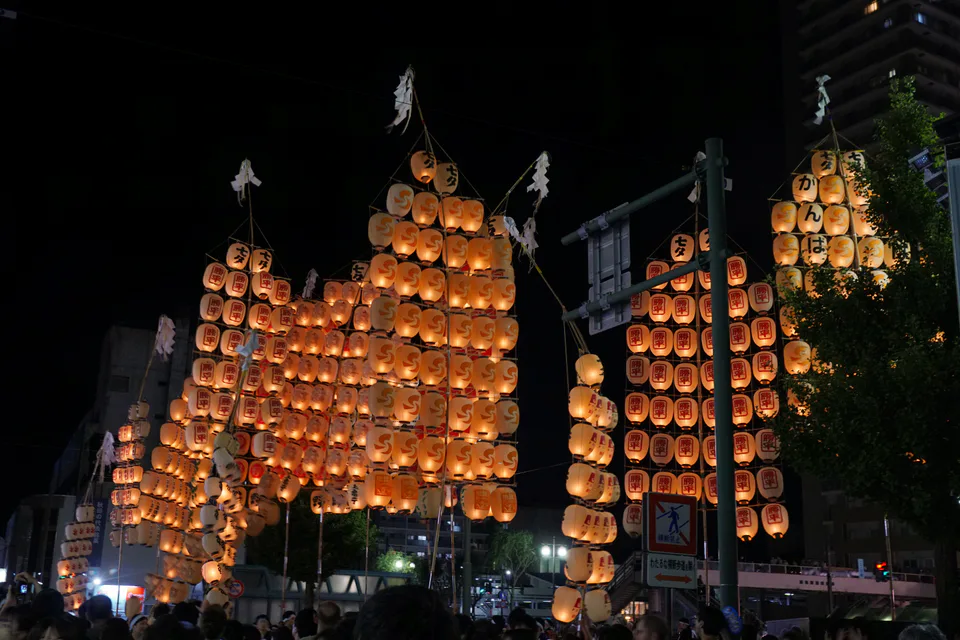
Akita Kanto at night. Photo: 掬茶 / Wikimedia Commons, CC BY-SA 4.0.
Pair this with: Aomori Nebuta vs Hirosaki Neputa
Day 4 — The second Akita night is the itinerary’s recovery buffer
Keep the same hotel. Use the daytime skill competition only if you still have energy, then rest before deciding whether a second Kanto evening adds enough value. This is the day that keeps the week from turning into seven consecutive luggage transfers.
If a mountain onsen is more important than a second Kanto night, compare Nyuto Onsen vs Lake Tazawa before moving out of Akita. The ryokan decision should replace a festival block, not be stacked on top of one.
Day 5 — Sendai fireworks are the transition night
Travel south to Sendai in daylight and check in before the fireworks crowd builds. The 57th Sendai Tanabata Fireworks Festival is on August 5, 2026 from 19:30 to 20:30 around Aobayama Park and the Hirose River, with about 16,000 fireworks. Rain does not automatically cancel it, but severe weather can, with no postponement.
The broader Sendai Tanabata Festival guide separates the August 5 fireworks from the August 6–8 main festival, while the Sendai Tanabata itinerary is the better page for the arcade route, hotel break and Matsushima timing.
Day 6 — Slow down for Sendai Tanabata
Sendai Tanabata runs August 6–8 and changes the pace from moving parades to a city-centre walking festival. Treat August 6 as recovery disguised as sightseeing: walk the arcades, eat properly, take a hotel break and return downtown later rather than adding Yamadera simply because the railway map makes it look close.
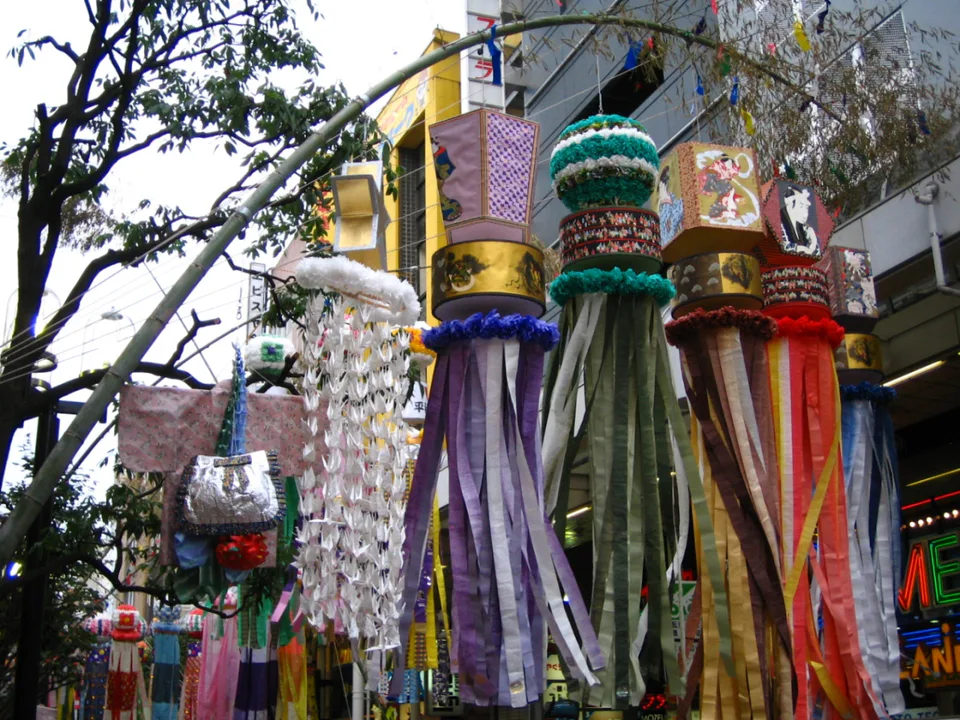
Sendai Tanabata decorations. Photo: Haseyu- / Wikimedia Commons, Public Domain.
If you finish the downtown route early, the Aobayama Night Fest guide explains when moving uphill for the 19:00–21:00 programme is worth the extra transfer.
Day 7 — Finish in Sendai or move to Yamagata only if you sleep there
The conservative finish is another Sendai day: complete missed arcades, use Matsushima as a half-day or leave by Shinkansen without another late crowd. The higher-density version moves to Yamagata for Hanagasa, which runs August 5–7 from 18:00 to about 21:45.
Only add Hanagasa when Yamagata becomes the overnight base. Watching the full parade and then racing to another city recreates the exact problem this itinerary is designed to avoid.
Where paid seats add the most value
Do not buy reserved seats in every city by default. Morioka and Aomori are both possible without them; the decision is whether saving several hours of position-holding is worth the cost. Akita has clear 2026 tiers: S ¥4,500, A ¥4,000, B ¥3,500 and a six-person box at ¥28,000.
With children, the Aomori family guide is useful because assigned seating changes value when sightlines, toilets and bedtime matter more than roaming freedom.
Book the intercity legs before the daytime extras
The three key transfers are Morioka → Aomori on August 2, Aomori → Akita on August 3 and Akita → Sendai on August 5. Once hotels are fixed, reserve those movements before filling the route with museums, side trips and restaurant bookings.
If luggage makes every transfer feel risky, use the Japan luggage-forwarding guide before solving the problem with unnecessary taxis or a car. For local buses, how to ride buses in Japan is the better operating reference than memorising one citywide rule.
Bad weather: cut daytime excursions before cutting the festival nights
The practical backup is to remove Hirosaki, Oga, Yamadera or an optional second festival block first. The Japan rainy-day itinerary backup guide is useful when the weather problem affects several cities rather than one evening.
Final verdict
The route works because each night has one job and most of the moving happens in daylight. Start in Morioka, give Aomori its own evening, protect two Akita nights, use the August 5 Sendai fireworks as the transition south, then slow down for Tanabata. Add Yamagata only when you are willing to sleep there. If this is part of a first Japan trip, the Japan itinerary for first-time visitors should decide whether a festival-heavy Tohoku week fits the trip at all.
Tohoku Autumn Leaves Itinerary: 5 or 7 Days, JR EAST PASS and Hotels
Naruko Gorge 2 Day Itinerary: 2026 Trains, Trails, Onsen and Hotels
Akita Kanto 2026 Is Over: What S, A, B and Free Viewing Taught Us
Katakai Festival 2026: September 11 or 12? Daytime Fireworks, Seats and the Nagaoka Exit
Hiroshima One-Day Itinerary: Peace Park, Castle and Shukkeien