For a first Akita Kanto visit, the illuminated night performance is the part I would protect first. The daytime skill contest is a second layer, not a substitute. The more useful 2026 decision, though, was which date to choose. August 3 gave you the night performance plus the new drone show without a daytime contest. August 4–5 let you combine daytime qualifying rounds with the night festival. August 6 was the content-maximising day: skill-contest finals, the night performance and the drone show—but also the highest all-day fatigue load.
That means a one-night visitor, a technique-focused repeat visitor and someone trying to see every programme should not have used the same plan. The festival ran August 3–6, 2026; use the structure below as a planning reference and recheck the next edition rather than copying the dates forward.
↔ Scroll table left or right
2026 trip goal | Date I would have chosen | Why | Main cost |
First visit, one Akita night, lowest daytime load | August 3 | Night performance + drone show, with no need to protect a daytime contest block | You miss the skill contest entirely |
Want to study technique but not maximise every extra | August 4 or 5 | Daytime skill-contest qualifying + night performance | No drone show; hot all-day schedule if you stay continuously |
Technique enthusiast / maximum festival content | August 6 | Skill-contest finals + night performance + drone show | Longest high-value day; needs a hotel break and disciplined pacing |
Older traveller or child who needs sitting certainty | Any date + reserved seat | The seat solves a physical endurance problem | Fixed position and non-refundable weather risk |
One night in Akita: spend your energy on the night avenue, not on proving you saw everything
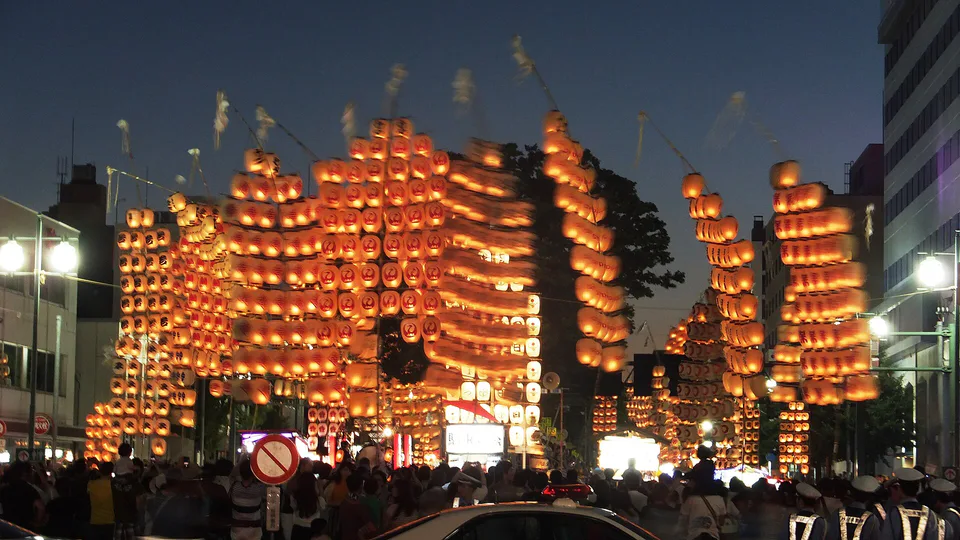
The 2026 night programme began around 19:10–19:15 and ended at 21:00, with traffic restrictions continuing until 21:30. That is the core first-time experience: dozens of illuminated kanto poles balanced along Kanto Odori after dark.
If Akita is only a one-night stop between other Tohoku festivals, I would not arrive from another city, rush into the daytime skill contest, skip the hotel, eat badly and then expect everyone to enjoy the full night programme. The better sequence is arrival → luggage drop → meal / rest → night performance → walk back to the hotel.
This is especially true in August heat. The itinerary does not become more valuable because every free hour is filled. A shower, air-conditioned break and proper meal can directly improve the one festival block you crossed Japan to see.
If you need to choose a paid viewing category, use the dedicated S vs A vs B vs free-viewing comparison. The key rule is to buy the cheapest seat category that solves the actual sitting or elevation problem.
Two nights: this is when the daytime skill contest starts to earn its place
The official festival FAQ says the Kanto Myogikai skill contest ran August 4–6 at Area Nakaichi, about a 10-minute walk from Akita Station. It is a judged competition rather than a daytime copy of the night avenue: teams and individuals are assessed on stability, form, control inside the competition circle and performance technique.
That is why the contest works better as the middle block of a two-night stay. You can arrive the previous afternoon, see one night performance, sleep, watch a selected part of the contest the next day, return to the hotel, then decide whether another night performance is worth your energy.
I would not automatically watch the contest from opening to closing. The point is to see the technique at a closer, more analytical scale. Once you have seen enough rounds to understand what separates a stable performance from a difficult one, the marginal value of another hot hour can fall quickly for a casual visitor.
August 6 was the “maximum content” day—but only if you could use it
August 6 combined the skill-contest finals with the night performance and the drone show. On paper, that made it the richest single festival date. In practice, it also created the biggest risk of turning Akita into a 12-hour endurance event.
The durable lesson is: maximum scheduled content is not maximum usable value. A technique enthusiast may genuinely want the finals and the night. A first-time couple on a wider Tohoku trip may get more from August 3: arrive calmly, eat, watch the night performance and protect the next city.
If a future edition again places finals and a special night programme on the same day, use your hotel as a reset point. Do not treat the gap between daytime and evening programmes as another sightseeing slot.
Reserved seating is an energy-management tool, not a status upgrade
In 2026, reserved seats cost ¥4,500 for S, ¥4,000 for A and ¥3,500 for B; a six-person box cost ¥28,000. The performance itself was not a premium-seat-only version. You were paying for a defined place to sit and less dependence on roadside position-holding.
That makes a paid seat more valuable when the group includes older travellers, young children, mobility limits or someone who would otherwise spend much of the evening worrying about standing. A fit solo traveller who values movement and an early exit may prefer free viewing even when they can afford S.
Do not let a paid ticket force the entire northern-Japan route. Lock the city sequence first, then buy the seat. If the festival is competing with Aomori, Morioka and Sendai, use the Tohoku summer festival itinerary before making one non-refundable viewing ticket the anchor of the whole week.
A central hotel buys two things: a shorter exit and a real reset between programmes
During a festival stay, “near Akita Station” and “near the night corridor” are both useful, but for different reasons. Station proximity helps arrival, departure and the daytime contest at Area Nakaichi. Kanto Odori proximity reduces the post-21:00 walk and makes it easier to use the room between daytime and night events.
I would pay a modest central-location premium when it removes two or more festival-day trips: luggage drop after arrival, afternoon hotel reset, walk home after the night programme, or station departure next morning. A cheaper room that requires another bus/taxi every time can be the expensive choice once crowds and road restrictions appear.
Conversely, do not overpay for a central hotel if you are only sleeping in Akita after one night programme and leaving late the next day. Hotel value comes from repeated use, not the postcode alone.
Free time between the contest and night performance should usually become recovery time
The daytime contest and the night programme are separated by several hours. That gap tempts visitors to add another museum, shopping block or distant attraction. I would usually do the opposite on August 4–6: lunch, hotel, shower, hydration and an early dinner.
The evening performance requires standing/walking even if you hold a reserved seat, and the crowd dispersal after 21:00 adds another busy movement period. Saving energy in the afternoon is not wasted sightseeing time; it is an investment in the part of the day with the highest unique value.
Rain changes the schedule economics, not just the clothing
The official FAQ explains that the festival generally tries to perform during clear intervals and may shorten the programme depending on conditions. The 2026 individual reserved-seat rules also stated that rain cancellation did not trigger a refund.
That means the weather strategy differs by viewing type. A free viewer can shorten the night with no sunk ticket. A paid-seat holder may feel pressure to stay because money has already been spent. Do not let that sunk cost override safety, health or the next day’s route.
For the daytime contest, the festival has historically provided an indoor rain venue when required, but future arrangements should be checked rather than assumed. The main planning lesson is to keep the rest of the Akita day light enough that a weather change can be absorbed.
Festival night plus Nyuto Onsen the next morning is not automatically a clean pairing
Akita and Nyuto Onsen look close on a Tohoku map, but rural onsen travel is a separate transport problem. If you end Kanto at 21:00 and then plan an aggressive early transfer with luggage the next morning, the festival hotel has stopped being a recovery base.
If Nyuto or Lake Tazawa is next, compare Nyuto Onsen Village vs Lake Tazawa and make sure the bus/rail sequence works before deciding whether a second Akita festival night is realistic. The same principle applies to Omagari Fireworks: its transport plan should govern that day, not the desire to squeeze in one more Akita block first.
My planning rule for future editions
One Akita night: choose the night performance and protect energy. Add the daytime contest only if you arrive early and technique is a real priority.
Two Akita nights: use the skill contest as the middle-day layer; return to the hotel before the second night.
Want one richest date: choose the day that combines finals/special content only if you can handle the fatigue. More programme is not automatically better.
Older traveller / child: reserve a seat because it solves endurance, not because it is “premium.”
Multi-festival Tohoku route: protect the sequence between cities before maximising Akita content.
Final verdict
Akita Kanto is easiest to plan when you treat the illuminated night avenue as the core product and everything else as optional layering. In 2026, August 3 was the cleanest one-night first-visit date, August 4–5 were stronger for technique plus a night, and August 6 maximised content at the cost of fatigue. Two nights made the daytime contest much easier to justify because the hotel could absorb the hottest and most tiring part of the schedule.
The durable rule is to maximise the number of high-value festival blocks you can actually enjoy, not the number printed on the timetable.
Kishiwada Danjiri October 2026: Districts, Transport and How to Plan the Day
Kochi Yosakoi Accessibility 2026: Wheelchair Seats and Low-Walking Plan
Okinawa Trip Cost: 5-Day Budget for Hotels, Car and Activities
Aizu Festival 2026: If You Only Have One Day, Make It September 20
References
Akita Kanto Festival — official 2026 night schedule and reserved seats · Akita Kanto Festival — official skill-contest and weather FAQ. Historical 2026 facts checked August 25, 2026; recheck the next edition before booking.