For an onsen-first trip, stay inside Nyuto Onsenkyo only when you can reach the correct inn early enough to use the ryokan evening and you do not need a very early Tazawako Station departure the next morning. For a late rail arrival, large luggage or a time-sensitive Komachi train, stay by Tazawako Station. Choose the Lake Tazawa shore only when the lake view and lakeside hours are themselves the reason to stop; it is not the same logistics product as sleeping beside the station.
The most important 2026 constraint is earlier than many travellers expect. Ugo Kotsu’s current Nyuto Line timetable lists the final through departure from Tazawako Station at 17:20, reaching the upper Nyuto stops around 18:00–18:08. A mountain ryokan night can therefore fail before dinner even enters the discussion. If your Shinkansen reaches Tazawako after that useful bus window, “the hotel is only 45 minutes away” is no longer the relevant fact.
↔ Scroll table left or right
Your real constraint | Start with | Why | What can reverse it |
Ryokan dinner + repeated baths + forest morning | Nyuto Onsenkyo | The accommodation becomes the destination and overnight guests can buy the Yumeguri pass | Your dated train cannot reach the inn before its bus/check-in/meal window |
Arrive Tazawako after the final useful Nyuto bus | Tazawako Station | You protect the rail arrival instead of turning a premium ryokan night into a taxi problem | The inn confirms a workable private transfer for the exact arrival |
Early Komachi or other important JR departure | Tazawako Station for the final night | Upper Nyuto stops do not all have an early bus that matches the first rail departures | Your train is late enough that breakfast plus the confirmed bus leave comfortable margin |
Lake scenery / lakeside sunset is the overnight purpose | Lake Tazawa shore | The hotel buys lake hours, not station convenience | The stay is only a transfer buffer; then the station is more useful |
Two nights, late arrival then onsen night | Station first → Nyuto second | The first hotel protects transport; the second protects the ryokan experience | Day 3 has an early train, which can make the reverse order cleaner |
Two nights, early Day 3 rail deadline | Nyuto first → station second | The hotel move points toward the next hard departure instead of away from it | The Day 3 train is late and Nyuto breakfast/morning is a major priority |
ValueNavi Nyuto Base Resilience Score
ValueNavi scores the base for a specific arrival/departure pattern, not the fame of the ryokan. The model uses arrival-chain reliability 25%, departure-chain reliability 20%, ryokan-time capture 20%, luggage/last-mile fit 15%, weather resilience 10%, and overnight-only experience value 10%. Each dimension is scored 0–10.
Scenario | Score | Decision |
|---|---|---|
Nyuto: reach Tazawako early afternoon, no early train next day | Strong onsen-base fit: dinner, repeated baths and morning are all protected. | |
Nyuto: train reaches Tazawako close to 17:20 with luggage | Fragile. One rail delay can remove the public-bus chain and compress the ryokan evening. | |
Tazawako Station: late arrival + important early Komachi | The base directly protects both hard transport edges. | |
Lake Tazawa shore: lake sunset/morning are the actual purpose | Good scenery base when the lake hours are deliberately used. | |
Lake shore used only as a transfer buffer for an early train | The scenery premium does not solve the station deadline. | |
Two nights: late arrival → station first → Nyuto second | Each hotel protects a different job instead of forcing one base to do both. |
I treat 8.5+ as a strong default, 7.0–8.4 as purpose-dependent, and below 7.0 as a warning that the hotel is fighting the transport chain. This is an editorial planning model, not an official safety or hotel rating.
ValueNavi Transfer Slack: measure the connection you can actually survive
For the mountain night, calculate the usable margin before the last public-bus chain:
Transfer Slack = final useful bus departure − scheduled train arrival − platform-to-bus/luggage allowance
The 17:20 Tazawako departure is the current last through bus to the upper Nyuto area. A train arriving at 17:10 does not create ten safe minutes: you still have to leave the platform, orient yourself, reach the stop and handle bags. ValueNavi therefore treats a single-digit nominal connection as red, roughly 15–30 minutes as amber, and more than 30 minutes as the more comfortable planning zone. These are conservative editorial thresholds, not Ugo Kotsu minimum connection times.
Nyuto Onsenkyo, Lake Tazawa and Tazawako Station are three different bases
The original question is often framed as “Nyuto Onsen or Lake Tazawa?” That hides the most useful third option.
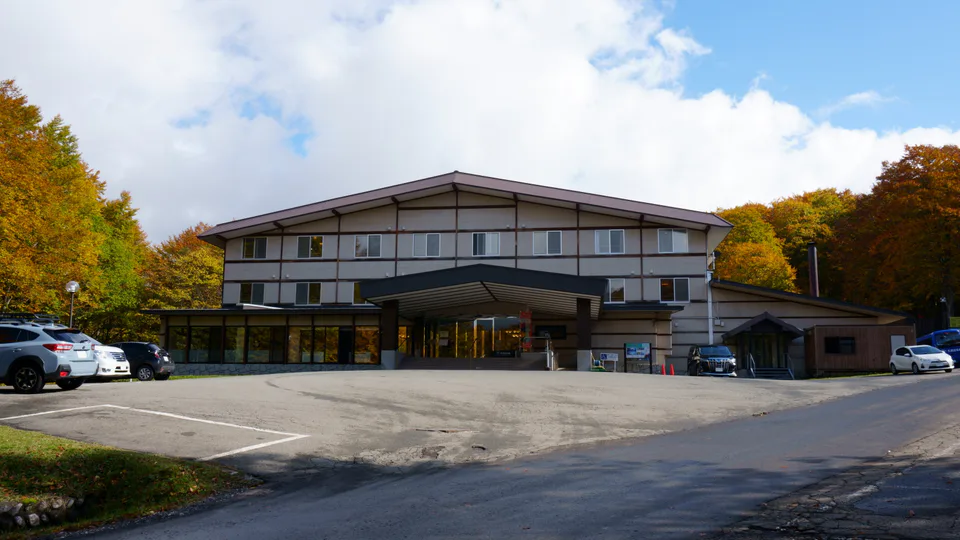
Nyuto Onsenkyo is an experience base. The seven member inns are spread around the mountain area, each with its own source and property-specific access. You accept the bus and last mile because dinner, bathing and the forest setting are meant to consume useful hotel hours.
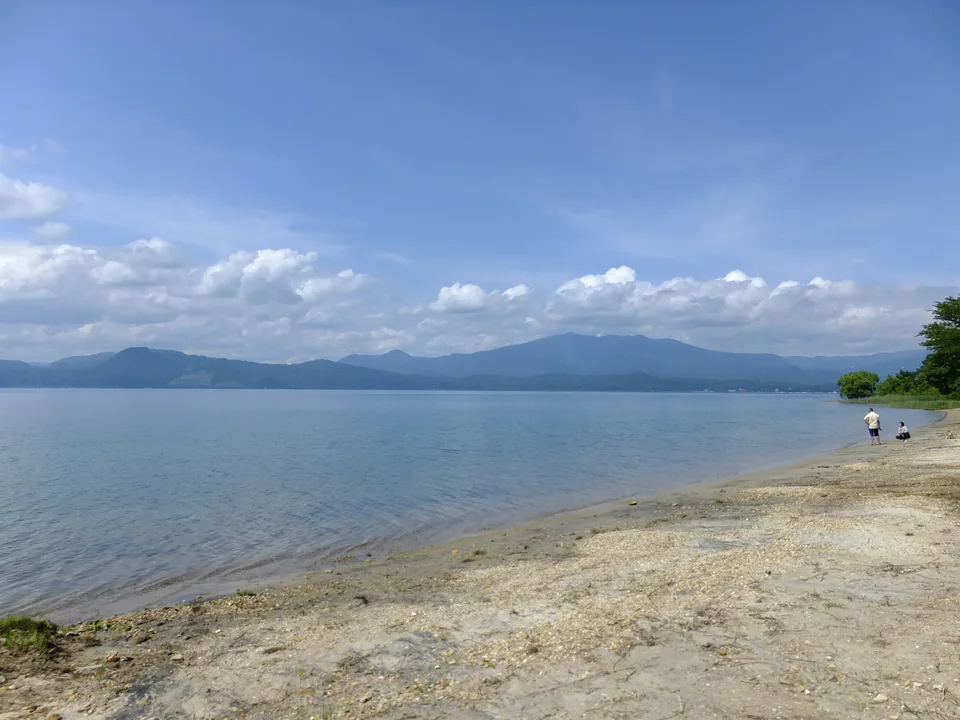
Lake Tazawa shore is a scenery base. On the current Nyuto Line, Tazawako Lakeside is only about 12 minutes from Tazawako Station on many services. That can be a pleasant first or final night when the lake itself deserves sunset, sunrise or a slower morning. But you still need a bus or taxi to the Shinkansen station.
Tazawako Station is the transport base. It is the rational answer when the train, suitcase or late arrival is the hard constraint. A station hotel is not a substitute for the onsen experience; it is a way to stop the itinerary from wasting an expensive mountain night.
Do not combine the lakeside and station into one “easy Tazawako” category. A hotel that is excellent for the lake may be worse for a 07:xx railway departure than a plain room near the platform.
The 17:20 final through bus makes late arrival a hard boundary
The Tazawako-Kakunodate Tourism Association gives the normal Nyuto Onsenkyo journey as about 45 minutes by the Nyuto Line. The current Ugo Kotsu timetable revised April 1, 2026 makes the operating window more concrete.
From Tazawako Station, the published through departures to the upper Nyuto area begin at 06:55 and continue through the day. The final listed through departure is 17:20; it reaches Kyukamura and Taenoyu around 18:05 and the Ganiba terminus around 18:08. Road and weather delays are possible, and Ugo Kotsu explicitly warns that not every service is designed to connect with the Shinkansen.
That creates a stronger planning rule than “arrive before dinner.” If your train reaches Tazawako at 17:10, the mountain stay is already fragile even before you account for leaving the platform, finding the bus stop and handling luggage. If it reaches at 18:00, the scheduled through bus is gone.
A taxi or hotel transfer may still exist, but that is a different product and should be confirmed before payment. Do not buy a non-refundable ryokan night on the assumption that a late public bus will appear because Google Maps shows only 45 minutes of road distance.
The first morning bus is also property-specific
The return direction exposes another hidden problem. The current timetable includes an early service that starts lower on the route at Arupa Komakusa around 07:13 and reaches Tazawako Station around 07:47. But the first listed through service from the upper Ganiba/Taenoyu side starts around 08:00 and reaches Tazawako Station around 08:48.
That means “Nyuto Onsen has a morning bus” is too vague for an early Shinkansen. Your inn’s nearest stop matters. A hotel near a lower stop can have a different first realistic departure from one deeper in Nyuto Onsenkyo.
For an important Komachi connection, work backwards from the train: station arrival margin → bus arrival → nearest stop → checkout/breakfast → hotel-to-stop walk or shuttle. If the chain has no slack, move the final night toward Tazawako Station instead of forcing the onsen to behave like a station hotel.
Tsuru no Yu is the clearest example of why the inn name matters more than “Nyuto”
Ugo Kotsu’s current timetable carries a specific note for Tsuru no Yu. The route-bus stop named “Tsurunoyu Onsen Entrance” is not the ryokan entrance; the operator states that walking from that stop takes about 50 minutes. Travellers are instructed to contact Tsuru no Yu and use its transfer from Arupa Komakusa.
This is a major failure mode for anyone planning only at destination level. Booking “Nyuto Onsenkyo” does not give every inn the same door-to-bus geometry. Taenoyu, Kyukamura, Tsuru no Yu and the other properties must be checked individually.
With two large suitcases, snow or an older traveller, this distinction can override almost every other hotel comparison. A famous inn with the wrong transfer for your arrival can be a worse trip than a less famous inn sitting directly on the bus route.
The Yumeguri pass is one of the few benefits that genuinely requires an overnight stay
The Nyuto Onsenkyo Association currently sells the Yumeguri bathing pass only to guests staying at one of the seven member inns. The published price is JPY 2,500 for adults (about US$16) and JPY 1,000 for children (about US$6.30 at the August 26, 2026 exchange rate), with payment in cash. It covers bathing at the seven member inns, subject to each bath’s operating conditions and closures. JPY is the reference currency and exchange rates move.
This matters because it is a real overnight-only benefit rather than a vague promise of “more atmosphere.” If your plan is to sample several different spring sources, the mountain night can unlock a product a station or lakeside hotel cannot buy for you.
But the pass should still be judged by usable sessions. Hot-spring hopping is not an endurance contest; the association itself warns guests about over-bathing. A one-night stay does not become better value simply because seven baths exist. Ask how many you realistically want to use between check-in, dinner, sleep and departure.
One night: do not spend the only night repairing the transfer
With one night, Nyuto Onsenkyo is the right answer only when the timing supports the experience.
Arrive Tazawako by early/mid-afternoon: Nyuto gets strong. You have time for the bus, check-in, bath, dinner and another session.
Arrive near the final through bus: the value falls sharply. One train delay can erase the bath-before-dinner window or the bus itself.
Arrive after the useful bus window: stay by Tazawako Station unless the inn has confirmed a transfer that still preserves the meal.
Very early rail departure next morning: the station usually wins the final night, especially from the upper Nyuto stops.
A mountain ryokan is not a trophy postcode. If the only usable hotel hours are late sleep and rushed breakfast, use a simpler base and visit Nyuto when you can actually stay.
Two nights: the order should follow arrival and departure, not a fixed template
The old default “Tazawako first, Nyuto second” is only half right. Direction matters.
Station first → Nyuto second
This is strongest after a late Shinkansen arrival. Sleep by the station, leave large luggage if appropriate, then enter Nyuto the next day with enough time to use the ryokan properly. It is especially good when Day 3 has no very early train.
Nyuto first → station second
This is better when Day 1 reaches Tazawako early enough for the mountain transfer but Day 3 has a hard rail departure. The second hotel now removes the risky morning bus instead of creating it.
Lake shore first → Nyuto second
This only makes sense if the lake itself is a real first-night experience—sunset, lakeside hotel time or a slower scenic morning. If the lakeside room is merely a substitute for sleeping beside the station, it can add one extra transfer without protecting either the train or the ryokan.
The split-stay rule is: the first hotel should protect the arrival; the final hotel should protect the departure. If both nights are calm and the onsen is the whole reason for the trip, two nights at the same Nyuto inn can be better than moving for variety.
Large luggage increases the value of the station—but does not automatically kill Nyuto
Forty-five minutes on a bus is easy with an overnight bag and less attractive with two large suitcases in winter. Before downgrading the onsen experience, separate the luggage problem from the hotel problem.
Ask the inn whether it accepts forwarded luggage, whether it can hold bags, and exactly where its pickup meets the route bus. If the larger cases can continue to the following city, the Nyuto night may become much easier with a small bag. The Japan luggage-forwarding guide covers the broader workflow.
If no transfer or forwarding solution exists, the station base becomes more rational because it turns the suitcase into a stationary object. That is a constraint-specific reason to choose Tazawako Station, not proof that the onsen village is generally inconvenient.
Winter raises the cost of a weak last mile
Nyuto is attractive in winter precisely because it feels remote. That remoteness makes poor transfer assumptions more expensive. Ugo Kotsu warns that road and weather conditions can cause delays. Walking routes that look modest in summer can be very different with snow, darkness and luggage.
Use the actual inn’s winter access, not a summer blog post. The current Nyuto Onsenkyo Association also publishes a seasonal Yumeguri shuttle timetable between member inns; service patterns change with season. If onsen hopping is central to the trip, recheck the dated shuttle rather than assuming the same inn-to-inn movement operates year-round.
The red-team question is simple: if the bus is late and outdoor walking is unpleasant, does the chosen property itself still justify the night? A strong ryokan can. A booking chosen only for a famous name may not.
Final verdict
Stay in Nyuto Onsenkyo when you can reach the correct inn with enough margin to use dinner, repeated baths and the following morning. Stay at Tazawako Station when the hard problem is a late train, large luggage or an early onward departure. Stay on the Lake Tazawa shore only when lake time itself is part of the trip; do not treat it as a station hotel with a prettier view.
For two nights, there is no universal order. Late arrival usually favours station first → Nyuto second. An early Day 3 train can reverse it to Nyuto first → station second. And because the 2026 public bus currently stops sending through services from Tazawako Station to the upper Nyuto area after 17:20, the arrival timetable must be fixed before you pay for the ryokan.
Where to Stay Before the Shimanami Kaido: Onomichi or Fukuyama?
Where to Stay for the Saga Balloon Fiesta 2026: Saga, Tosu or Hakata
Lotte Hotel Busan vs Arban Hotel: Is the Five-Star Premium Worth It in Seomyeon?
Lake Biwa Otsu Prince Hotel: Is the 36.2m² Lake View Worth the Shuttle?
References
Ugo Kotsu — Nyuto Line timetable, revised April 1, 2026 · Tazawako-Kakunodate Tourism Association — Nyuto Onsenkyo access · Nyuto Onsenkyo Association — seven member inns and Yumeguri pass. Checked August 26, 2026. Recheck dated bus service, winter access, inn transfer, meal and check-in rules before booking.