For most car-free first visits with only two nights in Fukui, stay both nights around Fukui Station if the Dinosaur Museum and Eiheiji are the priorities. Move the second night to Awara Onsen only when the move buys a real second product: a ryokan dinner and bath, a slow onsen morning, or a route that is already continuing toward Tojinbo, Mikuni or northern Fukui. The biggest planning trap is the name Awaraonsen Station. The Hokuriku Shinkansen stops there, but the station is about 4 km from the actual onsen town. Reaching the Shinkansen station is not the same as reaching your ryokan.
The useful comparison is therefore not “city hotel versus hot-spring hotel.” It is transport flexibility versus a time-sensitive overnight experience. Fukui Station keeps the two most important sightseeing days easy to repair. Awara Onsen earns the hotel move only when you arrive early enough to use dinner, bathing and the next morning rather than turning an expensive ryokan into a late check-in and early checkout.
↔ Scroll table left or right
Your trip pattern | Start with | Why |
2 nights, Dinosaur Museum + Eiheiji | Fukui Station both nights | No hotel move; both major days begin from the strongest transport hub |
2 nights, museum + ryokan experience is equally important | Fukui first, Awara second | Protect the timed museum day, then let the second hotel create a different evening |
Tojinbo / Mikuni on Day 2 or Day 3 | Awara becomes stronger | The sightseeing direction, onsen town and next morning can point the same way |
Late arrival or early Shinkansen departure | Fukui Station | The station base removes another local transfer and dinner-time risk |
Large luggage, children or older travellers | Fukui Station unless ryokan pickup is confirmed | The hotel move costs more when every transfer includes bags or mobility friction |
3 nights | 2 Fukui + 1 Awara is easier to justify | You can give the onsen night a real afternoon, evening and morning without sacrificing a core sightseeing day |
First correction: Awaraonsen Station and Awara Onsen town are not the same place
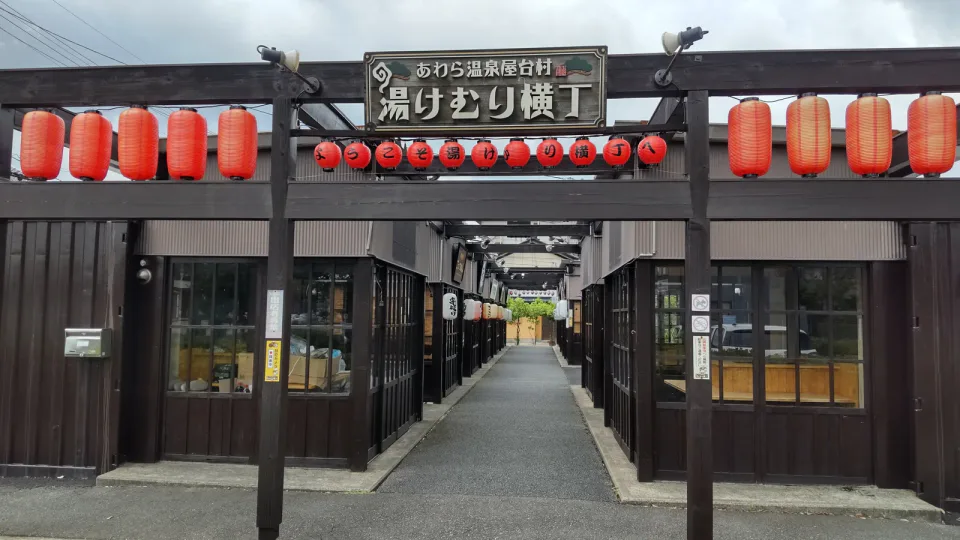
This distinction should be made before you compare hotels. Awaraonsen Station is the Hokuriku Shinkansen / Hapiline Fukui rail gateway. Awara-Yunomachi Station on Echizen Railway sits in the hot-spring town itself. Awara City’s tourism association currently says the Shinkansen station is roughly 4 km from the onsen district; buses or taxis take about ten minutes, and some member ryokan provide reserved pickup. By contrast, ryokan around Awara-Yunomachi are generally within walking distance or a short taxi ride.
This creates a common false assumption: “My Shinkansen arrives at Awaraonsen, so the ryokan is beside the station.” It may not be. A traveller arriving with two large cases still has a final local movement, and a dinner-inclusive ryokan can make that final ten-minute transfer much more important than it looks on a map.
The same geography creates an advantage when the trip genuinely points north. Buses from the Awara area connect toward Tojinbo and Mikuni, and current local guidance also lists services between Awaraonsen Station, the onsen town and the coast. If Day 2 already finishes around Tojinbo and Day 3 continues north or west, sleeping in Awara can remove a backtrack. If every sightseeing day returns naturally to Fukui, the move is much harder to justify.
Fukui Station is the default because it protects the two hardest sightseeing days
The Dinosaur Museum and Eiheiji are not two interchangeable half-day stops. Both have operating windows, transport constraints and enough depth to deserve their own planning. Fukui Station is the one base that lets you keep those days independent.
That independence matters more than shaving a few minutes from one evening. With the same Fukui hotel for two nights, a family can return early after the museum without worrying about ryokan dinner. Bad weather can make you swap the order of the museum and temple days. A late arrival on Night 1 does not destroy a half-board package. Large luggage can stay in the room instead of becoming part of Day 2.
If the wider regional route is still changing, use the Hokuriku 5-day vs 7-day itinerary before committing to another hotel base. The value of Awara rises when the route itself turns north; it falls when it is only an atmospheric detour from a Fukui-centred trip.
The Dinosaur Museum is the hard-edge day: do not attach a fragile ryokan dinner to it by default
The Fukui Prefectural Dinosaur Museum currently requires date-and-time-designated advance admission. Normal opening is 09:00–17:00 with last entry at 16:30, with longer hours during the published summer extension. That makes it the least flexible day in a short Fukui stay.
From Fukui Station, the standard public-transport route uses Echizen Railway to Katsuyama, roughly one hour, followed by a local bus or taxi. The museum also currently lists direct services from JR Fukui Station, including the daily WOW RIDE bus and a separate direct Dinosaur Bus on weekends, holidays and specified busy periods. These options make Fukui Station a strong staging point even without a car.
Awara can also work for the museum, but only on the days the direct service fits. In the 2026 operating year, the prefecture publishes the Awara Dinosaur direct bus from Awara-Yunomachi and JR Awaraonsen on Fridays, Saturdays, Sundays, holidays and selected peak periods. It is useful, but limited-frequency direct transport should be treated as a timetable to build around, not as permanent turn-up-and-go mobility.
For families, this is the key sequencing rule: do not make the child’s highest-priority timed attraction and a fixed ryokan dinner compete for the same delay margin unless the transport chain is comfortably proven. If the museum runs long, souvenir shopping expands or a connection is missed, a Fukui hotel absorbs the delay. An Awara dinner plan may not.
Eiheiji also favours Fukui Station—but it is the easier day to combine with a move
The current Eiheiji Liner runs directly from Fukui Station East Exit and takes roughly half an hour. It operates on a seat-capacity, first-come basis rather than reserved seating, so leaving buffer still matters. This direct link is one reason a station base performs so well on a car-free two-night trip.
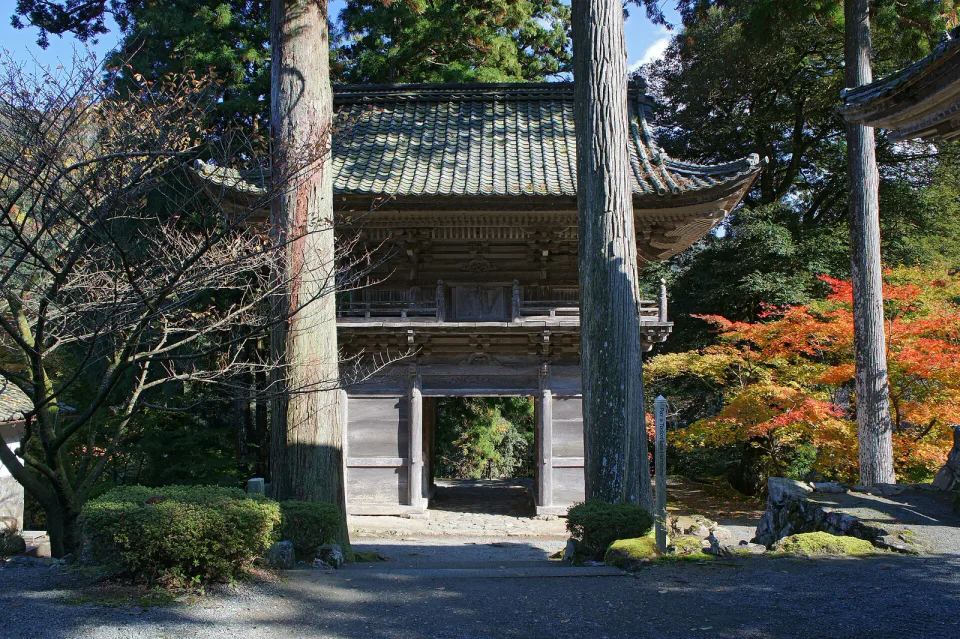
Eiheiji itself currently closes earlier than a typical city attraction: official visitor information lists 08:30–16:30, with admission ending at 16:00, subject to seasonal change. The day therefore rewards an earlier start, but it does not have the same timed-ticket structure as the Dinosaur Museum.
That makes Eiheiji the more natural day for a split stay. If you visit Eiheiji earlier, then continue toward northern Fukui and can reach Awara with generous time before dinner, the hotel move is doing two jobs. If the route simply returns to Fukui Station before heading to Awara solely to sleep, it is mostly adding another transfer.
Use a two-benefit rule before moving to Awara for only one night
On a two-night trip, a second hotel should not be added because “Awara Onsen is famous” or because the Shinkansen station shares the name. I would move only when the Awara night buys at least two benefits that the Fukui hotel cannot reproduce.
Ryokan dinner + onsen morning: the clearest case. You arrive by mid-afternoon, bathe before dinner, sleep there and still use breakfast or another bath the next morning.
Tojinbo afternoon + onsen evening: the route already points toward the coast, so the hotel move follows the sightseeing geography.
Onsen experience + northbound onward route: the next morning does not force you straight back through Fukui.
Confirmed ryokan pickup + luggage delivery: the physical cost of the move has been materially reduced.
A weak split is museum → Fukui → collect luggage → Awara → late dinner → early checkout → back toward Fukui. In that sequence, the onsen hotel becomes a complicated bed rather than an overnight experience.
Awara becomes much stronger on a three-night trip
Three nights change the economics because the hotel move no longer consumes such a large share of the trip. A clean first-time structure is:
Night 1 — Fukui Station: easy arrival, no dinner deadline.
Day 2 / Night 2 — Fukui Station: Dinosaur Museum or Eiheiji, with the same room as recovery base.
Day 3 / Night 3 — Awara Onsen: second core sight in the morning, then Tojinbo / northern Fukui or an early transfer to the ryokan for a proper onsen evening.
That third night is not just “more time.” It creates a full use window for the second accommodation style. The ryokan can receive a real afternoon, dinner, bath and morning instead of fighting the only full sightseeing day.
Large luggage: the Shinkansen station name does not remove the last mile
Awara’s current tourism guidance is unusually useful here. The onsen town is about 4 km from the Shinkansen station, and member ryokan may offer reserved pickup. The tourism association also currently runs a luggage service for guests of specified member ryokan: eligible bags can be accepted at Awaraonsen Station during published hours and delivered to participating properties for a fee.
That makes an Awara split much more practical—but only if your property participates and your arrival time fits the service. Do not assume every ryokan offers pickup, every train is met, or every bag can be sent. Confirm the exact hotel, reservation requirement and luggage conditions before travel.
If you are travelling across several Japanese cities, the Japan luggage-forwarding guide is the more general solution. A useful split-stay tactic is to send the main suitcase onward and carry one overnight bag to Awara, especially when the following hotel is in Kanazawa, Kyoto or Osaka.
Families and older travellers: fewer hand-offs can beat the better-looking ryokan
A family with children often gets more value from Fukui Station than the room photos suggest. One hotel means the museum day can end whenever energy ends. Dinner can be flexible. Wet clothes, souvenirs and strollers can stay in the same place. The next morning starts without repacking.
Awara can still be the better family choice when the ryokan itself is a major part of the holiday—private bath, multi-person room, dinner and a slow morning—but the child meal, bedding, bath policy and pickup all need to work. A “family room” label alone does not solve the transport plan.
For older travellers, compare the entire chain rather than just train minutes: Fukui hotel → station → sightseeing bus/train → return versus Fukui hotel → luggage → Awaraonsen Station → bus/taxi/pickup → ryokan. If the onsen night is genuinely desired, that second chain may be worth it. If not, it is extra mobility cost disguised as atmosphere.
Winter raises the value of margin
The Dinosaur Museum’s official access guidance warns that the Katsuyama area receives snow in winter and tells drivers to use winter tyres and allow extra time. Even without driving, winter weather increases the cost of a tight transfer day. A delayed local connection is more damaging when it also threatens a ryokan dinner or the final pickup.
For a winter two-night trip, I would therefore be more conservative about splitting hotels. Keep both nights in Fukui unless the Awara stay is important enough to justify protecting a large arrival buffer. With three nights, the move is easier to absorb.
What if the Dinosaur Museum is the only Fukui priority?
This is the main case where the default can reverse. If you do not care strongly about Eiheiji, you arrive early, and you specifically want an onsen stay, Awara may be a better base than Fukui even on a short trip. The direct Awara Dinosaur bus on eligible operating days can connect the onsen area and museum without forcing a Fukui hotel night.
But this is a timetable-dependent answer. Check the exact date first. If the direct bus does not run, or the museum admission slot and ryokan dinner create a tight chain, Fukui Station regains the advantage.
Do not let a famous onsen name create an unnecessary hotel move
The deletion test is simple: if you removed the ryokan dinner, baths and slow morning from the Awara plan, would you still move hotels? If the answer is no, then those are the benefits that must justify the transfer. Price and schedule them explicitly.
Likewise, if you remove the museum and Eiheiji from the Fukui plan, the station base loses much of its advantage. The two bases are not universally better or worse. They are tools for different hard edges of the itinerary.
Final verdict: two nights favour Fukui Station; three nights make Awara much easier to earn
Two-night first trip with Dinosaur Museum + Eiheiji: stay both nights around Fukui Station. The same room protects both sightseeing days, luggage and schedule recovery.
Two nights with a genuine ryokan priority: split Fukui → Awara only when the second night earns at least two benefits—typically dinner/bathing plus a slow morning or coast-facing route.
Three nights: two nights in Fukui plus one Awara night is the most natural upgrade because the onsen stay can finally receive a real afternoon and morning.
Most important correction: Awaraonsen Shinkansen Station is not the onsen town itself. Budget the final bus, taxi or confirmed ryokan pickup before calling the transfer “easy.”
Compare Fukui Station-area stays
Continue planning
Hokuriku 5 Days vs 7 Days · How to Choose a Ryokan and Onsen Stay · Japanese Onsen Etiquette · Komatsu Airport vs Noto Airport
References
Fukui Prefectural Dinosaur Museum — current access · Fukui Prefectural Dinosaur Museum — opening hours and reservation rules · Keifuku Bus — current Eiheiji Liner timetable · Awara City Tourism Association — Awara access · Awara City Tourism Association — 2026 transport and luggage FAQ. Checked August 25, 2026. Bus patterns, museum reservation rules and ryokan pickup arrangements can change; verify the exact date and property before travel.