
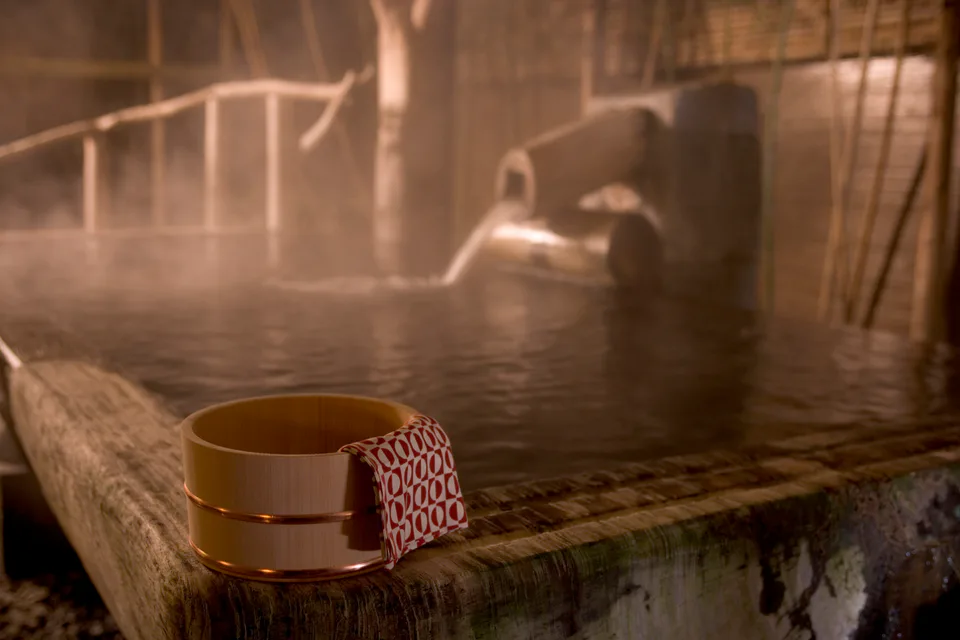

Japanese onsen etiquette is easier if you remember one principle: the shared bath is for soaking, not for getting clean. Undress in the changing room, wash and rinse thoroughly before entering, keep towels and long hair out of the bathwater, speak quietly, leave your phone outside the bathing area and follow the property’s posted tattoo and child rules. If you can do those things, you already understand most of the etiquette that matters.
The harder decision is often not “what do I do inside?” but which bathing product fits you. Choose a standard public bath when nudity and shared space are comfortable. Choose a reservable private bath when tattoos, family privacy, gender mix or first-time anxiety make the public bath the wrong product. Choose an in-room onsen when privacy itself is worth paying a hotel premium for. Do not book a ryokan first and discover its bathing rules afterward.
↔ Scroll table left or right
Your situation | Best starting choice | Check before paying |
No tattoos, comfortable with communal nudity | Public onsen | Bath hours, towel policy and any alternating bath schedule |
Small tattoo | Public bath only if the facility explicitly allows it or approves a cover | Do not assume a generic tattoo patch overrides the property rule |
Large or multiple tattoos | Tattoo-friendly bath or private bath | Whether the private-bath policy is separate from the public-bath restriction |
Couple or family wanting to bathe together | Reservable private bath / in-room bath | Time limit, reservation method and child policy |
Very shy first-timer | Private bath first, public bath later if desired | Do not pay for a premium public-bath ryokan you know you will avoid |
Day trip, no hotel stay | Day-use onsen or sento | Last entry, towel rental and tattoo rule |
The sequence matters more than knowing Japanese vocabulary
A typical public onsen can be reduced to seven actions:
Enter the correct changing room. Most public baths are separated by gender. Look for the posted English, pictogram or the characters 女 (women) and 男 (men). At some ryokan, the bath sides swap by time of day, so recheck the sign even if you used the bath earlier.
Undress completely. Standard public onsen bathing is nude. Leave swimwear and the large bath towel in the changing area unless the facility explicitly operates a different bathing format.
Take the small towel to the washing area. It can be used for washing or modesty while moving around, but it does not enter the bathwater.
Wash and rinse thoroughly. Sit at the shower station when seats are provided, wash the body and remove all soap before entering the shared bath.
Enter slowly. Keep the small towel and long hair out of the water. Do not swim, splash or submerge your head.
Soak only while comfortable. There is no prize for staying in the hottest tub the longest. Leave, cool down or finish when the heat stops feeling comfortable.
Keep the changing room dry. Wipe excess water from your body before stepping back onto the changing-room floor, then dry fully and get dressed.
If you forget a minor detail, follow the posted instructions and the staff. The etiquette is designed to keep shared water clean and shared space comfortable, not to catch visitors making ceremonial mistakes.
Before you undress, solve four questions
A first-time visitor can remove most uncertainty before entering the changing room.
1. Is this the correct bath? Ryokan sometimes alternate men’s and women’s baths at set hours, particularly when the two sides have different outdoor baths or views.
2. Where do valuables go? Some facilities have lockable lockers; others use open baskets for clothing and separate small lockers for valuables. Do not carry your phone into the bathing space simply because you cannot see a locker immediately.
3. Are towels provided? A ryokan commonly provides towels, while a small day-use bath or sento may rent or sell them. Check before walking into the bathing area with the large towel by mistake.
4. Does your tattoo fit the property rule? Ask before paying or undressing. A private bath reservation can solve this at many properties, but not every property applies identical rules.
The large towel and small towel have different jobs
One of the most common first-time mistakes is bringing the large bath towel to the water’s edge and then having nowhere clean and dry to put it.
Large towel: leave it with your clothing in the changing area. Its job is drying afterward.
Small towel: take it into the bathing area. Use it for washing or modesty, then place it on your head or at the side of the bath while soaking. JNTO’s current guidance explicitly says towels should stay out of the shared water.
If a facility provides only one towel or uses a different system, follow its instructions. The rule is not “Japanese baths must have two towels”; the rule is “do not put the washing towel into the shared bathwater.”
Wash first means actually wash, not just splash water on your legs
The bath is shared. JNTO’s current etiquette guidance tells bathers to wash thoroughly at the washing station and rinse away all soap before entering. Makeup should also be removed before soaking.
A quick hot-water rinse—kakeyu—can help you adjust to the bath temperature and is customary at many baths, but it is not a substitute for washing when the facility provides shower stations and expects guests to clean themselves first.
When using a seated shower, keep spray under control and rinse the stool/basin after use. That small reset matters more to other bathers than performing a complicated ritual.
Hair, towels and heads stay out of the water for the same reason
Long hair should be tied up high enough that it cannot trail into the bath. Do not submerge your head, and do not wring the small towel into the bath.
These rules are all versions of the same shared-water principle. You do not need to memorise them independently: the water should contain bathers, not their washing equipment, hair or soap.
Your phone should not enter the bathing or changing space
Onsen are spaces where other guests are undressed. JNTO’s current guidance says to leave phones outside the bathing area. Treat the changing room with the same privacy standard even if you only want to check a message and have no intention of taking a photograph.
If a property has a designated photo period, private bath or specifically marked photo zone, follow that local policy. Otherwise, keep the phone in the locker or room.
This is one area where “I promise I am not filming” is not a useful argument. Other guests should not have to decide what your camera is doing.
Tattoos: there is no universal Japan-wide answer
JNTO’s current guidance is explicit that tattoo rules vary. Some onsen prohibit them, some accept small tattoos if covered with an approved sheet, and a growing number are tattoo-friendly.
The practical hierarchy is:
Best: use the property’s own written tattoo policy.
If unclear: email or ask before arrival.
Small tattoo: ask whether the property accepts a cover patch and whether it must be a specific type/size.
Larger tattoos: search for a tattoo-friendly public bath or book a private bath.
Do not hide a tattoo and hope staff do not notice when the rules say no tattoos. The cost of being refused after check-in is much higher than choosing the right bath beforehand.
A private bath solves privacy, not every hotel rule automatically
A kashikiri-buro is a reservable bath used privately for a set period. It is valuable for couples, families, tattooed travellers and people uncomfortable with communal nudity.
But three products often get confused:
Public onsen: shared bathing area, usually gender-separated.
Reservable private bath: a shared facility you book for exclusive use for a limited period.
In-room onsen: a bath physically attached to your guest room.
They have different price and booking implications. A hotel can be tattoo-restrictive in its public bath while allowing private-bath use. Another may have a different rule. Confirm the actual product rather than assuming “private” is a legal loophole.
Use the Japanese ryokan selection guide before paying for an in-room onsen premium you may not need.
Couples should not assume they can bathe together
The vast majority of standard public onsen are separated by gender. A couple who wants the bath to be a shared activity should book a private bath or room with its own bath rather than planning to “meet inside.”
This is especially important when the ryokan stay is emotionally centred on the bath. Two people can pay a large premium for a famous rotenburo and then discover that they experience it separately. That may be completely fine—but it should be chosen, not discovered.
Families and children: the posted age rule wins
Rules for children entering the opposite-gender bath vary by locality and facility. Do not rely on one nationwide age number from an old blog.
If a parent needs to supervise children of different genders, ask the property before booking. A private family bath can remove the uncertainty and also makes changing, temperature choice and getting young children out of the water easier.
For a family ryokan, this can be more valuable than a famous large public bath that the group cannot use together.
Onsen vs sento: etiquette is similar, the water source is not
Onsen refers to hot-spring water that meets Japan’s legal criteria. Sento is a public bathhouse and may use ordinary heated water. For the visitor, much of the communal-bathing etiquette is similar: wash first, no towel in the bath, protect privacy and follow the local tattoo rules.
This matters because someone who mainly wants to try Japanese public bathing does not always need to travel to a remote hot-spring town. An urban sento can deliver the shared-bath culture with much less transport commitment. Someone specifically seeking mineral spring water, outdoor baths and a ryokan stay should choose an onsen destination.
How long should you soak?
There is no useful universal “correct” number of minutes. Bath temperatures vary, as do bodies, fatigue, hydration and outdoor conditions. Start conservatively, enter gradually and leave if you feel dizzy, weak, nauseous or uncomfortably hot.
Do not use other bathers as a timer. A local guest who sits in one bath for a long time is not setting a target for you.
If you have a medical condition, are pregnant or have been advised to limit heat exposure, follow professional medical advice and the facility’s safety guidance rather than a travel article.
Alcohol and the “ryokan dinner → bath” sequence
A common ryokan pattern is check-in, bath, dinner, then another bath later. That order is often easier than drinking heavily at dinner and immediately entering very hot water.
You do not need to treat the onsen like a challenge that must be completed before bed. Hydrate, let the meal settle and skip another soak if you are tired or have been drinking. The point of a ryokan bath is recovery and enjoyment, not extracting the maximum number of bath sessions from the room rate.
Do you rinse after the onsen?
Facilities and water types differ, so the local instruction wins. The etiquette-critical washing happens before entering the shared bath. After soaking, some visitors leave the spring water on the skin, while others rinse depending on comfort, sensitivity or facility guidance.
Do not turn this into an authenticity test. If the property asks guests to rinse, rinse. If the water irritates your skin, prioritise comfort and safety.
Six mistakes that actually affect other people
1. Entering without washing. This violates the core shared-water logic.
2. Putting the towel in the bath. Keep it on your head or poolside.
3. Letting long hair trail in the water. Tie it up before entering.
4. Bringing a phone into a nude shared space. Privacy matters even without photography.
5. Treating the bath like a swimming pool. No splashing, swimming or loud play.
6. Ignoring the property’s tattoo or child policy. Local rules override a generic travel guide.
Everything else is secondary. A quiet first-timer who follows these six points is easier to share a bath with than someone who knows ten Japanese terms but ignores the basics.
First-timer decision: public bath, private bath or skip?
Choose the public bath if you are curious, comfortable enough with nudity and the property rules fit you. The anxiety often comes from not knowing the sequence, and the sequence is simple.
Choose a private bath if the public format will make you spend the whole session worrying about tattoos, children, your partner or being seen. Paying a little more can turn an avoided amenity into an experience you actually use.
Skip the bath if neither format is comfortable. A ryokan stay is not a cultural exam. Choose a hotel or inn whose value does not depend on forcing yourself through an experience you do not want.
The first-onsen guide focuses on the emotional side; the ryokan selection guide focuses on paying for the right bathing product.
Final verdict
Onsen etiquette is a cleanliness-and-privacy system, not a ritual performance. Wash first, rinse completely, keep towels and hair out of the shared water, stay quiet, keep phones outside and follow the facility’s tattoo and child policies.
The higher-value decision happens before you enter: choose public, private or in-room bathing based on who is travelling and what will actually be used. If a tattoo rule, gender split or family need makes the public bath a poor fit, solve that at booking time rather than at the changing-room door.
Kyoto Tea Ceremony Guide: MAIKOYA Kimono, Etiquette and Booking
Yamadera Autumn Leaves Day Trip: Sendai Trains, 1,015 Steps and Hotels
Japan Autumn Leaves Onsen Ryokan Guide: Foliage Views, Open-Air Baths and Access
Hakkoda Autumn Leaves Guide: Ropeway, Sukayu Onsen, Access and Weather Plans
Unzen Nita Pass Autumn Leaves Guide: Ropeway, Access, Onsen and Nagasaki Routes
References
Japan National Tourism Organization — current onsen bathing steps, towel, hair, phone and tattoo guidance · JNTO — current manners guidance, tattoo variability and private-bath option · JNTO — onsen overview and facility-specific tattoo guidance. Checked August 25, 2026. Property rules always take priority over this general guide.