
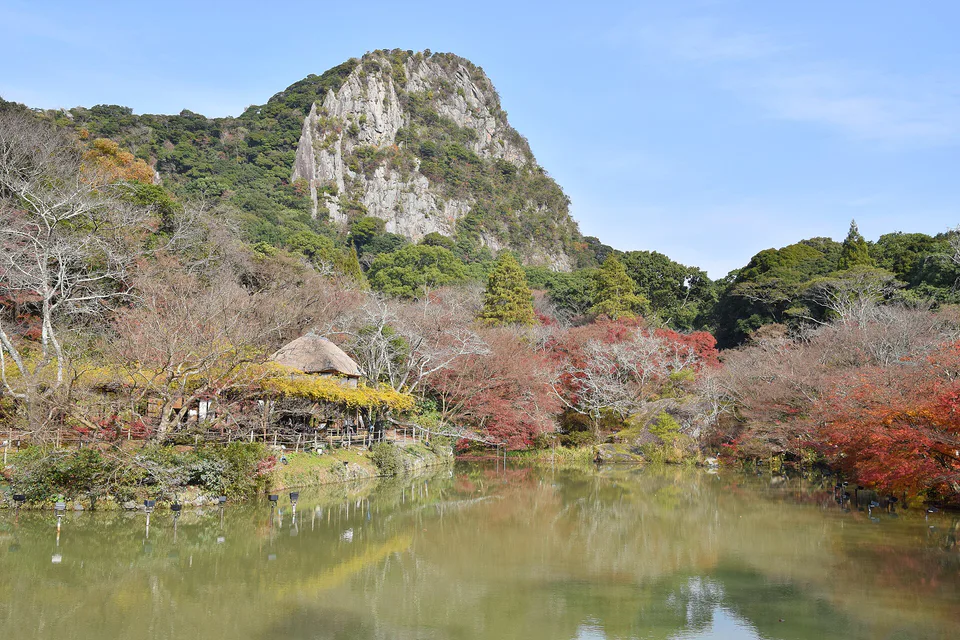
The best autumn onsen ryokan is not the property with the most dramatic foliage photo. It is the stay whose fixed arrival, dinner, bathing and departure windows still fit your route. For a first Japan trip, I would usually favour a lower-friction onsen area such as Hakone, Jozankei, Kinosaki or a well-connected Kawaguchiko stay over a remote mountain ryokan unless the remote hotel itself is one of the trip’s main reasons for travelling. Oirase or Kurokawa can be exceptional, but their transport is part of the booking, not an afterthought.
A one-night ryokan only earns a large autumn premium when you will actually use several hotel-specific hours: an afternoon bath, dinner, a post-dinner bath or town walk, an early-morning bath, breakfast, or a dawn foliage window. If your itinerary reaches the property just before dinner and leaves immediately after breakfast, you may be paying peak-season rates for little more than a bed and two meals.
↔ Scroll table left or right
Your trip pattern | Start with | Why | Main failure mode |
First autumn trip, no car, want an easy one-night onsen | Hakone or Jozankei | City/gateway access is easier to recover if weather or transport shifts | Trying to fit a full sightseeing day before a fixed dinner |
Foliage itself is the main event and you accept scarce transport | Oirase / Lake Towada corridor | Sleeping locally protects early and late gorge time | Missing a reserved hotel shuttle or seasonal bus |
Onsen-town evening matters more than a room view | Kinosaki or Arima | The town, baths and dinner still have value if foliage is imperfect | Arriving too late for half-board and losing the useful evening |
Private natural onsen inside the room is non-negotiable | Choose the exact room product first | Property-level “private bath” wording is not enough | Booking a reservable shared bath or ordinary-water tub by mistake |
Remote Kyushu onsen is the destination | Kurokawa / Unzen / selected Yufuin ryokan | The slow stay can justify the extra transport when you give it enough time | Building the night around the final bus or a late airport arrival |
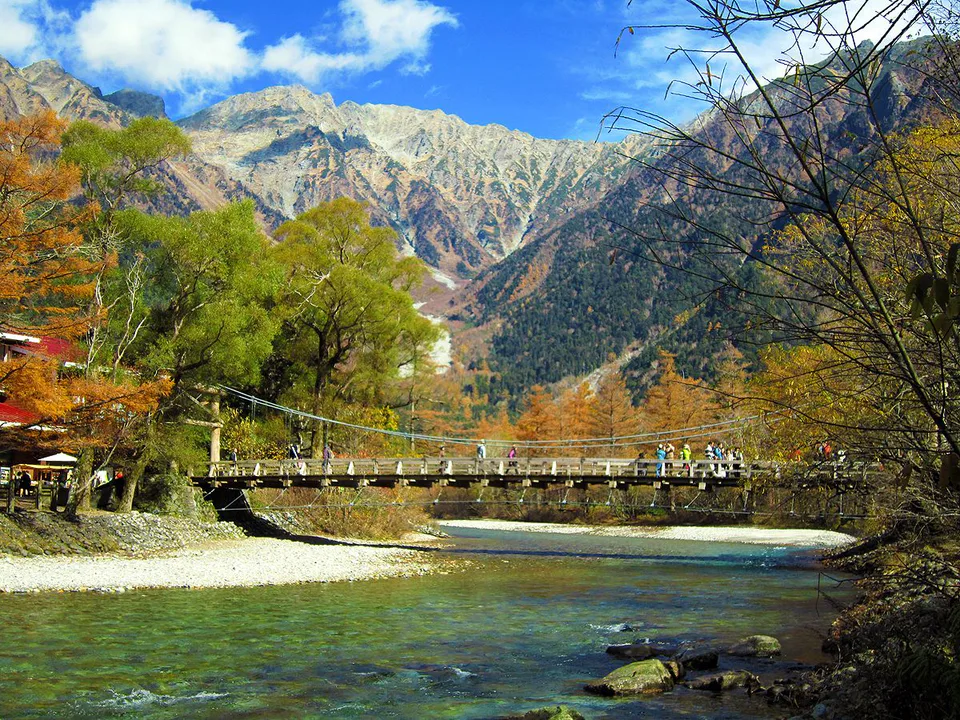
First choose the scarce hours you are buying—not the hotel
Autumn ryokan stays are easy to overbuy because the most attractive room often appears beside the most attractive foliage photo. Before comparing properties, decide which hours need to become better because you sleep there.
For a one-night stay, five hotel-specific windows are common:
Arrival afternoon: check in, settle the luggage, use the bath before dinner, or walk the nearby foliage area.
Dinner: often the most time-sensitive part of a half-board booking.
Evening: another bath, an onsen-town walk, illumination or simply quiet room time after day visitors leave.
Early morning: bath, garden, lake, gorge or town before breakfast and day-trip crowds.
Breakfast to checkout: the final room, bath or scenery window before moving on.
ValueNavi test: if you will genuinely use three or more of those five windows, a premium ryokan can make sense. If you will use only “dinner + sleep” or “sleep + breakfast”, reopen the comparison with a simpler hotel, a room-only plan or a better-located base. This is an editorial planning rule, not a hotel policy.
Foliage sightseeing and ryokan dinner compete for the same afternoon
The biggest autumn scheduling mistake is treating a half-board ryokan as if it were a normal city hotel. A city hotel is often happy to receive you late. A ryokan may have a fixed dinner start, a last meal time, a pickup window and staff preparation tied to your arrival.
Kinosaki’s official visitor guidance makes the conflict explicit: it recommends arriving before check-in time when possible and notes that many ryokan serve dinner around 18:00. Current listed plans on the official Kinosaki booking platform commonly use check-in windows such as 15:00–18:00; one current Ichidaya plan asks guests to arrive by 17:30 because dinner begins at 18:00.
That means the last foliage stop before a ryokan should not be treated as an unlimited afternoon. If the day is Kyoto → Kinosaki, Tokyo → Hakone or Hachinohe → Oirase, work backward from the hotel’s dinner and transport rather than forward from “one more temple” or “one more gorge stop”.
I would deliberately cut a secondary afternoon attraction to protect a high-value ryokan night. You are not losing sightseeing time; you are preventing two expensive products—the autumn day and the ryokan stay—from occupying the same hour.
Remote foliage hotels should be booked as a transport package
Oirase Keiryu Hotel is a useful example because the access itself proves why “room available” is not enough. For April–November 2026, the hotel currently lists a Hachinohe Station shuttle at 14:30 and an Aomori Station shuttle at 15:00. Reservations are required at least two days in advance and close when capacity is reached. The Hachinohe journey is about 105 minutes in April–November; the Aomori journey is about 120 minutes.
Those times create a hard planning consequence. You cannot spend the whole afternoon sightseeing in Aomori or Hachinohe, then casually decide to reach the hotel for dinner. The shuttle departure effectively becomes the start of the ryokan stay.
Once there, the hotel’s 2026 Oirase guest shuttle gives another kind of value: it runs hourly through the gorge from early morning, with the last departure earlier in November because of sunset. This is exactly when an overnight can outperform a day trip—the hotel is not only a bed, it is providing access to a scarce transport window.
The red-team condition is obvious: if the reserved shuttle does not fit your flight or train, do not keep the remote hotel simply because the room is attractive. Move the first night to Aomori or Hachinohe and protect the connection.
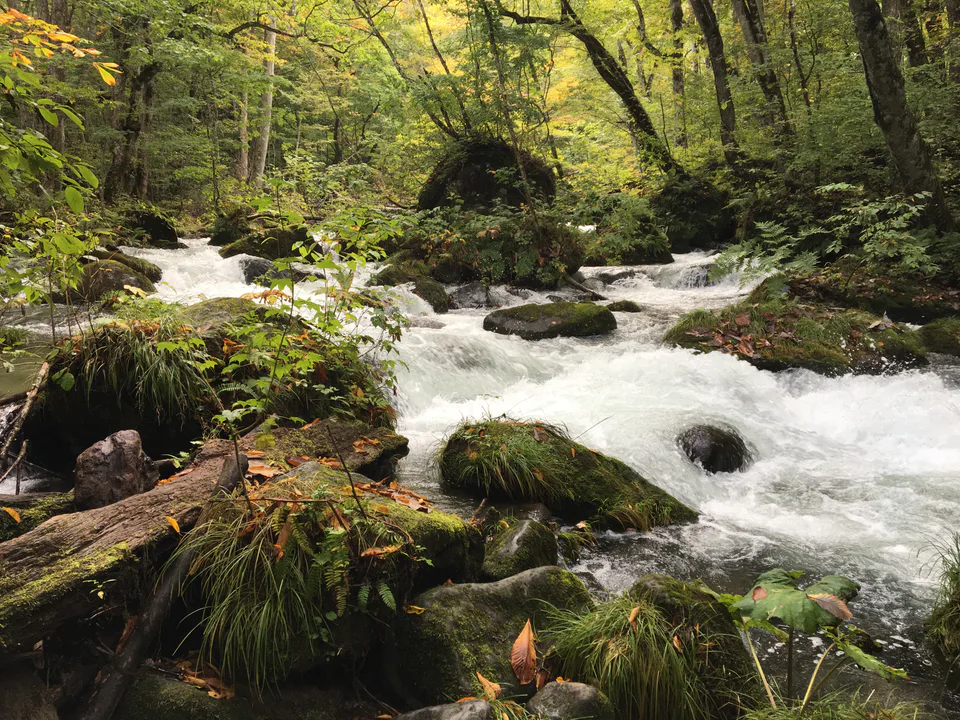
Jozankei is the lower-risk Hokkaido answer when you want onsen without giving the night to transport
Jozankei’s strength is not that it has the most dramatic autumn ryokan in Japan. It is that the onsen area sits close enough to Sapporo to remain a flexible first-trip choice. The Jozankei Tourist Association currently lists about 50 minutes by car from Sapporo and multiple public-transport approaches from central Sapporo and New Chitose Airport.
For autumn 2026, the tourism association has also published dedicated foliage buses within the Jozankei area from October 1, including the Koyo Kappa Bus and routes toward Hoheikyo Dam and Sapporo Kokusai. Those services are weather- and traffic-sensitive, and peak foliage can create Route 230 congestion.
This makes Jozankei a useful “city-edge ryokan” archetype. You can give the hotel a proper afternoon and evening without sacrificing an entire transfer day. If weather deteriorates, Sapporo remains a strong recovery city. For a first Hokkaido autumn trip, I would often pay for this resilience before paying for a more remote room that requires every connection to work perfectly.
Hakone is the easiest place to learn what a private-onsen premium is actually buying
Hakone has a wide range of elevations, hotel styles and transport routes, which makes it forgiving for first-time visitors. But it is still easy to misread the bath product.
Hotel Hatsuhana illustrates the cleanest version of the premium: its current official information says all guest rooms have open-air baths supplied from the hotel’s private hot-spring source. It also operates four reservable private baths, each with a 45-minute time limit, plus public bathing. Check-in is 15:00 and checkout is 11:00, and the hotel provides a courtesy car from Hakone-Yumoto between 09:00 and 17:00 after guests call on arrival.
The decision value here is not “Hatsuhana is best”. It is that the exact room answers three separate questions at once: Is the bath inside the room? Is it natural hot-spring water? Is it available whenever the room is available? Many other “private bath” labels answer only one or two of those questions.
If privacy matters but the most expensive room does not, a reservable private bath may be enough. If a guest cannot use communal baths because of mobility, family needs or personal preference, the in-room natural-onsen category can be worth a much larger premium. Pay for the constraint it removes.
In-room onsen, reservable private bath and communal rotenburo are different products
Do not use “private onsen” as one category. Before paying, classify the bath:
In-room natural hot-spring bath: the strongest privacy product. Confirm that the water is actually onsen water, not simply a private open-air tub.
In-room ordinary-water bath: private, but not the same product if natural hot-spring water is the reason for the upgrade.
Reservable private bath: usually a shared hotel bath that your party uses alone for a timed session. It can be much cheaper than upgrading the room.
Communal rotenburo: often the largest or most scenic bath. It may deliver the best foliage experience even though it is not private.
For a couple, a normal room plus one reservable private bath can outperform an expensive in-room-onsen room if you only want one private session. For older travellers, a room bath can be worth more because it removes corridors, stairs, dressing-room transitions and repeated walks. For families, the correct choice depends on child rules, bath depth, real beds and who will actually bathe together.
If you need a general selector before choosing the region, use the Japanese ryokan and onsen selection guide.
Kinosaki proves that the town can be more valuable than a foliage-view room
Kinosaki is useful as a late-autumn alternative because the night still works even when the leaves are imperfect. The value can come from dinner, yukata, the canal-side town, and the public-bath circuit rather than a single bedroom window.
Official Kinosaki guidance says ryokan guests receive an onsen pass that can be used for the town’s public baths until 13:00 on checkout day. The official station-to-ryokan shuttle generally operates around limited-express arrivals between roughly 12:30 and 18:00, and early-arriving guests can use the Ryokan Service Center for luggage storage or delivery when available.
This changes what you should pay for. If the best part of the stay is walking between public baths, an expensive in-room rotenburo may be redundant. Spend the premium on a better room layout, dinner, location or a second night instead. If a guest will not use public baths, the equation reverses and a private bath may become the core requirement.
For the separate length decision, use Kinosaki Onsen: One Night or Two?.
Kurokawa is worth the transport only when the onsen town is the destination
Kurokawa is almost the opposite of Hakone. The onsen-town experience is distinctive, but public transport is sparse enough that the route must be treated as part of the stay.
The Kurokawa Onsen Ryokan Association currently tells public-transport travellers to check connections carefully. Its current FAQ says buses from Kumamoto, Yufuin and Hakata operate only a few times per day and should be reserved by the previous day. The official access page shows direct Hakata–Kurokawa service at roughly 2 hours 45 minutes and Yufuin–Kurokawa at roughly 1 hour 37 minutes on the relevant cross-Kyushu route.
This is why I would not use Kurokawa as a one-night transit stop between two aggressive sightseeing days. If you accept the transport cost, give the town the afternoon, dinner, bathing circuit and next morning. Otherwise Beppu, Yufuin or a better-connected city may deliver more usable trip time.
If your Kyushu decision is still one level higher, compare Beppu vs Yufuin before adding another hotel move.
Use the bad-colour test before paying the autumn premium
A foliage ryokan is resilient when the stay still works after you remove the leaves from the marketing photo. Ask: If the colours are early, late or hidden by rain, would I still be happy to spend this night here?
The answer is often yes when the property or town has independent value:
Jozankei: onsen + proximity to Sapporo.
Hakone: baths + museums + multiple elevations and transport routes.
Kinosaki: public-bath town + dinner + evening walk.
Kurokawa: the onsen town and ryokan circuit are the destination.
Oirase: the hotel and gorge access can still matter, but severe weather can damage the core outdoor value more sharply.
A room that depends on one named foliage view carries a different risk. If you would resent the premium on a rainy day, keep the rate refundable for longer or choose a room whose bath, meals and layout justify the stay on their own.
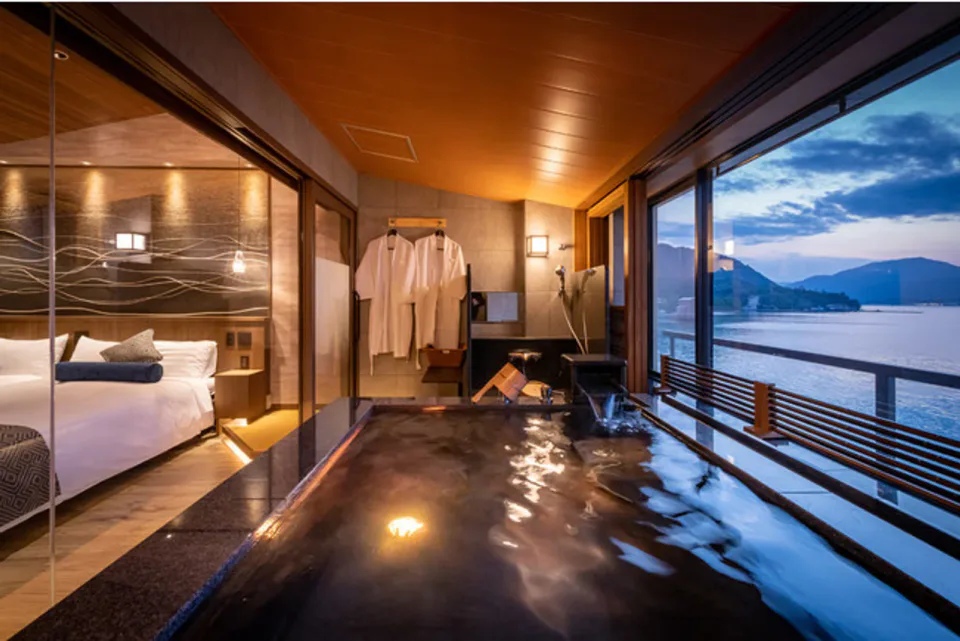
Do not stack three premiums unless you will use all three
Autumn pricing can stack several expensive features into one booking:
peak-season date;
named foliage / mountain / lake view;
private in-room onsen;
half-board dinner and breakfast;
remote-location scarcity.
Paying all of them can be rational, but only when the itinerary uses them. A couple arriving at 15:00, bathing before and after dinner, waking early for the view and spending the morning at the property can use almost every premium. A traveller arriving at 20:00 and leaving at 07:30 cannot.
Use the same logic as a hotel upgrade: identify which premium solves a real constraint, then stop. Do not keep adding expensive features because they sound individually attractive.
Families and older travellers should reverse the usual priority order
For these groups, I would choose in this order:
safe and realistic transport;
actual bed layout and legal occupancy;
bathroom and bathing accessibility;
dinner timing and dietary fit;
then the view.
A spectacular remote ryokan can be the wrong product if the final bus requires running with luggage, the room uses floor futons that do not suit an older guest, or the bath requires stairs. A less photogenic property near the station can create more actual onsen time because the group arrives earlier and less tired.
For children, check age restrictions, child meals, bedding, public-bath rules and whether a private bath is reservable. For older travellers, ask about elevators, stairs, walking distance from reception to the room and dining area, and the physical height or steps of the bath. These details can reverse an otherwise attractive recommendation.
One night versus two: the second night should create a new window, not repeat the first
One ryokan night is enough when the product is compact: arrive mid-afternoon, dinner, baths, slow morning, continue. Two nights become worthwhile when the second day unlocks something you could not use on the first—another weather window, a full gorge or hiking day, a second onsen-town session, or a transport sequence that removes backtracking.
I would not add a second night merely because “autumn ryokan are relaxing”. That second night competes with another scarce Japan night. It has to buy a new useful window or substantially reduce transfer friction.
Final verdict: protect the ryokan hours before you chase peak colour
For a first autumn trip, choose the onsen stay whose logistics let you arrive early enough to use it. Hakone and Jozankei are the easiest low-risk entries; Kinosaki is strong when the onsen town and dinner matter as much as the leaves; Oirase earns the move when the gorge is a primary objective and its shuttle fits; Kurokawa earns the transport only when the slow onsen stay itself is the destination.
Then choose the exact room by bath type, bed layout and view—not by the property’s generic marketing photos. The best autumn ryokan is the one that still feels like a good purchase if the leaves are one week off peak and you only see the view clearly once.
Compare autumn onsen stays for your exact dates
Continue planning
Japan Autumn Leaves Calendar and Route Guide · Jozankei Autumn Leaves · Kawaguchiko Fuji-View Hotels and Private Baths · Hakone Autumn Guide · Kinosaki: One Night or Two?
References
Jozankei Tourist Association — access · Jozankei Tourist Association — 2026 autumn foliage buses · Oirase Keiryu Hotel — 2026 shuttle and access · Oirase Keiryu Hotel — guest gorge shuttle · Hotel Hatsuhana — rooms, hot springs and access · Visit Kinosaki — ryokan timing, shuttle and onsen pass · Kurokawa Onsen Ryokan Association — access. Checked August 25, 2026. Foliage, transport, dinner times, bath policies and room inventory remain date- and property-specific.