
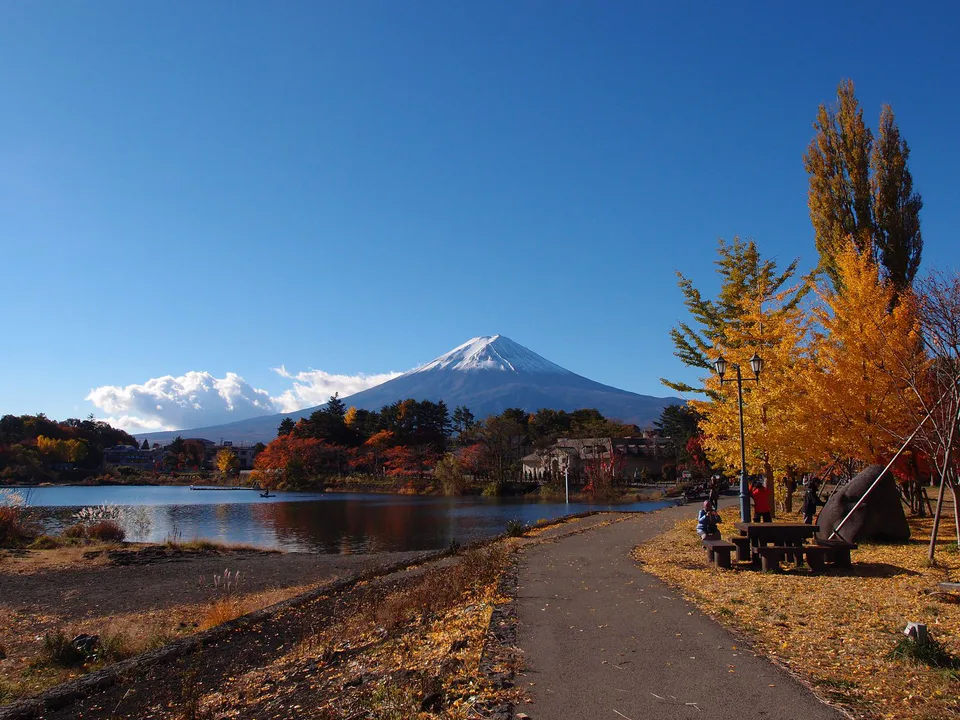
For a first Kawaguchiko stay without a car, I would start with Konansou or Fuji Lake Hotel if you want a named Mt Fuji-view room without giving up easy station access. Choose FUFU Kawaguchiko when the hotel itself is the experience and a private natural hot-spring bath matters even if clouds hide the mountain. Choose Fuji View Hotel when garden space, a scheduled station shuttle and a quieter resort setting matter more than an in-room private onsen. Highland Resort only jumps the list when Fuji-Q Highland is a major part of the trip.
The most important booking rule is simple: do not pay a Fuji-view premium for the hotel name; pay only for an exact room product that explicitly says Mt Fuji view. A lake-view room can face the wrong direction. A “private bath” may be a reservable communal facility rather than a bath inside your room. And even a correctly oriented room cannot guarantee that Mt Fuji will be visible through cloud, rain or fog.
↔ Scroll table left or right
Your real priority | Start with | What you are actually buying | Main reason to reverse |
No car, first visit, want Fuji view + private bath | Konansou | Named Mt Fuji-side rooms with private open-air baths plus station shuttle | You want a larger suite-style hotel experience rather than a ryokan-led stay |
Family / older traveller, want access flexibility + Fuji-side hot-spring room | Fuji Lake Hotel | Specific Fuji-view rooms, some with Kawaguchiko Onsen baths, plus a responsive station pickup | You accidentally book a lake-side room; the hotel states that one room does not show both views |
Couple / occasion, hotel time and in-room natural onsen are the point | FUFU Kawaguchiko | All-suite accommodation, all rooms facing Fuji and all rooms with natural hot-spring open-air baths | You will spend most daylight hours away from the hotel or need station-level flexibility |
Garden, quiet resort time, scheduled shuttle, cloud-day resilience | Fuji View Hotel | Fuji-side rooms, large grounds, public onsen and a fixed station-shuttle rhythm | An in-room private natural onsen is non-negotiable |
Fuji-Q Highland is a major anchor | Highland Resort Hotel & Spa | Named Fuji-view rooms plus Fuji-Q access and official-hotel benefits | Your trip is really about Lake Kawaguchiko, or you are booking it for the adjacent spa while that facility remains closed |
First separate three products that booking sites often blur together
“Fuji-view hotel with private onsen” can describe three very different purchases. Separate them before comparing nightly rates.
Named Mt Fuji-view room: the room category itself explicitly faces or advertises Mt Fuji. This solves orientation, not weather.
Private bath inside the room: only your party uses it, but the water is not necessarily natural hot-spring water unless the hotel says so.
Reservable private bath elsewhere in the hotel: a shared hotel facility booked for a time slot. It may be excellent, but it is not the same product as stepping into an in-room bath whenever you want.
This distinction immediately changes the shortlist. FUFU says every guest room has a natural hot-spring open-air bath. Fuji Lake Hotel has specific special rooms whose open-air baths use Kawaguchiko Onsen water, but also sells ordinary Fuji-view rooms without that same in-room product. Konansou sells a limited set of Mt Fuji-side rooms with private open-air baths, while also operating a separate reservable Mt Fuji-view private bath. Fuji View Hotel has public hot-spring facilities but should not be selected as if every Fuji-facing room includes a private onsen.
ValueNavi rule: screenshot the full room name before payment. “Hotel has Fuji views” and “hotel has private baths” are two property-level statements that do not prove your exact room has both.
Konansou is the cleanest first-time answer when you want both the room view and the ryokan stay
Konansou currently states that it has ten Mt Fuji-view rooms and that those rooms feature private open-air baths. Its Type G example is a seventh-floor corner room with a 12.5-tatami Japanese-style room, a deck and an open-air bath positioned for the Fuji view. The hotel separately sells lake-side rooms, so the room name still matters.
The access pattern is also unusually workable for a ryokan stay. Konansou currently provides a complimentary Kawaguchiko Station shuttle: guests call after arriving, pickup operates from 09:00 to 17:00, and the hotel also provides next-morning station drop-off by arrangement.
That combination makes Konansou strong for a first trip because the premium buys two things that reinforce each other: a time-sensitive room experience and a relatively simple no-car arrival. You can arrive in the afternoon, use the room before dinner, bathe again after dinner and have another chance to see Fuji in the morning.
The failure mode is a late arrival. A ryokan room, dinner and private bath all lose value if you reach Kawaguchiko after the useful check-in window. If the inbound bus or train is already late, a station-oriented hotel or a room-only plan may be more resilient than forcing an expensive half-board stay into a few sleeping hours.
Fuji Lake Hotel is the more flexible family and accessibility choice—but never confuse Fuji side with lake side
Fuji Lake Hotel's current official information makes one important limitation unusually explicit: a room has either the Mt Fuji view or the Lake Kawaguchiko view; you do not get both at once. That is exactly the sort of detail that a booking-site thumbnail can hide.
Its current special-room inventory includes Fuji-view rooms with open-air baths using water from Kawaguchiko Onsen. The published Fuji-view Standard special room is 42 m² with capacity for four. The hotel also sells ordinary Fuji-view twins and separate lake-view categories, so “Fuji Lake Hotel” alone is not the product.
For no-car travellers, the hotel currently offers a practical station pickup: call from Kawaguchiko Station, wait at bus stop 10, and the hotel states that pickup generally takes about 5–15 minutes. Morning drop-offs run on a schedule. That is useful for families, older travellers and anyone who does not want a taxi dependency.
There is also a separate reservable Fuji-view private bath. The hotel currently prices the Fuji-view cypress bath at JPY 3,850 for one hour, with reservations accepted only on the day. Do not use that facility to justify a room premium as though it were guaranteed in-room bathing: it is a separate, capacity-limited product.
I would choose Fuji Lake over Konansou when the group values room flexibility, accessibility or hotel logistics more than a strongly ryokan-led night. I would not choose it from the phrase “lake hotel” while assuming a Fuji panorama. Lock the room orientation first.
FUFU Kawaguchiko is the strongest cloud-day purchase because the private onsen survives even when the view does not
FUFU is the easiest hotel here to understand at product level. Its official site says all guest rooms are suites facing Mt Fuji, weather permitting, and all guest rooms have natural hot-spring open-air baths. The standard two-person suite categories start around 59–65 m², while larger premium suites rise substantially beyond that.
But not every FUFU room gives the same visual experience. The first-floor Stylish Suite looks through the forest; second- and third-floor Comfort Suites see Fuji and the lake through the treetops; the fourth-floor Precious Suite is positioned as the stronger elevated view. Paying “for FUFU” without comparing floors can therefore be the same mistake as paying “for a Fuji-view hotel” without comparing room sides.
The main reason I would pay the FUFU premium is not a promise of clear weather. It is that the stay still has a strong product when Fuji disappears: a large suite, private natural hot spring, fireplace, forest setting, restaurant and communal bath. That makes the booking less dependent on a single external condition.
The trade-off is transport freedom. FUFU's official access guidance uses roughly 15 minutes by taxi from Kawaguchiko Station. If you are arriving late, leaving early, moving large luggage or using the station repeatedly, that last mile is real. The hotel is strongest when you deliberately schedule time inside it rather than treating it as an expensive place to sleep between full sightseeing days.
Fuji View Hotel is the quiet-space alternative when you want the grounds more than a private room bath
Fuji View Hotel currently sells both Fuji-facing and other room orientations. Its official material says Fuji-side rooms can see Mt Fuji in Japanese- and Western-style categories, while the property's large grounds and garden are central to the stay.
For no-car travellers, its current scheduled shuttle is a useful difference from a call-on-arrival system. The published Kawaguchiko Station departures run from 08:45 through 19:45 at roughly hourly intervals with a midday gap, and the ride is about ten minutes. That gives the hotel a predictable transfer rhythm, but it also means you should not arrive after the last shuttle assuming the hotel is station-adjacent.
Fuji View becomes attractive when the bad-weather test matters. If the mountain is hidden, you still have the grounds, public onsen and a quieter resort environment. It becomes weaker when your must-have is a natural hot-spring bath inside your own room. In that case, compare the exact Konansou, Fuji Lake or FUFU room product instead of using “has onsen” as a substitute.
Highland Resort is a Fuji-Q hotel with Fuji-view rooms—not a substitute for a Lake Kawaguchiko private-onsen stay
Highland Resort currently sells clearly named Fuji-view room categories, including a 54 m² family room that can sleep up to six with four regular beds plus sofa-bed positions. It also gives hotel guests Fuji-Q Highland benefits, including entry before the general opening under the current hotel rules. Its highway-bus terminal sits in front of the hotel, so the transport geometry can be excellent when Fuji-Q is the anchor.
That is a different trip from staying beside Lake Kawaguchiko for a private onsen and lake-and-Fuji composition. Do not include Highland Resort in the shortlist merely because the room has a Fuji view.
There is also a time-sensitive 2026 caveat. The adjacent Fujiyama Onsen is currently closed after renovation work and earthquake-related damage; the hotel says reopening remains undecided and currently directs interested hotel guests to Hotel Mt. Fuji as an alternative bathing facility, without a shuttle. As of August 25, 2026, do not value Highland Resort as though normal adjacent-onsen access is operating.
If Fuji-Q is not a major part of your itinerary, Highland Resort usually loses to a Kawaguchiko hotel whose lake, room or bath experience matches the reason you came.
Use a Fuji-view-session test before paying the room premium
A Fuji-view room has value only during the hours you are actually in it and awake. For a one-night stay, there are usually four plausible view sessions:
arrival afternoon;
sunset / pre-dinner room time;
early morning after waking;
breakfast-to-checkout time.
If your itinerary arrives at 20:30, leaves the room at 07:00 for a tour and checks out immediately, the room may give you almost no daylight view session. Paying a large view premium in that itinerary is mostly buying the possibility of a brief morning reveal.
If you arrive at 15:00, have dinner at the property, wake early and spend a slow morning at the hotel, you may use three or four view sessions. The same premium is now buying repeated opportunities.
This also gives you a simple way to compare one night with two. A second night is not automatically worth double. It earns its cost when it adds another meaningful hotel morning, sunset or weather-recovery window rather than just another night when you are away sightseeing.
The bad-weather test is more important here than at most hotels
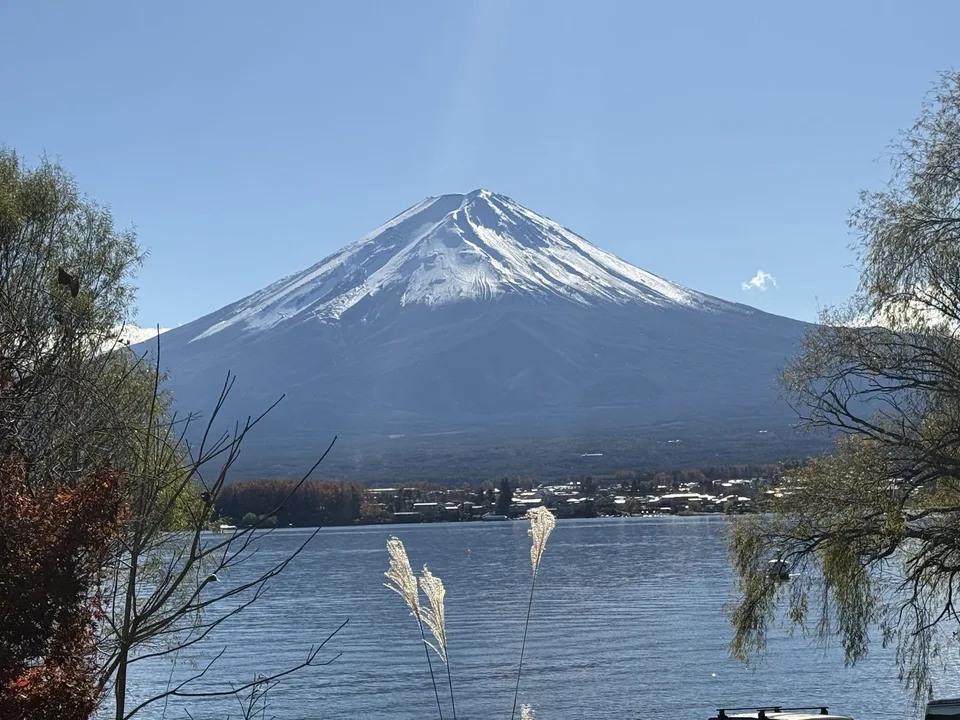
Mt Fuji visibility is weather-dependent. A named Fuji-side room solves direction, not cloud. Before paying a large premium, ask one question: if I never see the summit clearly, would I still be happy I chose this hotel?
FUFU: strongest yes if private natural onsen, room size and hotel time matter.
Konansou: still defensible if the ryokan dinner, bath and slow night are part of the trip.
Fuji Lake: defensible when family logistics, accessibility and an in-room hot-spring room are also useful.
Fuji View: defensible if the garden and quieter resort setting are part of the appeal.
Highland Resort: defensible when Fuji-Q is doing the main work; weak if you booked it only for the mountain.
If your answer is “I would be disappointed because the only reason I am paying more is the view,” use a more flexible or cancellable rate and avoid stacking the same premium twice—for example, expensive Fuji-view room + private bath you will not use + meal plan that conflicts with your sightseeing.
North shore versus station-side is really hotel-time versus transport optionality
The classic north-shore and lakeside Fuji composition is attractive because the mountain sits across the water, but it can make the hotel more dependent on shuttle, taxi or bus timing. FUFU is a clear example: excellent hotel-time product, but roughly a 15-minute taxi leg from the station.
Konansou and Fuji Lake sit in the more transport-friendly Funatsu/Kawaguchiko Station orbit and both provide station transfer support. They are stronger when you arrive with large luggage, continue to Hakone or Tokyo the next morning, or need a late change of plan.
Fuji View sits in Katsuyama on the southern side of the lake and uses a scheduled shuttle. It is neither a station hotel nor the classic north-shore product. That can be exactly right when you want a quieter property and are willing to live by its transfer rhythm.
For the wider area choice, use Where to Stay at Lake Kawaguchi: Station, North Shore or Fuji-Yoshida? before comparing hotel brands. Area geometry should come before amenities.
For four people, maximum occupancy is not the same as four equivalent beds
Families and adult groups need to open the bed layout, not just the capacity line. A four-person Japanese-style room can use futons; a western room can use sofa beds or extra beds; a suite can have two large beds plus added sleeping surfaces.
Examples in the current official material show why this matters. Fuji Lake's 42 m² Fuji-view special room has capacity for four but combines two beds with Japanese-style space. FUFU's rooms for more than two guests may use extra beds. Highland Resort's 54 m² Fuji-view Family room lists four 120 cm beds plus two sofa-bed positions for maximum six-person occupancy.
For two parents with children, those arrangements may be excellent. For four adults who want four equal western beds, the same “sleeps four” label may fail. Make bed equality a veto before paying for the view.
When I would not pay for a Fuji-view room
I would downgrade the view before I downgraded the whole trip when:
the arrival is after dark and departure is before the first useful morning window;
the forecast is poor and the hotel has little non-view value for you;
the Fuji-view room forces a bed layout that does not work for the group;
the premium removes budget from an extra night that would give you a second weather window;
or the hotel location creates a fragile onward transfer with large luggage.
A cheaper room plus a second Kawaguchiko morning can sometimes buy more real chances to see Mt Fuji than one very expensive room for a single night. That is a trip-design decision, not a statement that view rooms are overpriced.
Final verdict: pick the room whose value survives both clouds and your itinerary
Konansou is my first no-car choice for a classic one-night Fuji-view ryokan stay. Fuji Lake Hotel is the more flexible family/access choice when you carefully lock a Fuji-side room product. FUFU Kawaguchiko is the strongest premium choice when the private natural onsen and suite time are worth paying for even on a cloudy day. Fuji View Hotel works when gardens, quiet and a scheduled shuttle matter more than an in-room bath. Highland Resort should be selected because Fuji-Q is part of the trip, not because it happens to sell Fuji-view rooms.
Whichever hotel you choose, save the full room name, view wording, bath type, meal plan, shuttle rule and cancellation condition. The correct question is not “Which Kawaguchiko hotel has the best Fuji view?” It is “Which exact room still makes sense if the mountain appears for only one of the view sessions I actually use?”
Compare Kawaguchiko stays for your dates
More planning
Where to Stay at Lake Kawaguchi: Station, North Shore or Fuji-Yoshida? · How Many Nights in Lake Kawaguchi? · Mt Fuji Day Trip or Overnight? · Tokyo to Kawaguchiko: Train, Bus or Tour? · Luggage Forwarding for Kawaguchiko and Hakone
References
Fuji Lake Hotel — current room categories · Fuji Lake Hotel — overseas guest, shuttle and private-bath information · Konansou — Mt Fuji-side rooms and hot springs · FUFU Kawaguchiko — room categories · FUFU Kawaguchiko — natural hot springs · Fuji View Hotel — current shuttle and access · Highland Resort Hotel & Spa — current room categories · Highland Resort — current Fujiyama Onsen closure notice. Checked August 25, 2026. Room names, transport, bath access and operating conditions can change; recheck the exact booking date.