For a two-night, car-free autumn stay at Lake Kawaguchi, I would default to the Kawaguchiko Station / Funatsu area when transport, luggage and an onward journey matter most. I would pay for the north shore only when the Maple Corridor illumination, a lake-and-Mount-Fuji room, or a slow ryokan evening is itself one of the experiences you came for. Choose Fuji-Yoshida only when Fuji-Q Highland, Fujisan Station or an early Arakurayama Sengen Park morning is a real priority—not merely because Lake Kawaguchi hotels are expensive.
The key autumn trade-off is hidden in the timetable. The 2026 Fuji Kawaguchiko Autumn Leaves Festival is scheduled for November 7–29, with illumination from sunset until 9:00 p.m. The Maple Corridor is about 20 minutes from Kawaguchiko Station on the Red Line plus a short walk from the Kubota Itchiku Art Museum stop. But evening local transport does not simply run until the lights go off. If you stay near the station and want the full illuminated evening, solve the return before booking the room. A genuinely walkable north-shore hotel is buying you freedom from that last-mile problem as much as it is buying a view.
Checked August 25, 2026. Fujikawaguchiko’s official tourism site lists the 2026 autumn festival for November 7–29 with illumination until 21:00. Current Fujikyu Railway timetables are effective from March 14, 2026. Current local-bus information still shows evening services on the Kawaguchiko sightseeing-bus corridor ending well before a 21:00 illumination finish. Timetables, festival operations, hotel shuttles and road conditions can change, so recheck the exact date.
Lake Kawaguchi autumn stay: the 30-second decision
↔ Scroll table left or right
Your real priority | Start with | Why | Main catch |
First visit, car-free, large luggage, late arrival | Kawaguchiko Station / Funatsu | Rail, highway buses, sightseeing buses and onward transport all converge here | You still need a return plan after a full north-shore illumination evening |
Maple Corridor after dark is a must-do | North shore within genuine walking range | Removes the weakest late-night transport segment | Higher autumn prices and more difficult arrival with large luggage |
Ryokan dinner + onsen + lake/Fuji view are the stay | North or south shore, exact hotel first | The hotel can justify being less transport-efficient | Dinner and shuttle cutoffs become hard constraints |
Family / older travellers want a lake hotel without a difficult final walk | South shore with a verified shuttle | Can trade north-shore walkability for a controlled hotel transfer | The shuttle must match your arrival and evening plans |
Fuji-Q occupies most of one day | Fuji-Q / Fuji-Yoshida | You stop commuting back from the lake after the park day | Maple Corridor and lakeside evenings become separate journeys |
Chureito Pagoda early morning is the goal | Shimoyoshida side of Fuji-Yoshida | The park is reached from Shimoyoshida, not from a generic “Fuji-Yoshida” hotel zone | Still not a lake or Maple Corridor base |
Oishi Park sunrise / photography with a car | Northwest shore | Early light matters more than station access | Weak choice for car-free late evenings |
The autumn premium is partly a night-return premium
The official 2026 festival schedule makes this the most important seasonal difference. The illumination lasts until 21:00, while the ordinary sightseeing-bus network is fundamentally a daytime transport system. Fujikyu’s current local-bus information, for example, shows an evening P1 service leaving Kawaguchiko Natural Living Center at 18:27 and returning to Kawaguchiko Station at 18:54 while running along the sightseeing-bus route. That is useful transport, but it is not a 21:00 festival-exit solution.
This changes how a north-shore room should be valued. A hotel close enough to walk from the Maple Corridor does not merely save a daytime bus fare. It can remove the uncertainty of finding a taxi, leaving the illumination early or waiting on a cold November night. If you know you will stay until the lights finish, that operational advantage is repeatable and concrete.
The opposite is also true. If you only want the leaves in daylight, or you are happy to leave the corridor before dark, much of the north-shore premium disappears. The station area becomes stronger because it keeps the entire regional transport network available without forcing the hotel to solve one special evening.
Kawaguchiko Station is the safest default, but not the best illumination base
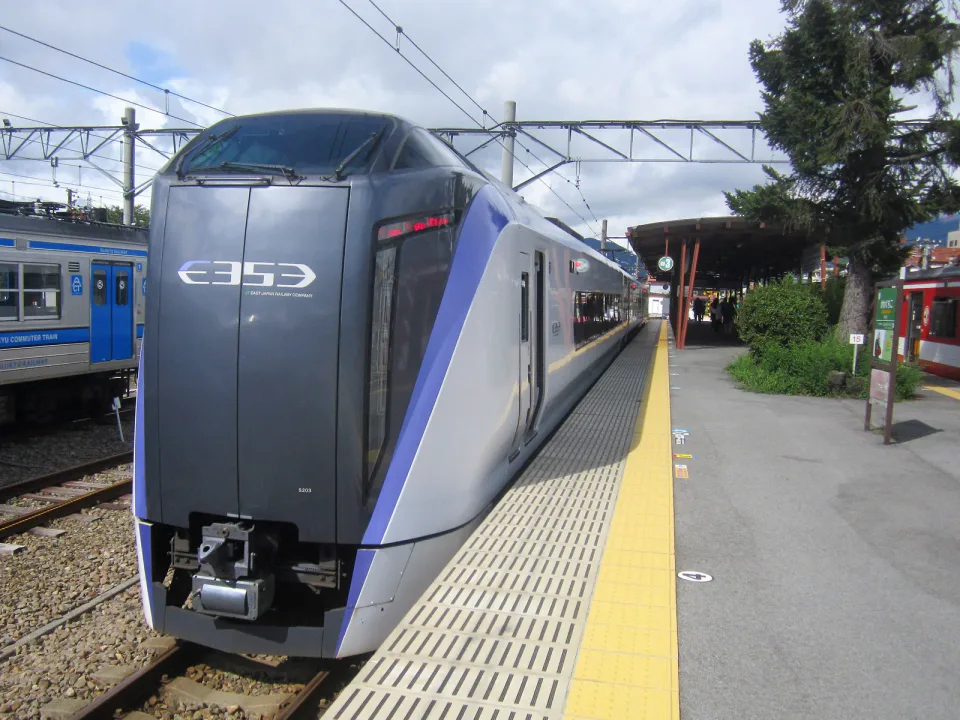
Kawaguchiko Station is the transport hub for the lake. Fujikyu Railway, Fuji Excursion services, highway buses and the local sightseeing buses all meet here. The current station timetable continues to show departures toward Otsuki through 22:10, although an onward connection to Tokyo must still be checked separately. For a traveler arriving with two large cases, changing cities after checkout or dealing with uncertain weather, that flexibility is valuable.
The station area also reduces the cost of being wrong. If Mount Fuji disappears behind cloud, you can switch to a museum, Fuji-Q, Fuji-Yoshida or an earlier onward departure without first escaping a remote lakeshore hotel. That resilience matters in autumn because a two-night stay is partly a weather hedge.
But do not confuse transport convenience with Maple Corridor convenience. The official corridor page places the Red Line ride from Kawaguchiko Station at about 20 minutes, followed by roughly five minutes on foot from the Kubota Itchiku Art Museum stop. That is easy in the daytime. It is a different product after the illumination when scheduled local transport is thinning out.
ValueNavi rule: if you expect to arrive at Kawaguchiko late in the day, start with the station area unless the lakeside hotel has confirmed your pickup and dinner plan. This is an editorial safety rule, not an official transport cutoff.
North shore is worth paying for when you will use it before breakfast and after dark
The north shore is the strongest experience-led base during autumn because it can combine three scarce windows: the Maple Corridor after day visitors thin out, early lake-and-Fuji light, and a ryokan evening that does not require another bus ride. That is more defensible than paying extra simply because the room description says “Mt. Fuji view.”
The red-team case is a park-and-transport-heavy itinerary. If you arrive after dinner, leave before sunrise or spend the entire next day at Fuji-Q, you are paying north-shore prices for a hotel zone you barely use. The same is true when the exact room does not face Mount Fuji or when weather hides the mountain: location remains valuable, but the view premium may not.
For car-free travelers, “north shore” is also too broad a label. A property six minutes from the corridor and a property that still needs a bus or taxi are not the same autumn product. Measure the walk from the actual hotel entrance to the corridor, not from a broad map pin or the words “Kawaguchi north shore.”
South shore is the shuttle-dependent compromise
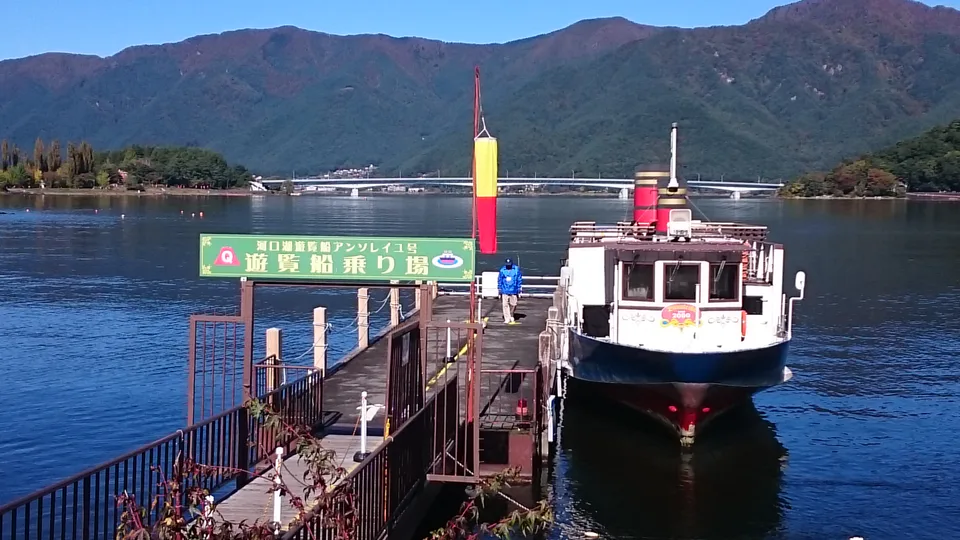
South-shore hotels can be an excellent middle ground for families and older travelers: you keep a lake stay, often gain larger resort-style rooms or onsen facilities, and avoid the most remote northwestern location. But the hotel shuttle becomes part of the room product.
Before booking, write down four times: your expected arrival at Kawaguchiko Station, the hotel’s final pickup, the dinner cutoff, and the next morning’s first useful departure. A shuttle that looks generous at 15:00 can be irrelevant to a 19:00 arrival. A fixed timetable and a call-on-arrival shuttle are also different products.
If the illumination is the main event, ask a fifth question: how do we get back after the Maple Corridor? A hotel may have an excellent station shuttle and still offer no return from the north shore. Do not mentally turn “hotel shuttle available” into “the hotel solves all local transport.”
Fuji-Yoshida only wins when it changes the trip, not when it is merely cheaper
Fuji-Yoshida is not a substitute north shore. It is a different trip geography. Fujisan Station is a tourism hub for Fuji-Yoshida, while Shimoyoshida is the closest railway station to Arakurayama Sengen Park. Fuji-Q Highland sits between Fujisan Station and Kawaguchiko on the railway line.
The towns are also close enough that splitting hotels purely to save train time is hard to justify. One current Fujisan Express schedule runs from Fujisan Station at 10:41 to Kawaguchiko at 10:46—five minutes. Ordinary services vary, but the underlying point is durable: the rail distance is much smaller than the friction of checking out, moving luggage and checking in again.
So when does Fuji-Yoshida actually win?
Fuji-Q is a full day: ending the day near Fuji-Q or Fujisan Station can be more useful than returning to a lake hotel you will barely see.
Arakurayama is an early-morning priority: search around Shimoyoshida rather than treating Fujisan Station as the same base. The official park information places the park about 20 minutes on foot from Shimoyoshida Station, followed by a 398-step climb to the observation deck.
Your onward route uses Fujisan Station: some highway-bus routes serve Fujisan Station directly, making the station a real transport decision rather than an overflow hotel zone.
If none of those is true and the lake, Maple Corridor and ryokan are the purpose of the stay, moving to Fuji-Yoshida because lake hotels are expensive often saves money by removing the experience you were trying to buy.
Oishi Park is a sunrise base, not a Maple Corridor base
Oishi Park and the northwest shore are often grouped with the north shore because both can produce excellent lake-and-Mount-Fuji compositions. They should not be treated as the same accommodation problem. Oishi is farther west and is served by the sightseeing-bus corridor, but it is not the Maple Corridor walking zone.
For a driver or a photographer building the stay around dawn light, that can be exactly the point. For a car-free traveler who wants the 21:00 illumination and then an easy return, it can create the wrong last mile. Choose the northwest shore for what happens at sunrise, not because the map says “north side of Lake Kawaguchi.”
Two nights should usually mean one hotel
The old temptation is to use night one near Kawaguchiko Station and night two on the north shore—or one night in Fuji-Yoshida and one at the lake—to “optimize” every day. For a two-night stay, that usually destroys the benefit.
A hotel move consumes checkout time, luggage handling, a period when you may not have a room, and another check-in. The transport you are trying to save is often only one local bus or a few minutes of railway. Keep one base unless the second hotel unlocks a completely different high-value time window.
There is one split I would consider: a genuinely late arrival followed by a special ryokan night. Sleep near Kawaguchiko Station on night one if your arrival would miss the ryokan’s pickup or dinner, then move once the next morning and make night two the onsen / half-board / illumination experience. Here the move changes the evening product rather than merely shaving a commute.
One night and two nights should not use the same ranking
For one night, transport margin dominates. The station area is the cleanest default because a delayed bus from Tokyo or a slow onward morning can otherwise consume much of the stay. A north-shore one-night stay only works when you can arrive early enough to use the hotel, dinner and evening.
Two nights change the logic. You gain two mornings, one full day and a second chance at Mount Fuji visibility. This is when a north-shore or northwest-shore experience can justify more transport friction. But the second night only adds value if the itinerary remains in the lake area. If day two is entirely Fuji-Q and day three leaves early, the lake premium is still being underused.
Autumn leaves make dinner deadlines more—not less—important
Half-board ryokan are attractive during the festival because the lakeshore has fewer late dining fallbacks than a major city. But illumination and dinner can compete for the same early-evening hours. Do not book a fixed dinner and then assume you can stay at the corridor until 21:00.
Use this order:
Confirm the hotel dinner cutoff.
Confirm whether the corridor is walkable from the hotel.
If not, confirm the post-illumination transport.
Only then decide whether the meal plan and illumination can coexist.
A hotel can be excellent for autumn leaves and still be the wrong booking for a traveler whose only available corridor window is after dinner.
Mount Fuji view and lake view are not the same room feature
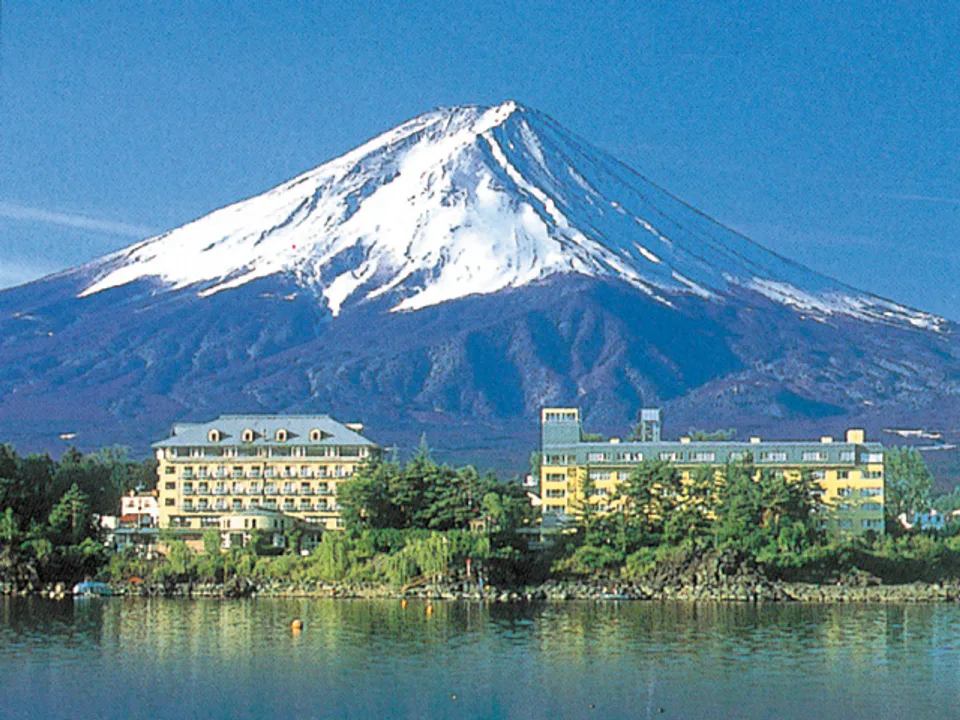
Do not buy a room from the hotel name or shore alone. Around Lake Kawaguchi, “Lake View,” “Mt. Fuji View,” “Fuji side” and “private open-air bath” describe different attributes. A lake-facing room on the wrong side can look away from Mount Fuji; a Fuji-facing room can still have trees, lower floors or weather between you and the mountain; a private bath is not automatically an onsen bath or a Fuji-view bath.
This is where the old 36-property audit created false precision. The correct unit is not the hotel—it is the exact sellable room plan. Verify room direction, bath type, meals, shuttle and cancellation on the final booking page. If any one of those is the reason for paying more, its absence should change the booking.
Weather makes a resilient base more valuable than a perfect forecast-dependent room
Two nights improve the odds of seeing Mount Fuji, but they do not guarantee it. Cloud, rain or snow can erase the room-view premium while leaving the transport and hotel experience intact.
That gives each base a different weather fallback:
Kawaguchiko Station: easiest to change plans, leave earlier or move to another attraction.
North shore: strongest if the ryokan, onsen and autumn evening are still worth the stay without a clear mountain.
South shore: strong when the resort itself has useful indoor facilities and the shuttle remains dependable.
Fuji-Yoshida: stronger when Fuji-Q or city sights already occupy a real part of the itinerary.
The premium room is most defensible when more than one feature survives bad weather.
If Hakone is next, the station can beat the prettier shore
Kawaguchiko Station is not only the arrival hub. Current Fujikyu Bus routes also connect the area toward Gotemba and Mishima, which can matter when Hakone, a Tokaido Shinkansen or another westbound leg follows the lake stay. A hotel deep on the north shore can add a local transfer before that longer regional movement even begins.
If the next stop is Hakone, use the Kawaguchiko–Hakone luggage guide and Hakone vs Kawaguchiko before paying for the lake’s most remote room. The best autumn hotel can still be the wrong final-night base for the next morning.
A practical two-night decision tree
Are you car-free and arriving after late afternoon? Start at Kawaguchiko Station unless the hotel has confirmed pickup and dinner.
Will you stay through the full Maple Corridor illumination? Prefer a genuinely walkable north-shore hotel or pre-arrange the return.
Is Fuji-Q at least one full day? Fuji-Q / Fuji-Yoshida becomes a real contender.
Is Arakurayama before the crowds a must-do? Search Shimoyoshida, not generic Fujisan Station.
Is sunrise photography the main goal and you have a car? Oishi / northwest shore gets stronger.
Are you leaving for Hakone, Gotemba or Mishima with large luggage? Station or a south-shore hotel with a proven transfer gets stronger.
Do you only want a “Fuji view room”? Stop and verify the exact room direction before choosing an area.
Autumn Plan B
If the north shore is sold out or overpriced, I would not automatically jump to Fuji-Yoshida. First ask what the north shore was supposed to solve.
You wanted illumination: choose a station or south-shore hotel, then pre-plan a taxi / early return.
You wanted a lake-and-Fuji morning: check another lakeshore room with the correct direction before leaving the lake entirely.
You wanted a luxury ryokan evening: compare the south shore before moving to a city hotel.
You wanted Fuji-Q or Chureito anyway: Fuji-Yoshida is a genuine alternative rather than overflow.
If the Fuji Excursion is sold out, the hotel location does not need to change automatically. Highway buses and JR to Otsuki plus Fujikyu Railway remain alternative arrival patterns; solve the transport separately from the accommodation experience.
Final verdict
For most car-free first-time visitors spending two autumn nights around Lake Kawaguchi, Kawaguchiko Station / Funatsu is the safest default because it protects arrival, luggage, weather changes and the next regional transfer. Pay for the north shore when the Maple Corridor after dark, a slow ryokan evening or a lake-and-Fuji morning will actually be used; the premium is partly payment for removing the weak post-illumination last mile. Use the south shore when a verified hotel shuttle makes the lake stay easier for your group. Choose Fuji-Yoshida only when Fuji-Q, Fujisan Station or an early Shimoyoshida/Arakurayama morning is a major part of the itinerary. For two nights, do not split hotels just to save a few minutes of local transport.
Compare Lake Kawaguchi hotels on Booking.com
Where to Stay for Kochi Yosakoi: Station, Obiyamachi or Saenbacho
Hakodate and Onuma Autumn Leaves: Late Foliage Timing, Transport and Where to Stay
Asahidake vs Kurodake Autumn Leaves: Ropeways, Hiking and Where to Stay
Where to Stay in Hakone for One Night: Yumoto, Gora or Lake Ashi
Lake Biwa Otsu Prince Hotel: Is the 36.2m² Lake View Worth the Shuttle?