
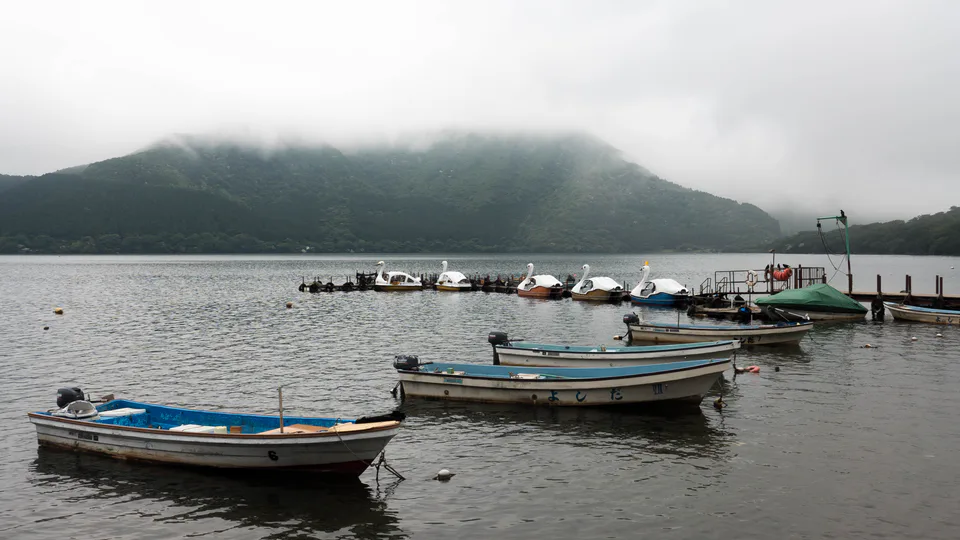
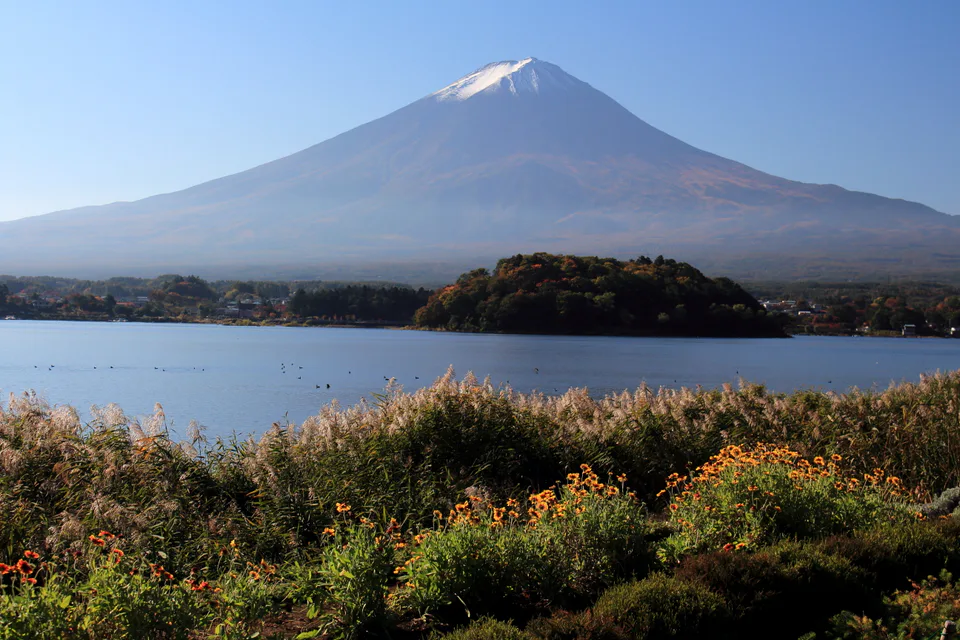
Choose Kawaguchiko when Mount Fuji is the reason you are giving up a night elsewhere in Japan. Choose Hakone when the overnight itself—ryokan dinner, onsen, museums and an easier westbound route—matters more than one classic Fuji view. For most first-time visitors with one spare night, I would still choose one, not both. The important refinement is this: Hakone is the cleaner stop before Kyoto or Osaka, but Kawaguchiko no longer requires a full backtrack to Tokyo because a direct bus links Kawaguchiko with Mishima for the Tokaido Shinkansen.
If both destinations are non-negotiable, use the Tokyo–Kawaguchiko–Hakone three-day itinerary instead of forcing two mountain regions into one overnight.
Hakone vs Kawaguchiko: the 30-second decision
↔ Scroll table left or right
Your real priority | Start with | Why |
Mt Fuji views / photography | Kawaguchiko | The lake makes Fuji the centre of the stay, and an overnight creates two separate viewing windows. |
Ryokan / onsen / bad-weather resilience | Hakone | The stay can still feel worthwhile when Fuji is hidden because the hotel, bath and museums carry more of the experience. |
Tokyo → mountain stop → Kyoto / Osaka | Hakone | Odawara puts you directly back onto the Tokaido Shinkansen corridor. |
Tokyo → mountain stop → Tokyo | Kawaguchiko | A direct Fuji Excursion or highway-bus pattern keeps the side trip simple. |
Fuji-Q / Fujiyoshida / Fuji-first family trip | Kawaguchiko | Those priorities sit naturally in the Fuji Five Lakes side trip rather than Hakone. |
Large luggage / dislike local transfers | Depends on hotel | Hakone has more internal transport, while a north-shore Kawaguchiko hotel can also add bus or shuttle friction. The last mile matters more than the destination label. |
The one-night route is the real comparison
On a first Japan trip, the better destination is often the one that creates the cleaner next day, not the one with the longer attraction list. Current 2026 operator information makes the route trade-off clearer:
↔ Scroll table left or right
One-night route | Transport structure | ValueNavi verdict |
Tokyo → Hakone → Kyoto / Osaka | The Romancecar can run directly from Shinjuku to Hakone-Yumoto in as little as 75 minutes, then you exit the region through Odawara for the Shinkansen west. | Cleanest open-jaw mountain stop. You avoid returning to central Tokyo before continuing west. |
Tokyo → Kawaguchiko → Tokyo | The Fuji Excursion links Shinjuku and Kawaguchiko directly in about 1 hour 54 minutes or more. The current one-way fare is ¥4,200 (about US$26; exchange rates move). | Cleanest Fuji-view side trip. The long-distance train can end at Kawaguchiko Station with no transfer. |
Tokyo → Kawaguchiko → Kyoto / Osaka | A direct Kawaguchiko–Mishima express bus currently costs ¥2,700 (about US$17), or ¥2,500 (about US$16) with the listed web discount, before connecting to the Shinkansen at Mishima. | Workable, not wrong. It avoids a Tokyo backtrack, but adds a road-dependent bus-to-Shinkansen connection and another booking to manage. |
This is why I still give Hakone the edge for a Tokyo-to-Kansai transition, but not by enough to override a genuine Fuji priority. If Mount Fuji is the point of the night, the Mishima exit makes Kawaguchiko a much more defensible westbound choice than the old “return to Tokyo first” assumption suggests.
Kawaguchiko wins when Fuji is the reason for the stop
Kawaguchiko gives Mount Fuji more chances to be part of the scenery rather than a distant bonus. The north shore, Oishi Park and lakefront viewpoints can all work when visibility is good. Before adding every attraction, use the Things to Do in Kawaguchiko guide to build the day around the clearest weather window, and the Oishi Park boat vs Red-Line bus guide for the north-shore last mile.
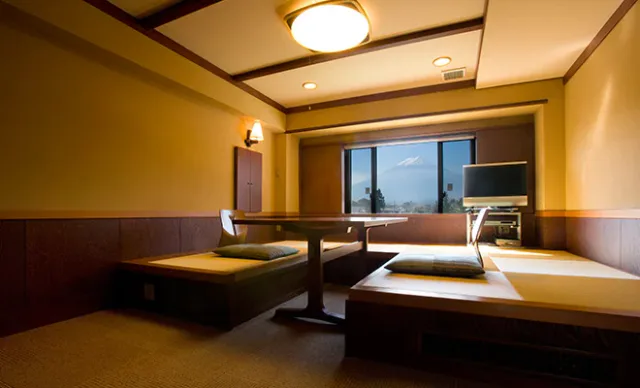
One night is valuable because it creates two separate visibility periods. It does not guarantee a clear mountain. If you are paying specifically for the view, compare exact room categories in the Kawaguchiko Mt Fuji-view hotel guide and decide how many nights Lake Kawaguchiko needs before booking a second night only as a weather gamble.
Kawaguchiko Station and the south shore reduce arrival friction; north-shore hotels trade easier lake-and-Fuji access for more shuttle or sightseeing-bus dependence. If Fuji-Q or Fujiyoshida streets matter more than a lakeside evening, the Kawaguchiko vs Fujiyoshida accommodation guide may change the base entirely.
The direct-train convenience has a capacity limit
Fujikyu currently lists four daily Fuji Excursion round trips, plus some seasonal extras, with tickets sold from 10:00 one month before travel. That does not make Kawaguchiko difficult, because highway buses and transfer itineraries via Otsuki also exist. It does mean that “there is a direct train” should not be treated as unlimited flexibility on a peak weekend. If the direct departure is important to your one-night plan, secure it rather than building the whole day around a train you have not booked.
Hakone wins when the overnight itself is the experience
Hakone has more ways for the night to succeed without a perfect mountain view. A ryokan dinner, onsen, museum or quiet morning can remain worthwhile in cloud or rain. The trade-off is internal transport. Hakone-Yumoto is only the gateway; Gora, Sengokuhara and Lake Ashi can add trains, cable cars, ropeways or buses after the Tokyo journey.
Choose the district before the property. The Hakone-Yumoto, Gora or Lake Ashi guide separates arrival convenience from mountain-loop and lake atmosphere. Travellers prioritising privacy or tattoo-friendly bathing should then use the Hakone ryokan with private onsen guide instead of assuming every open-air bath uses natural hot-spring water.
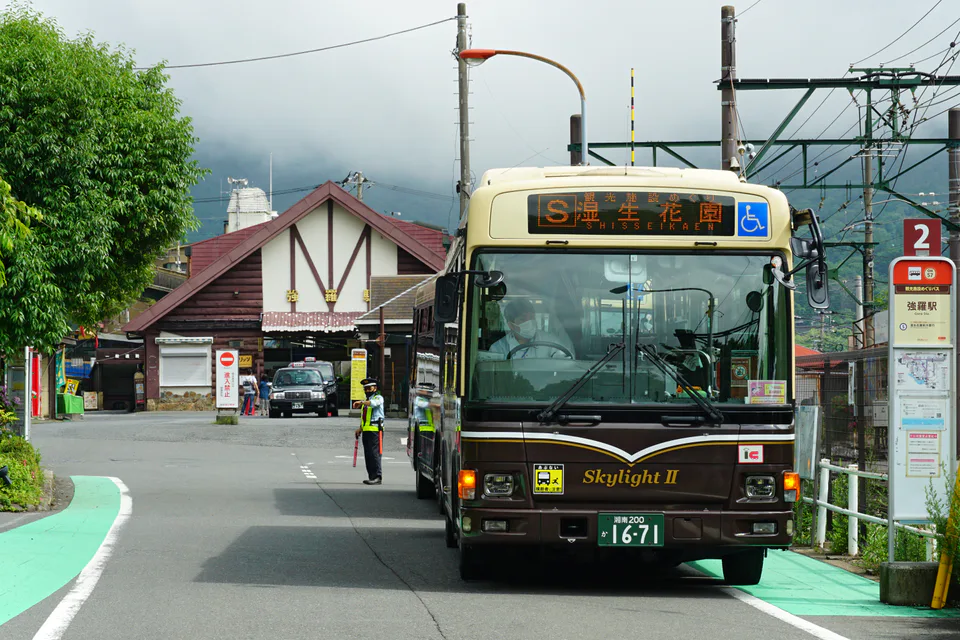
Hakone Freepass: the hidden open-jaw ticket trap
The 2-day Hakone Freepass currently costs ¥7,100 from Shinjuku (about US$45) or ¥6,000 from Odawara (about US$38). The Shinjuku version includes one return trip on the Odakyu Line between the departure station and Odawara; the Limited Express Romancecar still requires an extra limited-express fee. The current ticketless Romancecar surcharge from Shinjuku to Hakone-Yumoto is ¥1,150 (about US$7.20), on top of the base fare.
That creates an easy first-trip mistake: if your route is Tokyo → Hakone → Kyoto, the Shinjuku Freepass contains a return-to-Tokyo component you do not plan to use. That does not automatically make the pass poor value—the unlimited Hakone transport may still justify it—but the normal “round-trip from Tokyo” savings calculation no longer applies. Compare the Shinjuku version against an Odawara-origin pass plus your separate inbound ticket instead of assuming the most familiar pass is automatically the best one.
Tokyo access: compare hotel door to hotel door
Hakone can look closer because the Romancecar reaches Hakone-Yumoto directly from Shinjuku, but a Gora or Lake Ashi hotel may still require another substantial segment. Kawaguchiko’s Fuji Excursion takes longer from Shinjuku, yet Kawaguchiko Station can be the end of the long-distance journey. Use the Tokyo to Hakone guide and Tokyo to Kawaguchiko guide with your actual Tokyo hotel, not only the headline train time.
If the side trip sits between Tokyo and Kyoto or Osaka, Hakone still has the simpler rail architecture because Odawara is already on the Tokaido corridor. Kawaguchiko’s Mishima bus is the important counterexample: it removes the need to backtrack all the way to Tokyo, but the connection is more exposed to road conditions and schedule mismatch than a single rail corridor. For the whole transfer chain, use the Tokyo to Lake Kawaguchi and Hakone transport comparison.
Pair this with your stay-length and luggage decision
If you are still deciding whether either destination deserves a hotel night, compare Mt Fuji day trip vs overnight. If both regions are consecutive, solve the suitcase first with the Kawaguchiko–Hakone luggage guide or the broader Japan luggage-forwarding guide. A two-night mountain route is much easier when the main case is already heading to the next city.
Weather changes the value floor, not just the view
The two destinations have different downside risk. Kawaguchiko has the higher upside when visibility is excellent, but its value falls more sharply when Fuji stays hidden because the mountain is a larger part of the reason many travellers go. Hakone has a lower dependence on one view, but it is not weatherproof: ropeways, boats and mountain buses can still be suspended by adverse conditions.
↔ Scroll table left or right
Forecast / booking situation | Leaner choice | Reason |
Clear forecast + Fuji photography is the goal | Kawaguchiko | You are maximising the destination’s strongest upside. |
Mixed forecast + one fixed non-refundable mountain night | Hakone | Onsen, ryokan time and museums give the night more ways to succeed. |
You can move the side trip by a day or two | Kawaguchiko gains value | Flexibility lets you respond to visibility rather than buying extra nights as insurance. |
Strong wind / disrupted mountain transport | Neither is friction-free | Hakone’s ropeway and cruise network is exposed too; recheck official operations before departure. |
Keep the Japan rainy-day backup guide available if poor weather affects more than one day. In autumn, Hakone foliage also changes by elevation, so use the Hakone autumn guide rather than assuming Gora and Yumoto peak together.
One night, two nights and late arrival change the recommendation
With only one night, I value the first usable evening. A mid-afternoon arrival in Hakone can still leave time for a nearby museum, bath and half-board dinner, while a late arrival can turn the stay into a race against the ryokan meal cutoff. Kawaguchiko behaves differently: even a later arrival can still be worthwhile if the hotel itself has a Fuji-facing room, onsen or lakeside setting and the next morning is deliberately protected for the mountain. The later you arrive, the less I would pay for a long local transfer after the main Tokyo journey.
A second night needs a second purpose. At Kawaguchiko, that can be Fuji-Q, photography, a separate Fujiyoshida day or another weather window after a genuinely poor first morning. At Hakone, it can be splitting museums and Lake Ashi across two relaxed days or choosing a destination ryokan that deserves more time. If the second night exists only because “two nights sounds safer,” the opportunity cost is usually too high on a first trip.
Trip length changes that cost. On a 10-day first visit, two mountain nights consume 20% of the entire trip before counting arrival and departure constraints; on a 14-day trip they consume about 14%. That is why I am much more willing to approve both Hakone and Kawaguchiko on a longer trip than on a classic 10-day Tokyo–Kyoto–Osaka route.
Families and older travellers should choose the last mile
Kawaguchiko is easier to understand at a glance, but a north-shore hotel can still depend on a shuttle or sightseeing bus. Hakone has more transfers, but a Yumoto or station-near Gora hotel can reduce them. A family does not need the entire classic loop, and an older traveller does not need every viewpoint. One comfortable base plus one nearby zone can be a better trip than maximising attraction count.
On a first Japan trip, hotel changes also have an opportunity cost. The 10-, 12- or 14-day Japan itinerary helps test whether adding both mountain stops steals too much time from Tokyo or Kyoto.
Compare accommodation only after choosing the destination
Keep the same dates, guest count, room view, meal plan, natural-onsen status, shuttle and cancellation deadline. A cheaper room that removes the feature you chose the destination for is not the same product.
Check Kawaguchiko on Booking.com
Check Kawaguchiko on Expedia
Check Hakone on Booking.com
Check Hakone on Expedia
Final verdict
Choose Kawaguchiko when Mount Fuji is the non-negotiable reason for sacrificing a night elsewhere. Choose Hakone when you want the overnight to succeed even without a perfect Fuji view, or when the stop sits naturally between Tokyo and Kansai. My Hakone recommendation reverses if Fuji photography is the main goal: the direct Kawaguchiko–Mishima bus now makes a westbound Kawaguchiko night workable without returning to Tokyo. Do both only when Fuji and onsen are both genuine priorities and you can give the pair enough time to avoid turning two nights into two packing exercises.
Noboribetsu vs Jozankei: Which Onsen Stay Fits Your Hokkaido Trip?
Miyako Hotel Hakata vs Solaria Nishitetsu Hotel Fukuoka: Which Base Fits Your Trip?
Narita Capsule Hotel vs Shuttle Hotel: Which Is Better for a Late Arrival?
Sapporo Station vs Susukino: Which Base Fits Your Hokkaido Trip?
Sources
Odakyu Hakone — official Hakone access and transport guidance
Odakyu Hakone — Hakone Freepass fares, coverage and conditions
Odakyu Electric Railway — Romancecar timetable and fare information
Fujikyu Railway — Fuji Excursion timetable, fare and booking information
Fujikyu Bus — Kawaguchiko–Mishima express bus fares and service information
Prices and transport details checked on August 26, 2026. USD figures are approximate conversions for orientation only; exchange rates move. Recheck official transport operations and your exact travel date before departure.