
The best Tokyo-to-Hakone route is the one that removes the most friction from your actual hotel-to-ryokan chain. From Shinjuku, the direct Romancecar is usually the cleanest choice. From Tokyo Station or Shinagawa, travelling to Odawara by JR often makes more sense than crossing Tokyo just to board Odakyu. If Hakone sits between Tokyo and Kyoto or Osaka, treat Odawara as the gateway and avoid buying a return-to-Shinjuku product you will not fully use.
The Hakone Freepass is a separate decision. It is strong for a genuine loop using mountain rail, cable car, ropeway, Lake Ashi cruise and buses; it is usually poor value for a simple Hakone-Yumoto ryokan stay. The Romancecar is also separate: the pass does not include its limited-express surcharge.
Checked August 27, 2026. Odakyu currently lists the Shinjuku–Hakone-Yumoto IC base fare at ¥1,261 and the ticketless Romancecar surcharge at ¥1,150. Hakone Navi lists the 2-day Freepass at ¥7,100 from Shinjuku and ¥6,000 from Odawara. The current Hakone luggage service remains ¥1,500 for a regular bag and ¥2,500 for a large bag, one way. Recheck fares and operating status for the exact travel date.
ValueNavi route-first decision table
↔ Scroll table left or right
Your real trip | Start with | Why |
Hotel near Shinjuku → Hakone-Yumoto ryokan | Romancecar | Direct reserved-seat ride; removes the Odawara platform change and protects a dinner check-in better than the cheapest route |
Hotel near Shinjuku → budget-first Hakone trip | Regular Odakyu | Same base corridor without the limited-express surcharge; accept a slower trip and usually a change |
Tokyo Station / Ginza / Shinagawa → Hakone | JR to Odawara | Crossing Tokyo to Shinjuku can erase the Romancecar’s simplicity |
Tokyo → Hakone → Kyoto / Osaka | Odawara gateway + Hakone-area pass if needed | Do not pay for a Shinjuku return leg you will not use; keep the intercity route moving west |
Kyoto / Osaka → Hakone → Tokyo | Arrive at Odawara first | Hakone becomes an intermediate stop rather than a Tokyo day trip |
Hakone-Yumoto hotel + onsen only | Separate tickets | The Freepass usually buys far more local transport than this itinerary needs |
Gora + Owakudani + Lake Ashi + buses | Price the Hakone Freepass | Repeated mountain transport is where the pass starts doing real work |
ValueNavi Route Fit Score: the same train can be excellent or wasteful depending on where the trip starts and ends
This editorial model weights door-to-door simplicity 25%, transfer friction 20%, luggage resilience 15%, schedule resilience 15%, cost efficiency 15% and onward-route fit 10%. The score is not an official operator rating; it measures how well a route fits a specific itinerary.
Scenario | Best-fit option | ValueNavi score | Why |
|---|---|---|---|
Shinjuku hotel → Hakone-Yumoto, two large bags, fixed ryokan dinner | Direct Romancecar | The reserved seat and no-change ride remove the exact friction that matters most before a time-sensitive check-in | |
Shinjuku hotel → Hakone-Yumoto, light luggage, budget-first | Regular Odakyu | The extra travel time is acceptable when the surcharge does not buy a meaningful schedule benefit | |
Tokyo Station / Shinagawa → Gora or Lake Ashi | JR to Odawara, then Hakone transport | It avoids crossing Tokyo to Shinjuku before starting the westbound trip | |
Tokyo → Hakone → Kyoto/Osaka | Odawara gateway + area-only Freepass if the local route justifies it | The route keeps moving west and avoids buying a return-to-Shinjuku component you will not use | |
Hakone-Yumoto ryokan + onsen only | Separate tickets | A regional pass adds little when the itinerary does not consume the covered mountain network |
The score is deliberately scenario-specific. “Romancecar 9.3/10” is not a universal train ranking; move the hotel from Shinjuku to Tokyo Station and its route fit drops because the traveller first has to cross the city to use it.
The hidden cost is the first and last kilometre, not the headline train time
Tokyo-to-Hakone comparisons often begin at a major station and stop at Hakone-Yumoto. Your trip does not. A useful door-to-door calculation has at least four pieces: hotel to departure station, the intercity rail segment, the Odawara or Yumoto transfer, and the final railway or bus leg to the ryokan.
This is why a direct Romancecar can beat a nominally faster option from a Shinjuku hotel, while a Shinkansen can beat the Romancecar from a Tokyo Station or Shinagawa hotel. The correct route changes with the origin before the train even moves.
↔ Scroll table left or right
What the timetable shows | What the traveller actually pays |
Shinjuku → Hakone-Yumoto | Hotel-to-Shinjuku walk + station navigation + train + final hotel transfer |
Tokyo → Odawara by Shinkansen | Fast rail segment + Odawara transfer + Hakone local transport |
Odawara → Gora or Lake Ashi | Local rail/bus time, waiting, luggage handling and the last hotel connection |
ValueNavi rule: if one route saves 20 minutes on the train but creates an extra cross-city transfer with two large suitcases, it has not necessarily saved 20 minutes of the trip.
From Shinjuku, the Romancecar buys certainty more than speed
Odakyu’s current timetable has direct Shinjuku–Hakone-Yumoto Romancecar services, with the fastest trips around 75 minutes and many services around 80 minutes. All seats are reserved. The current Shinjuku–Hakone-Yumoto IC base fare is ¥1,261 (about US$7.90). The online ticketless limited-express surcharge is ¥1,150 (about US$7.20); the standard limited-express ticket is ¥1,200 (about US$7.50).
That makes the ticketless Romancecar one-way cost about ¥2,411 (about US$15.10) before any onward Hakone local transport. The standard non-ticketless combination is about ¥2,461 (about US$15.40). The important point is that the convenience premium is the surcharge, not the whole ¥2,411 fare.
That makes the Romancecar a convenience upgrade rather than a completely different fare system. The ordinary base fare still exists; the limited-express ticket buys the reserved seat and direct limited-express service. The Hakone Freepass can replace the relevant base-fare component when you hold the Shinjuku version, but it does not replace the Romancecar surcharge.
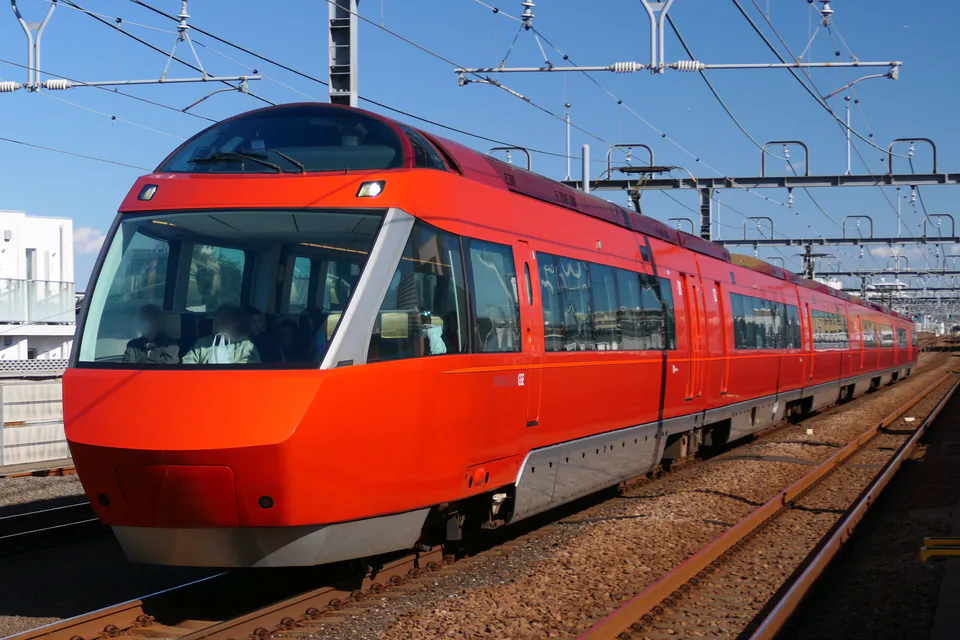
An Odakyu 70000 series GSE operating the Romancecar Hakone service to Hakone-Yumoto. Image: MaedaAkihiko / Wikimedia Commons (CC BY-SA 4.0).
I would pay the surcharge when a reserved seat, no train change and a predictable arrival matter: older travellers, a child who needs a seat, two travellers managing luggage, or a ryokan dinner deadline. I would skip it when the trip is budget-first, luggage is light and another 30–50 minutes does not damage the day.
ValueNavi cost stack: separate admission to the network from the convenience upgrades
↔ Scroll table left or right
Purchase | Current cost | What it actually buys |
Shinjuku → Hakone-Yumoto ticketless Romancecar, one way | ¥2,411 (~US$15.10) | ¥1,261 base fare + ¥1,150 reserved-seat limited-express surcharge |
2-day Hakone Freepass from Shinjuku | ¥7,100 (~US$44.50) | Odakyu return to the Hakone gateway + covered Hakone transport; Romancecar surcharge still extra |
2-day Hakone Freepass from Odawara | ¥6,000 (~US$37.60) | Hakone-area network without paying for an Odakyu return to Shinjuku |
Shinjuku 2-day Freepass + ticketless Romancecar both directions | ¥9,400 (~US$59.00) | Freepass coverage plus two ¥1,150 Romancecar surcharges; useful only if you actually return to Shinjuku |
Hakone luggage service, regular bag | ¥1,500 (~US$9.40) one way | Removes one bag from the mountain transport chain when the hotel participates |
Hakone luggage service, large bag | ¥2,500 (~US$15.70) one way | Same service for larger luggage within the published 200cm / 30kg limit |
FX assumption: ¥1 ≈ US$0.00627 (¥1,000 ≈ US$6.27), checked August 27, 2026. USD figures are rounded planning equivalents, not guaranteed exchange rates.
The stack exposes a common comparison error: a traveller may call the Romancecar “¥2,411 extra” when only ¥1,150 is the premium over the same base corridor, or may call a Freepass “all-inclusive” when the reserved-seat surcharge and luggage handling are separate decisions.
From Tokyo Station or Shinagawa, do not detour to Shinjuku by habit
For hotels around Tokyo Station, Ginza, Nihombashi or Shinagawa, Odawara is the important interchange. The Tokaido Line reaches Odawara without crossing Tokyo to Shinjuku; the Tokaido Shinkansen is faster and costs more. From Odawara, continue into Hakone by Odakyu/Hakone Tozan transport or by bus depending on where you sleep.
The Shinkansen is most persuasive when time is scarce, when you already begin close to Tokyo or Shinagawa Station, or when Hakone is part of an onward Tokaido itinerary. It is less persuasive when the “fast” segment is surrounded by extra station journeys that the Romancecar would have avoided from a Shinjuku base.
For oversized luggage on the Tokaido Shinkansen, JR Central requires the relevant baggage-space reservation when the total of three dimensions exceeds 160cm. That makes the Shinkansen orderly for large luggage when booked correctly, but it is another rule to handle rather than a reason to choose it automatically.
Open-jaw Japan itineraries change the pass decision
International visitors often do not return to the same Tokyo hotel. A common route is Tokyo → Hakone → Kyoto/Osaka, or the reverse. In that structure, the Shinjuku version of the Hakone Freepass can be the wrong shape because part of its value is a round trip on Odakyu between the departure station and Odawara.
The current adult Hakone Freepass costs ¥7,100 (about US$44.50) for two days or ¥7,500 (about US$47.00) for three days from Shinjuku. The Hakone-area-only version from Odawara costs ¥6,000 (about US$37.60) or ¥6,400 (about US$40.10). If you will enter Hakone through Odawara and then continue west rather than return to Shinjuku, compare the Odawara-area pass with separate intercity tickets. The correct product follows the route shape.
This is also why the “¥400 more for three days” headline should not control your itinerary. The extra pass day is cheap; an extra ryokan night and a night removed from Kyoto, Osaka or Tokyo are not. Decide the stay length first in Hakone 1 Night or 2 Nights, then buy the pass that matches it.
Hakone Freepass: when it actually earns its price
The pass currently covers unlimited rides on the principal Hakone transport network during its validity, including the Hakone Tozan Train, cable car, Hakone Ropeway, Hakone Sightseeing Cruise and designated buses. The Shinjuku version also includes the relevant Odakyu round trip to the Hakone gateway. The Romancecar limited-express surcharge remains separate.
Official Hakone Navi fare examples make the break-even logic clear. A sample two-day itinerary using Shinjuku–Hakone base transport plus mountain railway, buses, cable car, ropeway and cruise totals more than the ¥7,100 pass price. That is the right use case: the pass is valuable because the itinerary repeatedly consumes covered transport, not because “everyone buys one for Hakone.”
↔ Scroll table left or right
Itinerary | Freepass verdict | Reason |
Full classic loop | Usually strong | Ropeway, cruise, mountain rail/cable car and buses stack up quickly |
Two days split between Gora, Lake Ashi and Sengokuhara | Strong | Repeated covered buses and mountain transport make the pass useful beyond one loop |
Hakone-Yumoto ryokan, station walk and return | Usually skip | Local transport use is too small to justify a regional pass |
Hotel shuttle from Odawara + little sightseeing | Usually skip | The hotel is solving the local transport instead |
Open-jaw through Odawara | Use the route-shaped version | A Shinjuku return component can be wasted |
Large luggage: remove it before entering the mountain network
Hakone-Yumoto’s official Hakone Luggage Transport Service is one of the most useful pieces of the route when the hotel participates. Current same-day outbound acceptance at Hakone-Yumoto is 08:30–12:00, with hotel delivery from 15:00. Standard bags up to 140cm total dimensions and 15kg cost ¥1,500 (about US$9.40); large bags up to 200cm and 30kg cost ¥2,500 (about US$15.70).
For the return direction, participating hotels accept bags by 10:00 for collection at Hakone-Yumoto from 13:30–18:30. Not every property participates, and several item types are excluded. The service also has a hard planning consequence: arriving at Hakone-Yumoto after noon can remove the same-day station-to-hotel delivery option.
This changes the value of an early Romancecar. A train that arrives before the luggage cutoff can let you hand off the suitcase and spend the afternoon on the loop; a cheaper later arrival may save fare but leave you carrying or storing the bag. The best train is therefore sometimes the one that preserves the baggage plan.
For a Tokyo–Hakone–Kyoto itinerary, compare this local service with luggage forwarding for Hakone. Large luggage should not be allowed to dictate every mountain transfer if it can be separated from the sightseeing day.
Ryokan dinner deadlines should decide the train backwards
If your accommodation includes kaiseki dinner, the hotel’s meal and check-in rules matter more than squeezing in one extra attraction. Work backwards from the latest safe hotel arrival, then subtract the final bus or railway leg and a buffer for delays. Only then choose the Tokyo departure.
This is a stronger rule than “take the fastest train.” A 13:00 arrival that gives you an unhurried route to the ryokan can be better than a 10:30 arrival followed by an overpacked loop that leaves you racing for dinner.
If the ryokan itself is the main reason for Hakone, read Hakone Ryokan with Private Onsen before spending more on transport or a regional pass.
Weather can break the loop without breaking the trip
The Hakone Ropeway’s current published operating hours are 09:00–17:00 from February through November and 09:00–16:15 in December and January. The operator also warns that strong wind, lightning, typhoons and maintenance can suspend service. Lake transport can also be weather-sensitive.
Do not force the loop just to “use the pass.” If the ropeway is disrupted, shift the day toward Gora museums, Hakone-Yumoto, Sengokuhara or another functioning transport corridor and recheck the official operating-status page. A pass is a tool, not an itinerary obligation.
Three common Tokyo-to-Hakone mistakes
1. Choosing a train before choosing the Hakone hotel area. Yumoto, Gora, Lake Ashi and Sengokuhara create different final legs, so the same Tokyo train can produce very different door-to-door journeys.
2. Buying the Shinjuku Freepass for an open-jaw trip. If you leave Hakone toward Kyoto or Osaka, compare the Odawara-area version instead of paying for an Odakyu return you will not use.
3. Arriving after the luggage-service cutoff with a mountain-loop plan. The train fare may be cheaper, but carrying two large cases through mountain transport can erase the saving in comfort and time.
Final verdict
From Shinjuku, I would choose the Romancecar when the reserved seat and direct arrival protect the rest of the day. I would use regular Odakyu when budget matters more and the extra time is harmless. From Tokyo Station or Shinagawa, I would start by comparing JR to Odawara rather than detouring to Shinjuku.
I would buy the Hakone Freepass for a genuine multi-mode Hakone itinerary, not automatically for the destination name. A full loop or a two-day Gora/Lake Ashi/Sengokuhara plan is a strong fit; a Yumoto ryokan-only stay is not. For Tokyo → Hakone → Kyoto/Osaka, route shape becomes the deciding factor and the Odawara-area pass deserves the first comparison.
The deletion test for this route is simple: a timetable tells you which train is fastest. The useful decision is which combination of origin, hotel area, luggage, meal deadline, onward city and local transport produces the least-fragile journey.
Planning next steps
Sources
Odakyu — current Romancecar base fares and limited-express surcharges
Odakyu — Romancecar service and ticketless surcharge
Hakone Navi — current Hakone Freepass prices and coverage
Hakone Navi — Hakone Luggage Transport Service hours, sizes and fees
Hakone Navi — ropeway hours and operating conditions
Checked August 27, 2026. Fares, timetables, operating status and service rules can change. Recheck the exact travel date before departure.