
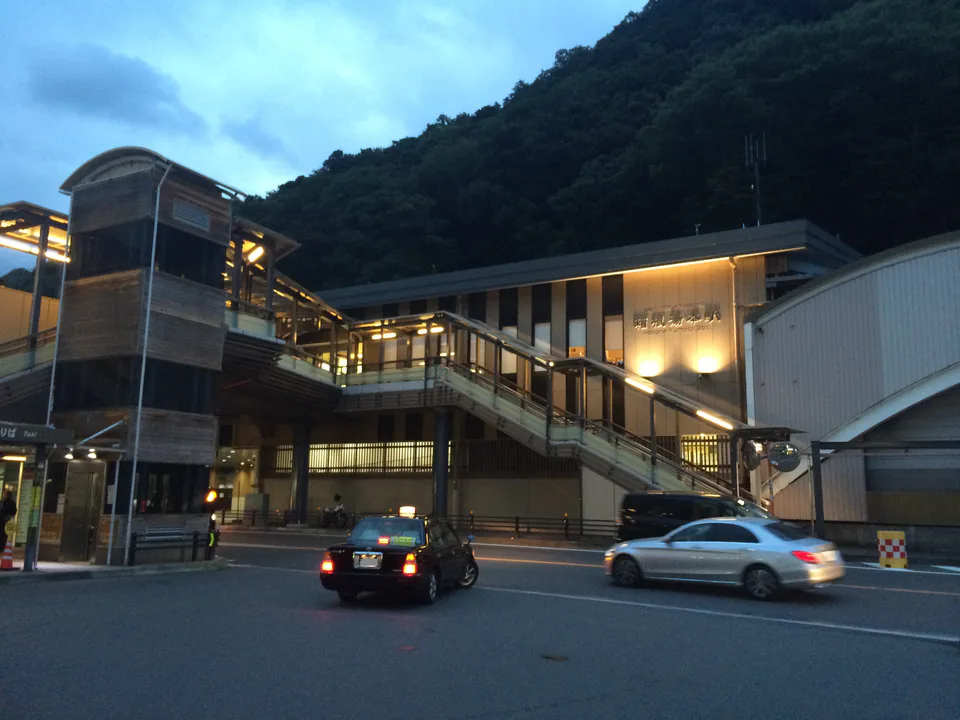
Tokyo to Lake Kawaguchi and Hakone isn't one transport question. Lake Kawaguchi is reached through the Fuji Excursion, highway buses or a transfer at Otsuki. Hakone is reached through Odakyu, Odawara, JR or the Tokaido Shinkansen, followed by a separate mountain network. The best answer changes with your Tokyo hotel district, reserved-seat availability, luggage, ryokan dinner time and whether the trip ends back in Tokyo or continues west to Kyoto or Osaka.
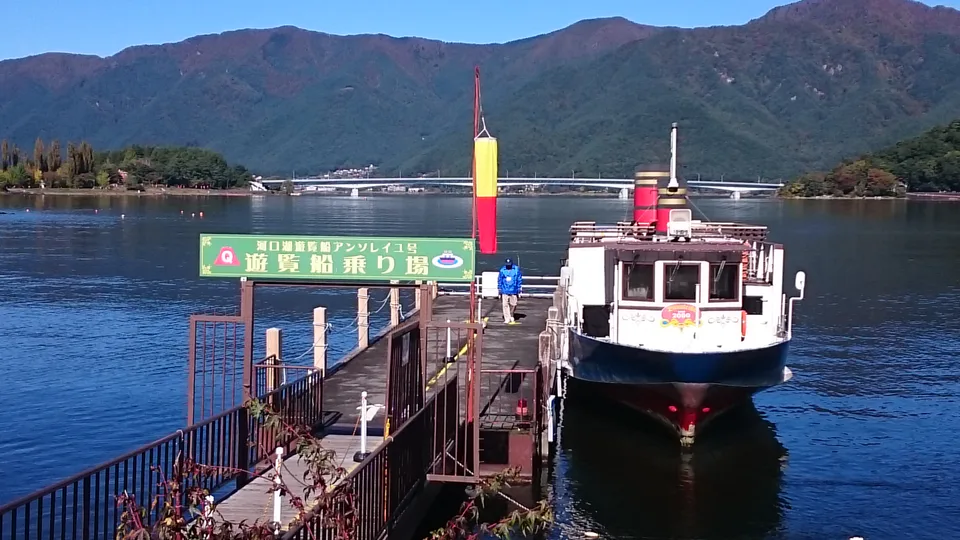
Tokyo to Lake Kawaguchi and Hakone: 30-second decision
For a one-day trip, choose Lake Kawaguchi when the Mount Fuji and lake composition is the main objective. Choose Hakone when onsen, museums and a route with more poor-weather alternatives matter more. Don't attempt full sightseeing in both destinations on the same day. For a combined first trip, three days and two nights is the practical minimum: Lake Kawaguchi first, Hakone second, then depart through Odawara for Tokyo or the Tokaido Shinkansen.
↔ Scroll table left or right
Tokyo base | Lake Kawaguchi default | Hakone default | Main trap |
Shinjuku | Fuji Excursion or highway bus | Romancecar or regular Odakyu | Both direct products sell out on popular dates |
Tokyo / Ginza / Nihombashi | JR or Shinkansen to Odawara | ||
Shinagawa | Connect through Tokyo or Shinjuku | JR or Shinkansen to Odawara | |
Ueno / Asakusa | Tokyo or Akihabara bus, or rail via Shinjuku/Otsuki | JR through Tokyo to Odawara | Cross-Tokyo luggage transfer is omitted from search results |
Shibuya | Direct highway bus or Shinjuku connection | Odakyu via Shinjuku or JR via Shinagawa | Direct buses are less frequent than the combined Shinjuku options |
Why the Tokyo hotel district changes the answer
A traveler staying beside Shinjuku Station can reach both destinations without crossing Tokyo, which makes a reserved direct service attractive. A traveler staying in Ginza may spend 30–45 minutes reaching the correct Shinjuku platform with luggage before the advertised trip even begins. The same traveler can reach Tokyo Station quickly and take JR or the Shinkansen to Odawara for Hakone. A hotel in Asakusa adds subway transfers, stairs and crowding, so a Tokyo Station or Akihabara bus can outperform an apparently faster Shinjuku departure.
Always calculate four legs: hotel to departure terminal, intercity journey, arrival terminal to the first attraction or hotel, and the return or onward leg. Lake Kawaguchi Station isn't the north shore, Oishi Park or every ryokan. Hakone-Yumoto isn't Gora, Sengokuhara or Lake Ashi. A direct train to the gateway can still leave a long local transfer. This is why the correct Tokyo origin and final hotel district matter more than a headline journey time.
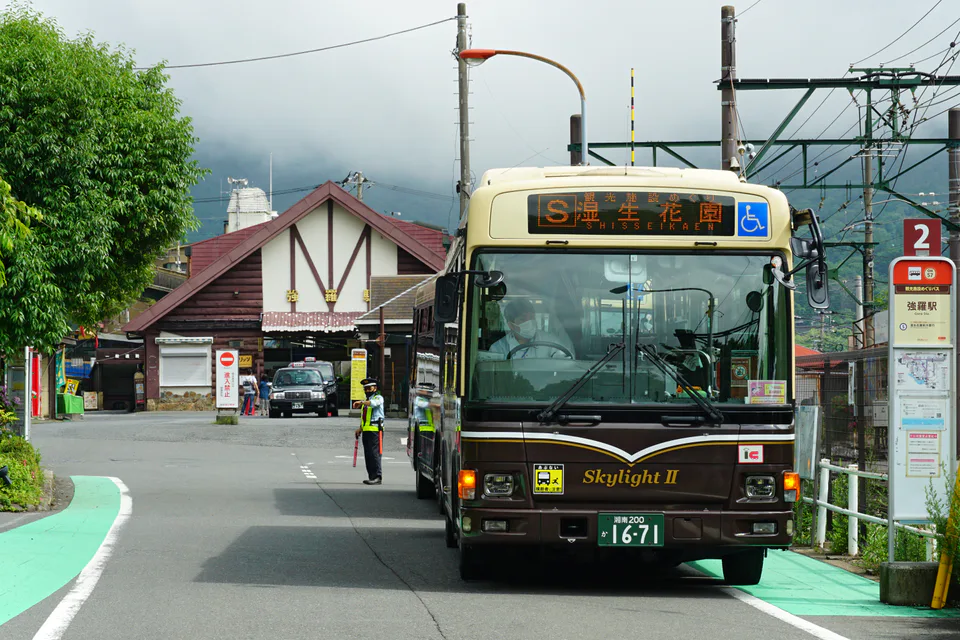
Tokyo to Lake Kawaguchi: train, bus or Otsuki transfer
The Fuji Excursion is the clearest rail option from Shinjuku because it runs through to Kawaguchiko without a physical change at Otsuki. The current planning reference is about 1 hour 53 minutes at the fastest and ¥4,200 one way, with four regular daily round trips plus selected seasonal services. Its weakness isn't speed but capacity: popular clear-weather weekends, school holidays and foliage dates can sell out. A pass that covers the underlying railway sectors doesn't create a seat on a sold-out limited express.
The Shinjuku highway bus is normally cheaper and serves Kawaguchiko Station and Fuji-Q directly. Reservations usually open about one month before departure. It's a strong choice when the hotel is near Busta Shinjuku, the fare matters more than rail predictability and the schedule leaves road-delay margin. It's a weak choice when a timed activity, ryokan shuttle or final international connection follows immediately, because congestion on the Chuo Expressway can erase the timetable advantage.
Direct buses also operate from Tokyo Station, Shibuya, Akihabara, Haneda and other origins on selected schedules. Their value is avoiding a cross-city transfer, not necessarily higher frequency. If direct services are sold out or road congestion is a major concern, travel by JR to Otsuki and transfer to Fujikyu Railway. This route requires one physical change and may not guarantee a seat, but it gives more departure combinations. Families, older travelers and people with large suitcases should allow extra transfer time at Otsuki.
↔ Scroll table left or right
Lake Kawaguchi option | Best for | Main weakness |
Fuji Excursion | Predictable reserved journey and avoiding road congestion | Limited departures and seats |
Highway bus | Low-cost direct travel and several Tokyo origins | Expressway delay and vehicle luggage limits |
JR + Fujikyu via Otsuki | Sold-out direct services and more timetable combinations | Physical transfer and no guaranteed local seat |
Rental car | Four travelers, older relatives, several bags and dispersed lake stops | Traffic, parking, fatigue and no alcohol for the driver |
Tokyo to Hakone: Romancecar, JR or Shinkansen
The Romancecar is the lowest-transfer choice from Shinjuku to Hakone-Yumoto. It uses reserved seats and protects older travelers or a fixed ryokan dinner better than a commuter train. The limited-express surcharge is separate from the base fare and from the Hakone Freepass. Reaching Hakone-Yumoto still doesn't complete the journey for Gora, Sengokuhara or Lake Ashi, so reserve enough local time after the train and avoid treating the arrival time at Yumoto as hotel arrival.
Regular Odakyu is slower and may require a change at Odawara, but it's cheaper and the base round trip can be bundled with a Shinjuku Hakone Freepass. Busy commuter-style services are less comfortable with luggage and don't guarantee a seat. Travelers based near Tokyo Station, Ginza, Ueno or Shinagawa should compare JR directly to Odawara. The Tokaido Shinkansen is fastest from Tokyo or Shinagawa, especially when the trip continues to Kyoto or Osaka, but it costs more and still requires local Hakone transport from Odawara.
Highway buses can be useful when a named stop matches Sengokuhara, Togendai, Gotemba or a specific hotel. They aren't universal Hakone buses. Booking a service labelled Hakone without checking the final zone can create a longer local transfer than a train. Driving is most useful for families, Sengokuhara, Gotemba shopping and lake hotels, but the mountain network experiences weekend queues, parking pressure and weather changes. A driver who wants a ryokan dinner and alcohol shouldn't build the plan around same-day driving back to Tokyo.
Day trip, overnight stay or both destinations?
A Lake Kawaguchi day trip works when you reserve an early direct service, choose two or three priorities and avoid the final return. The local sightseeing buses are useful but the north shore, Oishi Park, ropeway and ryokan areas consume time. An overnight stay adds an evening and early-morning Mount Fuji window, which matters because cloud can hide the mountain later in the day. It also supports Fuji-Q, a north-shore property or a slower lake circuit.
A Hakone day trip should use one transport corridor rather than the entire destination. Choose Gora–Owakudani–Togendai–Lake Ashi when the ropeway and weather are reliable, or Sengokuhara–Togendai when museums and the lake matter more. An overnight protects a half-board dinner, onsen and a slower mountain route. Stay in Hakone-Yumoto for late arrival or early departure, Gora for mountain access and museums, or Lake Ashi when the resort and morning lake scenery are the purpose.
Combining both in one day creates a transfer day, not two useful visits. A two-day itinerary is still compressed because the Gotemba transfer occupies the middle of the trip. Three days and two nights is the first realistic structure: day one reaches and explores Lake Kawaguchi, night one stays near the lake; day two uses the morning weather window and transfers through Gotemba to Hakone; night two stays in Hakone; day three uses one Hakone corridor and leaves through Odawara.
Kawaguchiko–Gotemba–Hakone without a car
The common car-free transfer uses a Fujikyu G-Liner or another eligible bus from Kawaguchiko toward Gotemba, followed by a Hakone Tozan or Odakyu bus. Current G-Liner service is limited rather than metro-frequency. Some services reach Gotemba Station, while others serve Gotemba Premium Outlets differently. The correct onward platform depends on whether the hotel is toward Gora and Kowakudani, Sengokuhara, Togendai or another Lake Ashi stop.
Search the exact date and hotel area, not simply Hakone. Work backward from the ryokan dinner entry time and aim to reach the hotel area around 16:00–17:00 rather than targeting the last possible check-in. Add at least one service of margin for children, older travelers, winter conditions, weekends or large luggage. The transfer day should contain a Kawaguchiko morning, the Gotemba movement and hotel check-in. It shouldn't also attempt the complete Hakone loop.
↔ Scroll table left or right
Transfer step | Decision | Failure response |
Kawaguchiko departure | Choose a bus serving the required Gotemba point | Use the regular Gotemba route or change the Hakone hotel plan |
Gotemba interchange | Select the platform by Gora, Sengokuhara or Togendai | Ask staff and remove sightseeing rather than board the wrong zone |
Ryokan arrival | Protect dinner and final shuttle, not only front-desk check-in | Contact the property immediately and shorten the route |
Which pass should you buy?
The Hakone Freepass is most useful when the itinerary uses a substantial part of the Hakone transport network over two or three consecutive days. It doesn't include the Romancecar surcharge, every private bus or transport outside the coverage area. The Fuji Hakone Pass is designed for a genuine three-day two-region trip using specified Fujikyu and Hakone transport, but it doesn't automatically include every JR segment, highway bus or limited-express surcharge. Draw the exact route before buying it.
The JR TOKYO Wide Pass can make sense when Lake Kawaguchi is combined with another JR East destination such as Nikko, Karuizawa or Izu. It doesn't cover the Tokaido Shinkansen to Odawara and it doesn't create a Fuji Excursion seat after the train sells out. Point-to-point tickets are often better for one destination, a direct bus to Kawaguchiko or a short Hakone-Yumoto stay. A pass should support the route, not force extra travel to recover its price.
↔ Scroll table left or right
Pass | Best use | Key exclusion |
Hakone Freepass | Repeated Hakone local transport and a substantial loop | Romancecar surcharge and non-covered bus operators |
Fuji Hakone Pass | Three-day two-region trip using many covered sectors | Selected JR, highway-bus and limited-express products |
JR TOKYO Wide Pass | Kawaguchiko plus another JR East destination | Tokaido Shinkansen and sold-out reserved seats |
Point-to-point tickets | One destination or a simple direct route | No bundled convenience |
When does driving make sense for a family?
Driving becomes attractive for four travelers, older relatives, several bags, child seats, dispersed lake stops or a hotel that's awkward by bus. It isn't automatically cheaper. The complete cost includes the base rental, deductible and NOC protection, ETC card, child seats, expressway tolls, fuel, parking and possible one-way drop fees. A 24-hour C1-class planning model created on 1 August 2026 produced a total of roughly ¥25,000–¥27,000 before food, overtime, winter tyres or fines, but the real rate must be recalculated for the exact date and branch.
A car can cost less than four adult Fuji Excursion returns, but highway buses are often cheaper. Two adults and two children should compare child fares rather than multiplying the adult fare. A two-day combination increases rental, fuel and parking. The driver carries the congestion and fatigue risk, can't drink alcohol at an onsen ryokan and may face substantial non-operation charges after an incident without appropriate protection. Don't choose driving merely because a map shows both destinations on the same side of Tokyo.
Reserved seats, luggage, congestion and last-departure rules
Reserve capacity-limited transport before buying a non-refundable timed attraction. A pass is a fare product, not a guaranteed seat. Don't plan the final practical return: Lake Kawaguchi buses face expressway congestion, while Hakone buses face mountain roads, full vehicles and weather suspension. A ryokan dinner cutoff can be earlier than front-desk check-in, so work backward from the meal. Mount Fuji can remain hidden for the whole day, and Hakone’s ropeway, cruise or mountain buses can stop in wind, storms, snow or maintenance.
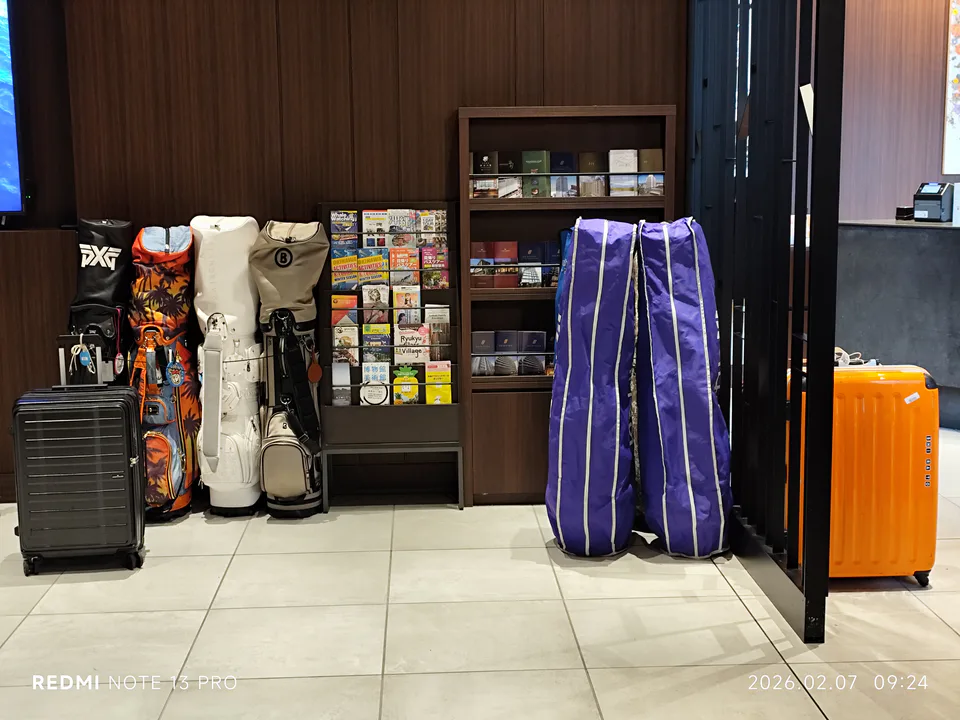
Keep large luggage outside the complete Hakone loop. The local Kawaguchiko luggage services and the Hakone-Yumoto participating-hotel service aren't one same-day cross-region delivery line. For a wider Japan trip, forward the main suitcase to the next city after confirming acceptance and carry a two-night bag. If lockers are full, use staffed storage. If a direct service sells out, use Otsuki for Kawaguchiko or Odawara for Hakone instead of buying an unsuitable route.
Frequently asked questions
Is Lake Kawaguchi or Hakone closer to Tokyo?
It depends on the Tokyo hotel and the final district. Shinjuku serves both well; Tokyo Station and Shinagawa usually favor Hakone.
Is the highway bus always faster than the train?
No. Its scheduled time can be competitive, but expressway congestion can substantially delay arrival.
Does the Hakone Freepass include the Romancecar?
No. The base Odakyu sector can be included, but the limited-express surcharge is separate.
Can I visit Lake Kawaguchi and Hakone in one day?
You can move between them, but it isn't a satisfying complete visit. Three days and two nights is the practical first-trip minimum.
Do Kawaguchiko–Hakone buses require reservations?
It depends on the selected service. Search the exact date, final stop and Gotemba interchange.
What should I do with large luggage?
Leave it in Tokyo for a day trip, or forward it to a later hotel and carry an overnight bag. Don't take it around the Hakone loop.
Which destination is better in rain?
Hakone usually retains more value through museums, onsen and ryokan time, although mountain transport can still be suspended.
Which destination should come before Kyoto?
Use Lake Kawaguchiko first and Hakone second, then leave through Odawara on the Tokaido Shinkansen.
Official checks, related planning and accommodation
Fuji Excursion official information|Shinjuku–Fuji Five Lakes bus|Kawaguchiko–Gotemba G-Liner|Hakone live transport. Last checked 4 August 2026.
Tokyo to Kawaguchiko: Train, Bus or Tour|Tokyo to Hakone|Tokyo–Kawaguchiko–Hakone 3-Day Itinerary
Compare Lake Kawaguchiko stays on Booking.com|Compare Hakone stays on Expedia
Check availability on Booking.com
Check availability on Expedia
Where to Stay
Mitsui Garden Hotel Ueno vs NOHGA: Station Access or More Room?
Hotel Gracery Shinjuku vs HOTEL GROOVE SHINJUKU: JR Walk or Airport Bus?
Hotel Metropolitan Tokyo Marunouchi vs Hotel Ryumeikan Tokyo: Early Shinkansen or 32.5m² Room?