

Choose Tokyo Station when the movement you most cannot afford to get wrong is an early Tokaido Shinkansen, repeated central/east-Tokyo travel, or a one-day Disney trip that already fits the rest of your map. Choose Shinjuku when west-Tokyo evenings, Hakone or Kawaguchiko departures, and west-side sightseeing will repay the location several times. The wrong way to decide is to compare one headline journey and let it dictate four or five hotel nights.
For most first-time visitors, count high-friction movements, not railway logos. A 07:00 checkout with two large suitcases and a reserved Kyoto train matters more than saving five minutes on a casual afternoon. Three late returns from Shibuya, Harajuku and Shinjuku can matter more than one easier airport transfer. If neither pattern dominates, use Where to Stay in Tokyo for First-Time Visitors rather than forcing this two-area choice.
Tokyo Station vs Shinjuku: the decision in 30 seconds
↔ Scroll table left or right
Your trip pattern | Start with | What you actually gain | What can reverse it |
Early Shinkansen to Kyoto, Osaka or Hiroshima + large luggage | Tokyo Station | Deletes one cross-Tokyo luggage transfer before a fixed train | The Shinkansen is late morning and most Tokyo days are west-side |
Several Shibuya / Harajuku / Shinjuku evenings | Shinjuku | The location pays back every night when you are most tired | Your actual evenings are mostly Ginza / Nihombashi / east Tokyo |
Tokyo → Hakone immediately after checkout | Shinjuku | Direct Romancecar option and cleaner westbound departure | You are continuing west by Shinkansen after Hakone and luggage is forwarded |
Tokyo → Kawaguchiko with luggage | Shinjuku | Direct highway-bus and rail options start from the west side | You are only making a day trip with a small bag |
One Disney day | Tokyo Station gets a modest edge | Keiyo Line runs directly to Maihama | Your hotel is far from the Keiyo side or the rest of the stay is strongly west-side |
Two full Disney days | Consider neither | A Maihama-area split stay can delete two long early/late commutes | Only one park day is actually fixed |
East/west itinerary is genuinely balanced and hotel prices differ materially | Choose the better hotel | You can buy room size, breakfast, laundry or a shorter real walk instead | One high-stakes departure makes location more valuable than the room |
Do not compare average train times; compare the journey that can break the day
Tokyo Station's strongest advantage appears when a reserved long-distance train is non-negotiable. The Tokaido Shinkansen is the transport spine toward Kyoto and Osaka. If your hotel is genuinely convenient for the Shinkansen gates, the departure sequence is hotel → station → Shinkansen. From Shinjuku, you add a city rail segment, station navigation and the possibility of doing all of that with luggage during a busy period.
That does not mean Tokyo Station automatically wins any trip that includes Kyoto. A noon Shinkansen is forgiving. A five-night Tokyo stay with four west-side evenings may gain more from Shinjuku every day than it loses once on departure morning. The useful distinction is one high-stakes transfer versus repeated low-to-medium friction.
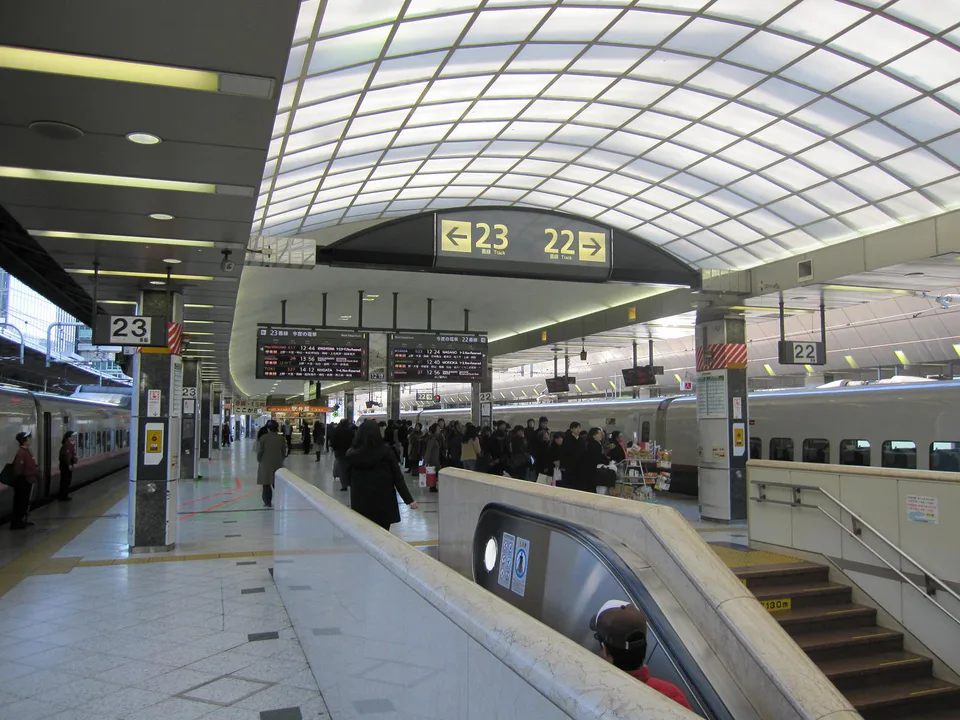
Is a Tokyo Station hotel premium worth it? Price the whole stay, not one night
Hotel comparisons become misleading when the premium is described as “only a little more per night.” Suppose two genuinely comparable hotels differ by ¥3,000 per night (about US$18.82). Over four nights, Tokyo Station now costs ¥12,000 more (about US$75.28). The question is no longer whether ¥3,000 feels small. It is what the full ¥12,000 removes from the trip.
If that premium only saves one easy ride to Tokyo Station on the final morning, I would usually keep the money—especially for light travellers. If the same hotel also improves two Ginza/Nihombashi days, shortens several east-side returns and removes a suitcase transfer before the Shinkansen, the premium is working repeatedly.
ValueNavi premium test: divide the total stay premium by the number of high-friction movements it meaningfully removes. The result is not a universal price threshold; it forces you to stop treating every “convenient location” claim as equally valuable.
Tokyo Station wins more often when your Tokyo map is already east or central
Marunouchi, Ginza and Nihombashi form a coherent central cluster. Ueno and Asakusa also sit on the east side of the city, so a Tokyo Station base can reduce the number of days that begin by crossing Tokyo before sightseeing even starts. This is a stronger reason to stay there than simply saying “Tokyo Station is convenient.”
The boundary condition is evening behaviour. If you repeatedly finish dinner, shopping or nightlife in Shibuya, Harajuku or Shinjuku, your morning geography and evening geography are fighting each other. In a four- or five-night stay, the return trip you repeat may outweigh the one Shinkansen departure you use once.
If Narita is the real eastern anchor, also compare Ueno vs Shinjuku. Tokyo Station is not automatically the best eastern base simply because it is Japan's most obvious long-distance rail hub.
Disney is direct from Tokyo Station, but the Keiyo platform is a hidden station walk
Tokyo Station is useful for a one-day Tokyo Disney Resort trip because the Keiyo Line runs directly to Maihama. But “direct train” does not mean “the platform is next to the main station concourse.” JR East's own media guidance says the walk from the conventional-line / Shinkansen side of Tokyo Station to the Keiyo Line area takes roughly 10–15 minutes.
For two adults with day bags, that is still a simple journey. For a stroller, young children, older relatives or a family returning after a full park day, the station walk is part of the transport cost. A hotel marketed as “five minutes from Tokyo Station” can also sit on the wrong side for the Keiyo route.
My verdict: one Disney day gives Tokyo Station a modest location bonus, not a veto over every other Tokyo need. Two full park days should trigger a different question: whether a Disney-area split stay deletes more travel than either Tokyo Station or Shinjuku can.
Shinjuku is valuable when westbound transport is part of the itinerary, not trivia
Odakyu currently advertises the fastest direct Romancecar journey from Shinjuku to Hakone-Yumoto at 75 minutes. The service is all-reserved-seat and removes a transfer when it matches your departure. Shinjuku is also a major Tokyo starting point for highway buses and rail services toward the Fuji / Kawaguchiko area.
That makes the district especially rational when hotel checkout and the mountain departure are the same movement. But one day trip should not decide four hotel nights. If Hakone or Kawaguchiko is an overnight and you will move the main suitcase with you, Shinjuku's advantage is meaningful. If it is only a day trip with a small bag, or the suitcase is forwarded, the advantage shrinks.
Decide Hakone vs Kawaguchiko before paying a Tokyo hotel premium for a route you may not use.
Shinjuku pays back through evenings in a way Tokyo Station often does not
A hotel base controls the last 20–40 minutes of the day, when travellers are tired and the marginal value of another transfer is highest. If several nights end around Shinjuku, Shibuya, Harajuku or west-Tokyo dining districts, a Shinjuku hotel can save repeated late journeys.
This is why I would not recommend Shinjuku simply because it has more rail lines. Network size is not the product. The product is how many of your actual days terminate there. If Shibuya itself is where the evenings happen, compare Shinjuku vs Shibuya; Shinjuku can lose despite having the broader network.
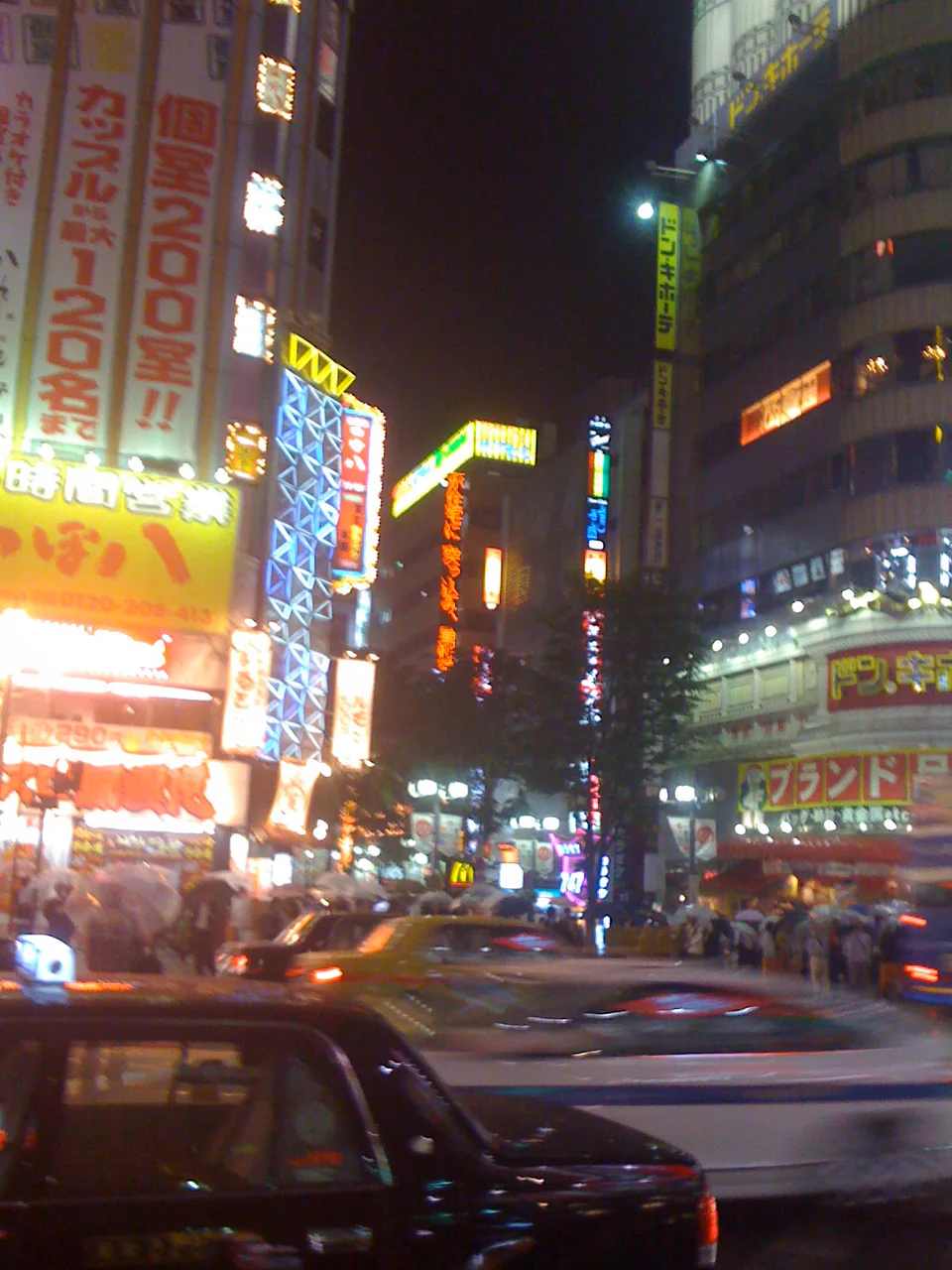
The exact hotel exit can overturn the district verdict
“Five minutes from Shinjuku Station” is incomplete information. A south-side hotel near the expressway bus terminal, a Kabukicho hotel and a Higashi-Shinjuku property produce different luggage and departure patterns. Tokyo Station has the same problem across Marunouchi, Yaesu and the deeper underground connections.
For families, older travellers and anyone with two large suitcases, I would rank the final 500 metres above a small nightly rate difference. An extra lift, underground passage or station crossing repeated twice a day can erase the theoretical advantage of the district. If luggage is the only reason the itinerary is becoming distorted, use Japan luggage forwarding rather than buying several nights in the wrong area.
Airport access should usually break a tie, not choose the whole stay
Both Tokyo Station and Shinjuku have strong Narita and Haneda access options. The useful question is therefore not “which area reaches the airport?” but whether the airport journey happens at a difficult time and whether the hotel sits near the departure point you will actually use.
A late arrival or very early departure can justify optimising the first or last night separately. Do not make four nights of Tokyo less convenient just to improve one airport transfer by a modest amount. If the first night is the problem, solve the first night.
ValueNavi repeated-friction score
Give each high-friction movement 2 points and each repeated ordinary movement 1 point. High-friction examples: early reserved Shinkansen with luggage, hotel checkout to Hakone with large cases, a fixed airport departure before normal breakfast. One-point examples: each repeated Shibuya evening, each east-Tokyo sightseeing day, a one-day Disney commute.
Then score only the movements each base actually removes. Whichever area deletes more points is the stronger starting shortlist. This is not a mathematical truth; it is a guardrail against letting one flashy journey time dominate the entire hotel decision.
The answer should also be allowed to fail. If Tokyo Station wins the route score but costs ¥12,000 more across the stay and the Shinjuku hotel gives you a larger room plus a genuinely easier last 500 metres, the hotel product can still reverse the district verdict.
Final verdict
Choose Tokyo Station when the itinerary's fragile movement is Shinkansen-led or the stay already lives in central/east Tokyo. Choose Shinjuku when west-Tokyo life and westbound departures will repay the base repeatedly. Do not treat Narita access, one day trip or one “direct” train as the whole decision.
If the choice still feels close, compare three things under the same dates: total stay price, hotel-door-to-platform friction and how many times each advantage is actually used. The better base is the one that removes the movement you will most regret doing tired, with luggage or against a fixed departure—not the station with the longest list of rail lines.
Okinawa Powered Paragliding vs Parasailing 2026: Which Short Flight Fits Your Trip?
Noboribetsu vs Jozankei: Which Onsen Stay Fits Your Hokkaido Trip?
Solaria Nishitetsu Hotel Fukuoka vs ONE FUKUOKA HOTEL: Which Tenjin Stay Fits?
References
Odakyu — current Romancecar guidance · JR East Media — Tokyo Station to Keiyo Line / Maihama transfer guidance · JR Central — Tokaido Shinkansen information · GO TOKYO — Tokyo Station/Marunouchi and Shinjuku area guidance. Transport details rechecked August 27, 2026. US-dollar figures are approximate conversions using the August 26, 2026 JPY/USD rate; exchange rates move.