
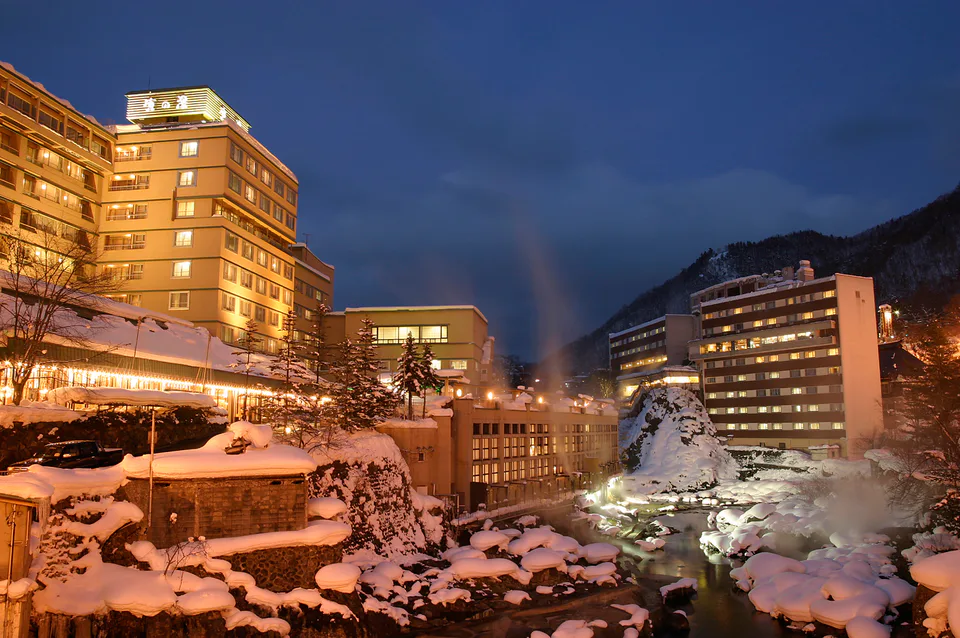
Choose Jozankei when Sapporo remains the centre of the trip and you want to add an onsen night with the least route disruption. Choose Noboribetsu when the onsen town itself deserves scarce Hokkaido time, when Hell Valley is part of the reason to go, or when the route is already moving south toward Lake Toya or Hakodate. The important correction is that neither town is simply “closer” or “better.” Jozankei is a Sapporo side loop; Noboribetsu can become a route-progressing stop.
For a one-night decision, count what the hotel move buys beyond bathing. Jozankei buys an evening and morning in a mountain onsen town without sending the itinerary far from Sapporo. Noboribetsu asks for more movement, but the move can earn two jobs at once: a distinctive volcanic onsen destination and a southbound repositioning. If you only want one soak, either town also has day-use options, so an overnight needs a stronger reason than “we should stay at an onsen once.”
↔ Scroll table left or right
Your actual trip | Start with | Why | What can reverse it |
Sapporo base, one easy onsen night, return to Sapporo | Jozankei | Direct Kappa Liner is about 60 minutes from Sapporo and the stay does not move the trip far off course | Hell Valley or a true destination-onsen experience matters more than convenience |
Sapporo → onsen → Hakodate / Lake Toya | Noboribetsu | The hotel change advances the route instead of creating a Sapporo out-and-back | You need to return to Sapporo immediately after the stay |
New Chitose Airport → onsen, schedule fits a direct bus | Noboribetsu gets stronger | Official tourism information lists a reservation-required direct airport bus at about one hour | Your flight misses the useful bus window or a late arrival makes any ryokan dinner fragile |
Only want a bath and nature break from Sapporo | Jozankei day trip | You keep the Sapporo room and avoid a hotel move | You specifically want ryokan dinner, evening atmosphere and a quiet morning |
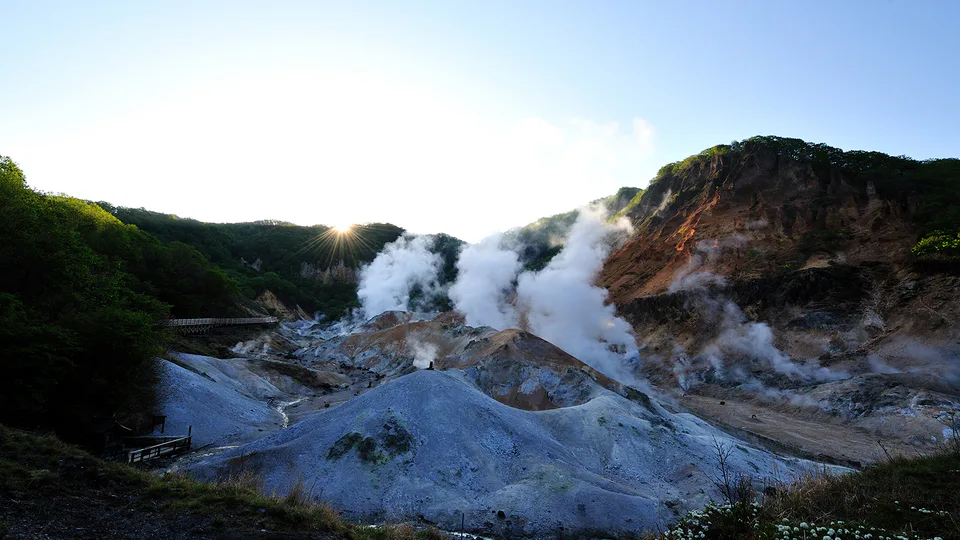
Volcanic landscape is a major Hokkaido priority | Noboribetsu overnight | Hell Valley gives the hotel move a destination-level reason | The trip is already too compressed and the extra move costs a higher-priority day |
Jozankei is a Sapporo-side-loop product, not a southbound transport stop
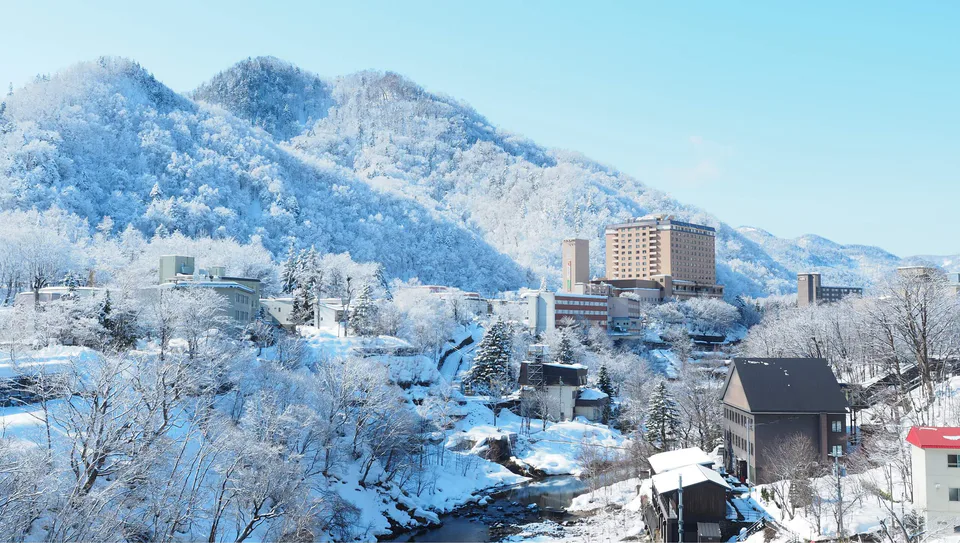
The Jozankei Tourist Association currently lists about 50 minutes by car from Sapporo and about 60 minutes on the direct Kappa Liner from Sapporo Station; the ordinary route bus is slower at roughly 80 minutes. Jotetsu’s current Kappa Liner system supports advance reservation and online payment. That makes Jozankei unusually easy to attach to a Sapporo stay without renting a car.
The hidden cost is direction. If you sleep in Jozankei and then return to Sapporo the next morning, the onsen night behaves like a side trip. That can be excellent when Sapporo is still the hub. It becomes inefficient when the rest of the itinerary is already moving toward Noboribetsu, Lake Toya or Hakodate.
This is why “Jozankei is closer to Sapporo” is not enough to decide the hotel. Ask whether you actually need to come back to Sapporo after the onsen. If yes, the short side loop is a strength. If no, convenience today can become backtracking tomorrow.
Noboribetsu becomes more valuable when the hotel move also moves the itinerary south
Noboribetsu’s official tourism association currently lists the limited express from Sapporo to JR Noboribetsu Station at about 1 hour 10 minutes and from JR Noboribetsu Station to Hakodate at about 2 hours 25 minutes. The onsen town itself is about 8 km from JR Noboribetsu Station, so rail travellers still have a last-mile bus or other transfer after the train. The local bus fare between the onsen bus terminal and JR Noboribetsu Station is currently JPY 350.
That last mile is a real cost with luggage, but it also reveals the larger advantage: Noboribetsu sits on a useful southbound rail corridor. If your itinerary is Sapporo → Noboribetsu → Hakodate, the ryokan night is not simply a detour for bathing. It is also your next geographic base.
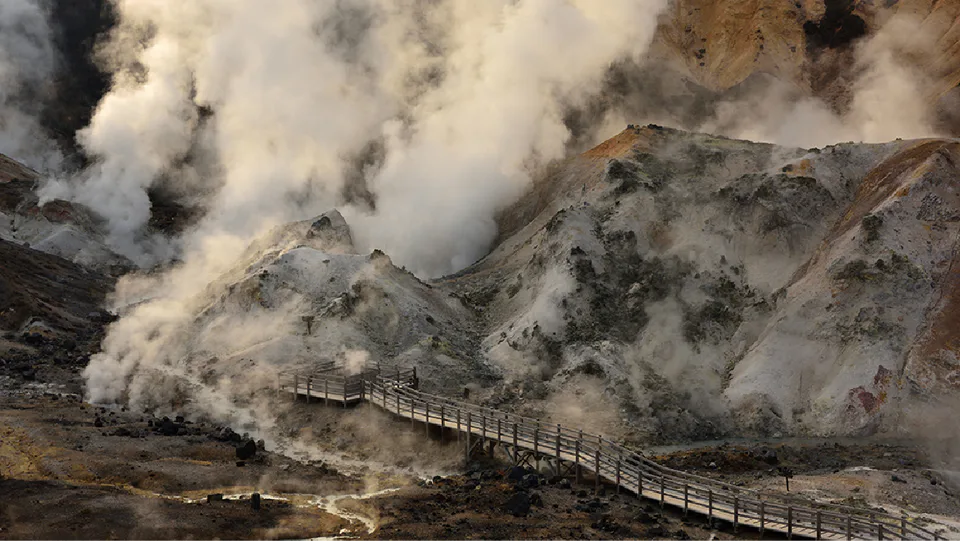
For the opposite itinerary—Sapporo city, one onsen night, then immediately back to Sapporo—Noboribetsu has to justify the extra movement with destination value. Hell Valley, the broader onsen-town atmosphere and the bath experience need to matter enough to earn that travel cost.
New Chitose Airport can reverse the usual “Jozankei is easier” answer
From central Sapporo, Jozankei is the simpler add-on. From New Chitose Airport, the comparison is less obvious. Noboribetsu’s official access page currently lists a reservation-required direct Expressway Airport-go bus to Noboribetsu Onsen at about one hour. It also lists other airport connections via rail or bus.
Jozankei’s official access page, by contrast, shows airport journeys that generally require more structure: for example a roughly 100-minute airport bus to Makomanai followed by about 47 minutes on a local bus, or Rapid Airport to Sapporo followed by the roughly 60-minute Kappa Liner. Transfer and waiting time sit on top of those published ride times.
So a traveller landing at New Chitose in the middle of the day can get a surprising result: Noboribetsu may be the cleaner first onsen night if the direct airport bus fits the flight. The answer reverses again for a late arrival. A ryokan dinner, hotel shuttle or reservation-required bus is a poor place to gamble on immigration, baggage or winter disruption. In that case, sleep at the airport, Chitose or Sapporo and move the onsen to the next day.
Use the New Chitose late-arrival guide before forcing either onsen onto Night 1.
Day trip or overnight? Count the hours the hotel unlocks
Both destinations can be experienced without sleeping there. Noboribetsu’s official tourism site currently lists multiple day-use baths, from public-bath-style facilities to hotel baths. Jozankei also supports day trips from Sapporo by direct or route bus.
An overnight therefore needs to buy hours a day trip cannot reproduce efficiently:
Ryokan dinner: useful only if you arrive early enough to meet the property’s dinner and check-in rules.
Late-evening bathing: valuable when the bath itself is a central reason for the stay rather than an amenity you may skip.
Quiet morning: strongest when you will actually walk, bathe or eat breakfast before moving on instead of leaving on the first practical bus.
Route progression: mainly a Noboribetsu advantage when the next destination is farther south.
If none of those applies, keep the existing hotel and take a day trip. A checkout and luggage move should not be the admission price for a bath you could have taken without changing rooms.
Large luggage changes the two towns in different ways
Jozankei’s best no-car version is a direct bus from central Sapporo to a stop near the selected ryokan. That can be simpler than carrying large bags through rail and local-bus transfers, but only if the property is genuinely convenient from the bus stop. “Jozankei” is an area, not one hotel entrance.
Noboribetsu’s common rail pattern creates a visible hand-off: limited express to JR Noboribetsu Station, then the final 8 km toward the onsen town. That is manageable, but a family with two 29-inch cases should price the convenience of a direct intercity bus or luggage forwarding rather than pretending the final bus is frictionless.
If the luggage is the only reason you are avoiding a route that otherwise makes sense, the Japan luggage-forwarding guide may solve the actual problem. Do not let one suitcase force a worse Hokkaido sequence.
Autumn can make Jozankei worth an overnight—but it also increases timing pressure
Jozankei has a stronger seasonal case during autumn because the valley itself becomes part of the trip. The tourist association currently lists its 2026 Koyo Kappa Bus from October 1 to October 21, with four departures per day and same-day first-come reservations at the tourist information centre. That is a useful reminder that peak foliage adds both value and capacity constraints.
An overnight can protect an early or late walking window, but it does not make every seasonal bus guaranteed. If the whole reason for choosing Jozankei is foliage, use the Jozankei autumn leaves guide and verify the specific 2026 service rather than applying a year-round hotel recommendation blindly.
One night is normally enough; two nights need a second job
For a first Hokkaido trip, one onsen night usually captures the change of pace without consuming too much of a limited itinerary. A second night needs another reason.
Two nights in Jozankei make sense when the ryokan or resort is itself a major part of the holiday, autumn hiking/nature time is protected, or you explicitly want a slow break from Sapporo.
Two nights in Noboribetsu make sense when you want a full onsen-resort stay plus Hell Valley, nearby West Iburi sightseeing or a low-tempo recovery block. They are harder to justify when Noboribetsu is mainly a transfer stop between Sapporo and Hakodate.
Do not add a second night because “onsen towns should be relaxing.” Add it because you can name the second day’s job.
Red-team the choice: when does the recommendation break?
Jozankei stops being the obvious convenience choice when you arrive from New Chitose on a schedule that fits Noboribetsu’s direct bus, or when the next destination is south of Sapporo and returning north creates backtracking.
Noboribetsu stops being the obvious destination-onson choice when the trip is already short, you only want one bath, you must return to Sapporo immediately and Hell Valley is not a priority. In that scenario, the extra transport may buy less than a well-chosen Jozankei day trip or one-night stay.
Both stop being good Night 1 choices when a late flight makes dinner or final-bus timing fragile. Protect sleep first, then move the onsen to the next day.
Final verdict
Choose Jozankei for a Sapporo-centred itinerary; choose Noboribetsu for a destination onsen or a southbound itinerary. If you return to Sapporo after the stay and mainly want bathing plus a quiet night, Jozankei is the cleaner purchase. If the onsen town itself matters, or the trip continues toward Lake Toya or Hakodate, Noboribetsu earns the hotel move more convincingly.
The one exception I would check before booking is New Chitose Airport. Noboribetsu’s reservation-required direct airport bus can make it operationally easier than Jozankei for the right daytime flight. Build the answer from the actual route before you build it from the atmosphere.
Tokyo Station vs Shinjuku: Which Base Fits Your Japan Itinerary?
Kobe Budget Eats: Gashoken vs ENISHI vs Red Rock — Which Fits Your Route?
Hakone vs Kawaguchiko: Which Is Better for Your First Japan Trip?
References
Jozankei Tourist Association — current access from Sapporo, New Chitose Airport and other Hokkaido regions · Jotetsu Bus — current Kappa Liner timetable and reservation information · Noboribetsu International Tourism and Convention Association — current rail and intercity-bus access · Noboribetsu Onsen Bus Terminal — current local bus fare to JR Noboribetsu Station · Noboribetsu day-use onsen listings. Checked August 25, 2026. Bus frequencies, reservation rules, weather and hotel shuttle arrangements can change; recheck the exact travel date.