
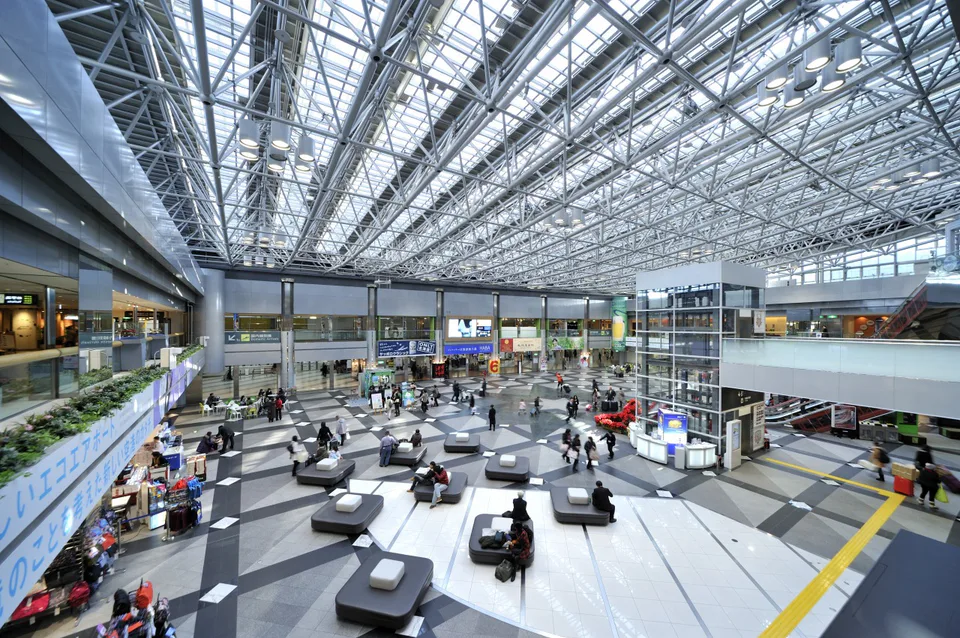
Continue to Sapporo when you reach the public side of New Chitose Airport with a comfortable margin for a transport option that actually reaches your hotel area. Stay at the airport when the city plan depends on the final JR train, a disappearing bus window or a chain of late transfers after a long flight. Chitose city is the third answer only when it clearly wins on room price or tomorrow’s direction.
The key 2026 correction is that the airport bus and JR train have different late-night jobs. The current central-Sapporo airport bus can take luggage directly toward Sapporo Station, Odori and Susukino, but its last useful airport departure is earlier than the final JR train. The bus is a low-hand-off alternative, not a rescue after you miss the last train. Build the first night from the time you are landside with your bags, not from scheduled touchdown.
↔ Scroll table left or right
Your actual situation after baggage/customs | Start with | Why |
Direct city bus still has comfortable margin and hotel is near its stop | Bus to Sapporo / Odori / Susukino | Slower than the fastest JR ride, but can remove one late-night luggage transfer |
Bus window is gone but 23:21 JR still has comfortable margin | JR to Sapporo | Current final rail departure outlasts the central-city bus window |
23:21 JR requires everything to go perfectly | Airport hotel | The trip has become a last-service bet rather than a normal transfer |
Late international arrival | PORTOM gets stronger | Directly connected to the International Terminal, so you can stop moving sooner |
Late domestic arrival | Air Terminal Hotel gets stronger | Its entrances are inside the Domestic Terminal beside arrival/departure areas |
Airport hotels expensive / sold out | Chitose | Shorter first-night move without forcing the full Sapporo transfer |
Tomorrow starts with airport bus, rental car or another flight | Usually airport hotel | A Sapporo night would send you north only to backtrack south |
ValueNavi Arrival Resilience Score: late Hokkaido arrivals need a weather-aware margin
This uses the same ValueNavi proprietary model as our Haneda and Narita late-arrival guides: last-service slack (30%), hotel-door fit (25%), luggage/hand-off burden (20%), next-morning positioning (15%), and fallback depth (10%). The score is our editorial planning analysis, not an operator rating. In winter, road and weather uncertainty lowers the effective resilience of any plan that stacks several dependencies.
New Chitose scenario | Arrival Resilience Score | Why | Main failure mode |
|---|---|---|---|
Terminal-matched airport hotel when JR margin is tight | Deletes last-service risk and protects the next full day | Tomorrow is a straightforward multi-night Sapporo stay, so the extra hotel move costs time | |
Direct airport bus with comfortable margin and hotel near the stop | One vehicle can take luggage toward Odori/Susukino without a Sapporo Station transfer | Road conditions and a hotel far from the actual bus stop reduce the advantage | |
JR to Sapporo with more than 30 minutes of usable station-ready slack | Fast, predictable line-haul with good fallback depth before the last service | Susukino/Odori hotel still requires a late local transfer | |
Chitose city fallback | Short first-night move and potentially lower room cost | Creates another check-out and luggage move if Sapporo is the only goal tomorrow | |
Final 23:21 JR with under 15 minutes of usable slack | The train itself is reliable, but the arrival chain has no room for one slow airport stage | Miss the service and the transport product changes completely |
ValueNavi Arrival Slack formula: usable slack = final useful departure time − landside-with-bags time − terminal-to-platform allowance. We use the same thresholds across airports: green above 30 minutes, amber at 15–30 minutes, red below 15 minutes. In winter, treat an amber road-dependent plan more cautiously because weather can add uncertainty before the hotel door even when the bus leaves on time.
The model also exposes why terminal-matched hotels matter. A late domestic arrival beside Air Terminal Hotel and a late international arrival beside PORTOM do not have the same post-arrival walking burden. “Airport hotel” is too broad a category for a resilience score.
The direct airport bus disappears before the final JR train
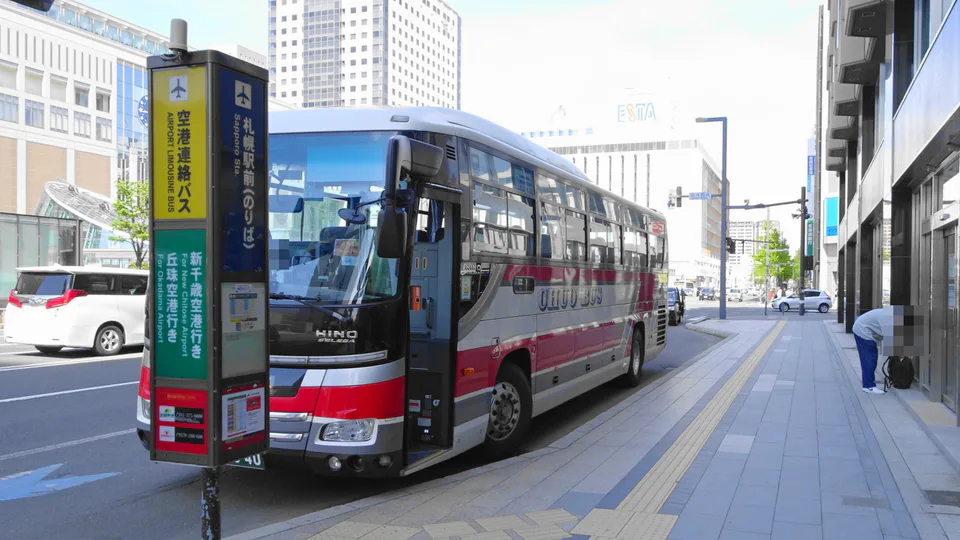
Hokkaido Chuo Bus and Hokuto Kotsu currently operate direct New Chitose Airport services into central Sapporo. The current 2026 summer timetable includes stops at Sapporo Station, Odori and Susukino, with an adult fare of ¥1,500 (about US$9.40) to the central stops.
JR Hokkaido currently lists the regular New Chitose Airport–Sapporo fare at ¥1,230 (about US$7.70) for a non-reserved seat, or ¥2,230 (about US$14.00) with the current reserved-seat charge included. Exchange rates move; use the yen fare when booking.
The late-arrival detail matters more than the fare. On the current central-city timetable, the final listed International Terminal departure is about 22:59. That is earlier than JR Hokkaido’s current 23:21 final Special Rapid Airport departure toward Sapporo.
So the normal late-night sequence is not:
miss train → take airport bus
It is closer to:
bus still available → choose bus vs JR by hotel stop and luggagebus gone → JR may still be availableJR becomes tight → stop treating Sapporo as the default
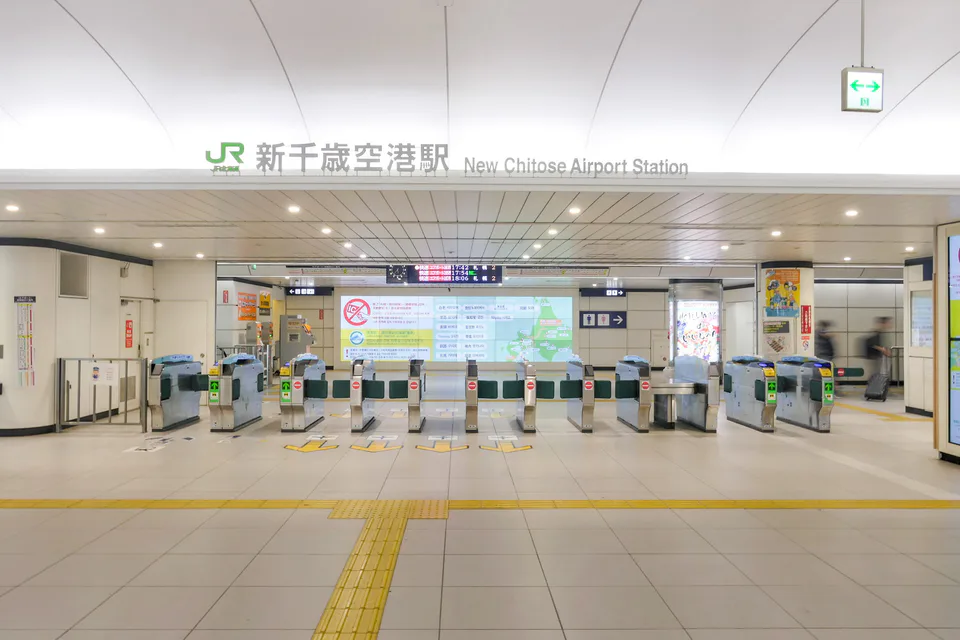
This is important for a Susukino hotel. A direct bus can carry the suitcase into the nightlife district without a Sapporo Station subway or taxi transfer. But once the bus window is gone, Susukino becomes a two-stage late-night transfer again: JR to Sapporo, then local transport to the hotel.
Road traffic is the trade-off. The bus operators explicitly describe published travel times as estimates and warn that traffic can create delays. For a city-bound arrival this is usually manageable; for a hard departure deadline, rail is the more predictable clock.
The 23:21 JR train is not your safe landing cutoff
JR Hokkaido currently publishes a 23:21 Special Rapid Airport departure from New Chitose Airport toward Sapporo. That time is useful only after you have reached the station. Taxiing, deplaning, baggage claim, immigration for international passengers and the terminal walk happen before you can board.
A flight scheduled to arrive at 22:35 is therefore not automatically “46 minutes before the final train.” The usable margin is whatever remains after the airport has finished with you.
If the bus has already finished and the JR plan requires a fast baggage belt, short immigration queue and perfect navigation, I would stop calling Sapporo the low-risk answer. A terminal-connected hotel is buying certainty and sleep, not merely saving a train ride.
Use “landside with bags” as the decision point
The most common planning error is using scheduled landing time as though it were a station-ready timestamp. A late arrival should have one explicit checkpoint: when everyone is on the public side with all luggage, what transport can still reach the hotel without a fragile second step?
That gives three different outcomes:
Bus still comfortably available: compare it with JR by hotel stop. It is often more attractive for Susukino/Odori and heavy luggage.
Only JR remains comfortably available: Sapporo is still reasonable when the hotel-side final transfer is simple.
JR is now a final-service sprint: buy the airport night unless you have deliberately budgeted a taxi.
This is a ValueNavi planning threshold rather than an official airport cutoff. The purpose is to avoid making the entire first night depend on several independent processes all running faster than average.
Go to Sapporo when the move removes an entire hotel change
When the city transfer remains robust and Sapporo is already your base for several nights, continuing that evening can be excellent. You avoid a disposable airport room, a second checkout and another luggage move the next morning.
JR Hokkaido’s fastest Airport services reach Sapporo in the mid-30-minute range. The direct bus is slower but can be more useful when it lands close to the actual hotel. The correct mode is therefore hotel-specific:
Sapporo Station hotel: JR usually has the cleanest combination of speed, frequency and predictable arrival.
Odori / Susukino hotel near an airport-bus stop: the direct bus can justify a longer ride by deleting the local luggage transfer.
Hotel away from both useful stops: compare the full final mile before assuming either airport mode is direct.
If the Sapporo base itself is still undecided, use Sapporo Station vs Susukino after the late-arrival question. Do not let one airport journey dictate four hotel nights unless the rest of the itinerary supports it.
An airport hotel earns the premium when it protects tomorrow
A terminal-connected room is strongest when the next morning still begins at New Chitose: a resort bus, rental-car pickup, another flight or a south/east Hokkaido route where going north to Sapporo tonight creates backtracking.
This is why “airport hotel = wasted first night” is too simplistic. Compare two complete bundles:
Airport-first: short transfer tonight + more sleep + one hotel move tomorrow.
Sapporo-first: longer transfer tonight + less sleep + no hotel move tomorrow.
The airport room wins when the sleep and next-morning position are worth more than avoiding tomorrow’s move. Sapporo wins when tonight’s city transfer is still clean and the airport room would do nothing except delay the inevitable move north.
“Airport hotel” is not one product: match it to your terminal
Air Terminal Hotel is inside the Domestic Terminal; PORTOM International Hokkaido is directly connected to the International Terminal. At midnight, that distinction matters more than a generic “inside New Chitose Airport” label.
Air Terminal Hotel’s current official access page places entrances beside Domestic Terminal Arrival Gate 5 on the first floor and Departure Gate E on the second floor, and gives about a five-minute walk from JR New Chitose Airport Station. For a late domestic arrival, the final chain can be extremely short.
PORTOM’s official access page places the hotel in the International Terminal Building. From JR New Chitose Airport Station it publishes about 10 minutes / 700 m; from the domestic-arrival side it publishes about 12 minutes / 960 m.
The practical rule is:
Domestic late arrival + sleep is the only job: check Air Terminal first.
International late arrival + sleep is the only job: check PORTOM first.
Tomorrow begins at JR: Air Terminal’s shorter station walk can add value.
Hotel facilities themselves matter: compare the actual room, bath and dining product rather than choosing solely by metres.
With ski bags or two large cases, 700–960 metres inside an airport is still a real luggage move. Terminal match is part of the room value.
Chitose is the fallback only when it wins a real trade-off
Chitose city can be cheaper than a terminal-connected hotel and avoids the full late-night ride to central Sapporo. It is useful when airport rooms are sold out or the next morning remains south of Sapporo.
It is a weak compromise when your only job tomorrow is “go to the Sapporo hotel where we will stay for four nights.” In that case you have paid for a second check-in and created another luggage move without protecting a difficult morning.
Do not choose Chitose because it is geographically between the airport and Sapporo. Choose it because the room rate, next-morning transport or itinerary direction actually repays the extra hotel change.
Tomorrow’s direction can reverse the answer
If the next days are Sapporo and Otaru, continuing north tonight has more value because tomorrow would otherwise repeat the same direction. If the next move is south toward Noboribetsu or east toward Tomamu/Obihiro, sleeping at the airport or nearby can prevent a pointless northbound detour.
If Niseko is next, use the New Chitose to Niseko guide before assuming the winter airport bus works like the previous season. If skiing is only one optional day rather than the trip’s centre, compare ski from Sapporo or stay at a resort.
For an onsen branch, Noboribetsu vs Jozankei helps decide whether the first hotel should point south or north.
Winter raises the cost of every extra dependency
Late winter arrivals already contain fixed processes you cannot accelerate. Snow, road conditions or an operating disruption can add another variable. The correct goal is therefore not “get as far as possible on Day 1.” It is “protect the first full day with the fewest fragile hand-offs.”
That can mean taking JR to Sapporo despite a slightly easier bus stop because rail timing is more predictable. It can also mean stopping at the airport despite an available train because the remaining margin is too small to be worth the sleep loss.
The recommendation is intentionally conditional. A conservative itinerary is not one that always stays at the airport; it is one that stops treating a last service as an ordinary service.
Final verdict: the bus is an earlier, easier option—not a later backup
Choose Sapporo when you are landside with a healthy margin and the city hotel already owns the next several nights. Use the direct airport bus when its stop removes a late luggage transfer to Odori or Susukino. Use JR when speed, frequency or the later 23:21 cutoff matters more. Stay at the airport when the remaining public-transport option has become a last-service gamble.
Then make a second hotel decision by terminal: Air Terminal Hotel is the natural low-friction first check after a domestic arrival; PORTOM is the natural first check after an international arrival. Chitose only wins when it has a real price or route advantage. The first night should protect tomorrow, not prove that you can still reach Sapporo.
Japan eSIM Late Arrival: Natural Days, 24 Hours and the 11 PM Trap
Sapporo vs Chitose for the Last Night: Where to Stay in Hokkaido
Hotel Gracery Sapporo vs Solaria Nishitetsu: Winter Luggage or a 26 m² Twin?
Fukuoka Girls’ Trip Hotels: Twin Beds, Bathroom Queues, Shopping Bags and Late Nights

References
JR Hokkaido — Airport train information · Hokkaido Chuo Bus — New Chitose Airport / Sapporo buses · Hokuto Kotsu — central Sapporo Airport Liner timetable · Air Terminal Hotel — official Domestic Terminal and JR access · PORTOM International Hokkaido — official International Terminal and cross-terminal access. Checked August 25, 2026. The current central-Sapporo bus timetable has its late airport departures before the current 23:21 final JR service; bus and rail timetables can change, so verify the exact travel date.