
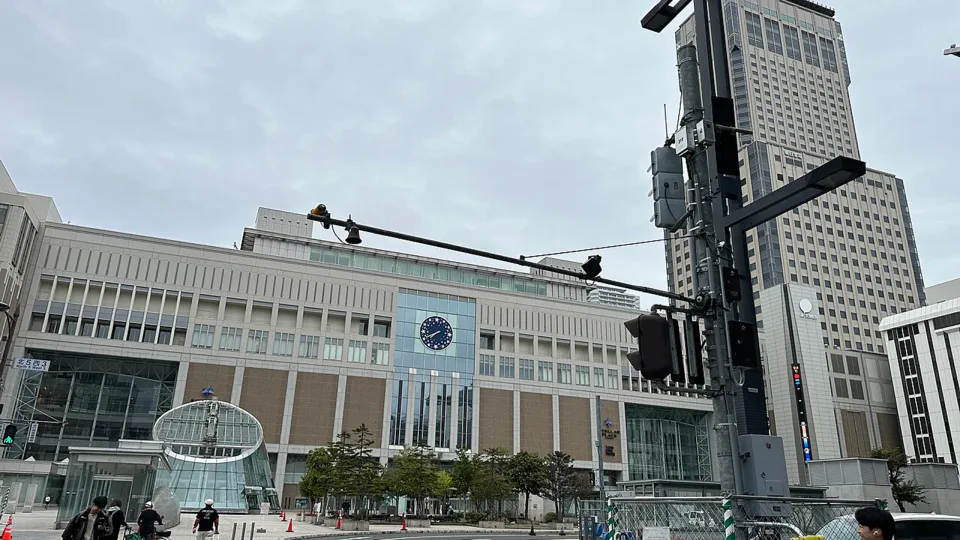
For most travellers with a late-morning, afternoon or evening flight from New Chitose Airport, I would keep the final night in Sapporo rather than create an extra hotel move. JR Hokkaido currently charges JPY 1,230 for a non-reserved Sapporo–New Chitose Airport trip, with Rapid Airport services taking as little as about 37 minutes and Special Rapid services as little as about 33 minutes. Sapporo becomes the wrong answer when the flight requires you to be at the terminal before the first practical airport train gives enough margin, when a rental-car return is still stacked onto departure morning, or when winter disruption risk is worth paying to move closer.
The important correction is that Chitose city and an airport-connected hotel are not the same solution. A hotel near JR Chitose Station mostly moves the long rail segment to the previous evening; you still have a final train, taxi or bus to the airport in the morning. A hotel physically connected to New Chitose Airport is the option that actually deletes the morning rail leg. Choose according to the amount of departure-day risk you need to remove—not according to the word “Chitose” in the address.
↔ Scroll table left or right
Your real departure problem | Best starting point | What the last-night move actually buys |
You only need to reach the terminal after roughly 08:00, car already returned, final Sapporo evening matters | Sapporo | No extra checkout/check-in; preserve dinner, shopping and the familiar hotel |
You want to be at the terminal around 06:30–07:30 | Chitose or airport-connected hotel | Move most or all of the airport transfer away from the flight morning |
You need to be at the terminal before the earliest practical Sapporo rail arrival | Airport-connected hotel | Deletes the rail dependency rather than merely shortening it |
Rental car still needs fuel, inspection, return and shuttle | Chitose / airport side gets stronger | Separates a multi-step rental return from a long Sapporo-to-airport journey |
Winter storm risk + important early flight + children/older travellers | Airport-connected hotel strongest | Reduces the number of weather-exposed moving parts on the morning that matters most |
Afternoon flight and you would lose a real Susukino/Sapporo dinner to move hotels | Sapporo | The airport move solves too little to justify sacrificing the evening |
The time bands above are ValueNavi planning thresholds, not airline check-in rules. Your required terminal-arrival time depends on domestic vs international travel, checked baggage, airline procedures and the flight itself.
Start with the time you want to be inside the terminal—not the flight time
“My flight is at 09:00” is not enough information. One traveller may want to be at the terminal 60 minutes before a domestic departure with no checked bag; another may deliberately allow much more time for an international flight, checked luggage, children or a tight onward connection. The hotel decision should therefore begin with a target terminal-arrival time.
JR Hokkaido’s current airport service gives the Sapporo–New Chitose Airport corridor a strong normal-day baseline: JPY 1,230 one way in a non-reserved seat, Rapid Airport in as little as about 37 minutes and Special Rapid in as little as about 33 minutes. Daytime service is frequent, with up to six Airport trains per hour in the main daytime pattern.
That is why an afternoon flight normally does not justify moving hotels. Even after adding the walk from your Sapporo hotel, station navigation and a deliberately early departure, there is usually enough room to create a comfortable buffer without giving up the previous evening.
The calculus changes at the start of the day. Japan’s official tourism guidance notes that the earliest train from Sapporo reaches New Chitose Airport at around 06:30. If your personal airport plan requires you to be inside the terminal before that, a Sapporo last night has already failed structurally; no amount of “leave earlier” can make the first train arrive before it exists.
The useful three-way comparison is Sapporo vs Chitose Station vs airport-connected
Most last-night advice treats this as a two-city decision. In practice there are three products.
1. Sapporo: keep the final night valuable
Sapporo is the default when the departure morning is not unusually early. You keep the same room, avoid another pack/check-in cycle, and retain a final evening around Sapporo Station or Susukino. If the car is already returned, the next morning can be hotel → Sapporo Station → direct Airport train → terminal.
The main trade-off is obvious: the longest transport leg remains on flight day. That is acceptable when you can build a generous buffer. It becomes less attractive when snow, luggage, mobility limits or a very early flight make that one rail segment disproportionately important.
2. Chitose Station: shift the long segment, but keep one morning connection
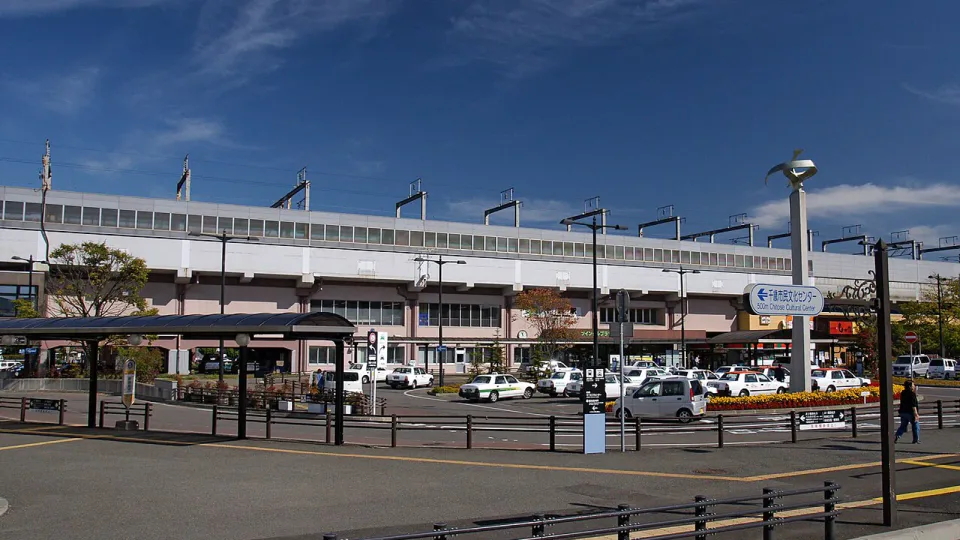
A hotel near JR Chitose Station is a buffer product. You move most of the Sapporo-to-airport journey the night before, sleep closer to the airport and make only the final short connection in the morning.
But do not describe this as “staying at the airport.” You still have to leave the hotel, reach JR Chitose Station or a taxi/bus pickup point, travel to New Chitose Airport and enter the terminal. In winter, that final movement is shorter than Sapporo’s but it is not zero-risk.
This option makes sense when an airport hotel costs materially more, your target terminal time is early but not extreme, or the rental-car route naturally ends in Chitose. It is much less compelling for an afternoon flight because you have paid the hotel-move cost without deleting the final morning connection.
3. Airport-connected hotel: actually remove the morning rail leg
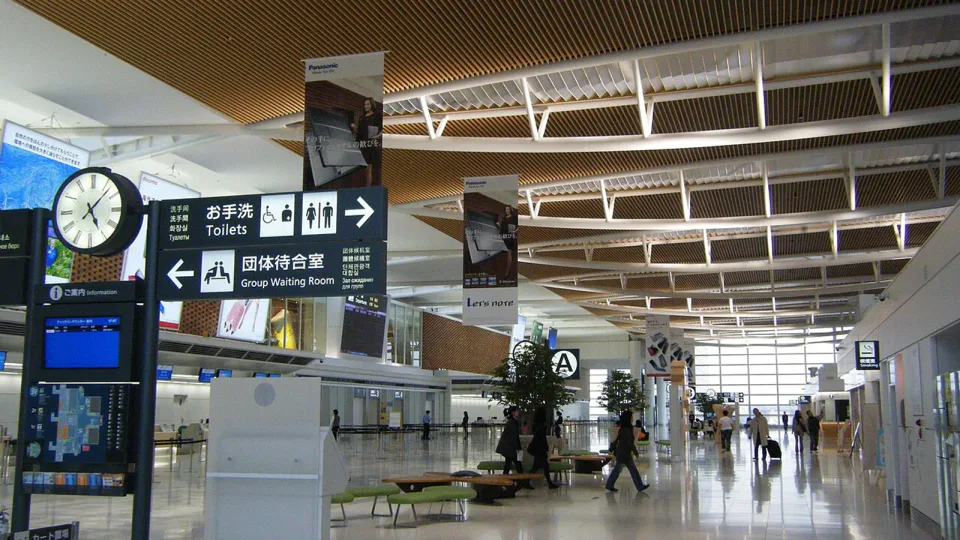
This is the high-buffer option. It is most defensible when you need the terminal very early, the flight is difficult to replace, the group carries a lot of luggage, or winter conditions make you want the fewest possible external transport links.
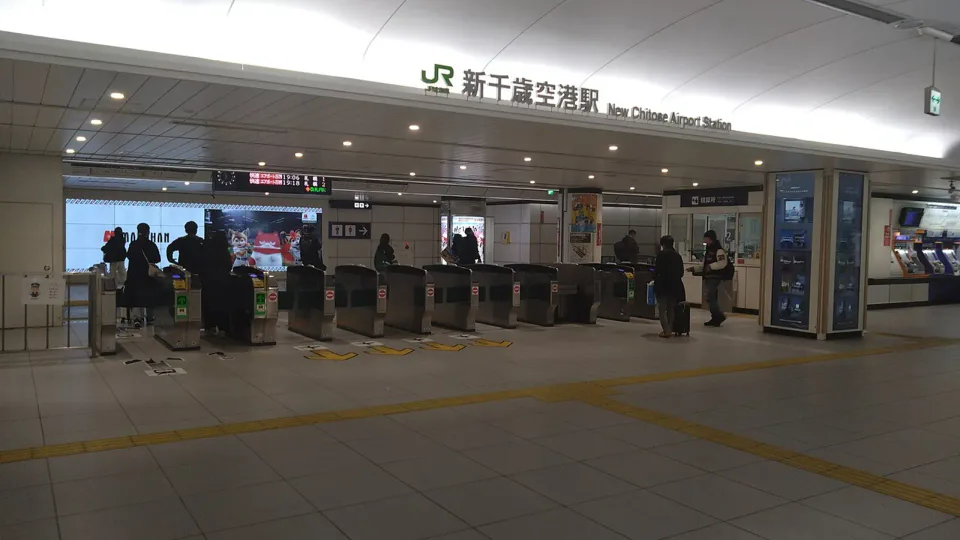
Even here, “airport-connected” has to be matched to the terminal. Air Terminal Hotel is directly connected to the Domestic Terminal Building; its official access page puts the hotel entrances beside Arrival Gate 5 on the first floor and near Departure Gate E on the second floor. It is about a five-minute indoor walk from JR New Chitose Airport Station.
Portom International Hokkaido is directly connected to the International Terminal. Its official access page gives about ten minutes on foot from JR New Chitose Airport Station and roughly twelve minutes from the Domestic Terminal arrival area. For an early international departure, that location is highly coherent. For an early domestic departure, the Air Terminal Hotel geometry is cleaner even though both properties are “at the airport.”
If you are considering Portom specifically, use the Portom International Hokkaido airport-terminal guide before paying the premium.
Moving to Chitose does not save the whole rail journey—it changes when you pay it
This is the most useful way to think about a Chitose last night. The train distance between Sapporo and the airport does not vanish because you sleep halfway down the line. You travel most of it the previous evening, then finish the last segment in the morning.
That means Chitose should not be evaluated primarily as a “time-saving hotel.” Its value is risk relocation:
the longer journey is completed when there is no flight check-in deadline immediately after it;
a delay in the evening may be annoying but is less likely to cause a missed flight;
the departure morning contains a shorter transport chain;
but you pay with another checkout, another check-in and a weaker final Sapporo evening.
If the flight leaves at 15:00 and the car is already returned, this trade is usually poor. If you need the terminal shortly after it opens and do not want to pay for an airport hotel, it can be excellent.
Use a “morning exposure” test rather than a distance test
Count how many external systems have to work between waking up and reaching the terminal.
↔ Scroll table left or right
Last-night base | Typical morning exposure | What can fail |
Sapporo | Hotel-to-station movement + 33–43-ish minute airport rail pattern + terminal | Hotel transfer, station navigation, JR disruption, missed intended train |
Chitose city | Hotel-to-local station/taxi + short airport transfer + terminal | Local walk/taxi, short JR/bus segment, winter road/rail disruption |
Air Terminal Hotel | Indoor movement into Domestic Terminal departure area | Mostly terminal/airline process rather than city transport |
Portom | Direct International Terminal access; indoor transfer needed for domestic side | Mainly terminal walking and airline process |
The table is analytical, not an official risk score. Its purpose is to show why “Chitose is closer” and “airport hotel” are not interchangeable recommendations.
Rental-car return can reverse an otherwise easy Sapporo decision
With no car, a late-morning flight from Sapporo can be simple. With a rental car, departure morning can become hotel → parking → refuel → rental branch → inspection/payment → unload luggage → shuttle → terminal. The branch may not be physically at the terminal even when the reservation says “New Chitose Airport.”
If the final driving day comes from Furano, Lake Toya, Noboribetsu or another regional base, do not stack the entire long drive and rental return onto the same morning as an important flight. Finish the regional drive the previous day where practical. Then decide whether to:
return the car and go back to Sapporo because the flight is late enough and the final city evening matters;
return the car and sleep in Chitose because the flight is early;
or use an airport-connected hotel when the desired terminal time is so early that even the short Chitose connection feels unnecessary.
The last-night hotel and the rental-return day are therefore one itinerary decision. Optimising them separately can create a plan that is individually cheap but collectively fragile.
Winter makes Chitose more valuable—but only the airport hotel removes weather exposure almost completely
Heavy snow can affect both roads and JR Hokkaido services. Moving from Sapporo to Chitose the night before reduces the distance you must cross on flight morning, but the Chitose-to-airport leg still depends on transport. A taxi still uses winter roads; JR Chitose Station still uses the rail network.
That distinction matters for an expensive international ticket or an itinerary with no easy replacement flight. If your goal is to reduce exposure rather than merely reduce kilometres, an airport-connected hotel is the cleaner hedge.
For a 14:00 departure, the logic changes. You can leave Sapporo much earlier than strictly necessary and create a large buffer without losing the final night. Winter risk does not automatically justify moving hotels; it raises the value of margin.
If you are still driving in winter, use the Hokkaido winter driving guide and do not make a normal-weather drive estimate the only margin protecting the flight.
Do not use the airport terminal itself as a free overnight fallback
New Chitose Airport’s current official service page lists the Domestic Terminal as open from 05:00 to 23:30 and the International Terminal from 05:00 to 21:00. It also states that resting inside the airport after closing is not permitted, except in accommodation facilities.
That removes a common fake backup plan. “If the train timing is bad, I will just sleep in the airport” is not equivalent to booking an airport hotel. If you deliberately need a pre-06:00 airport position, make an actual accommodation plan.
Air Terminal Hotel vs Portom: match the hotel to the departure terminal
The airport-hotel tier still has a decision inside it.
For an early domestic flight: Air Terminal Hotel is the cleaner geometry because it is directly inside the Domestic Terminal and its second-floor entrance is near Departure Gate E. Its official page says JR New Chitose Airport Station is about a five-minute walk away.
For an early international flight: Portom is the cleaner geometry because it is directly connected to the International Terminal. The hotel’s official route guide puts the JR station about ten minutes away and the Domestic Terminal arrival area about twelve minutes away.
There is one current 2026 caveat for Air Terminal Hotel: the hotel has announced overnight boarding-bridge maintenance from August 31 to October 6, 2026, approximately 00:00–04:00, and warns that construction lighting/noise may affect the property. If sleep quality is the entire reason for paying the terminal premium during those dates, check the latest notice before booking.
The final Sapporo evening has real value—count what you would actually lose
The opposite error is treating the last night as dead time because a flight follows it. A final Sapporo night can still contain dinner, shopping, laundry, packing in a room you already know, or simply avoiding another hotel move after a multi-base Hokkaido route.
Write down the specific evening you would surrender:
a Susukino dinner you genuinely want;
last shopping around Sapporo Station;
meeting friends;
repacking purchases in a familiar room;
or avoiding a fifth hotel change on a short trip.
If the answer is “nothing—I would eat early and sleep anyway,” Chitose becomes cheaper in opportunity cost. If the answer is a real final city evening, moving south for a 15:00 flight is probably solving the wrong problem.
Families and older travellers should price the hotel move as labour
A couple with one carry-on can move from Sapporo to Chitose almost casually. A family with two children, stroller, four suitcases and winter layers cannot. The extra hotel night creates packing, station movement, another check-in, another room layout and another morning checkout.
This makes the decision more polarised:
Later flight: staying in Sapporo is often even more attractive because avoiding the hotel move has high value.
Very early or high-stakes flight: an airport-connected hotel can be more attractive than a Chitose-city compromise because it removes the morning rail leg entirely.
For these groups, the middle option is not automatically the best compromise. It can mean paying the labour cost of moving hotels while still retaining a morning transport step.
Four scenarios that change the answer
Scenario 1: 14:30 domestic flight, no car, three nights already at Sapporo Station
Stay in Sapporo. The direct airport rail fare is JPY 1,230, and the normal transfer is short enough that you can simply leave with a generous margin. Moving to Chitose sacrifices a usable final evening and adds a hotel change without deleting a meaningful risk.
Scenario 2: you want to be at the terminal around 06:00
Use an airport-connected hotel. Official tourism guidance places the earliest Sapporo train arrival at around 06:30, so a 06:00 target cannot be solved by leaving Sapporo earlier by rail. Chitose city is closer, but it still leaves a morning transfer. Match Air Terminal Hotel to domestic flights and Portom to international flights unless another specific hotel/transport arrangement is stronger.
Scenario 3: 09:00 flight, family of four, rental car still needs return
Move the risk off the morning. Finish the long drive and rental return the previous day where practical, then sleep around Chitose or the airport. The exact choice depends on price and terminal, but Sapporo is now competing against several stacked departure tasks rather than one train ride.
Scenario 4: 12:30 flight in winter, car already returned, forecast is normal
Sapporo can still win. Leave earlier than you would in summer and monitor JR Hokkaido’s live operation information. Do not automatically sacrifice the final city evening just because snow is possible. If the forecast deteriorates or the flight is difficult to replace, the answer can reverse the night before.
Final verdict: Chitose buys buffer; an airport hotel buys removal
Stay in Sapporo when the flight leaves late enough that you can build a generous airport margin and the final Sapporo evening has real value. Stay near Chitose Station when you want to move most of the long transfer to the previous evening without paying for a terminal hotel. Stay inside the airport when the target terminal-arrival time is earlier than Sapporo rail can comfortably support, or when the value of deleting the final morning transport leg is unusually high.
The red-team test is simple: if moving to Chitose does not remove a specific risk you can name, keep the Sapporo room. If your departure plan is so tight that a short Chitose train still feels like a problem, do not stop halfway—use an airport-connected hotel.
Sources and verification date
JR Hokkaido — Rapid Airport frequency and Sapporo–New Chitose journey time · JR Hokkaido — current Rapid Airport fares · New Chitose Airport — terminal opening/closing hours · Air Terminal Hotel — Domestic Terminal access · Portom International Hokkaido — International Terminal and JR access. Checked August 25, 2026. Airline check-in rules, JR operations, winter disruption and hotel notices can change; verify the exact flight and travel date.
Where to Stay in Hakone for One Night: Yumoto, Gora or Lake Ashi
Early Flight or Late Arrival at KIX: Should You Move Hotels for the Last Night in Osaka?
Tokyo Honeymoon Hotels: Don’t Pay for the View Until You Pick the Night You’ll Stay In
Where to Stay in Hokkaido for Autumn Leaves: Six Bases Compared