
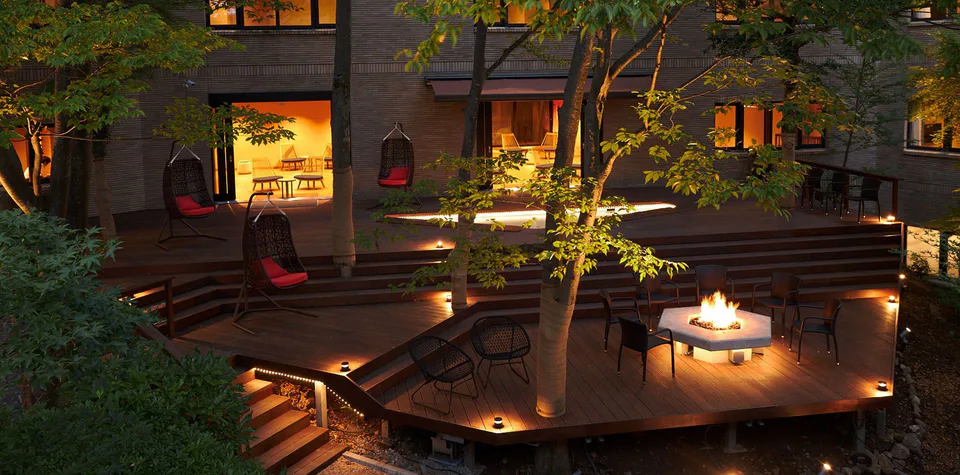
For a one-night Hakone stay, I would choose Gora only when I can reach Hakone-Yumoto by early afternoon and have a workable luggage plan. Choose Hakone-Yumoto for a late arrival, an early Odawara departure or any trip where a missed dinner would spoil the stay. Choose Lake Ashi when the quiet lake evening and early shoreline are the point of the overnight—not merely because the map looks more scenic. The real decision is where to place Hakone’s slowest and least resilient transport segment: before check-in, after breakfast or outside the trip altogether.
The one-night verdict: remove the failure you are least willing to accept
↔ Scroll table left or right
Decision | Hakone-Yumoto | Gora | Lake Ashi |
Best reason to stay | Protect a late arrival, early departure or difficult luggage day | Resume the classic loop near its midpoint the next morning | Keep the lake evening and early morning after day-trippers leave |
Main cost | You still climb into upper Hakone on sightseeing day | One more mountain transfer before check-in; hotel approaches may be steep | Thinner evening transport, dining and fallback options |
Arrival tolerance | Highest | Moderate | Lowest unless dinner and bus access are already secured |
After-noon luggage | Easiest to manage | Usually becomes part of the hotel-access problem | Most likely to add bus, slope or port-transfer friction |
Bad-weather fallback | Shorten the trip or exit via Odawara | Use museums, Gora Park or the hotel instead of forcing the loop | Treat the stay as a resort night; do not depend on the cruise or ropeway |
Avoid when | The lake morning is the main reason for staying overnight | You arrive late with large cases or need a fixed early train | You have an early Shinkansen, flight or inflexible cross-region transfer |
The usual “Gora for first-timers” answer is useful but incomplete. Gora wins only when the climb from Hakone-Yumoto is already affordable in time, energy and dinner margin. If that same climb happens after a delayed train, with two large suitcases and a 7 p.m. meal, Hakone-Yumoto is the better base even though it is less central on the sightseeing loop.
Use Tokyo to Hakone: Romancecar, JR or Hakone Freepass? before booking the area. A direct Romancecar arrival at Hakone-Yumoto creates a different final transfer from a Tokaido Shinkansen arrival at Odawara, while the before-check-in versus after-checkout loop guide decides which half of Hakone should sit on each day.
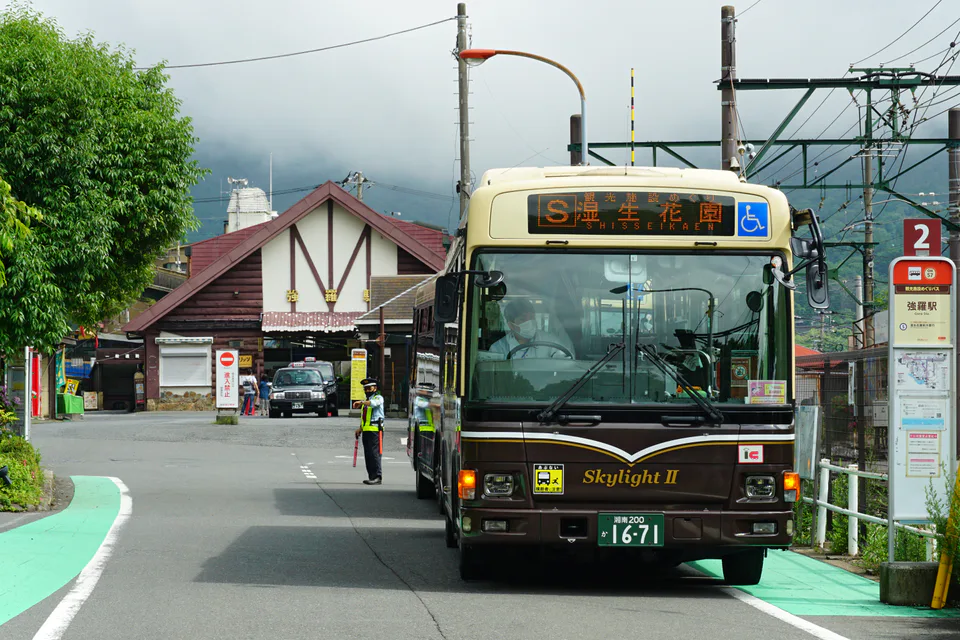
Use arrival windows as planning thresholds, not as official deadlines
For a car-free one-night stay, these are conservative ValueNavi planning thresholds:
Reach Hakone-Yumoto before noon: Lake Ashi becomes realistic if your hotel accepts the official luggage service and you want to travel through Gora, Owakudani and Togendai before check-in. The noon threshold matters because same-day luggage acceptance at Hakone-Yumoto ends at 12:00.
Reach Hakone-Yumoto in the early afternoon: Gora is usually the strongest balance. You absorb the mountain railway on arrival day, then begin near the cable car and ropeway the next morning.
Reach Hakone-Yumoto in the mid-to-late afternoon: Yumoto usually wins. The ropeway operates only in daytime, dinner-inclusive plans often have firm arrival rules, and continuing uphill buys little sightseeing value that evening.
Arrive after dark: choose Yumoto unless a hotel shuttle, final connection and meal arrangement are confirmed in writing. “There is still a bus” is not the same as “the whole check-in chain is resilient.”
These are editorial buffers, not promises about a particular timetable. Hakone’s official route search and live operating page should decide the actual day. Winter shortens the ropeway operating window, and adverse weather or maintenance can suspend sections even when the rest of the network is running.
Choose Hakone-Yumoto when arrival or departure is the fragile part
Hakone-Yumoto is the risk-control base. The Romancecar terminates here, local trains connect back to Odawara, the official luggage counter is inside the station, and the station area has more food and shopping fallbacks than the mountain or lake bases. It is the rational choice for a late inbound train, a first evening with jet lag, an early Shinkansen, young children, older travellers or bags that cannot be forwarded.
The trade-off is sightseeing repetition. If Owakudani, Togendai and Lake Ashi are still ahead, day two begins with the Hakone Tozan Railway climb to Gora before the cable car and ropeway. Yumoto protects the travel chain; it does not minimize upper-Hakone sightseeing time.
Paying for station proximity is most defensible here. A hotel that removes the station-to-room transfer can be worth more than a prettier property reached by a shuttle with a limited timetable. This is especially true on the final night before Kyoto, Osaka or an airport connection. Conversely, if your train leaves Odawara after lunch and you can tolerate a long descent, the Yumoto premium loses some of its value.
Area example: Yumoto Fujiya Hotel
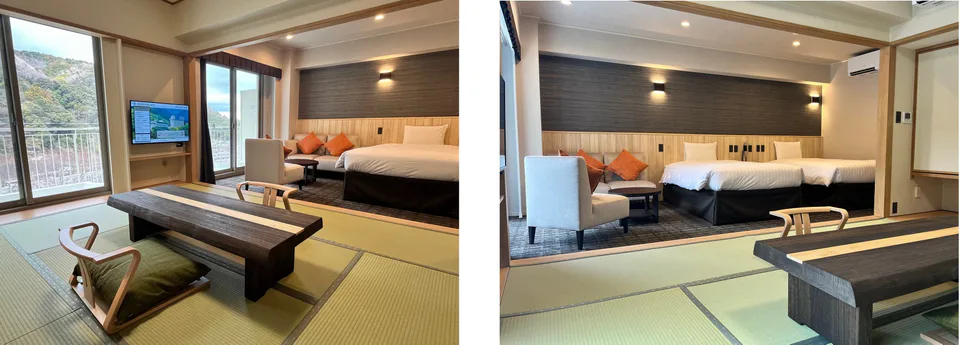
Yumoto Fujiya Hotel illustrates the Yumoto proposition: it is beside the station area, offers Western, Japanese and Japanese-Western rooms, and has public hot-spring baths plus reservable private baths. Its official tattoo policy allows public-bath entry only when tattoos can be covered by no more than two 10 × 14 cm stickers; otherwise a private bath is the safer option. Treat that as a hotel rule, not an area-wide rule, and reconfirm it for the booked date.
View Yumoto Fujiya Hotel on Booking.com
View Yumoto Fujiya Hotel on Expedia
Choose Gora when the classic loop—not the arrival—is the priority
Gora is the strongest default for a first visit because it sits at the transfer between the Hakone Tozan Railway and the cable car to Sounzan. From there, Owakudani and Togendai lie ahead on the ropeway, while the Open-Air Museum and Gora Park create useful arrival-day or bad-weather options. Gora therefore lets a one-night trip stop at a logical midpoint rather than restarting from the foot of the mountain.
That advantage is conditional. Gora is not one flat station district: the surrounding terrain rises quickly, and a “seven-minute walk” can mean a steep road, steps or a hotel entrance above the station. For a stroller, limited mobility or several suitcases, compare the exact exit-to-lobby route and shuttle hours. Straight-line map distance is not enough.
Gora also works best when dinner is already solved. It has restaurants, but it does not offer the same late-evening fallback density as a major city district or Hakone-Yumoto. A room-only booking is not automatically flexible if the nearest kitchens close before you arrive.
If the Open-Air Museum is part of the reason Gora wins, check the current museum planning guide. Reaching the ticket gate just before last entry is not a sensible arrival-day plan once hotel check-in and dinner are included.
Area example: HAKONE YUTOWA
HAKONE YUTOWA is a useful Gora benchmark because its official site places it about five minutes on foot from Gora Station. It has hotel rooms and condominium units, two private hot-spring baths available without advance reservation, and a dinner service whose latest arrival is 7:30 p.m. The hotel has also been fully cashless since 1 July 2026. Those details show why “Gora” still requires a property-level check: access, meal time, bath type and payment policy can matter more than the district label.
View HAKONE YUTOWA on Booking.com
View HAKONE YUTOWA on Expedia
“Lake Ashi” is two different transport decisions
Do not book a hotel from a generic “Lake Ashi” map result without checking which shore and port it uses. The sightseeing cruise connects Hakonemachi-ko, Motohakone-ko and Togendai-ko, but those ports play different roles after the cruise stops.
Choose Moto-Hakone or Hakone-machi for the shrine, old Tokaido and a cleaner bus exit
The southern shore is the better fit when Hakone Shrine, the lakeside torii, Hakone Checkpoint or the old Tokaido route is central. Moto-Hakone has buses toward Hakone-Yumoto and Odawara, and Hakone-machi sits beside the checkpoint and a cruise port. For a Tokyo-to-Hakone-to-Kyoto route, this shore is generally easier to reason about than an isolated northern-lake property because the next morning can be a direct bus descent rather than a cruise-plus-ropeway chain.
The cost is evening dependence. Once day-trippers leave, the lake is quieter precisely because shops, buses and restaurants are fewer. That is a feature when the hotel dinner and lake morning are the product; it is a problem when you booked room-only and assumed a city-style evening.
Choose Togendai when the ropeway and Owakudani are the route anchor
Togendai is directly connected to the ropeway and cruise and also has buses toward Hakone-Yumoto, Odawara and Shinjuku. It fits a route arriving through Gora and Owakudani, or one using the northern Hakone and Gotemba side. It is not interchangeable with Moto-Hakone: Hakone Shrine and the southern-shore sights remain on the other side of the lake, and a suspended cruise can turn a neat loop into a bus-replanning exercise.
Editorial verdict: choose a Lake Ashi hotel only when you can name the port, the next-morning exit and the dinner plan. “Lake view” alone is not enough to carry the transport trade-off.
Area example: Hakone Hotel at Hakone-machi
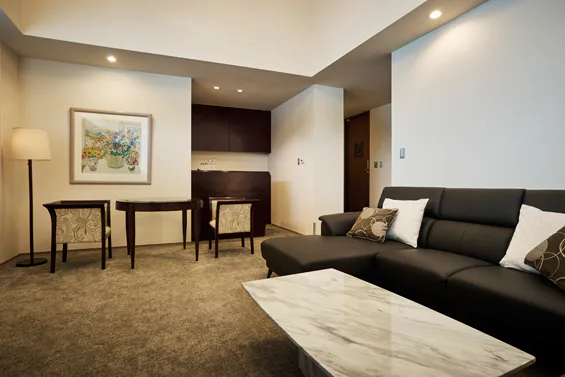
Hakone Hotel demonstrates the southern-shore trade-off. The official access information places it about 35 minutes by bus from Hakone-Yumoto, close to Hakone-machi Port. Rooms do not all frame the lake in the same way: some face it directly, while the Moderate Twin category sees it across the courtyard. The hotel has two communal hot-spring bath areas but does not advertise a standard reservable private bath, so travellers choosing by tattoo policy or private bathing should verify the exact arrangement before paying for the location.
View Hakone Hotel on Booking.com
View Hakone Hotel on Expedia
Three one-night routes that actually match the hotel base
Route A: late arrival, onsen night, full loop next day
Stay in Hakone-Yumoto. Check in without another mountain transfer, protect the meal and bath time, then start early for Gora, Sounzan, Owakudani, Togendai and Lake Ashi. This route gives up an upper-Hakone morning but is the most resilient after a long-haul flight, a delayed train or a winter arrival.
Route B: early-afternoon arrival, museum or quiet check-in, loop next morning
Stay in Gora. Complete the mountain railway on day one. Use any remaining daylight for the Open-Air Museum, Gora Park or the hotel, then take the cable car and ropeway after breakfast. This is the best default for a first visit only when luggage and dinner are under control.
Route C: morning arrival, loop before check-in, lake morning next day
Stay on the southern shore of Lake Ashi. Hand over bags at Hakone-Yumoto before noon, travel via Gora and Owakudani to Togendai, cross the lake and finish at Hakone-machi or Moto-Hakone. The next morning belongs to the shoreline, shrine or checkpoint before a bus descent. This route earns the lake premium; arriving at the lake after dark does not.
For the broader stay-length decision, pair these routes with Hakone for one night or two. One night is enough for a clear first-pass route; two nights become worthwhile when the ryokan, museums or weather flexibility are part of the trip rather than spare padding.
The luggage cutoff can reverse the best area
Hakone’s official same-day luggage service currently accepts bags at Hakone-Yumoto Station from 8:30 a.m. to noon, with collection at participating accommodation after 3 p.m. On the return, participating hotels accept bags by 10 a.m. for collection at Hakone-Yumoto from 1:30 to 6:30 p.m.
The current one-way fee is ¥1,500 for a regular item up to 140 cm in total dimensions and 15 kg, or ¥2,500 for a large item up to 200 cm and 30 kg. Service is limited to partner accommodation. Strollers, portable chargers, precision equipment, fragile items and several other categories are excluded.
The derived decision is more important than the price: after noon, a Gora or Lake Ashi booking may require you to carry the bag through the exact mountain segment you were trying to enjoy. Temporary storage at Hakone-Yumoto can help a day trip, but it forces you to return to Yumoto and therefore does not solve a lake-hotel transfer. If the stay is part of a Tokyo–Hakone–Kyoto route, forwarding the main cases to the next city and taking one overnight bag can be more valuable than choosing a theoretically central hotel.
Use the Kawaguchiko and Hakone luggage guide when the trip also includes Fuji Five Lakes; that transfer is not the same as Hakone’s local station-to-hotel service.
Ryokan dinner is a transport deadline, not a soft preference
A half-board ryokan stay turns the final bus or train into a meal-risk decision. Fixed-time kaiseki and set menus are prepared for booked guests; a late arrival may mean no replacement dinner and no refund. The hotel’s latest check-in and latest dinner entry may also be different.
Ask for the latest dinner arrival, not only the formal check-in time.
Confirm children’s meals, allergies, vegetarian requests and raw-food exclusions before booking an inflexible rail ticket.
Build margin for the next bus, not merely the scheduled bus you hope to catch.
For a likely late arrival, choose room-only in Yumoto and eat around the station rather than paying for a dinner you may miss.
Private baths, in-room hot-spring water and tattoo rules are hotel attributes, not district attributes. Read Hakone ryokan with private onsen before letting one bath photograph decide the entire base.
Bad weather does not affect the three bases equally
The Hakone Ropeway may suspend service in adverse weather or for maintenance, and the official live-status page warns that crowded buses may leave waiting passengers behind. A Freepass covers eligible transport; it does not guarantee that every link operates or that you board the first bus.
From Hakone-Yumoto: you can shorten the trip, use lower-Hakone activities or exit through Odawara. This is the most resilient base.
From Gora: replace the ropeway with the Open-Air Museum, Gora Park or hotel time. Gora remains useful even when the full loop fails.
From Lake Ashi: keep the hotel only if the property itself is worth the night. Fog, wind or a suspended cruise can remove the very views and cross-lake movement that justified the location.
This is why a lake hotel should not sit on the final night before a non-refundable early Shinkansen or flight. The issue is not that buses never run; it is that the route has fewer substitutes when one link becomes slow or crowded.
When Sengokuhara is the real answer
Sengokuhara should not be a fourth equal option in a first-time classic-loop comparison. It becomes the right answer when the Pola Museum, Venetian Glass Museum, susuki grassland, Gotemba side or a specific resort is the core of the stay, and when the bus stop or hotel shuttle is confirmed.
Do not choose it for one night merely because the hotel rate is lower. The saving can be consumed by a longer, less flexible final transfer and a route that no longer follows the classic train–cable car–ropeway–cruise sequence. For a foliage or grassland-led trip, use the Hakone autumn guide first.
For two nights, do not move hotels unless the second hotel is the experience
Two nights do not automatically justify two hotels. A single Gora base usually gives the best balance of loop access, museums and no repacking. A single Yumoto base is safer for mobility, luggage or repeated Odawara access. A single Lake Ashi base works when the property and shoreline are the trip rather than a base for maximum sightseeing.
Move once only when the change creates a distinct second stay:
Gora → Lake Ashi: best when night one supports museums and the upper loop, while night two deliberately buys the lake evening.
Gora → Hakone-Yumoto: better when the final morning has a fixed Shinkansen or cross-region departure.
Hakone-Yumoto → Lake Ashi: sensible after a late first arrival, but only if day two has enough time to justify moving rather than sightseeing from one base.
When Hakone is paired with Kawaguchiko, use the Tokyo–Kawaguchiko–Hakone three-day route rather than forcing two complete sightseeing loops into one transfer day.
Final decision flow
Will you reach Hakone-Yumoto after the luggage cutoff or in the late afternoon? Start with Hakone-Yumoto.
Can you forward bags, reach Gora comfortably and protect dinner? Choose Gora for the most efficient first-time loop.
Is the lake evening and early shoreline worth giving up transport flexibility? Choose a named Lake Ashi port, not the generic district.
Do you have a fixed early departure? Move the answer one step downhill: Lake Ashi to Gora, or Gora to Yumoto.
Are museums, Sengokuhara or Gotemba the actual trip? Stop optimizing for the classic loop and choose that corridor instead.
My default verdict: Gora is the best first-time one-night base for an early-afternoon arrival with light or forwarded luggage. Hakone-Yumoto is the better decision whenever arrival, dinner, mobility, luggage or the next morning is fragile. Lake Ashi is the best stay only when you are consciously buying the lake after the sightseeing day—not merely accepting a longer transfer for a prettier listing photo.
FAQ
Is Gora always the best area for a first Hakone trip?
No. Gora is the best midpoint for the classic loop, but Yumoto is better after a late arrival, before an early Odawara departure or when large luggage cannot be forwarded. Lake Ashi is better when the lake evening itself is the priority.
Can I stay at Lake Ashi without a car?
Yes. Buses, the ropeway and the sightseeing cruise connect the lake, but you must choose the specific port. Moto-Hakone and Hakone-machi suit southern-shore sights and bus exits; Togendai suits the ropeway and northern-Hakone route.
What should I do if I reach Hakone-Yumoto after noon with large suitcases?
The same-day hotel delivery window has closed. Yumoto becomes the least-friction stay; otherwise confirm a direct bus, hotel shuttle or taxi and the exact hotel approach before continuing uphill. Station storage is useful only if you are willing to return to Yumoto.
Where should I stay before travelling to Kyoto or Osaka?
Choose Yumoto when the Odawara Shinkansen is early or non-negotiable. Gora can still work for a later train if completing the loop matters more and you leave a substantial descent buffer. I would not choose Lake Ashi for an early fixed departure.
Does the Hakone Freepass make Gora or Lake Ashi automatically better?
No. The pass can reduce ticket friction and covers multiple Hakone transport modes, but it does not remove luggage, slopes, dinner deadlines, weather suspensions or waiting for a crowded bus.
Related Hakone decisions
Search all Hakone stays
Compare the full inventory only after choosing the transport zone. Then check the exact station or port, hotel approach, dinner deadline, bath policy and room-view wording. A property marketed as “Gora” or “Lake Ashi” can still sit on the wrong side of the decision.
Search all Hakone stays on Booking.com
Search all Hakone stays on Expedia
Official sources checked
Hakone Navi — Getting Around Hakone · Hakone Luggage Transport Service · Hakone transport operating status · Hakone Ropeway operating information · Moto-Hakone port and bus guide · Togendai station and port guide · Yumoto Fujiya Hotel hot-spring policy · HAKONE YUTOWA official site · Hakone Hotel official site. Checked 25 August 2026. Timetables, hotel plans, meal times, transport status and operating conditions can change; verify the actual travel date before locking non-refundable bookings.