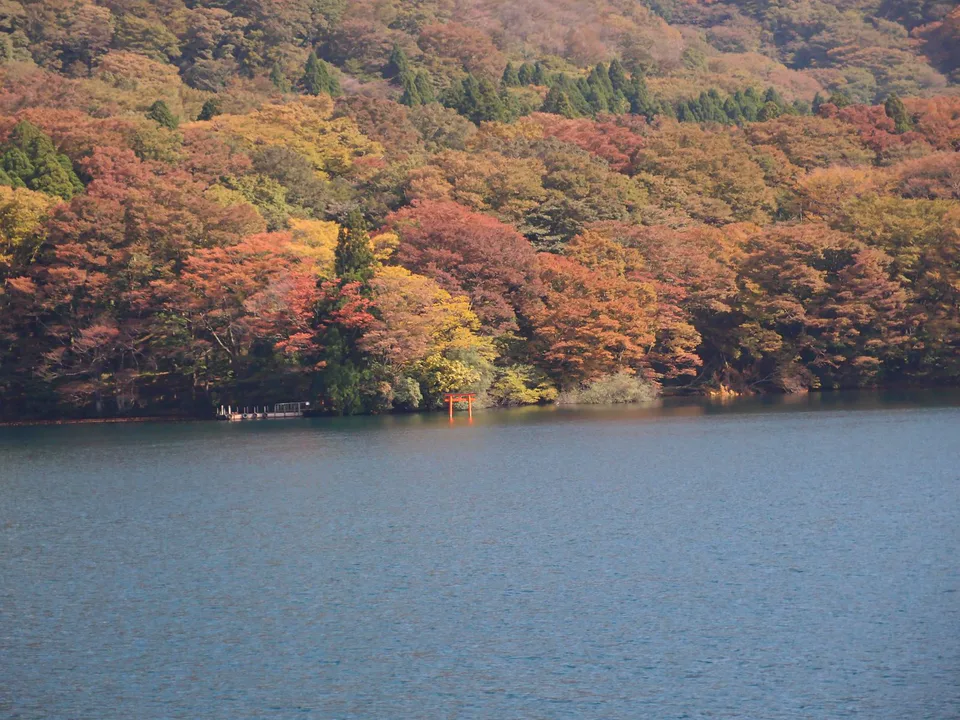
For most first-time Japan itineraries, one night in Hakone is the better default. It gives you a ryokan evening plus two sightseeing windows—before check-in and after checkout—without taking a second night away from Tokyo, Kyoto or Osaka. Two nights become worth paying for only when the full middle day has a clear job: museums, a slower Sengokuhara/Gora day, family recovery time, a deliberate rest day, or an extra operating/weather window for Owakudani, the ropeway and Lake Ashi.
The most misleading number in this decision is the Hakone Freepass difference. The current pass costs only ¥400 more (about US$2.51) for three days than two. That does not make a second Hakone night cheap. The expensive part is the extra accommodation night, meals, and the night you remove from somewhere else.
Hakone 1 night vs 2 nights: the decision in 30 seconds
↔ Scroll table left or right
Your trip pattern | Choose | Why | What can reverse it |
First Japan trip, 10–14 days, classic loop + one ryokan dinner | 1 night | You capture Hakone's most distinctive value without displacing too much Tokyo/Kyoto/Osaka time | You arrive late or must leave early next morning |
Arrive before late morning, leave after lunch next day | 1 night | Both sides of the hotel night become usable sightseeing windows | Your ryokan dinner/check-in time cuts the first day short |
Arrive after 14:00 and still want loop + museums + ryokan | 2 nights or cut activities | Operating hours and meal deadlines make one night structurally compressed | You accept a ryokan-first first day and reduce sightseeing |
Young children, older parents, slower mobility or frequent rest breaks | 2 nights often stronger | The middle day removes check-in/check-out pressure from the main sightseeing day | You are staying mostly in Hakone-Yumoto with a deliberately small itinerary |
Private onsen / kaiseki is the main goal | 1 better night first | One premium ryokan night can deliver more of the actual goal than two ordinary nights | Rest itself is a major trip priority and budget is secondary |
Ropeway / Owakudani / Fuji views are a must-try priority | 2 nights can justify itself | You buy another usable weather and operating window | Your Tokyo dates are flexible enough to move Hakone instead |
You cannot name what day two is for | 1 night | The second night is buying time without a defined use | “Doing less” is itself the reason for the trip |
Count usable Hakone hours, not hotel nights
A one-night stay can feel generous or nearly pointless depending on arrival and departure. The useful unit is the number of daylight and operating hours left after transport, luggage, check-in and ryokan meal deadlines.
↔ Scroll table left or right
Arrival / departure pattern | What one night feels like | Main risk |
Reach Hakone around 09:30–10:30 | Strong | Do not overfill day one and become late for dinner |
Reach around 12:00–13:00 | Workable | Choose one side of the loop or one museum rather than pretending everything fits |
Reach after 14:00 | Ryokan-first | The mountain transport window is already shrinking |
Leave before 09:00 next morning | Weak | You lose the second sightseeing window that normally makes one night efficient |
Leave after 13:00–15:00 next day | Strong | The morning can finish the route instead of becoming breakfast + checkout only |
The Hakone Ropeway's current official hours are 09:00–17:00 from February through November and 09:00–16:15 in December and January. Those closing times are why a 15:00 arrival is not merely “five hours later” than a 10:00 arrival—it can remove most of the day's mountain-network flexibility.
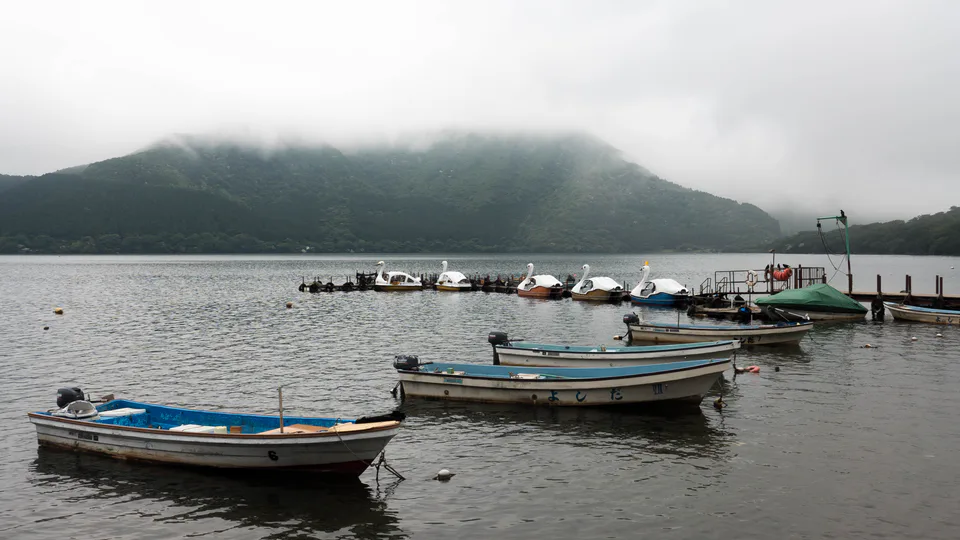
One night works when you split Hakone across check-in, not when you race the whole loop
The strongest one-night pattern does not try to finish Hakone before the ryokan. Arrive early, remove the main luggage, use one geographic section, check in with enough margin for dinner, then complete the remaining section after breakfast.
A Gora stay can pair naturally with the mountain railway, Open-Air Museum, cable car and Owakudani side. A Lake Ashi stay can preserve the lake for late afternoon or early morning. Hakone-Yumoto is easiest for arrival and departure but can create more backtracking if most sightseeing is higher in the mountains. Settle where to stay in Hakone before concluding that one night is too short.
The one-night model is especially strong for Tokyo → Hakone → Kyoto/Osaka. Hakone becomes a meaningful overnight break on a wider east-west itinerary instead of a round trip from Tokyo. The trade-off is that the luggage and onward-train plan have to be solved before arrival.
Two nights are really a purchase of one luggage-free middle day
The best reason to stay two nights is not “Hakone has enough attractions.” It is that the middle day has no arrival transfer, no checkout, no next-city train and no need to move the main luggage. That changes the pace more than simply sleeping in Hakone twice.
A full middle day can support the Open-Air Museum plus Gora, a slower Sengokuhara / Pola Museum day, Lake Ashi without timetable pressure, or a deliberate return to the ryokan before dinner. Families and slower travellers gain because every train, cable car, ropeway and bus connection no longer has to fit between two hotel deadlines.

If you cannot point to a specific use for that middle day, two nights become harder to defend. “More relaxing” is valid only when relaxation itself is one of the trip goals.
The true second-night cost is not the room rate
The extra-night decision should be calculated as an incremental trip cost, not a second hotel price in isolation:
Second-night incremental cost = extra Hakone accommodation + meal difference + extra local/luggage cost − the accommodation night you would otherwise have used elsewhere.
Illustrative example only: suppose a second Hakone ryokan night with meals is ¥45,000 (about US$282), while the Kyoto/Osaka/Tokyo hotel night it replaces would have been ¥28,000 (about US$176). The accommodation increment is already ¥17,000 (about US$107) before any extra luggage or transport costs. These are not quoted market rates; they show the calculation you should make using your actual dates.
This is why “the pass is only ¥400 more” is the wrong anchor. A small transport difference can coexist with a large itinerary-level opportunity cost.
The ¥400 Freepass extension is useful only after the stay length is decided
The current adult Hakone Freepass is ¥7,100 for two days (about US$44.54) and ¥7,500 for three days (about US$47.05) from Shinjuku. From Odawara, it is ¥6,000 (about US$37.64) for two days and ¥6,400 (about US$40.15) for three. In both cases, the third day adds only ¥400 (about US$2.51). Romancecar Limited Express charges are separate.
That price structure is genuinely useful when you have already decided on two nights. It is not evidence that two nights themselves are cheap. Transport should follow the itinerary, not create it. If the stay length is clear, use Tokyo to Hakone: Romancecar, JR and Hakone Freepass to choose the route and pass version that match where you enter and leave.
Noon is a hidden one-night cutoff if you rely on Hakone luggage delivery
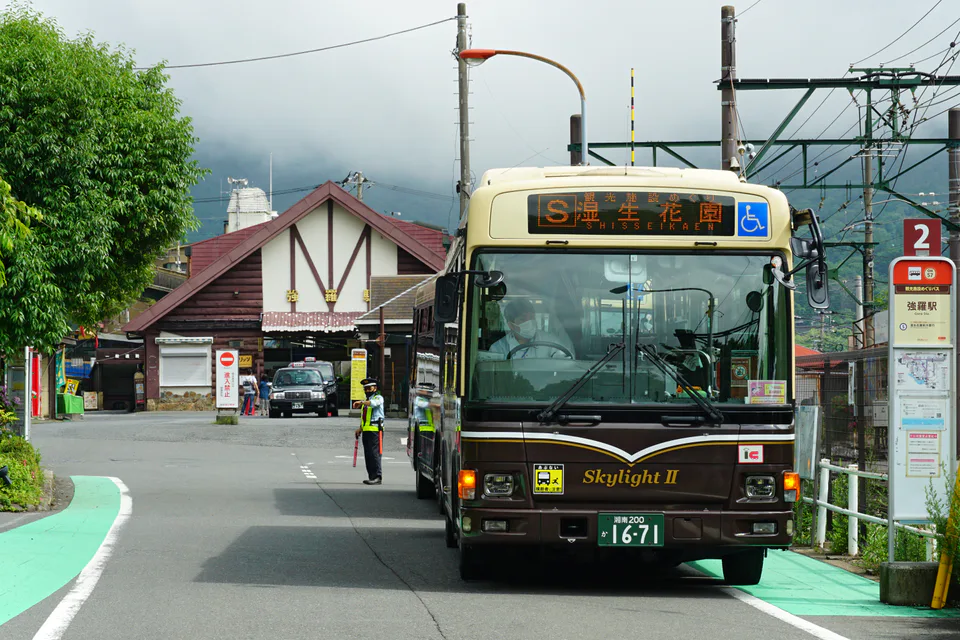
Hakone-Yumoto's official luggage transport service currently accepts same-day hotel-bound luggage from 08:30 to 12:00, with hotel pickup after 15:00. A regular-size piece costs ¥1,500 (about US$9.41) one way and a large piece ¥2,500 (about US$15.68), subject to the published size/weight limits and participating-accommodation rules.
That noon cutoff can split two otherwise similar one-night trips into different difficulty levels. Arrive at 11:15, hand over the suitcase and go sightseeing: the first half-day can work cleanly. Arrive at 12:30 expecting the same service and you may need a different storage/transport plan, which can turn “one night is easy” into “one night feels rushed.”
ValueNavi failure mode: do not solve a luggage-timing problem by automatically buying a second hotel night. First check whether forwarding, storage, a taxi segment or a different hotel area recovers the one-night plan. The broader Hakone luggage-forwarding guide covers the alternatives.
Weather is the strongest rational argument for two nights when the mountain network is the goal
The Hakone Ropeway can suspend because of strong wind, lightning, typhoons, adverse weather or maintenance. Its current official operating hours are 09:00–17:00 from February through November and 09:00–16:15 in December and January. Lake transport and Mount Fuji visibility are also weather-sensitive.
Two nights therefore create more than one usable weather window. That matters when Owakudani, the ropeway, Lake Ashi or mountain views are central reasons for going. It matters much less when the ryokan itself is the goal and the mountain circuit is optional.
Boundary condition: two nights improve resilience; they do not guarantee clear views or uninterrupted transport. Consecutive bad-weather days can still happen. If your Tokyo schedule is highly flexible, moving the Hakone date may sometimes buy more weather resilience than locking in a second night.
One premium ryokan night can beat two average nights
For many international visitors, Hakone is partly an accommodation experience: kaiseki dinner, onsen, a private bath, lounge time or a room with mountain views. In that case, the correct comparison is not simply one night versus two nights at the same property.
↔ Scroll table left or right
Choice | What you buy | When it wins |
One better ryokan night | Higher room/meal quality, concentrated onsen experience, lower itinerary opportunity cost | First trip, limited Japan days, accommodation experience is the goal |
Two ordinary nights | Full middle day, weather buffer, slower transfers | Museums, family pace or a broad Hakone itinerary matters more than the room |
Two premium nights | Maximum ryokan time + full middle day | Budget is secondary and Hakone is deliberately a major stop |
If a private bath is the main reason to add a night, compare actual room and bath types in Hakone Ryokan with Private Onsen. The second night should not be an automatic way to “get more value” from an expensive room.
The second night competes with the rest of Japan
For a long-haul visitor with only 9–14 nights in Japan, Hakone's second night is not competing with “nothing.” It may be replacing a full Kyoto day, an Osaka evening, another Tokyo neighbourhood or a slower arrival day.
↔ Scroll table left or right
Broader itinerary | Opportunity cost of night two | My default |
7–9 nights in Japan | High | One night unless Hakone is a top-two trip priority |
10–14 nights, first trip | Medium | One night first; two only with a defined middle-day purpose |
15+ nights or repeat trip | Lower | Two nights become easier to justify for pace, museums or weather margin |
These are editorial planning bands, not universal rules. A traveller who cares deeply about onsen and museums may rationally give Hakone two nights on a short trip. The purpose of the table is to make the trade explicit.
Three ways the two-night decision goes wrong
1. The middle day has no job. You add a night because the pass is cheap or the ryokan looks relaxing, then discover you displaced a more valuable city day.
2. You solve a luggage problem with accommodation nights. A better baggage plan can recover the one-night itinerary without paying for another room.
3. You expect two nights to guarantee the mountain view. A longer stay adds another chance; it cannot control wind, cloud or transport suspensions.
ValueNavi second-night test
Before paying for night two, answer four questions: What exactly will I do on the full middle day? Will I use the ryokan itself more than once? Is weather flexibility important enough to pay for? Which city or experience loses the night?
If you have strong answers to at least three, two nights are easy to defend. If only one answer is convincing, one night is usually the cleaner itinerary. If the only answer is “the three-day pass is just ¥400 more,” keep the night for somewhere else.
Final verdict
One night is the default for a first trip because it captures the most distinctive Hakone value per night: mountain transport, one ryokan dinner, onsen and two partial sightseeing windows. It works best when you arrive before lunch, remove the luggage quickly, choose the hotel area around your route and leave late enough to use the second morning.
Two nights are worth it when the full middle day materially changes the trip. Museums, family pace, a deliberate recovery stop or a second weather window can justify it. The answer also moves toward two nights when arrival is late or departure is early, because the “one-night” plan may otherwise contain very little usable Hakone time.
If you cannot name what the extra night buys beyond “more Hakone,” I would stay one night and give the second night back to the wider Japan itinerary.
References
Hakone Navi — current Hakone Freepass prices and validity · Hakone Navi — current ropeway operating hours and suspension guidance · Hakone Navi — current luggage transport hours, size limits and fees. Rechecked August 27, 2026. US-dollar figures are approximate conversions using the August 26, 2026 JPY/USD rate; exchange rates move. Hotel-cost examples are illustrative calculations, not quoted market prices.