Kinosaki Onsen 1 night or 2 nights depends on whether a second night adds meaningful bath, ryokan or side-trip time instead of repeating the same town routine.
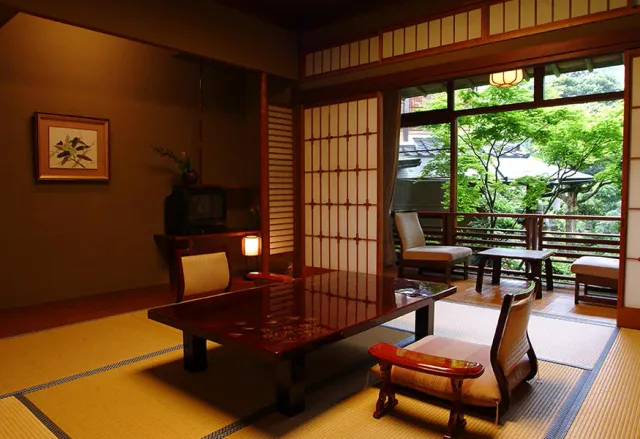
For most first-time visitors, one night in Kinosaki Onsen is enough if the town is a focused ryokan-and-onsen stop between Kyoto, Osaka or another major base. Arrive by early afternoon, check in, use the public baths through the evening, eat a ryokan dinner, bathe again the next morning and leave after breakfast. That gives you the core Kinosaki experience without using a second Japan night on the same small town.
Stay two nights when the second day has a job. The extra night is worth it if you want a full day with no arrival or departure train hanging over you, plan to visit several bathhouses slowly, want a side trip into the wider Toyooka area, or are deliberately building a recovery stop into a fast Japan itinerary. Two nights should buy a different travel rhythm, not simply duplicate the first evening.
Last checked: August 15, 2026. Public-bath operating days, renovation closures, ryokan meal times and local transport can change. Recheck the official Kinosaki information and your specific ryokan before the free-cancellation deadline.
Kinosaki Onsen 1 night or 2 nights: the 30-second decision
Kinosaki is one stop inside a 10–14 day first Japan trip: choose one night unless you are deliberately slowing the itinerary.
You mainly want a ryokan dinner, yukata walk and public baths: one night is usually enough.
You want a full day with no check-in or checkout pressure: two nights.
You want Takeno, Izushi, Genbudo or another Toyooka-area side trip while keeping Kinosaki as your base: two nights becomes much easier to justify.
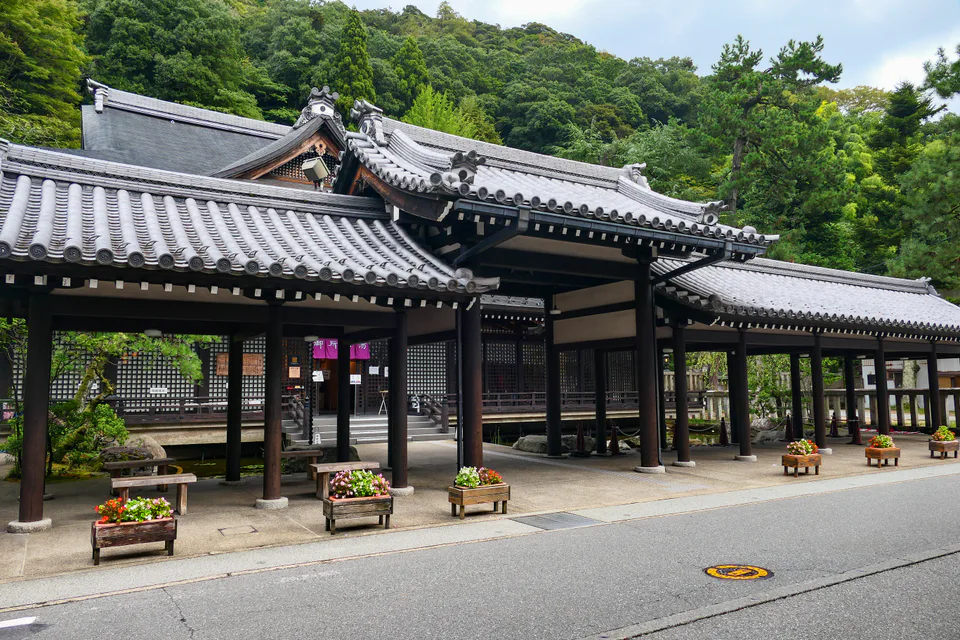
Goshono-yu, Kinosaki Onsen. Photo source: Wikimedia Commons; attribution and licence retained from the original file page.
One night works because the ryokan stay already gives you two bathing windows
The strongest argument for one night is that the experience is not limited to the evening you arrive. Kinosaki’s official ryokan guidance says staying guests receive a Yumepa pass for the public bathhouses, and the pass is generally valid through 1:00 p.m. on checkout day. That means a one-night stay can include an arrival-day bath, an after-dinner bath and another morning bath before departure.
This matters because many travelers imagine one night as a compressed six-hour visit. It does not have to be. If you arrive around early afternoon and avoid leaving immediately after breakfast, the stay stretches across two calendar days. The public baths also have different regular closure days, so you should not try to “collect all seven” as a completion task. The better goal is to use two or three that fit your route, energy and opening schedule.
The main condition is arrival time. The official ryokan shuttle generally operates around limited-express arrivals from roughly 12:30 to 18:00, and traditional dinner service is often around 18:00. If your train reaches Kinosaki late in the afternoon, the first night loses much of its margin. One night is efficient only when you protect enough time before dinner to settle in and actually use the town.
Two nights are worth paying for when the middle day changes the pace
The value of the second night appears on the middle day. You wake up already in Kinosaki, have no luggage handoff, no train deadline and no need to time the day around a 15:00 check-in. That is the only day of the stay when you can use the town from morning to night without either arriving or departing.
For travelers coming from London, Toronto or another long-haul origin and moving quickly through Tokyo, Kyoto and Osaka, that empty middle day can be more valuable than another attraction. The second night can function as an itinerary reset: sleep, bathe, walk, eat and stop measuring the day in station transfers. If that slower rhythm is part of why you chose an onsen town, two nights are not excessive.
But two nights are weak value if you spend the middle day repeating exactly the same route with no interest in the baths, local streets or surrounding area. Kinosaki is compact. A second night should either deepen the onsen experience or create a base for something outside the central bathhouse loop.
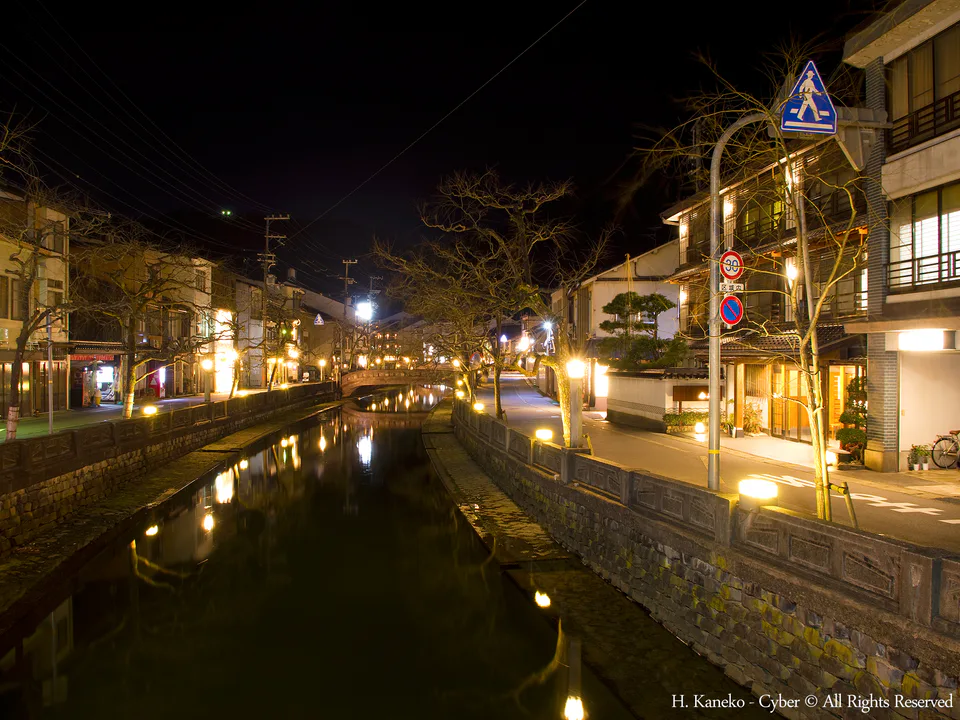
Kinosaki Onsen at night. Photo source: Wikimedia Commons / Panoramio archive; licence as stated on the original file page.
A second night makes more sense if you use Kinosaki as a Toyooka base
Visit Kinosaki’s current sample-itinerary library is a useful signal: it does not treat the destination only as a bathhouse strip. Official itineraries combine Kinosaki with Takeno Beach, Izushi, Genbudo, rural areas and other Toyooka experiences. The site currently publishes both 2-day/1-night and 3-day/2-night examples, which reflects two different trip styles rather than one universally correct stay length.
If you want one of those side trips, two nights reduce hotel churn. Instead of Kyoto → Kinosaki → side trip → new hotel, you can arrive, sleep in Kinosaki, use the middle day for the excursion, return to the same room and leave the following morning. That protects the ryokan experience from being squeezed around another transfer.
The exception is a side trip that is itself better as an overnight. Takeno, for example, can be more rewarding if the beach town is the main destination rather than a half-day add-on. Two nights in Kinosaki should not become an excuse to commute back and forth when the secondary place deserves its own stay.
Do not add a second night just to chase every public bath
The bathhouses have individual closure days and some have renovation periods. As of this check, Kono-yu is closed for renovation from May 11 through October 30, 2026, while Satono-yu has been closed for renovation since April 1, 2024. The practical set of available baths therefore changes by date.
That makes “I need two nights so I can visit all seven baths” a poor decision rule. A stay should not be lengthened around a checklist that may be impossible on your dates. Choose the baths that are open and different enough to matter, then let meals, walking and rest fill the gaps. Day visitors can also buy an onsen day pass, while ryokan guests receive their pass as part of the stay, so bathing time is not limited to one narrow evening window.
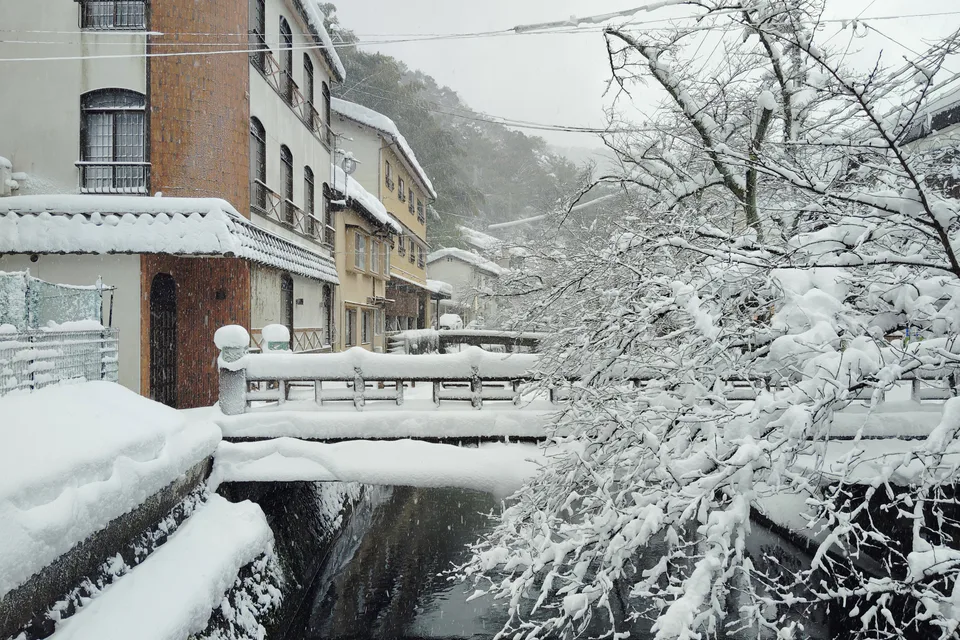
Otani River, Kinosaki Onsen, 2026. Photo source: Wikimedia Commons; attribution and licence retained from the original file page.
Luggage is the hidden reason one night can feel harder than two
A one-night detour is only elegant when the suitcase does not dominate the stop. The Ryokan Service Center opposite Kinosaki Onsen Station can hold luggage or, when possible, send it to a ryokan for a small fee. That helps on arrival, but the larger strategic question is whether you need the full suitcase in Kinosaki at all.
For a one-night stay between Kyoto and another major hotel, forwarding the large suitcase ahead and taking an overnight bag often makes the stop much cleaner. The broader Japan luggage forwarding guide explains the general workflow. If you are carrying everything because the next hotel cannot receive luggage, the convenience gap between one and two nights narrows because you are already committing to a full hotel move.
Your wider Japan itinerary should decide the second night
The second Kinosaki night competes with a night somewhere else. On a 10-day first trip, that trade-off is expensive. On a 14-day trip, it is much easier to give an onsen stop breathing room. This is why the right answer changes with trip length more than with a generic list of Kinosaki attractions.
If you have not yet fixed the overall route, start with the 10, 12 or 14 day Japan itinerary before giving Kinosaki a second night. If Kyoto and Osaka are competing for the same night, use the Kyoto vs Osaka stay comparison to decide where the sacrifice hurts least.
Who should choose one night—and who should choose two
Choose one night if this is your first onsen-town experience, the ryokan itself is the main purchase, you are traveling on a tighter 10–12 day route, and your arrival train can reach Kinosaki early enough for a relaxed check-in. One night also works well for travelers who enjoy hot springs but do not want bathing to dominate a full day.
Choose two nights if you specifically want a slow onsen break, are traveling in winter when weather can make movement more tiring, have enough trip length to protect the extra night, or have a clear middle-day plan. Couples and repeat Japan visitors often get more value from the second night because the trip is less dependent on fitting a standard first-timer checklist.
Do not choose two nights simply because changing hotels feels difficult. If the rest of the itinerary is already too compressed, the better solution may be fewer destinations rather than adding another night to every stop. Kinosaki rewards slowness, but an extra night only works when you are willing to use that slower pace.
Final verdict: one night is enough for the core experience; two nights need a purpose
For most first-time Japan itineraries, book one night in Kinosaki Onsen. Arrive early, protect the ryokan dinner window, bathe before and after dinner, use the morning pass again and leave without rushing. That is enough to understand why Kinosaki works as an overnight destination rather than just a day trip.
Book two nights when you can name what the middle day is buying: a side trip, a full no-train day, winter recovery or a deliberately slower onsen rhythm. If you cannot name that benefit, keep the second night for Kyoto, Osaka or the next destination.
Continue Planning
What Your First Onsen Feels Like
Fukuoka to Yufuin Road Trip: Which Route 210 Stops Are Worth It?
Biei Day Trip or Overnight? When Staying One Night Is Worth It
Where to Stay in Aomori on Your First Night: Station, Aomoriya, Oirase or Hirosaki
Where to Stay in Kamakura or Fujisawa: The Best Base for Two Nights, With Enoshima as the Wild Card