
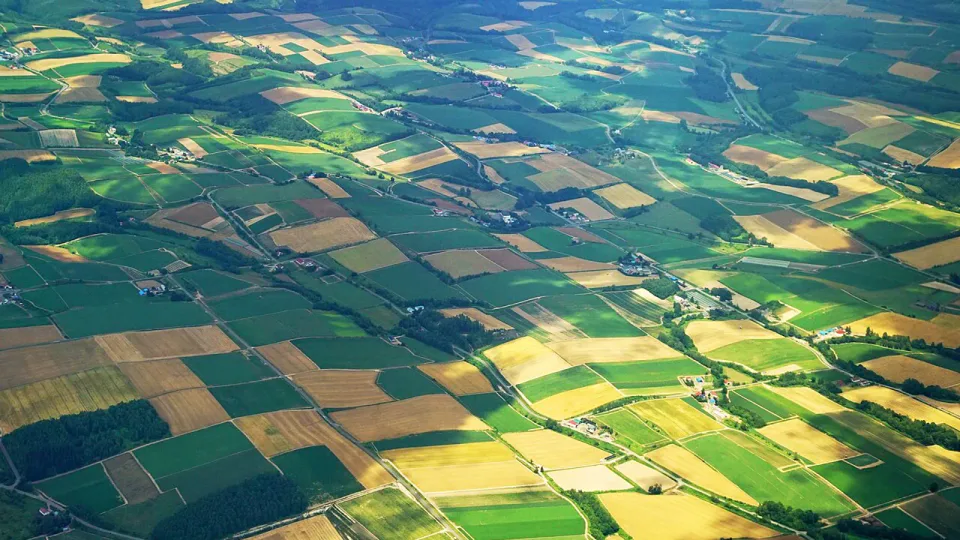
For a first Biei visit in summer, a day trip from Asahikawa or Furano is usually enough if your priorities are the Blue Pond, Shirahige Falls and Shikisai no Oka. Staying one night becomes worthwhile when you will deliberately use dawn, sunset, an early countryside drive, a photography window, or an onward route to Asahikawa Airport or Daisetsuzan. The important correction is seasonal: the convenient 2026 Biei View Bus is a summer–autumn product, so its day-trip logic should not be copied into winter.
Winter Biei is still possible without a car. Biei Tourism Association currently lists the regular Dohoku Bus between Asahikawa/Biei and the Shirogane–Blue Pond area as operating every day. But a winter visit is timetable-led rather than packaged-tour-led, and snow, darkness and road conditions make missed connections more expensive. As of August 25, 2026, the next 2026–27 Blue Pond illumination schedule has not yet been published on the official English site; the previous season ended on April 22, 2026. Do not build a winter overnight around last season's light-up times.
Biei day trip or overnight: the 30-second decision
↔ Scroll table left or right
Your actual trip | Default | Why |
Summer, first visit, Blue Pond + Shirahige Falls + Shikisai no Oka | Day trip | The 2026 Biei View Bus packages the core sights into a half-day from Biei Station |
Summer photography at dawn / sunset | Overnight | The night buys light windows that normal day trippers cannot use |
Winter, no car | Conditional day trip | Regular route buses exist, but the summer sightseeing-bus schedule does not apply |
Winter illumination is the main reason to visit | Overnight may be stronger | Evening transport becomes the limiting factor; wait for the official 2026–27 schedule before booking around it |
Next morning: Asahikawa Airport / Asahikawa / Daisetsuzan | Overnight gains value | The hotel move also progresses the wider route |
Family / older travellers already settled in Asahikawa or Furano | Day trip | A second hotel needs to create more than a slightly shorter train ride |
Summer 2026: the View Bus raises the bar for paying for a Biei night
Biei Tourism Association's current 2026 View Bus operates on selected dates in June and October and every day from July 1 through September 30. The standard summer Blue Pond and Flower Garden courses leave from the Shiki-no-Johokan information centre beside JR Biei Station. The morning course runs 09:40–12:45 and the afternoon course 14:10–17:10, linking Shirogane Blue Pond, Shirahige Falls and Shikisai no Oka.
That matters because the three sights most first-time visitors struggle to connect without a car are already bundled into one transport product. If those are your entire Biei wish list, a hotel night is not buying much additional convenience. Keep your luggage in Asahikawa or Furano, make the day trip, and avoid another checkout.
The bus is all-reserved and the operator warns that road or weather conditions can shorten or change the itinerary and may affect onward connections. Even in summer, do not schedule a tight limited-express or flight connection immediately after the tour.
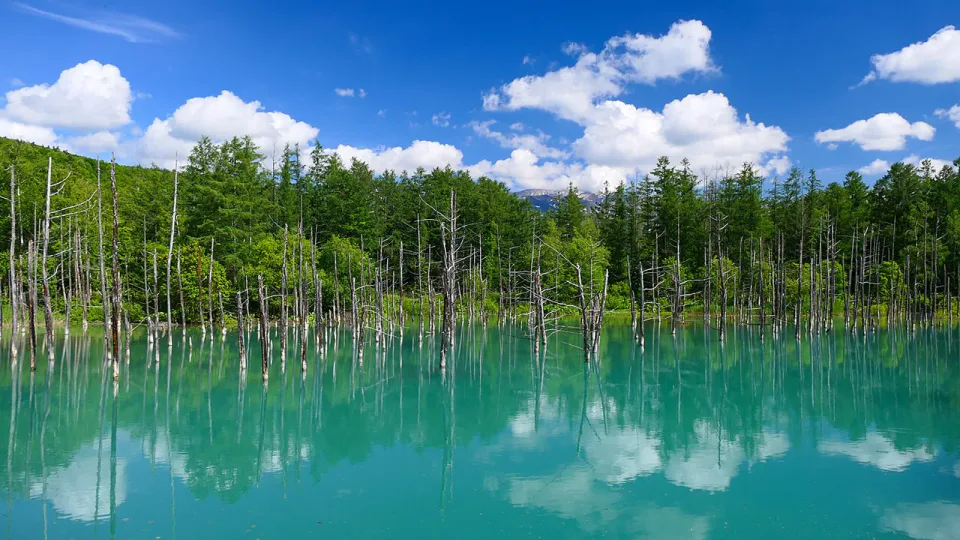
From Asahikawa, a summer day trip is usually the cleanest answer
The official connection guide for the 09:40 morning View Bus currently shows JR Furano Line travel from Asahikawa at 08:44, arriving Biei at 09:17. That is early, but it is not an extreme pre-dawn commute. You can keep the same hotel, travel with a day bag, complete the core Biei circuit, then return to a city with more evening dining and hotel choice.
This is where the deletion test is useful: if you remove the Biei hotel from the trip, do you lose dawn, sunset, a specific countryside stay or a better onward route? If not, the overnight is mostly substituting a hotel move for a short JR segment.
If Asahikawa is doing several jobs in the wider itinerary, compare it with the Hotel WBF Grande Asahikawa base guide before moving one night just for Biei.
From Furano, the next destination matters more than the day-trip train time
The same official connection guide currently shows Furano 08:12 → Biei 08:44 for the morning bus. If you already have two nights in Furano and the following day returns south or stays around Furano, keep the same room and day-trip Biei.
Biei overnight becomes stronger when the next leg moves north. A Furano → Biei sightseeing day → Biei night → Asahikawa/airport/Daisetsuzan sequence lets the hotel move progress the route instead of forcing you back to Furano solely to collect your luggage.
That is the key difference between a useful split stay and a cosmetic one. The Biei night should solve tomorrow as well as tonight.
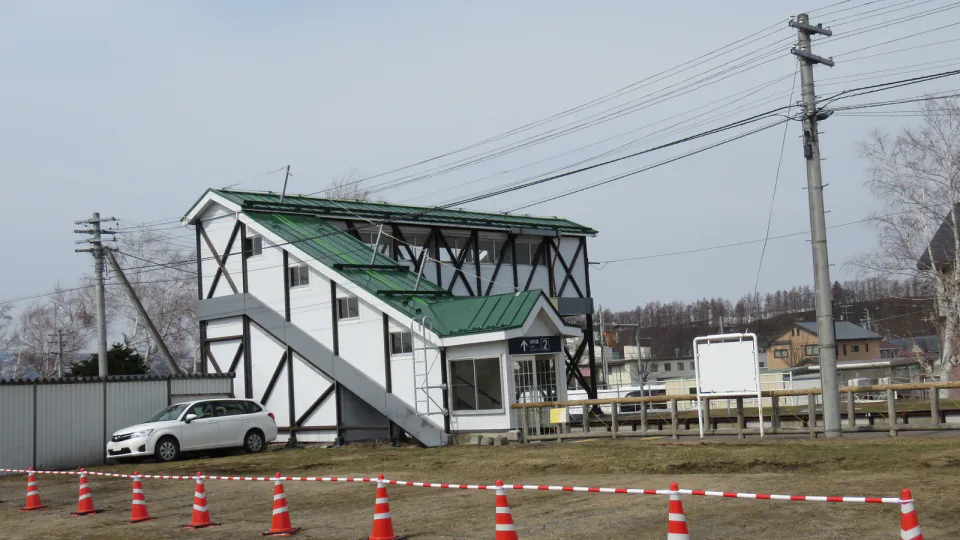
The strongest overnight case is edge-of-day time, not station convenience
Biei's hills are one of the few cases where the hours outside the standard sightseeing window can genuinely change the product. Dawn, lower-angle evening light and quieter roads matter to photographers in a way they may not matter to a traveller who simply wants to see the famous locations once.
Use a simple two-window test:
Evening window: will you deliberately stay out for sunset, golden-hour hills or a quiet countryside dinner?
Morning window: will you get up early for Patchwork Road, Panorama Road, an early Blue Pond visit or a route that leaves Biei before normal day-trip arrivals?
If neither window has a job, the night has weak incremental value. If both do, Biei can be one of the rare places where a one-night move produces a visibly different trip rather than simply a closer bed.
Staying in Biei does not remove the countryside last mile
This is the most common reason the overnight is overvalued. Biei Station is not the Blue Pond, and it is not the centre of every farm road. The Blue Pond official access page currently describes the site as about 20 minutes by car or route bus from the station area. The regular bus can solve the Shirogane corridor, but it does not turn every Patchwork Road viewpoint into a walkable attraction.
Before booking a station hotel, write down the first and last countryside stop for the following day. If you still need a taxi, bicycle, route bus or rental car, the hotel has only removed the Asahikawa/Furano → Biei segment. That may still be worthwhile, but it is a smaller benefit than “stay inside the sights” suggests.
Winter is a different decision: do not reuse the summer View Bus
The official Biei sightseeing-bus page currently labels the Association's 2026 product as the 2026 summer Biei View Bus. Its published operation ends with selected October dates. A traveller arriving in January or February should therefore not plan a winter day using the 09:40/14:10 summer course.
That does not mean winter Biei is inaccessible without driving. Biei Tourism Association currently lists the regular Dohoku Bus between Asahikawa, Biei, the Blue Pond and Shirogane Onsen as operating every day, and the Blue Pond facility page also confirms route-bus access. The itinerary simply has less built-in flexibility: miss one rural bus in winter and the replacement can be much more expensive than missing a city subway.
For a winter no-car day trip, I would therefore require three things before keeping the night in Asahikawa:
The current route-bus times allow the Blue Pond/Shirogane visit you want.
Your return bus still leaves comfortable margin for the train or hotel plan.
You are not depending on an evening illumination timetable that has not yet been published for your season.
If one of those fails, a Biei or Shirogane-area overnight becomes a stronger resilience purchase, not merely a photography splurge.
The Blue Pond itself changes identity in winter
Biei Tourism Association explicitly notes that when snow covers the frozen pond, visitors should not expect the familiar blue water surface. Winter interest shifts toward the snow landscape and seasonal illumination rather than seeing the same summer Blue Pond with snow around it.
The last published English illumination announcement covered October 24, 2025 through April 22, 2026 and has already ended. As of August 25, 2026, the Association has not yet published the next 2026–27 English schedule on the pages checked for this article. If illumination is the reason you would pay for a winter night, wait for the new dates and transport information before making a non-refundable booking.
This is a real boundary condition: a general “Biei overnight is better in winter for the light-up” recommendation is too early until the season's event and return-transport details exist.
Winter driving raises the bar for a rental-car overnight
A rental car gives Biei photographers enormous route flexibility in summer. Winter is different. Biei Tourism Association continues to warn visitors about snow and slippery conditions, including after late-season snowfall. An overnight does not make an unfamiliar winter driver safer; it simply changes where the drive starts.
If you do not have confident snow-driving experience, build the trip around current public transport, a sightseeing/taxi product or a guided activity instead of treating a rental car as the automatic solution to rural frequency. The editorial recommendation here is about itinerary resilience, not a claim that one transport mode is always safer for every driver.
Asahikawa Airport is the routing condition most likely to make one night worthwhile
Biei's official access information lists the airport bus between Asahikawa Airport and Biei Station at roughly 16 minutes. That can give Biei a second job in an open-jaw Hokkaido route: sightseeing base plus airport-positioning night.
For example, Furano → Biei → Asahikawa Airport is more coherent than Furano → Biei → Furano solely to sleep, then reversing direction to the airport. The same logic works on arrival when Biei is the first meaningful destination after an Asahikawa flight.
But do not book an airport-adjacent night merely because the map looks convenient. Check the actual bus/flight connection for the travel date; rural frequency matters more than the kilometre count.
Families and older travellers should demand a second benefit before changing hotels
If the group is already comfortable in Asahikawa or Furano, a Biei day branch avoids packing, checkout, luggage handling, a new room and another breakfast routine. A one-night stay should therefore earn its keep through more than “we save one train ride.”
Good second benefits include:
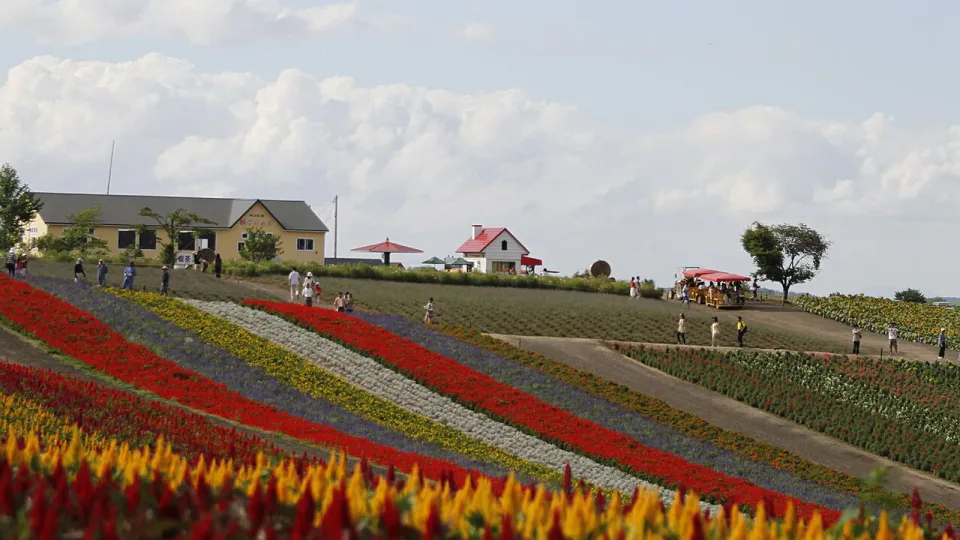
an early photography or quiet-sightseeing window;
an onward airport or northbound route;
a property or Shirogane Onsen stay that is itself part of the trip;
a winter evening plan whose transport is materially easier from the overnight base.
If none applies, keep the familiar hotel and use Biei as a day trip.

Final verdict: the answer changes by season
Summer first visit from Asahikawa or Furano: day trip by default. The 2026 View Bus already bundles the core first-time sights, so one night needs dawn, sunset, photography or route progression to justify the move.
Summer photographers: overnight if you will genuinely use both an evening and morning light window.
Winter without a car: do not copy the summer bus itinerary. Build from the current daily route bus and make the overnight decision from the actual return timetable.
Winter illumination trip: the overnight may become much more useful, but as of August 25, 2026 the next 2026–27 official illumination schedule has not yet been published on the checked English pages. Wait for the new season's dates and transport before treating that as a confirmed reason to stay.
Asahikawa Airport or northbound next day: Biei can earn the night because it moves the wider itinerary forward.
The common principle survives every season: stay overnight only when the night creates a usable hour or removes a route problem that a day trip cannot.
Onomichi Day Trip from Hiroshima: Is It Worth Adding in 3 Days?
La Vista Furano Hills: Is a Small Room Worth It for a One-Night Furano Stay?
Nagasaki Day Trip or Overnight from Fukuoka: 4-Day Trip Guide
Sources
Biei Tourism Association — Biei View Bus 2026 · Biei Tourism Association — sightseeing and regular buses · Biei Tourism Association — Shirogane Blue Pond access · Biei Tourism Association — previous 2025–26 illumination notice. Checked August 25, 2026. Seasonal bus products, winter illumination dates, road conditions and rural timetables can change; verify the exact season before travel.