For most first-time visitors, Nara should remain a day trip from Kyoto or Osaka. Stay one night only when the hotel buys a time window or route that a normal day trip does not reproduce well: Nara Park before the inbound crowds, a deliberate evening event/walk, a second sightseeing cluster such as western Nara, or a linear Kyoto → Nara → Osaka journey where the overnight actually improves the next day.
The practical test is simple: if you cannot name at least two useful hours before 09:00, after 17:00, or on a genuinely different Day 2, do not add the hotel. Nara’s core sights are compact and rail access back to the surrounding Kansai cities is strong enough that “it would be nice not to commute” is usually not sufficient payback for another checkout and luggage move.
↔ Scroll table left or right
Your plan | Choose | Why | What can reverse it |
Nara Park + Todaiji + Kasuga Taisha + Naramachi | Day trip | The classic first-visit route fits one focused day | You deliberately want the park before 08:00 or a meaningful night event |
Quiet park + early shrine/temple opening | Overnight | Nara Park is open 24/7 and major religious sites open early | Your group will not actually leave the hotel before 09:00 |
Central Nara + Horyuji / western Nara | Overnight gets stronger | Two geographic clusters stop competing for one afternoon | The second cluster is low priority compared with another Kyoto/Osaka day |
Kyoto → Nara → Osaka with light luggage | Usually day trip / transfer stop | The route is already linear; sleeping in Nara is not required to avoid backtracking | The night unlocks an early/late Nara experience you genuinely want |
Family / older travellers / large luggage | Day trip by default | Keeping one hotel can be easier than gaining a quiet morning | The overnight deliberately turns a rushed day into two slower half-days |
The first question is not “Is Nara worth a night?” — it is “What does the night unlock?”
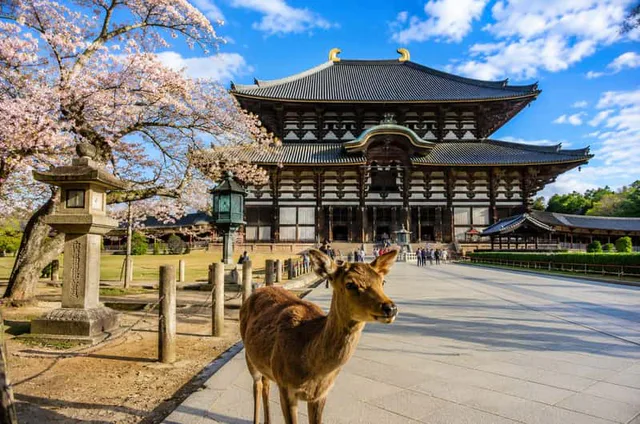
Nara is different from destinations where an overnight is needed simply because transport is slow. The first-visit sightseeing zone is compact. Nara City Tourism Association currently lists Nara Park about eight minutes on foot from Kintetsu-Nara Station and about 20 minutes from JR Nara Station. Todaiji, Kasuga Taisha, the deer-park area and the route toward Naramachi can be organised into one coherent day.
That means a Nara hotel needs a stronger burden of proof. It should buy one of three things:
a scarce time window before most day visitors arrive or after daytime sightseeing closes;
a second geographic cluster that would overload one day;
a better onward sequence where the hotel move is doing more than changing the postcode.
If it buys none of those, the night is mostly accommodation churn.
The classic Nara route is why the day trip is such a strong default
A first visit usually centres on eastern Nara: Nara Park, Todaiji, Kasuga Taisha and the streets toward Naramachi. There is enough to fill a full day, but not so much geographic separation that the itinerary automatically needs a second morning.
Rail also weakens the case for sleeping purely to avoid a return journey. Current Kintetsu timetable examples show ordinary Express services from Kintetsu-Nara to Osaka-Namba in roughly 39–40 minutes. The exact service varies, but the point is structural: Nara is not an isolated overnight destination that becomes inaccessible at dinner time.
If your base is Kyoto or Osaka and that hotel works for the rest of the trip, keeping the room protects luggage continuity and the evening you already planned in the base city.
Use the one-day Nara itinerary if the classic route is all you need. If you are deciding which city should host the excursion, use Nara from Kyoto or Osaka before creating a third hotel city.
The best reason to stay is the period before a normal day trip begins
This is where the overnight creates real, verifiable value. Nara Park is officially open 24 hours a day, 365 days a year. Kasuga Taisha’s main worship area currently opens at 06:30 from March through October and 07:00 from November through February. Todaiji’s Great Buddha Hall currently opens at 07:30 from April through October and 08:00 from November through March.
Those hours create a genuine overnight product. A traveller sleeping near the park can walk while the day-trip flow is still low, then enter a major shrine or temple before many visitors have even reached Nara Station.
But the hotel does not create value by itself. Your behaviour does. If the group routinely has breakfast at 08:30 and leaves the room at 09:30, the theoretical dawn advantage disappears. Do not pay for “quiet Nara mornings” unless the itinerary contains an actual alarm time and route.
I would use a simple morning test:
Out of the hotel before 07:00: the overnight can create a materially different park experience.
Out around 08:00: still useful, especially in seasons when Todaiji and Kasuga Taisha are already open.
Out after 09:00: the overnight needs another justification beyond morning quiet.
Do not count “Nara is peaceful at night” as a complete evening plan
After the temples close, Nara is quieter. That can be attractive, but quiet is a condition, not an itinerary.
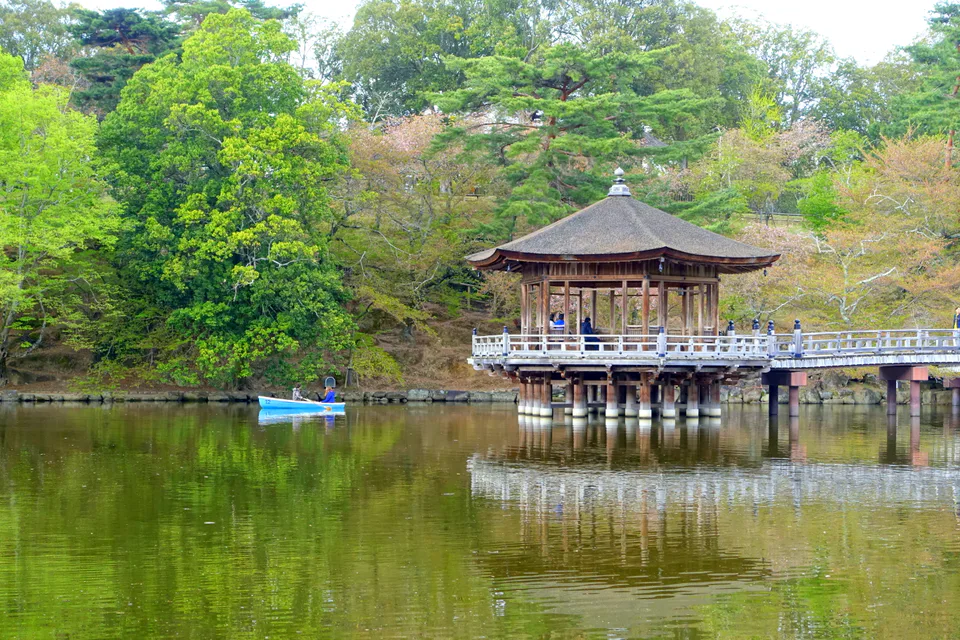
An overnight gets stronger when the evening has a named purpose: Nigatsu-do after the daytime rush, Sarusawa Pond, a specific restaurant, a seasonal lantern event such as Nara Tokae, or another published evening programme. It gets weaker when “walk around somewhere after dinner” is the only plan.
This matters because the opportunity cost is real. Sleeping in Nara may replace a Kyoto Gion evening or an Osaka Namba evening. The question is not whether Nara after dark is pleasant. It is whether that particular evening is more valuable than the one you are giving up.
If Nara Tokae is the reason for staying, use the Nara Tokae arrival-time guide and treat the night as an event decision rather than a generic Nara-hotel decision.
The overnight becomes easier to justify when Day 2 is geographically different
Stretching Nara Park across two days is usually weak value. Splitting central Nara from western Nara is different.
Horyuji and other western-Nara sights create a second cluster. Deeper prefectural destinations such as Hasedera or Tanzan Jinja can create another. In those cases the night is not buying “more time at the deer park.” It is preventing two distant sightseeing jobs from fighting for the same afternoon.
Use a cluster test:
Day 1 and Day 2 use the same Nara Park axis: question whether the hotel is padding the trip.
Day 1 central Nara; Day 2 western/deeper Nara: the overnight has a transport and pacing job.
Day 2 exists only because you found another attraction after deciding to stay: reverse the logic and ask whether that attraction is worth losing a Kyoto/Osaka day.
Kyoto → Nara → Osaka can be linear without an overnight
A common argument for sleeping in Nara is that it sits between Kyoto and Osaka. The geography is useful, but the conclusion is incomplete. Kintetsu connects Kyoto with Nara and Nara with Osaka-Namba, so a traveller can already use Nara as a linear sightseeing stop rather than returning to the original city.
The actual obstacle is luggage. A large suitcase through Nara Park is a much bigger problem than the intercity rail leg.
For a light-packing traveller, Kyoto hotel checkout → Nara sightseeing → Osaka check-in can work without a Nara night. For a couple with two 29-inch cases, the same plan needs forwarding or confirmed station storage. Solve that with the Japan luggage-forwarding guide.
An overnight should be added only when it also protects a Nara evening/morning or a real Day 2. Sleeping there just to make a linear route even more linear is weak payback.
The “two exclusive windows” rule is a useful overnight threshold
For a normal one-night stop, I would demand at least two pieces of value that a day trip handles poorly. Examples:
early Nara Park + early Kasuga Taisha;
seasonal evening event + quiet morning;
central Nara afternoon/evening + western Nara next morning;
slow family arrival + early temple visit before continuing onward.
One small benefit is rarely enough. “We can see deer at 07:30” is nice, but if the hotel move consumes the previous afternoon and the next morning, the net gain can still be negative.
This is the same logic used for split stays elsewhere in Kansai: the second hotel should unlock more than it costs.
Families should only stay if the night genuinely reduces rushing
For young children, a Nara overnight can be excellent when it changes the pace: arrive after lunch, see part of the park, eat early, sleep, then finish the key temple or shrine before moving on.
It can also be a bad optimisation. Checkout from Kyoto, move bags to Nara, check in, then repeat the process for Osaka the next day. A child who could have taken one easy day trip now experiences two hotel transitions.
Compare the two chains:
Day trip: fixed hotel → train → Nara → train → same room.
Overnight: pack → checkout → luggage move → Nara hotel → unpack → repack → checkout → onward transfer.
If the overnight does not create a substantially slower sightseeing day, the stable base often wins.
Older travellers should value hotel position more than the word “Nara”
If the whole reason for staying is an early park morning, the hotel must actually make that morning easy. Kintetsu-Nara, Sarusawa Pond and the western edge of Nara Park can be more useful than a cheaper hotel near JR Nara if the next morning starts on foot in the park.
If luggage and rail transfer are the priority, JR Nara can be more practical even though the park walk is longer. Nara City Tourism Association currently gives roughly eight minutes from Kintetsu-Nara to Nara Park versus about 20 minutes on foot from JR Nara.
This is a last-mile decision. Do not pay an overnight premium, then spend the exclusive morning waiting for a bus because the hotel was chosen by city name rather than route.
One night is stronger in autumn and event seasons — but only with a specific target
Autumn colour and seasonal lighting can extend the useful day, which increases the chance that a hotel earns its cost. But seasonality does not make every Nara overnight good.
If your plan is still only Todaiji + deer + Kasuga Taisha, the day trip remains efficient. Add the night when the seasonal experience needs an early start, late finish or second cluster that does not fit comfortably into the normal day.
Use the Nara autumn leaves route to test whether the seasonal targets still fit a day trip before changing hotels.
When I would keep Nara as a day trip
I would not add a Nara hotel when most of these are true:
It is your first visit.
The wish list is Nara Park, Todaiji, Kasuga Taisha and Naramachi.
You already have a good Kyoto or Osaka hotel.
You have large luggage.
You do not realistically wake before 08:00.
There is no evening event or named dinner/night plan.
Day 2 would mostly repeat central Nara.
In that profile, the night adds complexity faster than it adds value.
When I would stay one night in Nara
I would stay when at least two of these are true:
You will use Nara Park before 08:00.
Kasuga Taisha or Todaiji early opening is part of the plan.
A seasonal evening event or deliberate night route matters.
Day 2 is a different geographic cluster.
The family specifically needs to split one exhausting day into two slower halves.
The onward route benefits from sleeping in Nara and the night itself has experiential value.
That is the point where the hotel stops being an unnecessary postcode change and becomes part of the itinerary.
Final verdict: the day trip is the default; the overnight must buy hours you will actually use
Choose a day trip for the standard first-visit route. Choose one night only when you can name the early, late or second-day value before you search for the hotel.
The best Nara overnight is not “more relaxed” in the abstract. It is specific: deer and park before the day-trip wave, an early shrine/temple opening, a real evening event, or a second geographic cluster that deserves its own day.
If you cannot identify that value, keep the Kyoto or Osaka room and use the train. Nara is close enough that a normal day trip is a strength, not a compromise.
La Vista Furano Hills: Is a Small Room Worth It for a One-Night Furano Stay?
seven x seven Itoshima: Is One Coastal Night Worth Leaving Fukuoka?
Tokyo Itinerary 2026: 4, 5 or 7 Days — What Changes When You Add Disney or a Day Trip?
Nokogiriyama Ropeway: Round Trip or One Way? The Route Choice That Changes Your Day
References
Nara City Tourism Association — Nara Park access and 24-hour opening · Official Nara Travel Guide — Todaiji opening hours · Kasuga Taisha — current worship hours · Kintetsu Railway — current timetables. Checked August 25, 2026. Temple hours, ceremonies, events and train schedules can change; verify the exact date.