
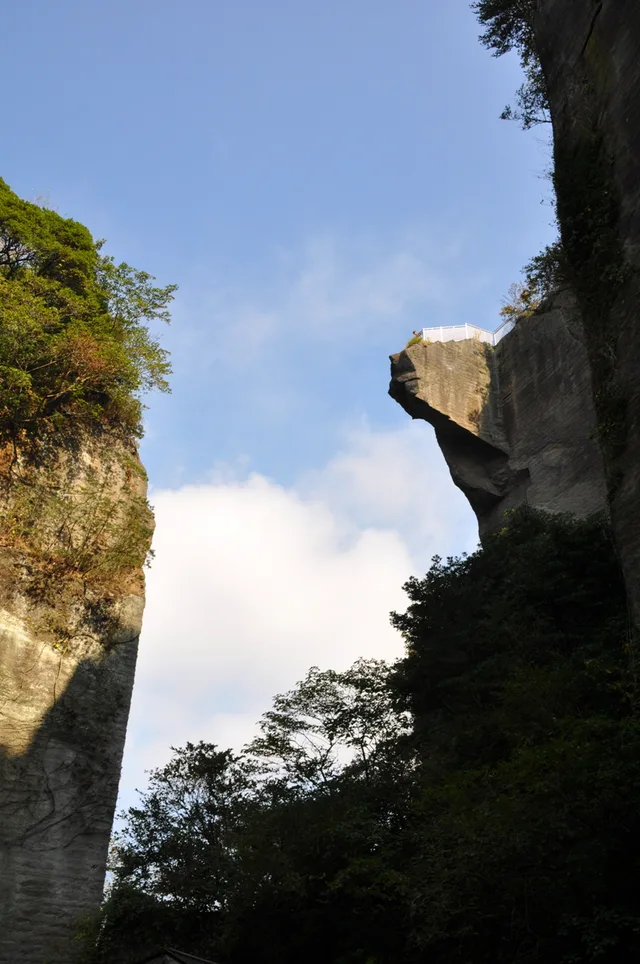
For a first Nokogiriyama visit, buy the ropeway round trip unless the Sharikimichi quarry trail is one of the reasons you came. The current adult fare is JPY 650 one way or JPY 1,200 round trip, so hiking one leg saves only JPY 550. That is too small a saving to justify a trail you did not actually want. More importantly, a “one-way” plan in 2026 should not be confused with a through-hike to Hota: current official notices still show landslide and rockfall closures affecting the old cross-mountain routes.
The decision is therefore not “Do I want to save JPY 550?” It is Do I want Nihonji and the viewpoints, or do I also want the industrial-history hiking route? Round trip is the lower-risk sightseeing product. One way is the hiking product.
↔ Scroll table left or right
Your day | Choose | Why | Main risk |
First visit, Nihonji + Jigoku Nozoki + viewpoints | Round trip | You protect temple time and avoid adding a separate mountain descent | The ropeway can suspend in bad weather |
You specifically want Sharikimichi and quarry remains | One way | The hike becomes part of the destination rather than a fare-saving device | Heat, rain, trail condition and tired knees |
Late arrival near Nihonji’s 15:00 last admission | Round trip or skip the temple | A hike consumes the exact hours you are already short of | Reaching the summit does not extend temple admission |
Planning Hama-Kanaya → Hota through-hike | Do not assume it is open | Current official closures block the normal through-route geometry | You can end up committed to a route that no longer passes through |
Children, older travellers or knee concerns | Round trip | Nihonji itself already contains many stairs and uneven mountain paths | Ropeway access does not make Nihonji step-free |
The JPY 550 “saving” is the wrong reason to choose one way
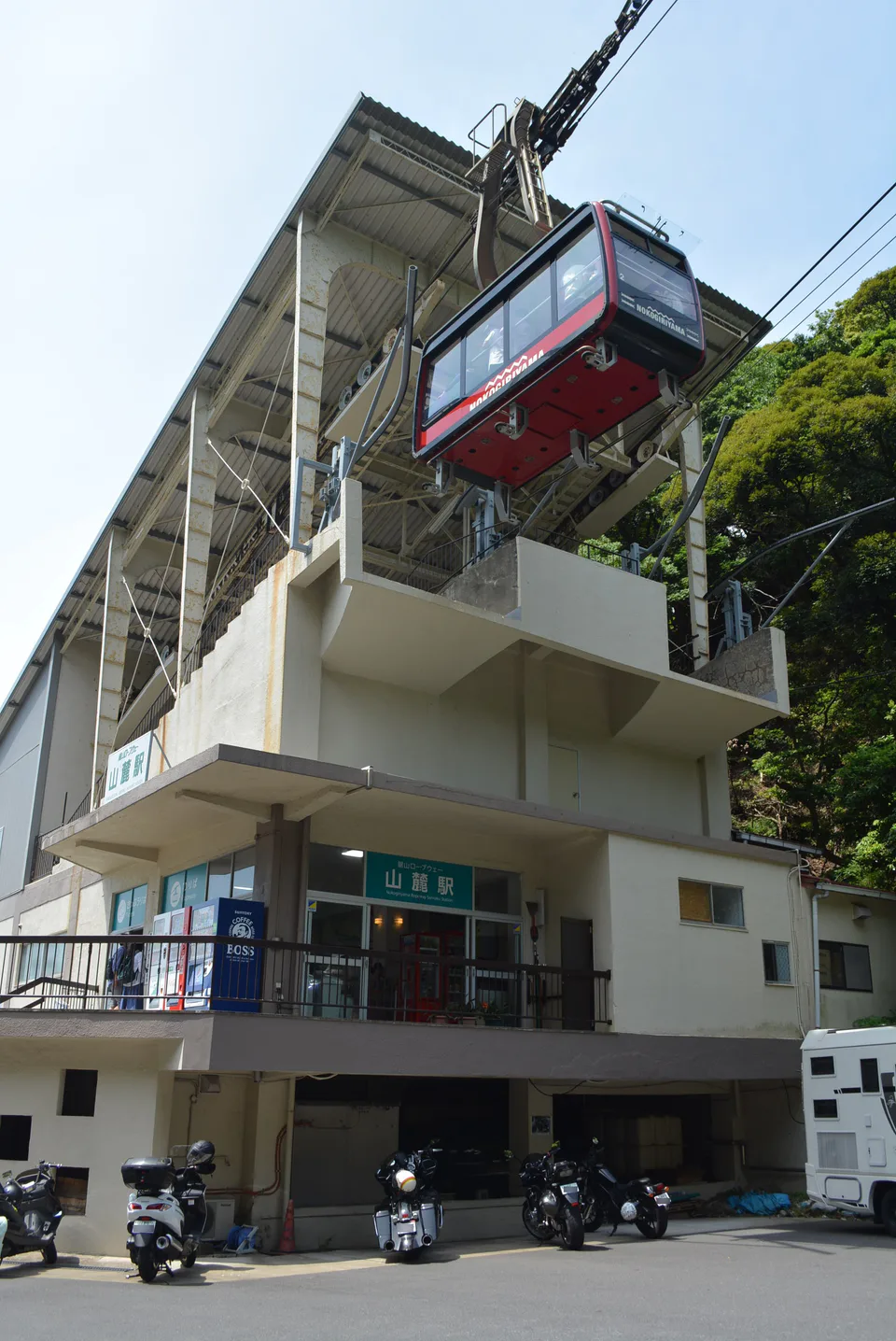
Nokogiriyama Ropeway currently charges JPY 650 for an adult one-way ticket and JPY 1,200 for a round trip. Children of primary-school age are JPY 320 one way and JPY 600 round trip. The ride takes about four minutes and normally runs about every fifteen minutes, with shorter intervals when busy.
For an adult, replacing one ropeway leg with a hike saves:
JPY 1,200 round trip - JPY 650 one way = JPY 550That is a real saving, but it is not large enough to be the primary decision variable. Sharikimichi is an industrial-heritage mountain trail, not a free escalator in the opposite direction. If you want the stone-hauling road, quarry remains and a genuine hike, JPY 550 is a bonus. If you only want to save money, the physical and timetable cost is disproportionate.
Round trip is the sightseeing default because Nihonji already contains a hike
Using the ropeway in both directions does not turn Mount Nokogiri into a low-walking attraction. Nihonji covers a large section of the mountain and explicitly warns that the grounds contain many stairs and some difficult walking surfaces. The current temple hours are 09:00–16:00 with final admission at 15:00, and admission is JPY 700 for adults and JPY 400 for children aged four through junior-high-school age.
This means the ropeway is best understood as removing the extra climb from Hama-Kanaya, not removing the walking inside the main attraction. A first-time visitor still needs time and energy for the cliff viewpoint area, Hyakushaku Kannon, the Great Buddha and the internal elevation changes.
For families, older travellers or anyone with sore knees, the question is therefore not “Can we ride the ropeway?” It is “After the ropeway, can we still handle the temple route we actually want?” If the answer is already borderline, adding Sharikimichi usually solves the wrong problem.
One way is worth it when Sharikimichi is part of the destination
Futtsu City describes Sharikimichi as the historic route used to move Boshu stone down the mountain. The trail still contains stone paving, wheel ruts, quarry remains and industrial traces that do not appear in the ropeway experience. The city tourism association gives roughly one to one-and-a-half hours as a reference for the Sharikimichi hiking section before adding Nihonji.
That is enough to change the day from “mountain attraction” into “hike plus temple.” Choose one way when that is exactly what you want. Suitable shoes, water, weather margin and daylight are part of the ticket decision even though none of them appears on the ropeway fare table.
Going up by ropeway and hiking down can reduce the sustained uphill effort, but downhill is not automatically easier. Long descents load knees and become less forgiving on wet stone or loose surfaces. Going up on foot and riding down protects tired legs later, but it front-loads the physical effort and can consume valuable temple time. There is no universally superior direction.
2026 route warning: one-way does not mean “walk through to Hota”
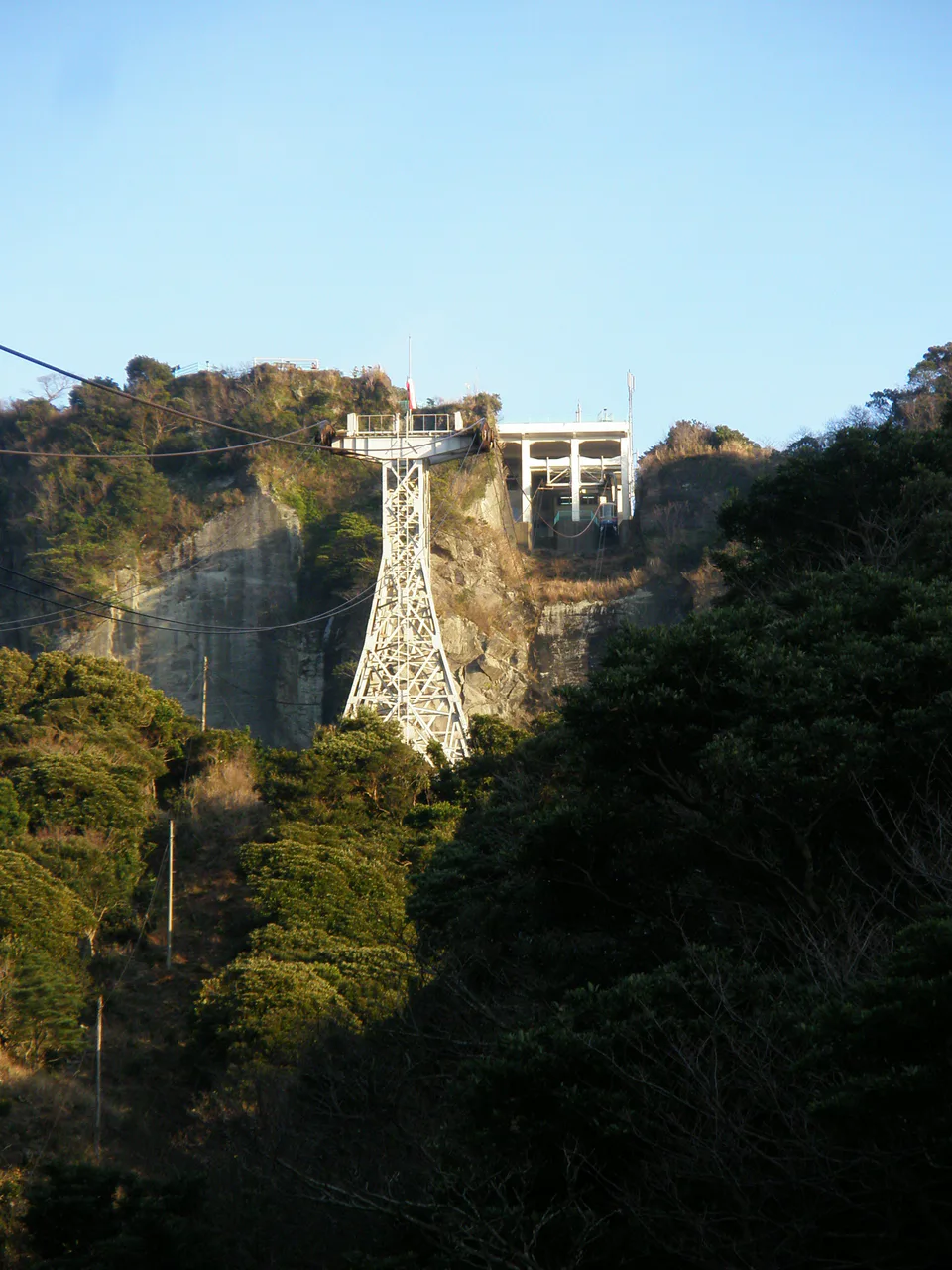
This is the most important current correction to older Nokogiriyama route advice. Futtsu City currently states that a landslide on the Kyonan side has closed the Kanaya–Motona forest-road section and that travellers cannot pass through toward Hota on the affected route. Kyonan’s tourism association carries the same closure warning.
Nihonji also currently warns that the walking approach from Omotesando has a rockfall closure and directs visitors to a detour from the Nokogiriyama sightseeing road side. Taken together, those notices mean a historical map showing a neat Hama-Kanaya → summit → Hota traverse should not be treated as a live 2026 itinerary.
ValueNavi rule: if your one-way plan depends on finishing at a different rail station, confirm the exact open route from an official source on the travel date. Otherwise keep the hike on the Kanaya side and return to Hama-Kanaya.
This is also why buying a one-way ropeway ticket simply to “keep options open” can be a mistake. The option you had in mind may be the one currently closed.
Nihonji’s 15:00 cutoff is more important than the ropeway’s 17:00 summer finish
From February 16 through November 15, the ropeway currently operates 09:00–17:00. In the winter period from November 16 through February 15 it operates 09:00–16:00, and the operator notes that annual inspection normally causes a closure of roughly one week to one month around mid-January. Bad weather can also suspend service.
Nihonji, however, currently stops admitting visitors at 15:00 and closes at 16:00. That creates two different clocks on the same mountain. Arriving at the upper ropeway station after 15:00 does not mean you still have two hours for Jigoku Nozoki and the temple.
For a first visit where Nihonji is the main objective, work backward from 15:00 rather than from the ropeway’s final car. A one-way hiking plan should start even earlier because you need margin for the trail before or after the temple section.
Bad weather changes the product twice: trail first, ropeway second
The ropeway operator explicitly states that service can be suspended in severe weather. Hiking is not an automatic backup: rain can make the stone and mountain path slower and less comfortable, while wind can reduce the value of exposed viewpoints.
This creates a two-layer weather test:
Trail questionable but ropeway running: switch from one way to round trip and keep the day sightseeing-led.
Ropeway suspended but hiking conditions genuinely safe: a fit and prepared hiker may still have an alternative route, but recheck current trail closures before leaving.
Both weather and trail status poor: do not turn a day-trip booking into a commitment to climb.
The useful backup is not “force the hike because the ropeway stopped.” It is a different Tokyo Bay or Chiba day that does not depend on exposed mountain infrastructure.
Tokyo Bay Ferry is an onward-route decision, not part of the mountain loop
Kanaya Port gives Nokogiriyama an unusual option: instead of returning inland by JR, you can cross Tokyo Bay to Kurihama. That can be useful when the wider trip continues toward the Miura Peninsula, Yokohama or Kamakura.
Do not confuse that with the mountain one-way decision. The ferry leaves from the Kanaya side near Hama-Kanaya, so a Kanaya-side hike can still fit it. A closed through-route to Hota does not prevent you from returning to Kanaya and using the ferry. Conversely, a ferry adds little if your hotel and next day are firmly in central Tokyo.
If Yokohama is the next overnight base, compare Yokohama or Tokyo for two nights before using the ferry merely because it looks more scenic on the map.
How I would build three realistic Nokogiriyama days
1. First visit, lowest-risk version
JR to Hama-Kanaya → ropeway up → Nihonji core sights → ropeway down → Hama-Kanaya. This is the correct default when the temple and views matter more than hiking.
2. Hiking version
Hama-Kanaya → Sharikimichi / quarry route → upper mountain / Nihonji → ropeway down, or reverse the order if conditions and your knees favour descent. Confirm the live trail status before committing.
3. Tokyo Bay onward version
Use either of the two Kanaya-side mountain plans, return to Kanaya, then take the Tokyo Bay Ferry if the next destination genuinely lies on the Miura/Yokohama side. Do not add the ferry and another full attraction simply because both fit before dinner on paper.
Final verdict: round trip for the temple, one way for the quarry trail
Choose the JPY 1,200 round trip when Nihonji, Jigoku Nozoki and a manageable first visit are the goal. Choose the JPY 650 one-way ticket only when you deliberately want Sharikimichi and are comfortable turning the outing into a hike. The JPY 550 difference is too small to justify a trail you would otherwise skip.
The red-team condition is current access. In 2026, official landslide and rockfall notices mean older through-hike maps can be wrong. Check the ropeway operation, Nihonji access and Futtsu/Kyonan trail notices on the morning of travel. If your one-way plan depends on reaching Hota, do not leave Hama-Kanaya until you have confirmed that exact passage is open.
Sources and verification date
Nokogiriyama Ropeway — fares, hours and weather suspension · Nihonji — admission and hours · Nihonji — current access notices · Futtsu City — Sharikimichi and current trail closure. Checked August 25, 2026. Ropeway service and mountain closures can change quickly; verify the same-day status before travel.
Itoshima Day Trip or Overnight? Is One Coastal Night Worth It?
Okinawa With Parents: The Best Hotel Is the One That Removes the Last 10 Minutes
Fukuoka Concert Hotels: Pick Your Base by the Trip Home After PayPay Dome or Marine Messe
Nada no Kenka Matsuri 2026: If You Only Go One Day, Choose Oct 15
Okinawa Without a Car: A 5-Day Itinerary That Keeps the Long Bus Days to Two