
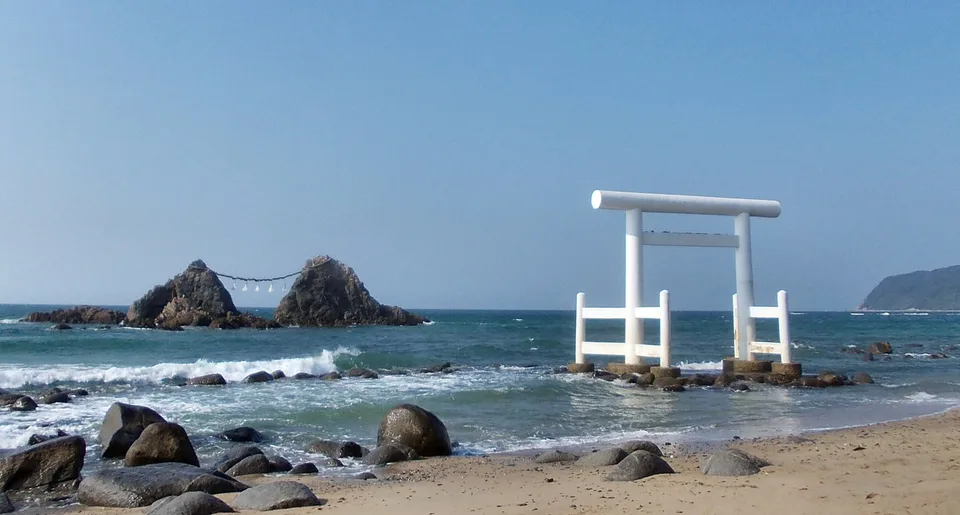
For most first-time visitors, Itoshima is still better as a day trip from Fukuoka. Stay overnight only when the night buys you something the day trip does not: sunset without a rushed return, blue hour or stargazing, a quiet coastal morning, or a hotel experience that is part of the trip. The important 2026 correction is that sunset does not automatically require an overnight. The current direct West Coast Liner from Futamigaura to Hakata finishes around 18:36, but later local Nishi-no-ura Line buses still run toward Ito Sales Office. A sunset day trip can therefore remain possible; it simply becomes a more complicated return rather than a one-seat ride to central Fukuoka.
The practical choice is between three products: a compact direct-bus day trip, a sunset day trip with a multi-leg return, or one coastal night that removes the evening transport clock and adds the next morning. Do not pay for a hotel merely because Itoshima is spread out. Sleeping there adds hours; it does not create a dense public-transport network.
↔ Scroll table left or right
Your real plan | Best starting choice | Why | Main catch |
Futamigaura + café + coast in daylight | Day trip | You get the core first-visit experience and keep one Fukuoka hotel | Do not add scattered peninsula stops just because the map looks small |
Sunset is important, but you do not mind transfers | Day trip can still work | Later local buses exist after the final direct Hakata-bound West Coast Liner | The return is no longer a simple one-seat ride; verify the exact connection for your date |
Sunset + blue hour + slow morning | Overnight | The hotel removes the evening bus clock and creates two edge-time sessions | Bad weather can reduce the scenic premium sharply |
Several scattered stops without a car | Day trip, but simplify the route | An overnight gives more time but does not fix sparse local transport | You can spend the extra night waiting for the same buses |
Self-drive along Sunset Road and onward next day | Overnight gets stronger | The hotel can advance a coastal road trip instead of forcing an out-and-back to Fukuoka | Do not mix drinking with a drive back to the hotel |
Weather is uncertain and the room itself is not special | Day trip | Keep the Fukuoka room and move Itoshima to the clearest day | A non-refundable coastal night can turn sunset risk into sunk cost |
The biggest decision gap is the sunset-to-Fukuoka return
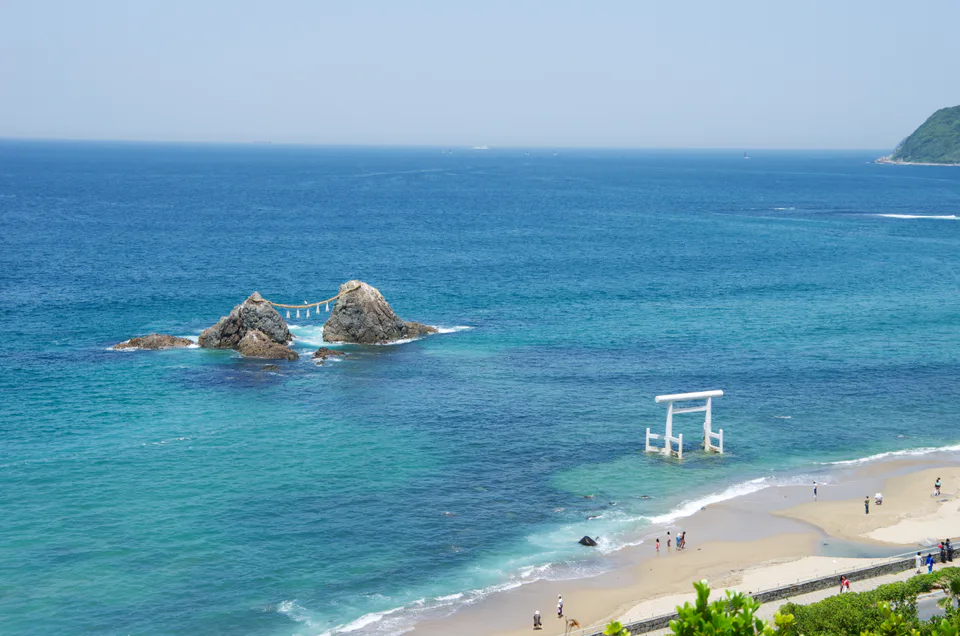
Sakurai Futamigaura is explicitly promoted by Fukuoka Prefecture as a sunset location, with blue hour after sunset also part of the attraction. That makes “stay for sunset” sound like an obvious argument for booking a room. The current bus timetable makes the decision more nuanced.
Showa Bus’s West Coast Liner currently provides the cleanest direct public-transport product between Futamigaura and central Fukuoka. From the Futamigaura / Tsuki to Taiyo Itoshima Sabo stop, the final direct Hakata-bound service is currently around 18:36. On dates when the sunset you want to watch occurs after that, the one-seat return has already disappeared before the main event.
But that does not mean all buses stop. The current Nishi-no-ura Line from the nearby Futamigaura / PALM BEACH stop continues later toward Ito Sales Office: on the present weekday timetable there are departures at roughly 19:22, 20:17, 21:08 and 22:10; Saturday and holiday patterns also include later evening departures, although the exact frequencies differ. Those are local services, not a direct Hakata-bound West Coast Liner.
This creates three different prices for sunset:
Leave before the last direct bus: simplest return, but you may sacrifice sunset or blue hour depending on season.
Stay for sunset and use later local transport: no hotel cost, but the return becomes a connection problem and you must verify the exact final chain.
Sleep on the coast: highest accommodation cost, but the evening stops being a timetable race and you also buy the next morning.
The overnight premium is therefore not “the price of seeing sunset.” It is the price of removing sunset-to-Fukuoka transfer pressure and adding another coastal session the next day.
A first visit still works very well as a compact day trip
If the goal is Futamigaura, a coastal café and a few hours beside the sea, a day trip remains the default. Fukuoka Prefecture’s official guide lists Futamigaura as accessible from Kyudai-Gakkentoshi Station by Showa Bus and also by the West Coast Liner from Hakata/Tenjin. You do not need to sleep in Itoshima simply to reach its best-known coast.
The day-trip version is especially strong when you already have a good Fukuoka base. You keep the same room, leave large luggage behind, avoid another check-in and can move the excursion to whichever day has the clearest weather. If Itoshima is competing with another excursion, resolve Dazaifu vs Itoshima before you give the coast an extra hotel night.
The mistake is trying to turn the whole peninsula into one public-transport checklist. Futamigaura, Keya, inland craft stops and other beaches do not sit on one metro-style loop. A successful first day trip has one coastal anchor and a small number of nearby additions.
Sleeping in Itoshima does not fix sparse public transport
This is the most important boundary condition for car-free travellers. A hotel can remove the final trip back to Fukuoka, but the next morning the sights are still spread out. You still need the correct bus, taxi, bicycle or another transport plan to move between coastal zones.
Before booking a coastal night, write down:
how you will reach the hotel from the final sightseeing stop;
whether dinner is walkable or provided by the property;
how you will reach the first stop the next morning;
how you leave Itoshima afterward with your luggage.
If the answer to every line is “another infrequent bus,” the extra night may add friction rather than remove it. In that case, keep Fukuoka and simplify the day route.
The overnight earns its premium when it creates at least two edge-time sessions
I would use a two-session test. Move one night out of Fukuoka only when the stay creates at least two pieces of time you genuinely value:
Sunset: no need to leave the coast early to protect the direct bus.
Blue hour or stargazing: Fukuoka Prefecture specifically highlights Futamigaura after sunset as well as its sunset view.
Slow dinner / hotel time: the property itself becomes part of the trip rather than a bed added to a day trip.
Quiet coastal morning: another useful session before the normal day-trip flow reaches the coast.
Route progression: the next morning continues west or south instead of immediately returning to the same Fukuoka hotel.
If only one of those survives, the hotel move is weak. If sunset is the only reason and the forecast turns poor, the entire premium can disappear.
Driving changes the answer because Sunset Road becomes one continuous route
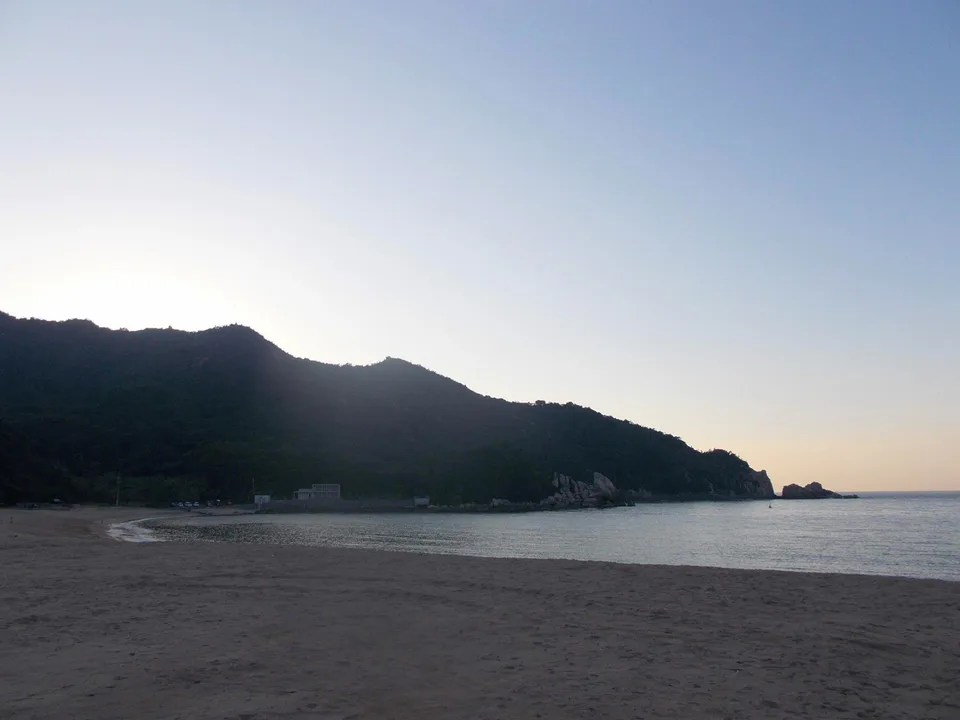
Fukuoka Prefecture describes Shima Sunset Road as an approximately 33 km coastal stretch running from Sakurai Futamigaura toward Benten Bridge at the mouth of the Izumi River. With a car, scattered viewpoints, cafés and Keya-side stops become a sequence rather than a set of bus-timetable problems.
That is when an overnight starts doing more than buying sunset. A useful self-drive pattern is: enter Itoshima in the afternoon → move along the coast → stay near the western side → continue the following morning instead of retracing the entire route to central Fukuoka.
The red-team condition is simple: if the car is parked at a coastal hotel and dinner includes alcohol, the night must be designed so nobody needs to drive again. An overnight removes a return drive only when the accommodation and dinner geography actually support that plan.
Do not compare a Fukuoka city room with an Itoshima stay as if both are only beds
A Fukuoka hotel night buys continuity: no checkout, no luggage move, dense restaurants, easy weather substitution and a clean next morning. An Itoshima night should therefore justify itself with a different product—coastal time, shared space, a special property or route progression.
If you are considering seven x seven Itoshima, for example, the useful question is not whether it is “nicer” than a Fukuoka room. Ask how many waking hours you will actually spend using the coast, room and shared space. A late check-in plus early checkout can turn an expensive coastal hotel back into a bed.
For families, this distinction is even stronger. A larger coastal room, kitchen or multiple proper beds can be a real reason to move. If the family receives no room-layout benefit and still spends most waking hours sightseeing, keeping the Fukuoka room may be easier.
Weather is the strongest argument against locking the night too early
Sunset-led value is inherently weather-sensitive. A cloudy evening does not make Itoshima worthless, but it can remove the exact reason you paid to relocate the hotel.
I would book the overnight more confidently when the property itself has value in mediocre weather: room space, a bath, good dining, an ocean-facing common area or another reason to enjoy the stay. If the hotel is only a sleep stop positioned for one sunset photo, a flexible Fukuoka base is usually more resilient.
Run this test before paying a non-refundable rate: would I still be happy I moved hotels if the sunset is grey? If the answer is no, keep the night flexible.
One night is enough for most travellers
One night captures the main difference between Itoshima and a normal Fukuoka day trip: late afternoon, sunset, blue hour, sleep and the following morning. A second night requires another job.
Good reasons for Night 2 include a beach day, hiking, a winter oyster-hut plan, a resort stay where the accommodation is central, or a self-drive route that keeps moving. “We are already there” is not enough. If the second day mainly sends you back toward Fukuoka, the extra night has diminishing value.
Three practical versions
Version A: first visit, public transport, no sunset obsession
Day trip. Keep the Fukuoka room, make Futamigaura the coastal anchor, add one nearby café or stop, and return while the direct transport is simple. This is the highest-resilience first visit.
Version B: sunset matters, but you do not want to move hotels
Long day trip. Stay for the light you want, but treat the return as a multi-leg transport plan rather than assuming the West Coast Liner still runs direct to Hakata. Check the exact later local bus and onward connection on your date before leaving Fukuoka.
Version C: sunset + blue hour + morning or self-drive route progression
Stay one night. The accommodation now deletes the evening transport deadline and creates a second edge-time session. This is the version where the hotel change has a clear job.
Final verdict: stay only when the night buys more than sunset
For most first-time visitors, day-trip Itoshima. The direct transport is good enough for a compact Futamigaura-centred visit, and keeping a Fukuoka hotel gives you weather flexibility and zero luggage move.
If sunset is important, do not assume an overnight is mandatory. The current direct Hakata-bound West Coast Liner finishes around 18:36, but later local Nishi-no-ura Line services remain. A long day trip can still work if you are comfortable planning the extra connection.
Stay one night when you want at least two of these: sunset, blue hour, a slow coastal evening, a quiet morning, a special hotel or route progression. That is when the night changes the trip rather than merely changing the bed.
Takayama Day Trip or Overnight from Nagoya: 4-Day Trip Guide
La Vista Furano Hills: Is a Small Room Worth It for a One-Night Furano Stay?
Aso Day Trip or Overnight: Which Fits a 4-Day Kumamoto Trip?
References
VISIT FUKUOKA — Sakurai Futamigaura, sunset and access · VISIT FUKUOKA — Shima Sunset Road · Showa Bus — April 4, 2026 Itoshima timetable revision · Showa Bus — current West Coast Liner timetable from Futamigaura · Showa Bus — current Nishi-no-ura Line timetable from Futamigaura / PALM BEACH. Checked August 25, 2026. Bus timetables, stop names, operating days and road conditions can change; verify the exact return chain for your travel date.