
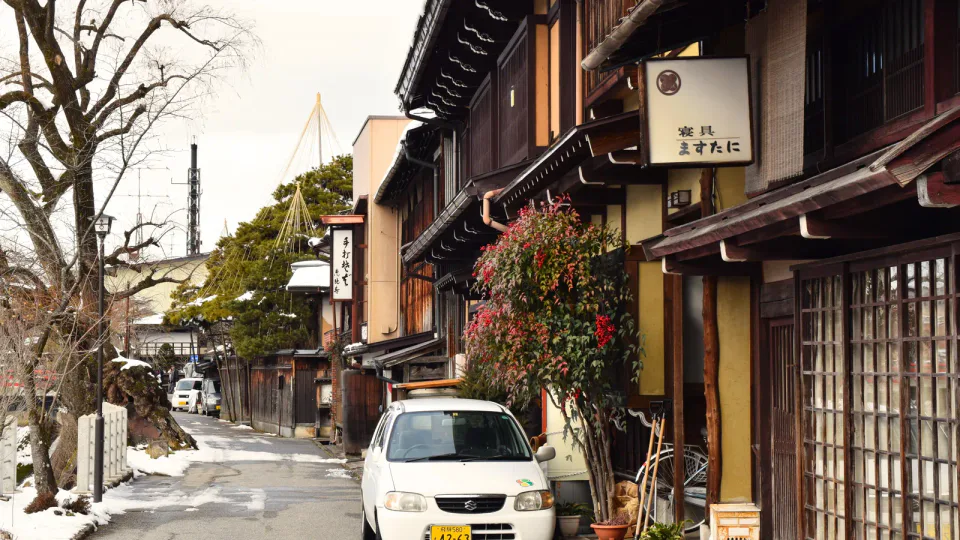
For a four-day Nagoya trip, Takayama is not automatically an overnight destination—and it is not automatically a bad day trip either. The decision turns on what your four days actually contain. If Day 1 is arrival and Day 4 is departure, you may have only two genuine full sightseeing days. In that case, Takayama must beat a full Nagoya/Aichi day, not merely look attractive on a map.
JR Central currently quotes about 2 hours 20 minutes from Nagoya to Hida Takayama by Limited Express Hida. That makes rail simple, but a same-day return still creates a minimum of roughly 4 hours 40 minutes on the train before station access, walking and waiting. The important counterpoint is the highway bus: the current Nohi/Meitetsu/JR Tokai Bus timetable includes a 07:15 departure from JR Nagoya Station arriving Takayama at 09:50, with a 19:00 departure from Takayama reaching JR Nagoya at 21:35. So a long but usable day trip exists for travellers who hate changing hotels.
The overnight earns its keep in a different way: it buys Takayama’s early morning, removes the same-evening return clock, and can turn the town into a forward-moving base for Shirakawa-go or Hokuriku. If you only sleep in Takayama and then retrace the same route to Nagoya, the hotel night does not save the intercity travel. It changes the timing and fatigue profile.
Fact-checked August 26, 2026. JPY remains the primary currency. Approximate USD conversions use ¥1,000 ≈ US$6.29; exchange rates move.
Takayama day trip or overnight from Nagoya: the 30-second decision
↔ Scroll table left or right
Your four-day trip | ValueNavi choice | Why |
Only two full sightseeing days; Nagoya/Aichi is the main purpose | Skip Takayama | Takayama would consume half of your true full-day inventory. |
You want central Takayama but strongly dislike moving hotels | Day trip can work | The early highway bus creates a long sightseeing window without a second check-in. |
Morning market, dinner, a slower old-town morning and Hida atmosphere are core reasons to go | Stay one night | The night unlocks time windows a same-day return compresses. |
Travelling with children or older parents and Takayama is important | Prefer one night | You trade a hotel move for a less punishing return day. |
Takayama + Shirakawa-go + Kanazawa | Stay and continue onward | Takayama becomes a route hinge rather than a Nagoya side trip. |
You only want the famous Sanmachi photo | Usually skip | The transport cost is too large for a single visual checkpoint. |
ValueNavi Four-Day Capacity Test: count full days before adding destinations
“Four days in Nagoya” can mean two very different trips. Four hotel nights with four sightseeing days is one thing. A four-calendar-day trip with an afternoon arrival and morning departure is effectively much smaller.
Use a simple capacity test:
↔ Scroll table left or right
Calendar day | Typical usable capacity | What Takayama does to it |
Day 1 arrival | Partial | Usually poor for a mountain transfer unless you land/arrive very early. |
Day 2 | Full | A Takayama day trip can consume almost all of it. |
Day 3 | Full | An overnight Takayama plan often uses part of this day too, depending on return/onward direction. |
Day 4 departure | Partial | Risk rises sharply if a long intercity return sits before a flight or fixed Shinkansen. |
If only Days 2 and 3 are fully usable, the real decision is not “Takayama yes/no.” It is which one of your two scarce full days you are willing to give up. That framing prevents the common mistake of adding Takayama because the train is direct while mentally keeping every Nagoya plan unchanged.
The true time cost: direct rail is easy, but it still uses 4h40 round trip
JR Central’s current Hida Takayama information gives an approximate Nagoya–Takayama journey of 2 hours 20 minutes by Limited Express Hida. Round trip, that is a 4-hour-40-minute rail floor. It does not include getting from your Nagoya hotel to the platform, boarding margin, walking from Takayama Station to Sanmachi or waiting for the return train.
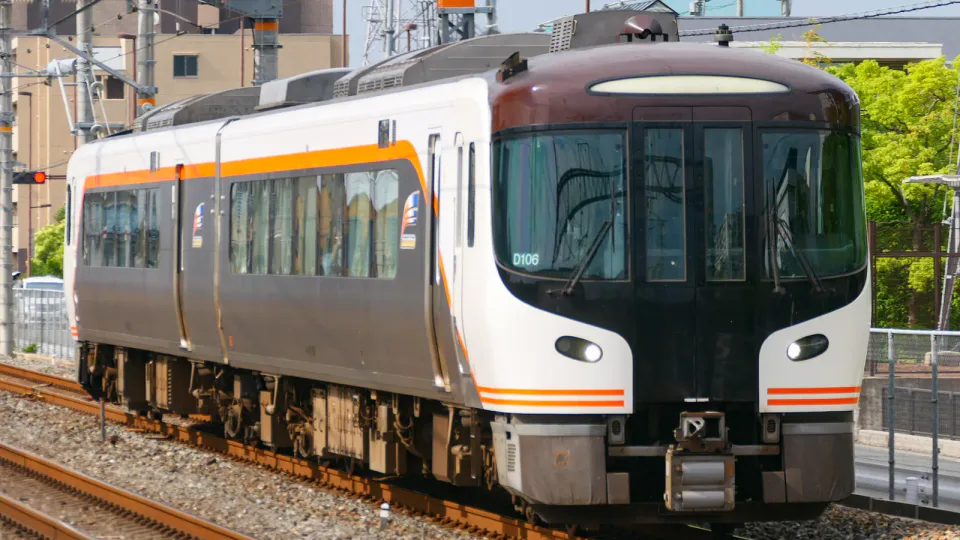
JR Central’s own 2026 model itinerary is revealing: it uses an 08:43 Limited Express Hida departure from Nagoya and starts Sanmachi/Jinya sightseeing at around 11:30. That is a comfortable one-way journey, but it shows why “direct” is the wrong synonym for “near.”
This is where a four-day trip becomes expensive in time opportunity cost. Five hours spent moving is not inherently bad if Takayama is one of the reasons you came to Central Japan. It is bad when Takayama is an optional extra competing with another full day you also refuse to delete.
The red-team result: the highway bus makes a real day trip possible
A stronger version of this article has to challenge the usual recommendation to “always stay overnight.” The current Takayama–Nagoya highway bus timetable gives a genuinely usable day-trip window.
↔ Scroll table left or right
Current example | Time | Decision effect |
JR Nagoya Station → Takayama Bus Terminal | 07:15 → 09:50 | Arrives while Miyagawa Morning Market is still open. |
Takayama sightseeing window | 09:50 → 19:00 | About 9 hours before the last example return used here. |
Takayama → JR Nagoya Station | 19:00 → 21:35 | Long day, but no hotel change. |
The standard bus fare is currently ¥3,600 (about US$22.63) one way. Nohi Bus also lists a ¥3,300 (about US$20.75) web-discount fare; the operator notes that this discount is tied to booking through a site supporting Japanese-language reservations. At standard fare, a return is ¥7,200 (about US$45.26); two discounted singles would be ¥6,600 (about US$41.49) if you are eligible and can book them.
This does not mean the bus is universally better than Hida. It is about itinerary geometry. The bus is roughly 2 hours 40 minutes each way, so total seated travel is longer than the JR Central headline time. What it can buy is an earlier arrival and later departure without repacking a hotel room.
ValueNavi Day-Trip Test: when the 07:15 bus is actually the better fit
I would consider the day trip if most of these are true:
↔ Scroll table left or right
Condition | Why it matters |
You refuse to change hotels for one night | The bus preserves one Nagoya base. |
You are comfortable with a roughly 14-hour hotel-to-hotel day | 07:15–21:35 at the station level is not a light excursion. |
Your Takayama wish list is central and walkable | Morning market + Sanmachi + Jinya + food fits much better than adding remote side trips. |
You can start early without destroying the following day | A day trip that causes a late start on Day 3 has hidden spillover cost. |
You value avoiding luggage friction more than evening atmosphere | This is the main practical advantage over the overnight. |
If that sounds like your travel style, a same-day trip is not irrational. It is simply a high-time, low-hotel-friction choice.
One Takayama night does not save the return journey—so what are you buying?
If you travel Nagoya → Takayama, sleep, then Takayama → Nagoya the next day, the intercity distance has not disappeared. You still make the round trip. The value of the hotel night must therefore come from somewhere else.
ValueNavi treats the overnight as paying for three possible dividends:
↔ Scroll table left or right
Overnight dividend | Real value | When it is weak |
Morning-window dividend | Miyagawa Morning Market before the day is already half used | You do not care about the market or early walking. |
Return-clock dividend | No need to stop sightseeing in order to catch Nagoya the same evening | You are happy with the long bus day and a late return. |
Forward-route dividend | Takayama becomes the launch point for Shirakawa-go / Hokuriku | You are definitely returning to Nagoya anyway. |
The overnight is strongest when you get at least two of the three. If the hotel night buys only “I slept in another city,” it is a weak use of a four-day trip.
Miyagawa Morning Market is the clearest overnight-only time window
Hida Takayama’s official tourism site lists Miyagawa Morning Market as 07:00–12:00 from April to November and 08:00–12:00 from December to March, generally year-round, about a 10-minute walk from Takayama Station. Some stalls can finish earlier when sold out.

The important nuance is that a day trip does not automatically miss it. The early highway bus arriving around 09:50 still leaves a market window. What the overnight buys is the better window: you can reach the market near opening, eat or browse without the intercity journey already behind you, then flow directly into Sanmachi.
That distinction is more useful than simply saying “you need to stay overnight for the morning market,” which the current bus timetable does not support.
The quiet-old-town paradox: evening atmosphere is real value, but many shops are closed
Takayama’s official tourism information lists the old-town area’s typical shop hours at roughly 09:00–18:00, varying by business, with Tuesday or Wednesday closures common for some shops. This creates an important overnight trade-off.
A quieter walk after normal shopping hours can be exactly what some travellers want. But do not pay for a Takayama night expecting six extra hours of shopping and food stalls. The evening premium is atmosphere, dinner and freedom from the return clock—not extra retail hours.
This is a useful test: if your desired Takayama experience is primarily daytime shopping, snacks and the famous streets, the early-bus day trip captures more of what you actually want than an overnight article might imply. If you value the town before and after normal commercial hours, the night becomes more distinctive.
If Takayama is just one old-town photo, the trip fails the deletion test
Imagine Sanmachi did not have the famous visual recognition. Would you still spend roughly five hours travelling for Hida food, the morning market, Jinya, sake breweries, crafts or the mountain-town rhythm? If the answer is no, Takayama is probably not a strong enough anchor for a four-day Nagoya trip.
That does not mean the town is “not worth it.” It means the opportunity cost is wrong for this particular trip length. Keeping the day in Nagoya/Aichi can support a full city day, Inuyama, Tokoname or another local priority without consuming an intercity return.
If you keep the day local and want a substantial indoor family anchor, Port of Nagoya Public Aquarium is easier to place inside a Nagoya base. If you prefer a smaller Sakae stop, compare Art Aquarium Nagoya.
Children and older parents: hotel move vs marathon day is the real trade-off
There is no universal “family = overnight” rule. Families can dislike hotel moves just as much as they dislike long travel days.
↔ Scroll table left or right
Group preference | Better fit | Trade-off |
Sleep quality and slower pace matter most | Takayama overnight | One extra packing/check-in cycle. |
Keeping one hotel is extremely valuable | Early-bus day trip | Very long day and late return. |
Neither option sounds pleasant | Skip Takayama | You lose Hida, but protect the short trip from fatigue. |
For a four-day holiday, “skip” is a legitimate third option. You do not have to choose between two versions that both sound tiring.
Peak 2026 Hida dates make spontaneous rail plans less resilient
JR Central operates Limited Express Hida, Shinano and Nanki as all-reserved-seat trains during selected 2026 peak periods. For Hida, the published periods are:
April 24–May 6, August 7–16, September 18–23, and December 25, 2026–January 5, 2027.
If your trip falls in one of these windows, “we will decide the night before” is weaker planning. Confirm your train before treating the Takayama day as fixed. The highway bus also requires booking for the Nagoya line, so peak-period flexibility should not be assumed simply because you switch modes.
Also want Shirakawa-go? This is where one Takayama night becomes route infrastructure
The most compelling use of a Takayama overnight is not “sleep somewhere pretty.” It is when the next morning moves forward instead of back to Nagoya.
Nohi Bus currently lists Takayama → Shirakawa-go at about 50 minutes, with a one-way fare of ¥2,800 (about US$17.60). Some services require reservations. The operator also explicitly warns that delays of two hours or more can occur because of parking congestion at Shirakawa-go, heavy snowfall or expressway closures.
That turns Takayama into a route hinge: Nagoya → Takayama overnight → Shirakawa-go → Kanazawa/Toyama can be much more coherent than Nagoya → Takayama → Nagoya followed by another separate mountain excursion.
But this also changes the identity of the trip. If Shirakawa-go and Kanazawa are non-negotiable, stop protecting the label “four-day Nagoya trip.” Use the Takayama–Shirakawa-go–Kanazawa four-day route and let Nagoya be the gateway.
ValueNavi Route-Conflict Matrix: which Takayama version fits the rest of the trip?
↔ Scroll table left or right
What else is fixed? | Day trip | Overnight | Skip |
One major Nagoya day + one Aichi excursion | High conflict | Very high conflict | Best fit |
Takayama is a top-two trip priority | Works if hotel stability matters | Best experience fit | Poor fit |
Shirakawa-go next | Poor route shape | Best route fit | Only if mountain route is dropped |
Early flight / fixed departure next morning | Safer if back in Nagoya the night before | Risky if return from Takayama is same departure day | Most resilient |
Large luggage and hotel-move aversion | Better fit | Extra handling | Lowest friction |
Three four-day versions that actually make sense
Version A: Nagoya stays the main trip
Day 1: arrive Nagoya. Day 2: full Nagoya day. Day 3: Aichi excursion or another city priority. Day 4: departure. Takayama is deleted, not squeezed.
This is the strongest version when Nagoya itself is the reason for the trip or you already have high-priority Aichi plans.
Version B: Takayama day trip, one hotel only
Day 1: arrive Nagoya. Day 2: Nagoya. Day 3: early highway bus to Takayama, morning market + Sanmachi + Jinya/food, 19:00 bus back. Day 4: departure.
This is not the most relaxed version. It is the hotel-stability version. Choose it because you deliberately prefer one long travel day over repacking—not because Takayama is “close.”
Version C: Takayama overnight, then forward or return
Day 1: arrive Nagoya. Day 2: Nagoya → Takayama, afternoon old town, dinner, overnight. Day 3: morning market, then either return Nagoya or continue toward Shirakawa-go/Hokuriku. Day 4: depart from the appropriate gateway.
This version earns the hotel night only if Day 3 uses the morning or the onward route. If you check out at 07:30 and immediately return to Nagoya, you have paid the hotel-move cost without collecting much of the overnight dividend.
What would reverse the recommendation?
The default “stay one night if Takayama matters” changes under four conditions.
First: you hate changing hotels and are happy with an early start plus late return. The highway-bus timetable makes a day trip viable. Second: your desired experience is almost entirely daytime shops and streets; the overnight’s evening hours add less because many businesses operate roughly 09:00–18:00. Third: your Day 4 departure is fixed and early; being back in Nagoya the previous night can be more resilient. Fourth: Takayama is merely a nice-to-have. Then the strongest move may be to delete it.
Conversely, the recommendation becomes much stronger for an overnight when you want the market near opening, a slower dinner/evening, children or parents need the pace broken up, or the trip continues to Shirakawa-go instead of backtracking.
Final verdict: choose the overnight for time windows or route shape, not because “Takayama deserves a night”
If your four-day Nagoya trip only contains two full sightseeing days, I would skip Takayama unless it is a top-two priority. A direct Limited Express does not change the fact that a return uses about 4h40 of rail time.
If Takayama is important but moving hotels is the bigger pain, the current early highway bus makes a day trip defensible. You can arrive around 09:50, still catch part of Miyagawa Morning Market, use most of the day in central Takayama and return to Nagoya at night. The cost is fatigue, not feasibility.
If you care about early morning Takayama, do not want a same-evening return clock, or are moving onward to Shirakawa-go/Hokuriku, stay one night. That is when the hotel changes the trip rather than merely changing the address where you sleep.
The weakest plan is the compromise that gains nothing: leave Nagoya late, spend only a few afternoon hours in Takayama, return the same evening, then wonder why both cities felt rushed.
Your next decision
If Shirakawa-go is also fixed, stop optimising the Nagoya return. Use the Takayama–Shirakawa-go–Kanazawa route and decide where the trip should finish instead.
Sources and what to recheck
Current Nagoya–Takayama rail time and the 2026 JR Central model itinerary were checked against JR Central’s Hida Takayama / Golden Route information. The 2026 all-reserved-seat periods for Limited Express Hida were checked against JR Central. Nagoya–Takayama highway-bus times and fares, plus Takayama–Shirakawa-go time/fare and delay warnings, were checked against Nohi Bus. Miyagawa Morning Market and old-town operating-hour guidance were checked against Hida Takayama’s official tourism site. Recheck the exact train or bus departure, reservation availability, shop/market operation and weather conditions for your travel date.