
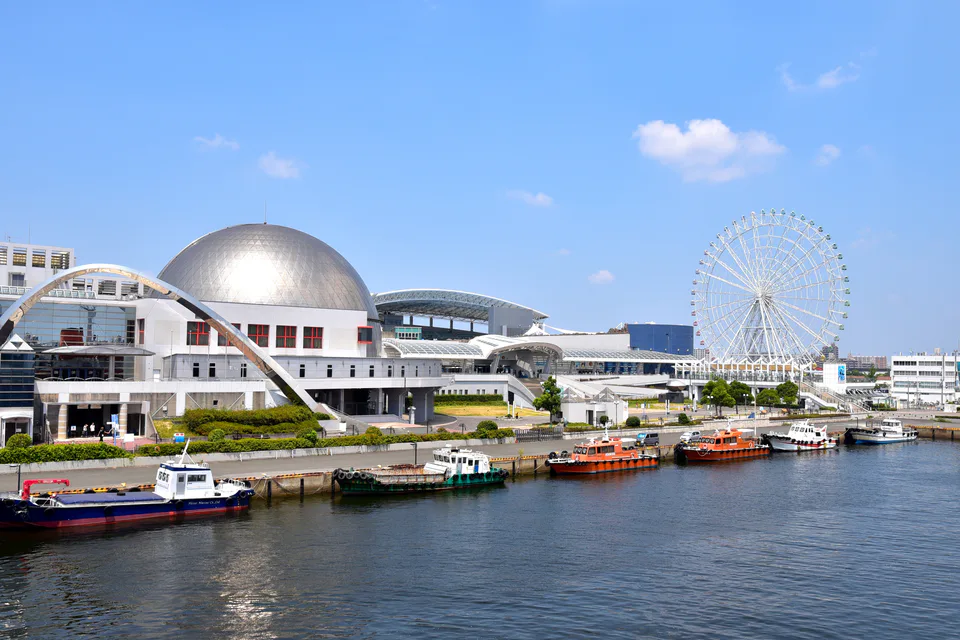
For a first visit to Port of Nagoya Public Aquarium, I would reserve about three to four hours if dolphin and killer-whale programs both matter, and about two to three hours if you only want the major exhibits plus one headline program. The aquarium itself says a full visit including a dolphin performance takes roughly two to three hours, with additional events requiring more time.
There is one important 2026 exception. Until August 31, the Summer Night Aquarium stays open until 20:00 and visitors entering after 17:00 can use the official night fare: JPY 1,620 for an adult instead of JPY 2,030. That saves JPY 410, or about 20%. But 17:00–20:00 is only a three-hour maximum window, so the cheaper ticket is best for a focused evening visit, not automatically the best value for a first-time visitor who wants the whole aquarium slowly.
↔ Scroll table left or right
Your visit | Time to protect | Best ticket / plan | Main trade-off |
First visit, both headline animal programs matter | 3–4 hours | Normal daytime admission | Costs more than the summer night fare but gives far more scheduling slack |
Main tanks + one headline program | 2–3 hours | Normal admission or night entry if the evening schedule fits | You must deliberately skip lower-priority exhibits/programs |
August 2026, entering after 17:00 | Up to 3 hours before 20:00 closing | Official JPY 1,620 night ticket | Less time and fewer chances to recover from a missed program |
Family needing lunch / rest / reset | Half day with a break | Use same-day re-entry | Re-entry is only allowed until one hour before closing |
August–November 2026 “full Garden Pier day” | Rebuild the day | Treat the aquarium as the main 2–4 hour anchor | Three nearby Garden Pier facilities are temporarily closed |
Photo: Bariston / Wikimedia Commons, CC BY-SA 4.0

The night ticket is cheaper because you are buying less scheduling capacity
The standard adult admission is currently JPY 2,030. On eligible Summer Night Aquarium dates, entry after 17:00 is JPY 1,620. The saving is JPY 410.
The mistake is treating that JPY 410 as a pure discount on the same product. It is not. During the 2026 summer-night period, the aquarium closes at 20:00, so a visitor entering at 17:00 has at most three hours inside. That happens to sit almost exactly on the aquarium’s own 2–3 hour estimate for seeing the full facility with a dolphin performance.
That makes the after-17:00 ticket a good fit only when your visit is controlled:
you know which one or two programs matter;
you are comfortable moving efficiently through the exhibits;
you are not building a long family meal or rest break inside the window;
and you accept that a program change removes more of your limited visit than it would during a half day.
If the aquarium is one of the main reasons for the Nagoya stop, I would pay the extra JPY 410 for the larger time window rather than optimise the smallest line in the trip budget.
For August 25–31, the current evening schedule makes a focused night visit workable
The current official event schedule for the late-August Summer Night Aquarium lists killer-whale public training at 17:30 and the BLUE ECHO dolphin performance at 19:00. Those exact times can still change for animal condition or operational reasons, so check the day’s live schedule before travelling.
As a planning example, a 17:00 arrival can therefore be built around two anchors:
enter and go directly toward the 17:30 program if that is a priority;
use the middle of the visit for the tanks and South Building;
return for the 19:00 dolphin performance;
finish the final exhibits before the 20:00 closing time.
That is a real evening product. It is also fragile. Miss the 17:30 program and there is not a full daytime schedule left to recover with. The night ticket therefore rewards visitors who can make decisions in advance rather than people who want to wander without watching the clock.
August to November 2026: the aquarium is no longer one stop inside the old Garden Pier bundle
From August 1 through November 30, 2026, three nearby Garden Pier facilities are closed for preparations connected with the Aichi-Nagoya 2026 Games:
Nagoya Port Building, including the Maritime Museum and observation room;
Fuji Antarctic Museum Ship;
Port House.
The aquarium itself remains open. This changes the opportunity cost of the port trip.
Older itineraries could justify a long Garden Pier block by stacking aquarium + museum + observation deck + Fuji into one journey. During the current closure period, that stacking logic is broken. I would now treat the aquarium as a standalone 2–4 hour attraction unless JETTY, a meal or another specifically confirmed port-area stop gives the rest of the day a job.
This is particularly important for a short Nagoya stay. Do not reserve an entire day for “Nagoya Port” just because an older itinerary listed four attractions there. The closure can free half a day for central Nagoya, Osu, Sakae or another Chubu stop.
If your trip overlaps the Games themselves, use the Aichi-Nagoya Asian Games 2026 guide because venue access and temporary transport arrangements can change the same port-area assumptions again.
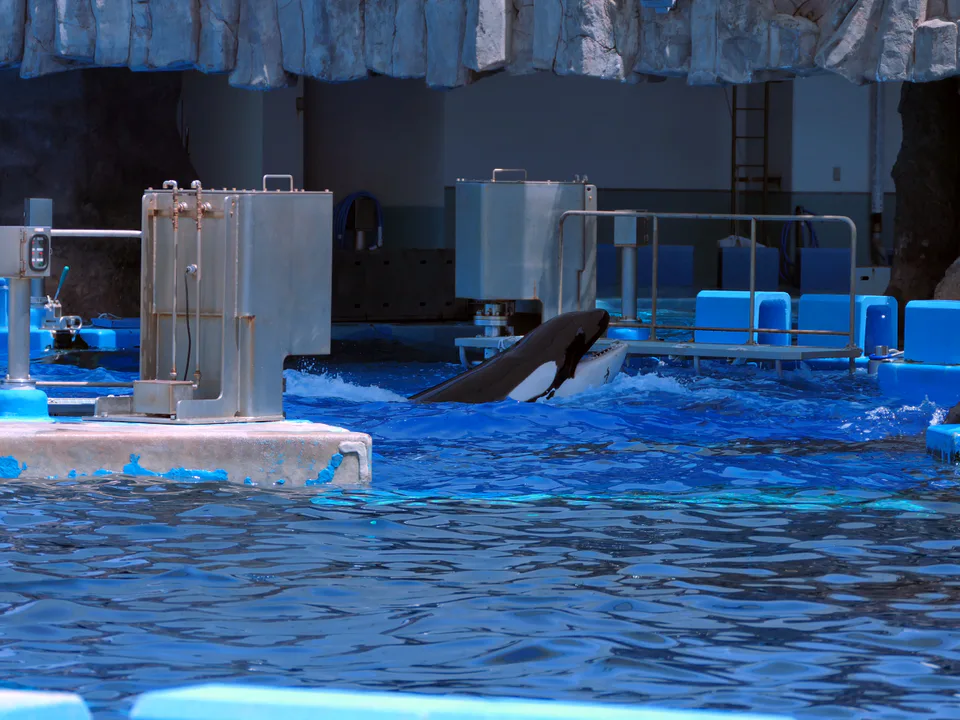
Photo: Hyppolyte de Saint-Rambert / Wikimedia Commons, CC BY 4.0
VLux5_hdsr_o33.jpg)
Build around one or two programs, not around a screenshot of every event time
Dolphin performances and killer-whale public training are natural anchors, but the aquarium can change or cancel animal programs according to the animals’ condition and daily operations. The current homepage is a reminder of that: the beluga baby is under artificial rearing and is not available for viewing at present.
That does not make the aquarium a bad visit. It means a resilient plan should not depend on one animal being visible or one training session operating exactly as expected.
I would rank the day like this:
Choose one must-see program.
Choose one second-choice program if the timing is clean.
Let the permanent exhibits fill the time between them.
If the must-see program changes on the day, the visit still has a structure. A minute-by-minute route copied weeks earlier does not.
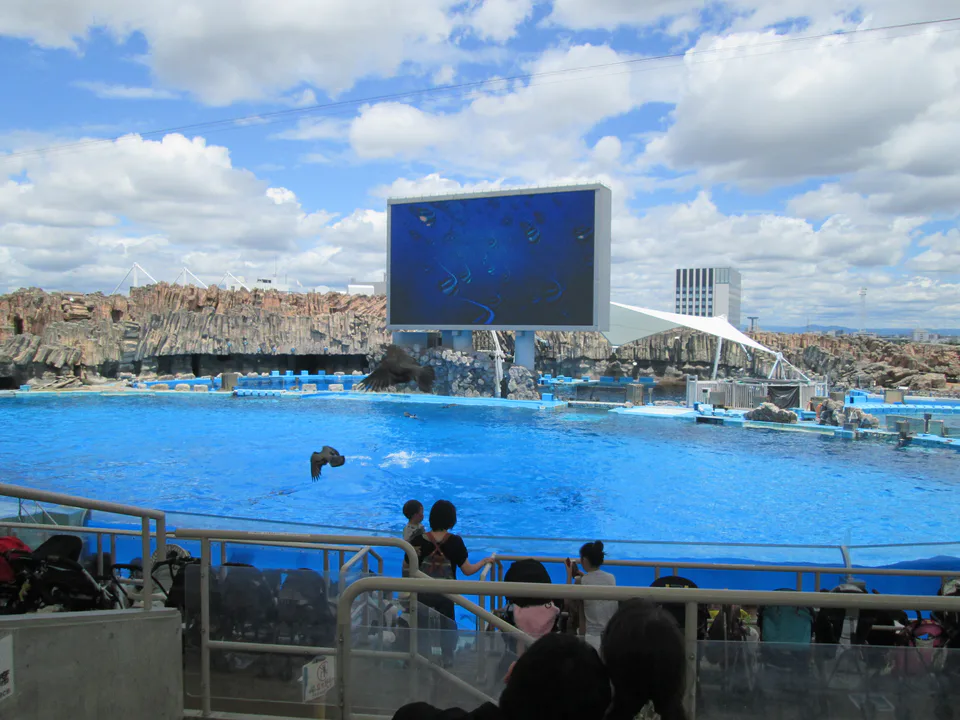
Photo: Maplestrip / Wikimedia Commons, CC0

Same-day re-entry is most valuable for families, not for attraction collecting
The aquarium allows unlimited same-day re-entry when you use the re-entry stamp, with re-entry permitted until one hour before closing. This is more useful than it first appears.
For a family, it allows a different half-day design:
aquarium block → proper lunch / quiet break outside → return for the second program.
That can be much better than asking a young child or an older traveller to stay inside continuously for four hours simply because the ticket has already been scanned.
During the August–November 2026 Garden Pier closures, however, do not interpret re-entry as permission to build a museum-hopping loop. The Maritime Museum, observation room, Fuji and Port House are the very facilities currently unavailable. Use re-entry for food, rest and a calmer pace, not to recreate an older port bundle that no longer exists.
Two to three hours vs three to four hours: use the number of anchors
The aquarium’s own FAQ gives about 2–3 hours for the whole facility including a dolphin performance. That is the most useful first-party baseline.
I would translate it into this ValueNavi rule:
2–3 hours: one headline program + major tanks + no long meal + limited revisiting.
3–4 hours: two headline programs + slower exhibits + food/rest + photography or children setting the pace.
More than 4 hours: only when the aquarium itself is the day’s main interest, the family wants a very slow visit, or re-entry is being used deliberately. Do not keep adding time merely because the old Garden Pier day used to contain more surrounding attractions.
This approach is stronger than using age alone. A marine-life enthusiast travelling solo can need more time than a family that only wants dolphins and the major tanks.
Do not bring transfer-day luggage to solve a problem the hotel already solved
The aquarium does not provide staffed baggage storage. Its official English information directs visitors to coin lockers near the entrance, currently JPY 400 for extra-large, JPY 300 for large and JPY 200 for small lockers.
The important boundary is capacity. A locker price is not a promise that your 29-inch suitcase fits or that an extra-large locker is free when you arrive. If the aquarium falls on a hotel-change day, leaving the main luggage at the hotel or station is the more resilient plan.
A 2–4 hour attraction should not determine the whole luggage routing of a multi-city Japan trip. Use luggage forwarding when the wider route needs it rather than carrying a full transfer load into the port.
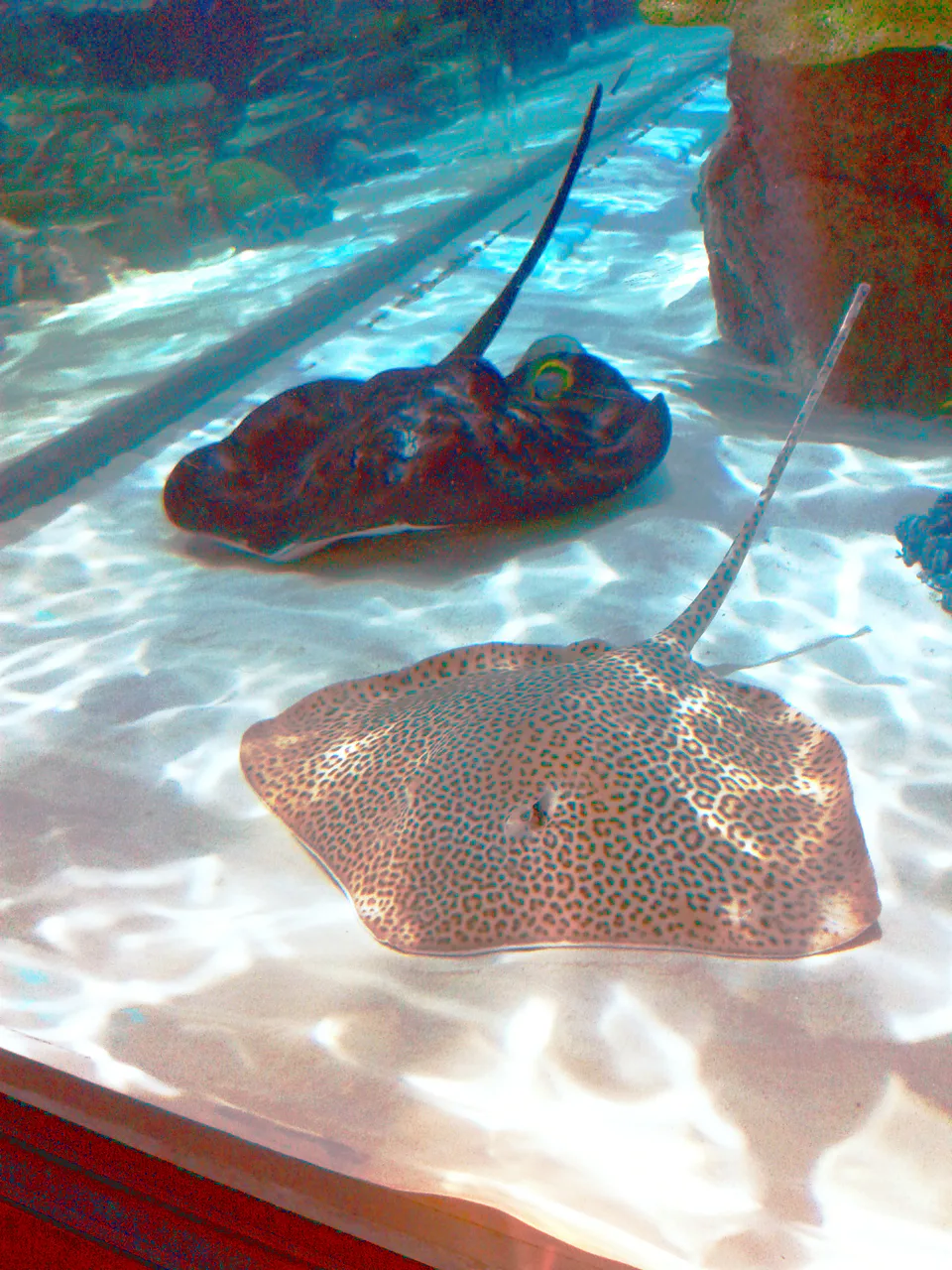
Photo: Maplestrip / Wikimedia Commons, CC0
.jpg)
Public transport gets stronger during the Games-preparation period
The aquarium currently warns that surrounding roads and parking can become heavily congested on weekends and holidays and recommends public transport. It is also changing parking arrangements in connection with Aichi-Nagoya 2026 preparations.
For an ordinary Nagoya sightseeing day, that pushes the decision toward the subway to Nagoyako Station rather than renting or keeping a car solely for this attraction. A car may still make sense as part of a wider regional route, but the aquarium itself does not create a strong driving case.
If the day also contains Korankei or another road-sensitive attraction, separate the two decisions. The aquarium is the better weather-flexible city block; Korankei is the day whose bus/road congestion deserves the transport buffer.
Daytime seller comparison should come after visit-window selection
Third-party general-admission tickets can still be useful for convenience, app preference or cancellation terms. But they should be compared only after you know you need a normal daytime ticket.
Through August 31, a traveller who will only enter after 17:00 should compare the official JPY 1,620 night product first. Buying a discounted normal-day product and congratulating yourself on the saving is pointless if you bought the wrong admission window.
Conversely, do not choose the night ticket merely because it is cheaper if a daytime visit is what lets your family see the two programs you actually care about. The JPY 410 difference is small relative to the cost of returning to Nagoya Port on another day.
When I would skip the aquarium
I would move the aquarium down the list when:
the Nagoya stay has only one usable day and another city or attraction is the trip’s real priority;
nobody in the group cares about marine life or the scheduled programs;
you were mainly attracted by an old “four Garden Pier attractions in one day” itinerary that is impossible during the current closures;
or the aquarium would force a major cross-city detour immediately before a fixed train or event session.
I would keep it high on the list for families, rain or extreme heat, marine-life-focused travellers, and Nagoya itineraries that need one dependable half-day block.
If the real competition is whether another destination belongs in a short Nagoya stay, compare Nagoya vs adding Takayama before forcing both into the same day.
Photo: カイロス / Wikimedia Commons, public domain

Final verdict: buy enough time before you buy the cheapest ticket
First-time visitor who wants the aquarium properly: keep three to four hours and use normal daytime admission. Focused visitor who wants the major exhibits plus one program: two to three hours is enough. Visiting between July 18 and August 31 only after 17:00: the JPY 1,620 night ticket is a strong product when a three-hour maximum visit is genuinely what you want.
For August through November 2026, remove the Nagoya Port Building, Maritime Museum/observation room, Fuji Antarctic Museum Ship and Port House from old Garden Pier itineraries. That makes the aquarium a smaller standalone time block than older guides suggest, not a weaker aquarium.
The key decision is therefore time capacity first, current port context second, ticket seller third. Saving JPY 410 is useful. Protecting the right three or four hours is more useful.
Official sources and verification date
Rechecked August 25, 2026 against the Port of Nagoya Public Aquarium official admission page, Summer Night Aquarium notice, current event schedule, FAQ, English visitor information and current Garden Pier closure notices. Animal programs, opening hours and visibility of individual animals can change on the day.
Official admission prices · Summer Night Aquarium 2026 · Official FAQ · Garden Pier closures, Aug 1–Nov 30, 2026 · Official English visitor guide