Hoshino Resorts Aomoriya is worth the premium when the resort replaces part of your sightseeing itinerary, not when it is merely an expensive place to sleep near Misawa. For most first-time visitors, one night is enough if you can arrive around check-in time, keep the evening on site, reserve the meal/show combination you actually want, and protect the following morning until roughly 10:00–12:00. A very late arrival or early departure removes too many of the hours you are paying for.
The useful comparison is therefore not “Aomoriya versus a cheaper hotel.” It is Aomoriya as a 15:00-to-noon experience bundle versus a city hotel plus separate sightseeing, dinner and transport. If the resort will get only a bed-and-breakfast window, I would stay in Hachinohe, Misawa or central Aomori instead. If the park, onsen, Aomori-style dinner, Michinoku Matsuriya and a slow morning are all things you would otherwise spend time and money arranging separately, the premium becomes much easier to justify.
↔ Scroll table left or right
Your actual stay | Verdict | What you are really buying |
Arrive about 15:00–16:30, leave after 10:00 next day | Strong one-night fit | Afternoon park/onsen + dinner + show + morning bath/breakfast/activity |
Arrive 18:00–19:00, leave after breakfast | Conditional | Dinner/show/morning still work, but much of the property and seasonal activity time disappears |
Arrive after 20:00 or leave before breakfast | Usually poor value | You are paying resort pricing for a compressed sleep stop |
Two nights with a full middle day on site | Worth considering | Seasonal activities, park time, multiple onsen sessions and less hotel-moving pressure |
Two nights but both daylight periods are spent off property | Usually overbuying | The second resort night is not replacing any external sightseeing or transport friction |
The first test: how many resort windows will you actually use?
Aomoriya’s standard check-in is 15:00 and checkout is 12:00. That creates a maximum hotel window of about 21 hours for a one-night stay before you subtract the time spent sleeping. The premium is easiest to defend when the remaining awake time contains several distinct resort windows:
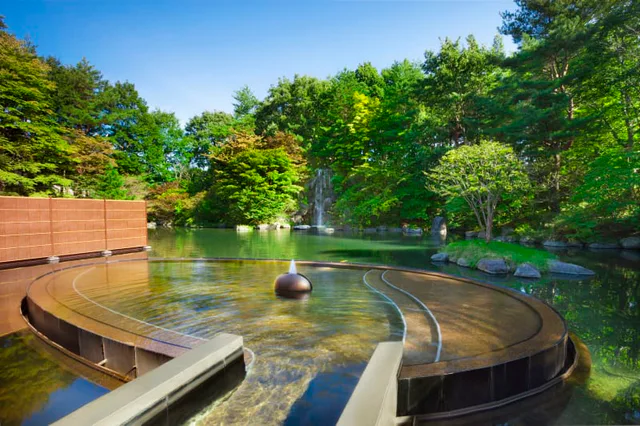
Arrival afternoon: park, seasonal activity or an early onsen.
Pre-dinner / dinner: time on property rather than a trip back into town.
Night: Michinoku Matsuriya and the post-show atmosphere.
Morning: bath, breakfast, walk or another activity before noon checkout.
If you can name three or four of those windows, the hotel is functioning as a destination. If you can name only “sleep” and “breakfast,” the resort label is doing more work than the itinerary.
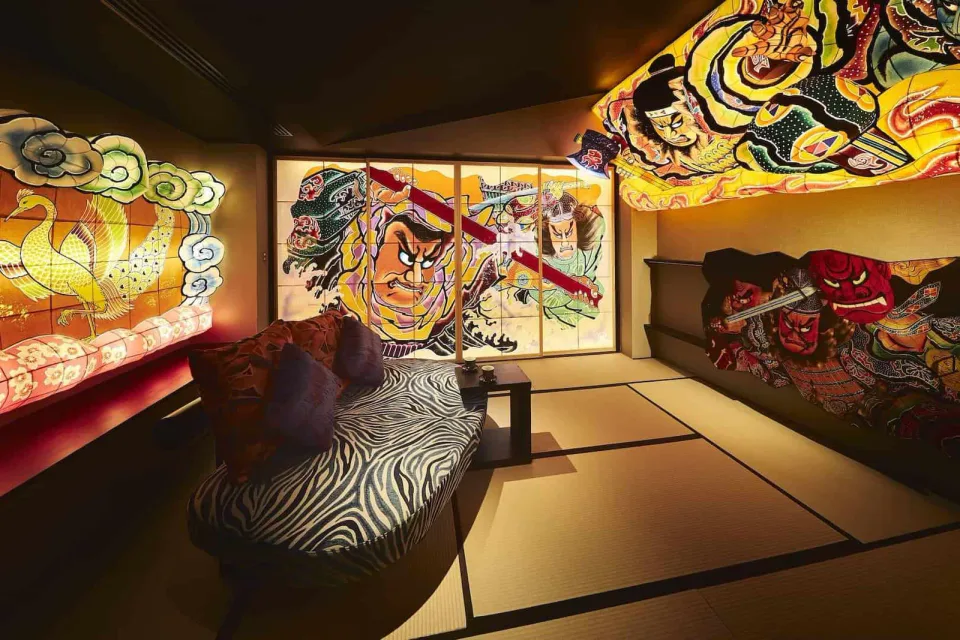
This also changes how I would price a themed room. The current Aomori Nebuta Room is 71.5 m² for up to three guests, while the more practical Azumashi rooms are roughly 43–50 m² for up to four. A Nebuta room can be a real celebration upgrade if you expect to spend time in it. If you arrive just before dinner and leave after breakfast, room theming competes with the same limited hours already needed for the park, onsen and show.
The second test: are you comparing the same meal-and-show package?
A room-only headline can make Aomoriya look cheaper than the experience most people imagine. The current Noresore Shokudo average prices are JPY 5,500 for adult dinner and JPY 3,300 for adult breakfast. Michinoku Matsuriya is a separate reservation and currently costs JPY 1,500 or JPY 1,800 per adult depending on the seat type; a box seat for up to four people is JPY 5,000.
For two adults, adding buffet dinner and breakfast at the current listed prices is JPY 17,600. Add ordinary individual seats for Michinoku Matsuriya and the combined meal/show add-ons become roughly JPY 20,600–21,200 before the room itself. That is ValueNavi-derived arithmetic from current published prices, not a package quote.
The implication is simple: compare final stay composition, not the first room price. A half-board package that looks more expensive can be cheaper than a room-only rate once the dinner and breakfast you intended to buy anyway are added. Conversely, if you plan to eat elsewhere and skip the show, do not pay a package premium for benefits you will not use.
Families should repeat the same calculation with the current child bands. Noresore Shokudo currently charges lower meal prices for ages 7–11 and 4–6, with ages 0–3 free; Michinoku Matsuriya also has child and toddler prices. Group size changes the value of every add-on much faster than it changes the room rate.
Michinoku Matsuriya is not included just because you booked the hotel
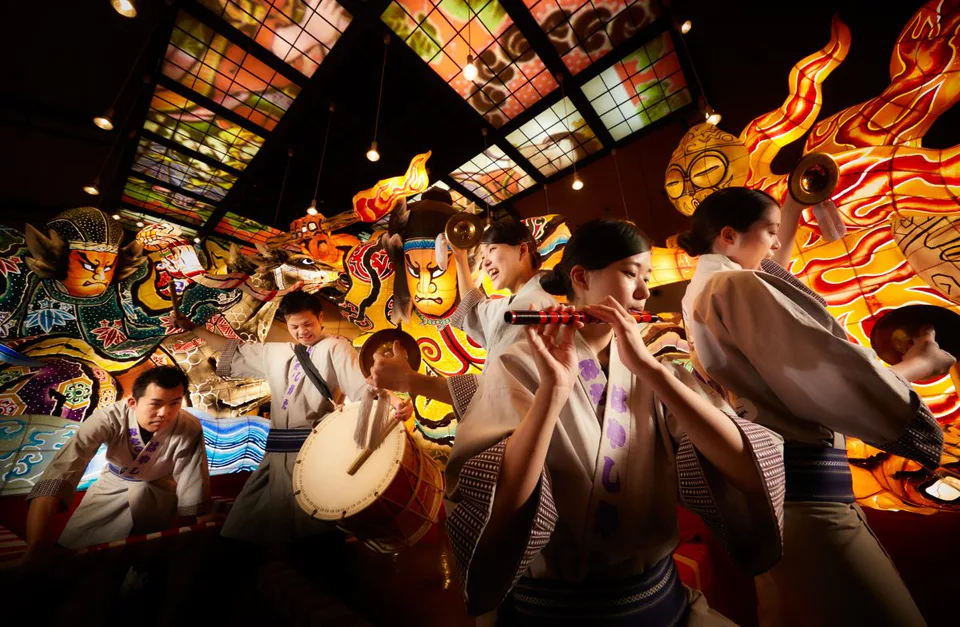
The current Michinoku Matsuriya show runs at 21:00 year-round, lasts about one hour and is for hotel guests only. It has 202 seats. The hotel accepts reservations until 30 minutes before the show, but also warns that performances regularly fill and recommends reserving in advance. Advance credit-card payment is required.
That makes the show part of a reservation chain, not a spontaneous free amenity. If the show is one of the main reasons you are paying for Aomoriya, confirm it before you value the room. A sold-out show does not make the hotel bad, but it changes what your premium is buying.
The timing also creates a useful dinner check. The main buffet currently runs 17:30–21:00, with last entry/order time around 20:30 depending on the current operation. A 21:00 show therefore works naturally with an earlier dinner. If your transport arrives at the hotel at 20:15, the theoretically available show does not solve the fact that the evening has become rushed.
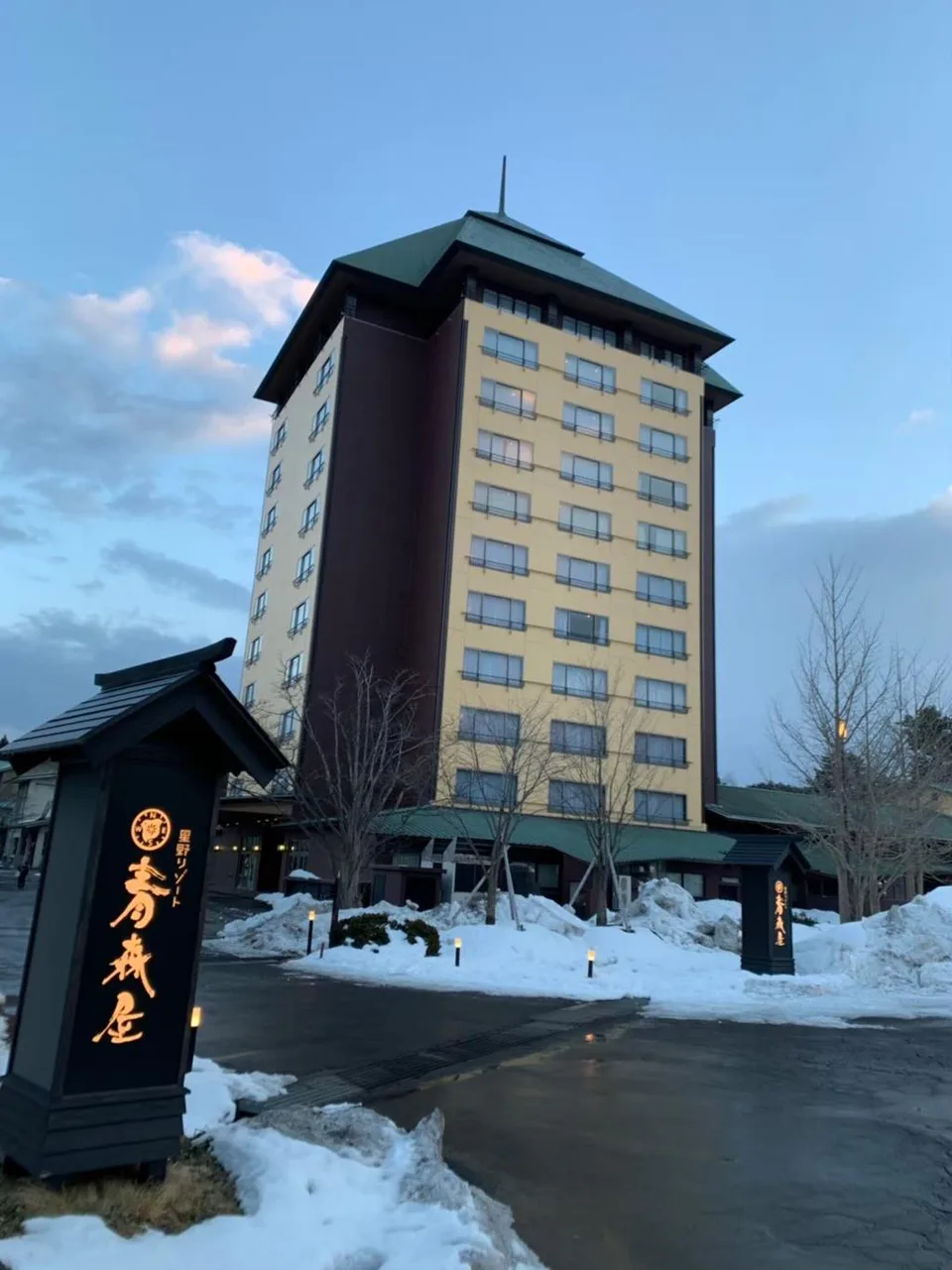
A late arrival breaks Aomoriya faster than it breaks a city hotel
A city hotel can still deliver most of its core value at 21:30: room, shower, sleep and a convenient station in the morning. Aomoriya cannot. The property’s value is front-loaded into the afternoon and evening.
The official access page currently lists a reserved free shuttle from Misawa Station, a roughly three-minute ride. That shuttle must normally be reserved by the previous day and can fill. The Misawa Airport shuttle takes about 20 minutes and normally requires reservation at least two days in advance; the hotel also lists specific JAL flights that the shuttle does not serve. Aomoriya is therefore car-free friendly, but only when the transport has been solved before arrival.
This is a real failure mode: a traveller can have a valid room reservation, a valid train or flight and still discover that the convenient shuttle they mentally included in the room value was never reserved. If the only practical arrival lands you after dinner or after the show begins, I would not “save” the night by paying for a premium room. I would use a simpler city night and move Aomoriya to a day when the resort can actually be used.
One night is enough when the resort does four jobs in one sequence
A well-designed one-night stay can be unusually efficient because several experiences sit on the same property. Hoshino Resorts’ own sample itineraries use a sequence such as dinner around 18:30, Michinoku Matsuriya at 21:00, a morning bath around 06:00, breakfast around 07:00–07:30 and a morning activity around 09:00 before the day continues.
You do not need to copy those exact times. The useful insight is that one night works because the resort lets the evening and morning touch each other without another hotel transfer. A traveller who would otherwise arrange an onsen, Aomori-themed dinner, evening entertainment and another morning activity separately can compress them into one stay.
That is why my first-time default is still one night. A second night should not be added simply because “the hotel has many activities.” It should solve a specific problem the first night cannot.
Two nights are worth it only when the middle day has a job
The hotel currently lists dozens of seasonal and year-round activities, but an activity catalogue is not a reason to stay longer by itself. I would add Night 2 when at least one of these is true:
You want a slow family day with several on-site activities instead of another long transfer.
Winter weather makes reducing hotel moves materially valuable.
You want to use the park and onsen at different times rather than compressing everything around dinner and the show.
A current seasonal programme genuinely matters enough to occupy the middle day.
The next leg is Oirase Keiryu Hotel and the direct hotel-to-hotel shuttle makes the sequence cleaner.
Aomoriya currently operates a guest-only shuttle to Hoshino Resorts Oirase Keiryu Hotel for guests staying at both properties. For April 2026 through March 2027, the published departure from Aomoriya is 09:45 and the journey is about 60 minutes; advance reservation at least two days ahead is required. That can make one Aomoriya night followed by Oirase a more efficient use of two premium hotel nights than two nights at Aomoriya when the second day would otherwise be spent mostly off property.
Use Aomoriya vs Oirase Keiryu Hotel if the real decision is between festival-style resort time and forest/stream time, and the Aomoriya–Oirase order guide if both hotels are already in the trip.
Themed room or practical room? Spend on the bottleneck first
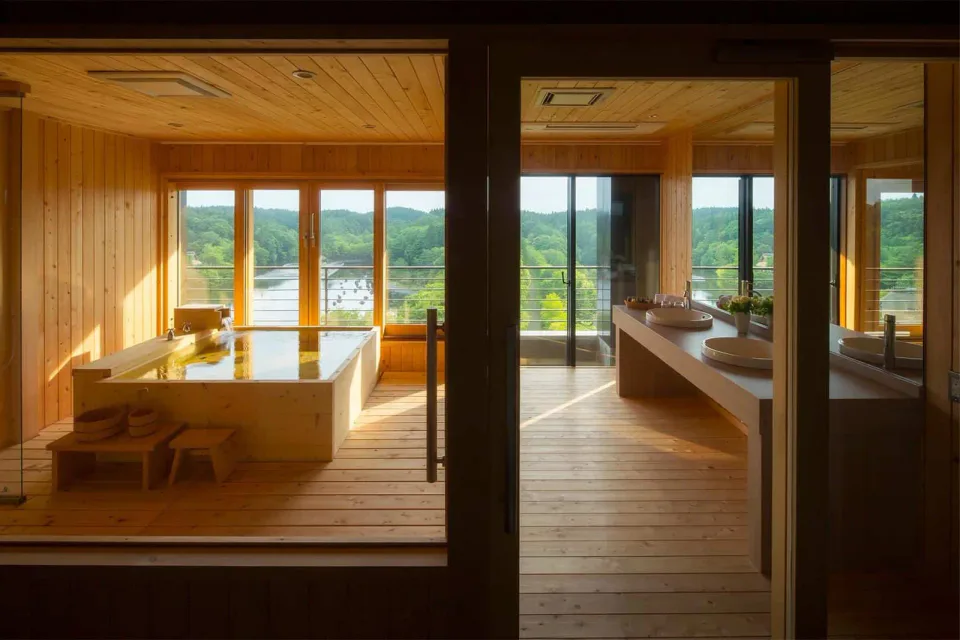
The current Aomori Nebuta Room is a 71.5 m² themed room for up to three guests. Azumashi rooms are about 43–50 m² and can accommodate up to four. The themed room is not “better” for every traveller; it solves a different objective.
I would use the budget in this order:
Arrival timing that lets the resort be used.
A legal, comfortable room for the actual party.
Meal plan and Michinoku Matsuriya reservations that match the evening.
Shuttle / onward transport.
Only then, room theming or a larger premium category.
If the first four are already solved and the room itself is part of a birthday, family celebration or first Hoshino stay, the Nebuta-room premium can make sense. If the trip is rushing from train to buffet to show to sleep, the room has almost no time to repay the upgrade.
Families get more value from concentration—but also multiply the extras
Aomoriya is a strong family product because meals, play, onsen, seasonal activities and evening entertainment can all happen without another train or car journey. That reduces group movement, which can be worth more than a small room-rate difference when children or grandparents are travelling.
But the total must be calculated for the whole party. A dinner, breakfast, show and paid activity that looks modest for one person becomes a significant add-on for four. Check child meal bands, show pricing, room occupancy and bed-sharing rules before comparing the property with a standard hotel.
The official property page currently lists rooms for one to five guests and publishes child/bed-sharing rules by age and room. Do not infer that every room sleeps five or that every child can share a bed under the same rule.
Do not use Aomoriya as a base for all of Aomori Prefecture
Aomoriya is near Misawa in eastern Aomori. It works naturally with Hachinohe, Misawa, Towada and an Oirase sequence. It is not the same thing as staying beside Aomori Station, and it is a poor base if several days repeatedly run to western Aomori or Hirosaki.
The hotel does offer a guest programme for an Aomori Station day trip on many dates, but that should not be mistaken for evidence that Aomoriya is geographically central. If the itinerary is mostly city sightseeing, use Where to Stay in Aomori and let the hotel base follow the destinations you repeat.
When I would not book Aomoriya
Late arrival: the resort loses too many afternoon/evening windows.
Early departure: the morning bath, breakfast and property time disappear.
Show is essential but not reserved: the stay is being valued around an uncertain benefit.
Room-only price is being compared with a city hotel including breakfast/dinner: the products are not normalised.
Most daylight hours are off property: the resort is not replacing any sightseeing or transport.
The trip is centred on Aomori/Hirosaki city sightseeing: the geography is wrong.
Final verdict
For a first visit, I would book one night at Aomoriya when I can arrive around 15:00–16:30, keep dinner and the evening on site, secure the show if I care about it, and leave the following morning unhurried. That gives the resort enough awake time to behave like a destination rather than a bed.
I would add a second night only when the middle day has a specific resort job—seasonal activities, family recovery, winter simplification or a deliberately slow stay. I would skip the premium entirely for a late-in/early-out schedule. The recommendation reverses when your itinerary stops using the resort: at that point, a simpler Misawa, Hachinohe or Aomori city hotel is buying the thing you actually need—location and sleep.
Official sources and verification date
Aomoriya official property and room information · Aomoriya dining · Michinoku Matsuriya · Aomoriya access and shuttles. Checked August 25, 2026. Meal prices, show schedules, activity availability and shuttle times can change; recheck the exact stay date before payment.
Hilton Okinawa Chatan Resort Review: Are the Pool and 37m² Ocean-View Rooms Worth It?
Sakura Castle: The Stamp Is Open 24/7 — The Castle Is in the Moats, Not a Keep
Vessel Hotel Campana Nagoya Review: Rooms, Bath and Station Walk
Nezu Museum 2026: The Garden Isn’t Free — and That Changes Whether ¥1,400 Is Worth It
Okinawa Prince Hotel Ocean View Ginowan: Are Two Ginowan Nights Worth Giving Up Yui Rail?