
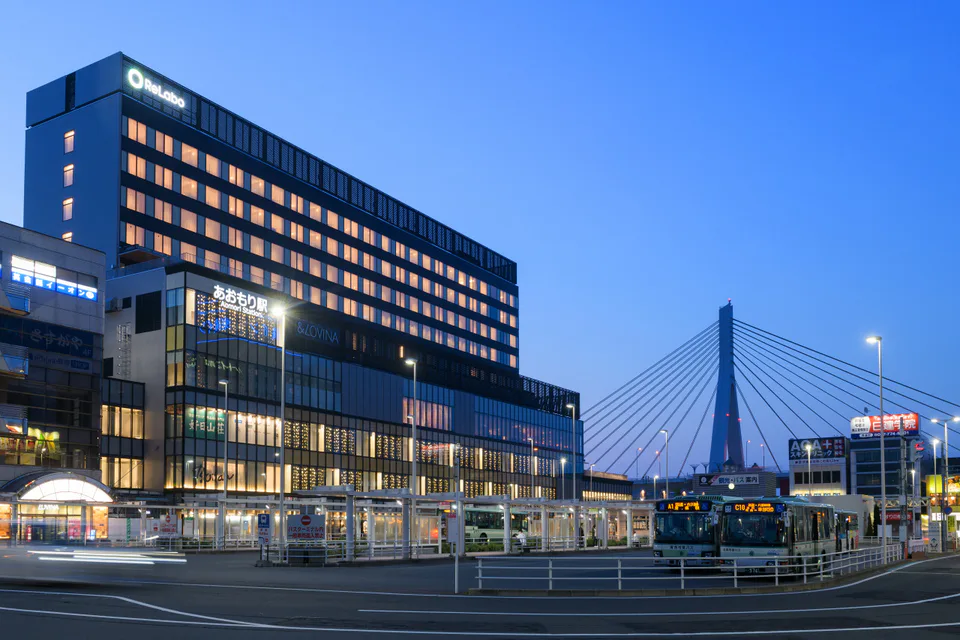
Do not choose one “best base in Aomori” for the whole prefecture. Choose the first city from your arrival corridor, then let the next hard departure decide whether you move. Aomori City is the best flexible hub for airport arrivals, the city waterfront and westward travel. Hachinohe is the stronger eastern gateway when you arrive by Tohoku Shinkansen or need a fixed Oirase/Towada bus. Hirosaki deserves its own night when castle-town mornings, blossom or foliage hours matter. Aomoriya and Oirase Keiryu Hotel are experience nights, not substitutes for a transport hub.
The biggest correction to a generic “stay near Aomori Station” answer is that Aomori Airport currently has direct buses to both Aomori Station and Hirosaki. The airport publishes about 35 minutes to Aomori Station and about 55 minutes to Hirosaki Bus Terminal. If your trip is actually a Tsugaru/Hirosaki trip, sleeping in Aomori City first can create a hotel move you never needed.
↔ Scroll table left or right
Your route | Best first base | Why | When to change it |
Aomori Airport + Aomori City / Hakkoda / onward east | Aomori Station | Airport bus, city services and a flexible buffer before seasonal transport | Move only when Oirase or another resort night unlocks time you cannot get by day trip |
Aomori Airport + Hirosaki / Tsugaru | Hirosaki | Direct airport bus means you do not need an Aomori City buffer by default | Move east only when the itinerary changes region |
Tokyo / Sendai Shinkansen + Oirase / eastern Aomori | Hachinohe Station | Shinkansen arrival and 2026 Oirase bus departures are aligned with Hachinohe | Move into Oirase when you want early/late gorge hours, not just to collect another hotel |
Aomoriya + Oirase Keiryu Hotel | Consecutive resort stay can be efficient | Hoshino currently runs a hotel-to-hotel shuttle of about 60 minutes for guests staying at both | Do not count that shuttle if you are not booked at both hotels |
Aomori Station is a buffer base, not the automatic answer for the whole prefecture
Aomori Station is strongest when flexibility is the priority. Aomori Airport currently lists the airport bus at roughly 35 minutes and JPY 980 to Aomori Station. That makes the station area useful for a late arrival, a weather-sensitive next day or a trip that has not yet committed to Hirosaki, Hakkoda or Oirase.
Its hidden weakness is repeated eastward travel. Oirase and Lake Towada are not ordinary suburban day trips. JR Bus Tohoku runs seasonal Mizuumi services from Aomori and seasonal Oirase services from Hachinohe, with timetable revisions and extra autumn services. If you keep sleeping in Aomori City while two consecutive days are built around Oirase/Towada, the hotel is protecting flexibility you are no longer using.
ValueNavi rule: keep Aomori Station when it is doing at least two jobs—arrival buffer + city day, airport + Hakkoda, or west/east transition. Move when the itinerary has clearly become an eastern-Aomori trip.
Hirosaki can be the correct first night directly from Aomori Airport
Aomori Airport currently publishes a direct bus to Hirosaki Bus Terminal of about 55 minutes, with an adult fare of JPY 1,600. That is only about twenty minutes longer than the published bus time to Aomori Station.
This changes the first-night logic. If the trip’s first two meaningful days are Hirosaki Castle, Tsugaru culture, blossoms or autumn foliage, inserting Aomori City first may add checkout, luggage storage and another rail transfer without protecting anything important.
Hirosaki becomes worth sleeping in when the value is tied to the edges of the day: early park walks, evening illumination, seasonal crowds or a slower castle-town dinner. If you only want a few central sights and the rest of the trip stays in Aomori City, it can still be a day trip.
Hachinohe Station is an Oirase transport tool, not the same thing as central Hachinohe
For a Shinkansen-led trip, Hachinohe Station is the cleanest eastern gateway. But do not confuse the Shinkansen station with the city-centre dining area around Hon-Hachinohe. The station-side hotel is an operational choice: arrive late, keep luggage simple, then board the next fixed service.
That matters in 2026 because JR Bus Tohoku’s Oirase 21 and 23 services from Hachinohe Station toward Oirase/Towada depart at 10:00 and 13:30 from April 11, and those named outbound services require reservation. A hotel near the correct departure point therefore protects a real timetable constraint.
If the trip has no early fixed bus and you care more about Hachinohe evening food than next-morning transport, central Hachinohe can be a better experience base. “Stay in Hachinohe” is not one answer.
Oirase: one night buys early and late access; two nights buy weather flexibility
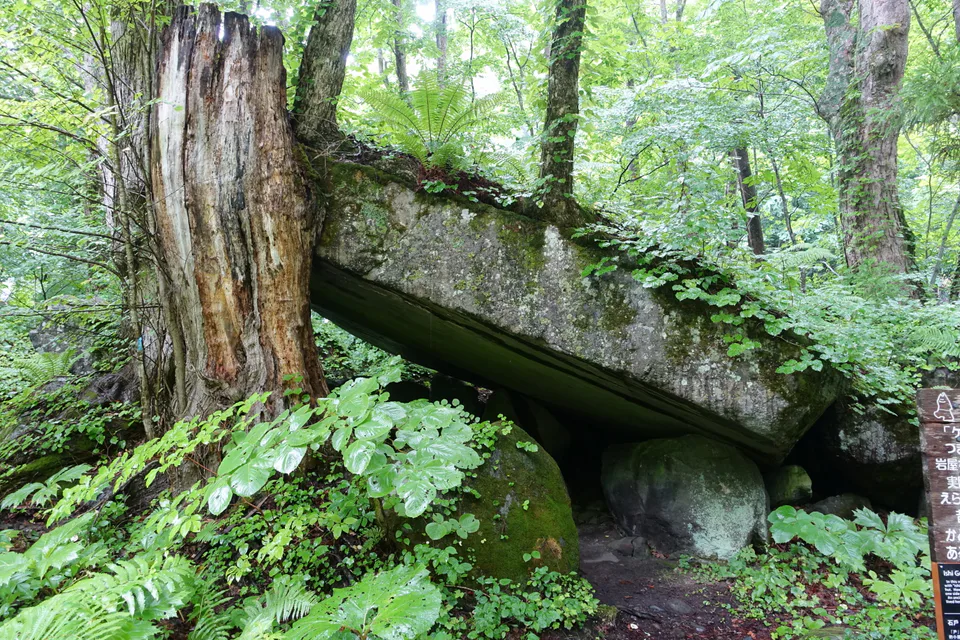
Oirase is the base to choose when the gorge itself is one of the reasons for the trip. The premium is not only scenery from the hotel. It is the ability to use the gorge before or after a long city-to-mountain transfer, reduce the risk of a rushed last bus, and give weather one extra chance.
The bus network is seasonal and changes within the year. JR Bus Tohoku’s 2026 service begins in spring, and from September 18 it adds extra autumn capacity, including a Mizuumi 102 service leaving Aomori Station at 07:30 for Lake Towada and extra Oirase/Towada sector services. That is useful, but it is also evidence that the route should be planned from the actual travel date, not an evergreen Google Maps estimate.
One night: best when you have a clear arrival bus and one main walking day. Two nights: stronger for peak foliage, photography, older travellers or anyone who would hate for one wet/windy day to erase the reason for coming.
Aomoriya is an experience night; late arrival destroys the premium
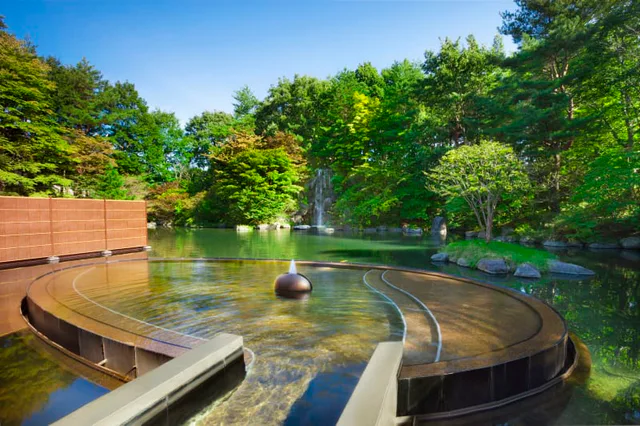
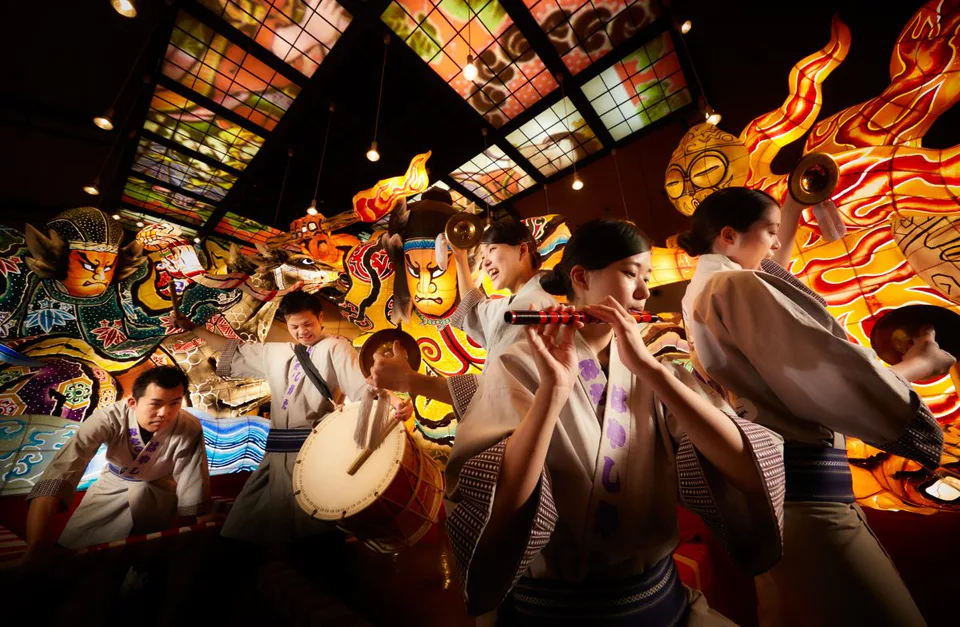
Aomoriya is near Misawa rather than Aomori Station. Hoshino’s official access page currently says the hotel is a 15-minute walk from Misawa Station, with a reservation-required free shuttle taking about three minutes. The hotel itself promotes an afternoon-to-evening rhythm of park exploration, bathing and festival-themed activities.
That makes Aomoriya a poor late-night transit bed. If you arrive near dinner or later and leave early, you are paying resort rates while using almost none of the resort time.
The strongest use is one deliberate night placed between transport legs. If you also stay at Oirase Keiryu Hotel, Hoshino currently operates a guest-only shuttle between the two: for April 2026–March 2027 the published Aomoriya departure is 09:45, travel time about 60 minutes, reservation required at least two days in advance and subject to capacity.
That shuttle creates real itinerary value because it can remove a return to Misawa/Hachinohe between the two resorts. But it is a closed benefit: it is only for guests staying at both properties and should not be treated as public sightseeing transport.
Three route patterns that are more stable than “base in Aomori and day-trip everything”
3 days / 2 nights: choose one side of the prefecture
West/city: Aomori 1 + Hirosaki 1, or two nights in one city if luggage simplicity matters more. East/nature: Hachinohe 1 + Oirase 1. Do not try to combine Hirosaki, Oirase and a resort in two nights simply because the prefecture name is the same.
4 days / 3 nights: use one transport night and one experience block
Examples: Aomori 1 + Oirase 2 for a nature-led trip; Hirosaki 2 + Aomori 1 for a west-led cultural trip; Hachinohe 1 + Aomoriya 1 + Oirase 1 when the Hoshino sequence is itself the point.
5 days / 4 nights: open-jaw geography starts to pay
Enter via Hachinohe/Shinkansen and exit via Aomori Airport, or reverse it. A directional route can remove the need to drag the whole trip back to one city every night.
Large luggage: keep the suitcase at the transport node, not on every resort shuttle
For a multi-base trip, use the large suitcase only where it adds value. Aomori Station and Hachinohe Station are better luggage nodes than a mountain bus. When hotel forwarding or storage is confirmed, take an overnight bag to Oirase or Aomoriya.
Do not assume every hotel shuttle accepts unlimited baggage or that every seasonal bus has spare luggage capacity. Aomori Airport explicitly warns that its Aomori-city bus has limited luggage space and passengers with oversized sports equipment can be redirected when full. That is a useful reminder that northern-Japan transport capacity is part of the itinerary, not background infrastructure.
Final verdict
Aomori Station is the best flexible hub, but it is not the default first night for every Aomori trip. Go straight to Hirosaki from Aomori Airport when the west/Tsugaru side dominates. Use Hachinohe Station when the Shinkansen and a fixed Oirase bus are the hard edges. Stay in Oirase when early/late gorge access or weather flexibility justifies the move. Stay at Aomoriya when you will actually use the resort afternoon and evening.
The strongest Aomori itinerary is normally directional. Every time you consider another hotel, ask what non-replaceable hour it unlocks or which fixed connection it protects. If the answer is “none,” keep the existing room.
Where to Stay for Naoshima and Shodoshima: Uno, Takamatsu or Okayama?
Kamikochi Autumn Leaves: Timing, Buses, Five Walks and Where to Stay
Happo vs Echoland: Where Should You Stay in Hakuba for Skiing?
References
Aomori Airport — airport buses to Aomori and Hirosaki · JR Bus Tohoku — 2026 Aomori/Hachinohe–Oirase/Towada services · JR Bus Tohoku — autumn 2026 additional Oirase/Towada services · Aomoriya — official access and resort-to-resort shuttle. Checked August 25, 2026. Seasonal buses, shuttle reservations and weather operations can change; verify the exact travel date before booking non-refundable stays.