
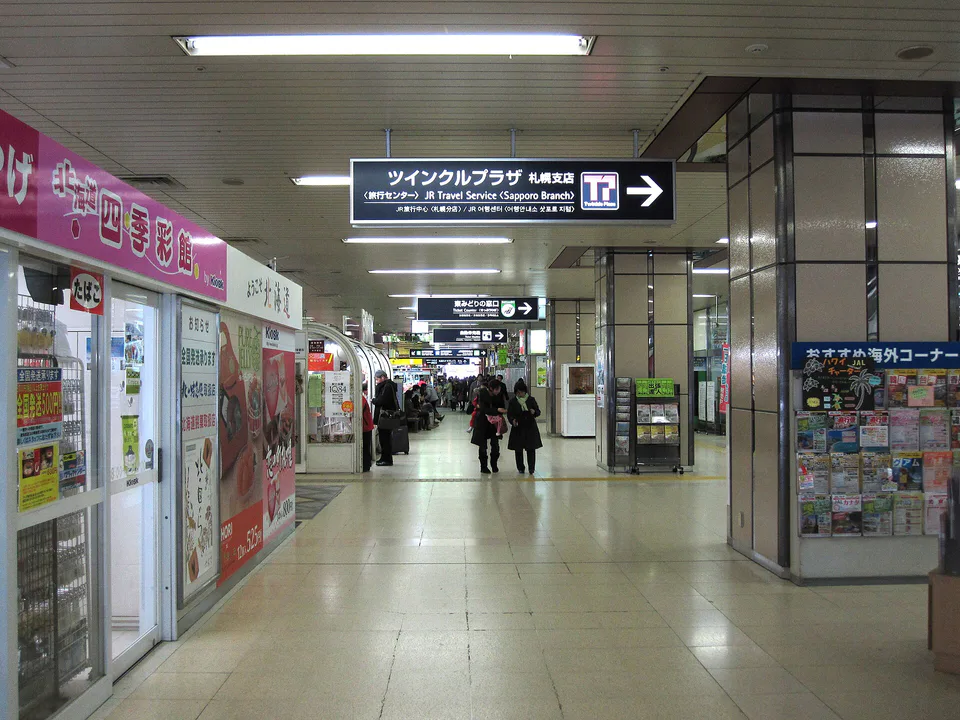
For most first-time visitors staying three or four nights, Odori is the safest Sapporo base. Choose Sapporo Station instead when airport rail, Otaru/Asahikawa/Furano departures, large luggage or an early onward train will repeat. Choose Susukino when late dinners and nightlife genuinely end several of your days there—not because you plan one night out. Nakajima Park is a deliberate hotel-level choice, not a default area recommendation.
For international visitors, one extra variable matters more than many area guides admit: how much of the stay is arrival/departure friction versus daily city movement? On a one- or two-night stop after a long-haul flight, being near JR Sapporo Station can dominate. On a four-night stay with only one airport arrival and one departure, paying that convenience cost every evening may make less sense than staying closer to where the city days actually end.
ValueNavi decision table: which Sapporo area fits your trip?
↔ Scroll table left or right
Trip pattern | Best default | Why | What can reverse it |
1–2 nights, large suitcase, airport in/out | Sapporo Station | Arrival and departure are a large share of the whole stay | A hotel with a much better underground/final-walk route in Odori |
3–4 nights, mostly city sightseeing, one JR day trip | Odori | Balanced access to all three subway lines and easier repeated city movement | Very early JR departures or a strong station-hotel deal |
3 JR day trips: Otaru / Asahikawa / Furano-Biei direction | Sapporo Station | The same JR origin repeats enough times to outweigh evening travel south | You return late to Susukino every night and value nightlife more than morning convenience |
Late food and bars on 2–3 nights | Susukino | The hotel sits where your day actually ends | Multiple early JR or airport departures |
Snow Festival focused on Odori Park | Odori | Repeated daylight/evening returns make event proximity valuable | Your exact hotel has a poor winter final walk or the itinerary is rail-trip heavy |
Quiet couple stay with a compelling park-side hotel | Nakajima Park | The hotel atmosphere is part of the purchase | Family luggage, repeated JR days or late northbound returns |
ValueNavi rule: count repeated movements before comparing hotel prices. A transfer you make six times can matter more than a single airport journey that saves ten or fifteen minutes.
The arrival/departure share test: why the same traveller can choose differently for two nights and four
Sapporo Station has an obvious first-impression advantage for an international traveller landing at New Chitose Airport. JR Hokkaido currently lists the fastest Airport train to Sapporo at about 33 minutes; depending on the service, daytime Airport trains take roughly 33–43 minutes. Arriving with a large suitcase and walking directly to a nearby hotel can be a real quality-of-trip improvement after a long flight.
But that advantage should be weighted by stay length. On a two-night stay, one airport arrival and one departure touch both ends of the trip. On a four-night stay, those are still only two movements while dinner, shopping and city sightseeing repeat across several days.
↔ Scroll table left or right
Stay shape | What deserves more weight | Likely winner |
1 night | Arrival + departure + luggage | Sapporo Station |
2 nights + Otaru day trip | Airport + JR trip + departure | Sapporo Station |
4 nights + one Otaru trip + central city days | Repeated city/evening movement | Odori often becomes stronger |
4 nights + Otaru + Asahikawa/Furano direction + early onward JR | Repeated JR departures | Sapporo Station |
This is an editorial weighting framework rather than an official transport rule. Its purpose is to stop one visually obvious airport connection from deciding a hotel base that you will use for four days.
Sapporo Station wins when JR is part of the itinerary, not merely the arrival
JR Sapporo Station is the strongest base when the station keeps reappearing in the plan. JR Hokkaido’s own visitor routing uses Sapporo as the hub for New Chitose Airport, Otaru, Asahikawa and the Furano/Biei direction. Some Airport trains also continue directly toward Otaru, which is useful if your Hokkaido route is rail-heavy.
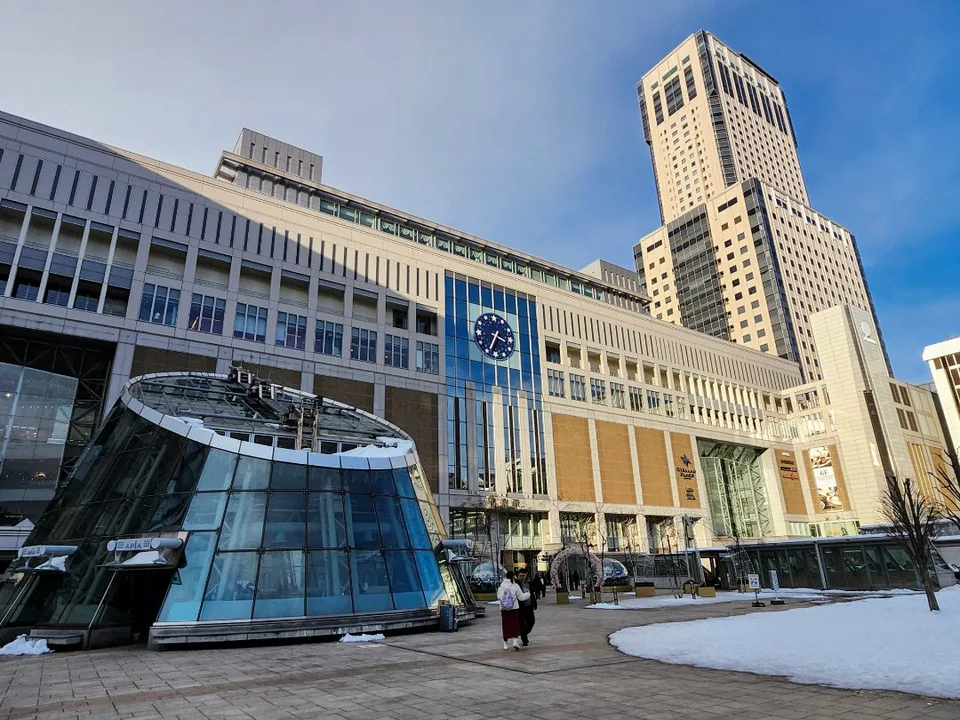
For a traveller doing Sapporo → Otaru one day, Sapporo → Asahikawa another day and then leaving toward eastern or central Hokkaido, staying near the station removes the same first/last local movement over and over. With large luggage, that repetition matters even more.
The station becomes weaker when you are using JR only once. If most sightseeing and dinners pull you toward Odori and Susukino, a few saved minutes on one morning can create more repeated evening travel over the rest of the stay. If this area is winning, compare actual station hotels next in JR Tower Nikko vs GRANBELL or Hotel Emion vs Keio Prelia.
Odori is the default because it minimizes imbalance
Odori Station is served by all three Sapporo Municipal Subway lines: Namboku, Tozai and Toho. That matters less because “three lines sounds good” and more because mixed city itineraries stop forcing you back through one direction.
The Sapporo Station–Odori corridor is also unusually winter-friendly. The Chi-Ka-Ho underground walkway links Subway Sapporo Station and Odori for about 520 metres, roughly a ten-minute walk, while underground connections continue south toward central shopping areas and Susukino. This does not make every Odori hotel fully indoors from JR Sapporo—the last block and the correct exit still matter—but it reduces exposure when snow, ice or wind make surface walking unpleasant.
Odori therefore works best when no single transport pattern dominates. You can go north toward JR, east or west on the Tozai Line, use the Toho Line when useful, and still end evenings around Tanukikoji or Susukino without making the hotel feel displaced.
If laundry or a specific long-stay room feature is what makes Odori attractive, move from area decision to room decision with Tokyu Stay Sapporo Odori: 19m² vs 23m² Twin.
Susukino is worth choosing only when late returns repeat
Official Sapporo tourism guidance puts Susukino Station at about 1.5 km, or around a 20-minute walk, from JR Sapporo Station. The two areas are connected by underground passages, and a subway ride is short. None of that makes Susukino inconvenient in absolute terms.

The decision problem is repetition. If three nights end with dinner, drinks or a late walk around Susukino, putting the hotel there removes the most annoying movement of the day: the trip home when you are tired and the weather is cold. If you only plan one celebratory dinner in Susukino, that single evening should not force every JR morning to start farther south.
ValueNavi reversal condition: Susukino beats Odori when the late-evening return happens more often than the northbound JR departure. If that ratio flips, the recommendation flips too.
For hotel-level comparisons in this area, SAPPORO STREAM HOTEL and Vessel Hotel Campana Susukino solve different late-night needs.
Winter changes the decision from “area” to “last 300 metres”
In a warm-weather map comparison, a five- or eight-minute walk can look trivial. In a Sapporo winter with snow, ice and rolling luggage, the exact path can matter more than the neighbourhood label.
↔ Scroll table left or right
Winter check | Why it matters |
Can you use an underground passage for most of the route? | Reduces exposure to snow, wind and slippery surfaces |
Does the correct exit have an elevator? | A stair-only “short route” can be worse with two large suitcases |
How much outdoor distance remains? | The final surface block is often the part you feel most after a flight or late dinner |
Will you repeat that walk morning and night? | A mediocre final block becomes a real cost over four nights |
This is where a specific hotel can overturn the area winner. A well-connected Sapporo Station hotel can beat Odori for a winter family even when Odori is better on paper; an Odori hotel with a much easier underground/elevator path can beat a nominally “closer” station hotel.
Use Sapporo long-stay hotels when laundry, public baths and repeated winter walking start to matter more than a broad neighbourhood label.
Families should count morning friction, not use nightlife stereotypes
Susukino is not automatically “bad for families,” and Nakajima Park is not automatically “best for families.” A family with two children, a stroller and large luggage may value a station-area hotel because it simplifies airport and JR mornings. Another family spending four days inside central Sapporo may prefer Odori because the subway network and shorter repeated city movement matter more.
Breakfast timing, room layout, elevators and the final winter walk can all reverse an area-level recommendation. If Sapporo Station is winning, compare Hotel Gracery Sapporo vs Hotel Emion rather than assuming the closest-looking pin is the easiest stay.
Nakajima Park should win because of a hotel or atmosphere—not because it is “quiet”
Nakajima Park stays on the Namboku Line and can feel calmer than the busiest central blocks. The trade-off is that many city routines add one more subway movement. That can be completely reasonable if the hotel, room size, park setting or price difference is strong enough.
What I would not do is choose it from a generic “quiet = better” rule. For a couple wanting slower evenings, the extra hop may be irrelevant. For a family with luggage or a traveller doing several JR days, it can become repeated friction. The Vessel Inn Sapporo Nakajima Park guide shows why exact elevator and winter-walk details matter more than the broad area name.
Open-jaw and wider Hokkaido routes can reverse the Odori default
If Sapporo is only the urban base between multiple Hokkaido rail legs, the station grows in value. A route such as New Chitose Airport → Sapporo → Otaru → Asahikawa/Furano → onward Hokkaido makes JR Sapporo a repeated operational hub, not merely an arrival point.
If Sapporo is instead a four-night city stay between flights, Odori often becomes stronger because the airport transfer happens only twice while central movement repeats every day. This is the same reason English-speaking long-haul visitors should not automatically choose a station hotel just because the first arrival looks easiest on Google Maps.
Do not split a short Sapporo stay between central areas
Sapporo Station, Odori and Susukino are close enough that moving hotels inside central Sapporo usually creates more luggage work than it saves in transport. For a three- or four-night stay, I would keep one base unless the hotel itself changes the trip materially.
Split the stay when the destination changes—Niseko, Jozankei, Otaru for a deliberate overnight, Furano or another Hokkaido city—not because dinner happens south of the station. If skiing changes the trip shape, use Ski from Sapporo or Stay at a Ski Resort before changing hotels.
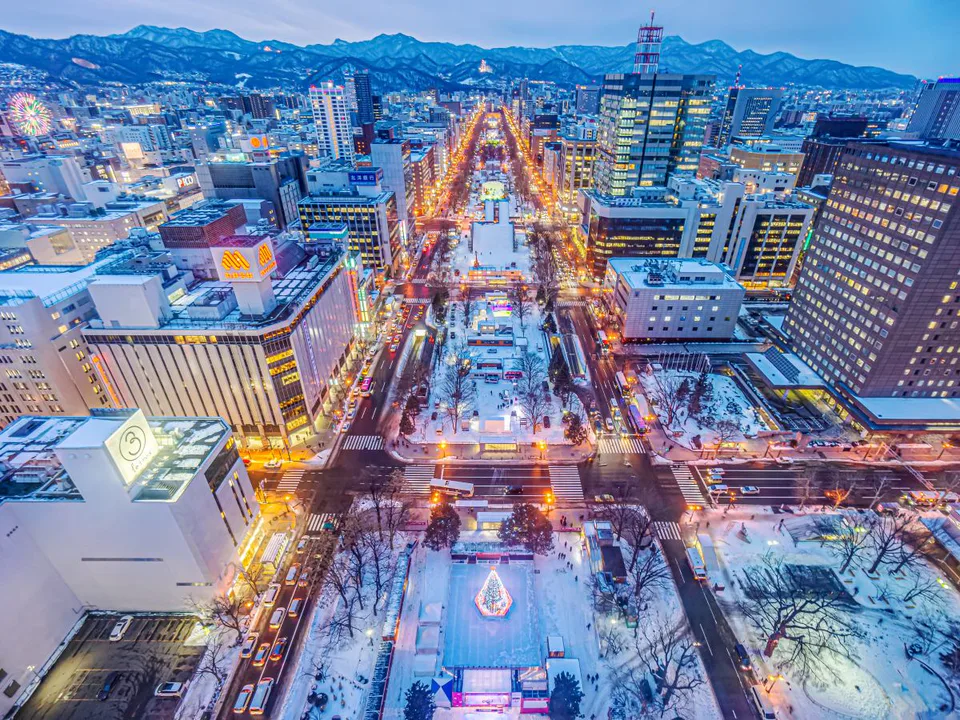
Final verdict: count the journeys you repeat, then inspect the final winter walk
Choose Odori by default for a three- or four-night first Sapporo stay with mixed city sightseeing. It is the most balanced base when no single route dominates.
Choose Sapporo Station when JR and luggage keep reappearing: a one- or two-night stop, airport rail at both ends, Otaru/Asahikawa/Furano rail days, an early onward train or a long-haul arrival with large cases.
Choose Susukino only when late evenings repeat enough to justify it. One dinner is not a base strategy. Choose Nakajima Park only when a specific hotel, price or quieter setting earns the extra movement.
The red-team condition is the exact hotel route. In winter, a supposedly ideal area can lose if the final outdoor walk is awkward, the useful exit lacks an elevator or you will drag luggage over snow twice. Once the area logic is clear, compare the actual station exit → underground passage → hotel path before paying.
Where to Stay in Kyoto for Autumn Leaves: Kyoto Station, Kawaramachi, Gion or Osaka?
Sapporo Shopping Hotels: Stay Where You Can Drop Your Bags, Not Just Where the Shops Are
Sapporo vs Chitose for the Last Night: Where to Stay in Hokkaido
Sources
JR Hokkaido — New Chitose Airport / Sapporo Airport train
Visit Sapporo — Chi-Ka-Ho underground walkway
Visit Sapporo — central Sapporo walking distances
Visit Sapporo — subway and city transport
Rail operations, fares, station exits and hotel access can change. Recheck the exact hotel route and current transport information for your travel date.