
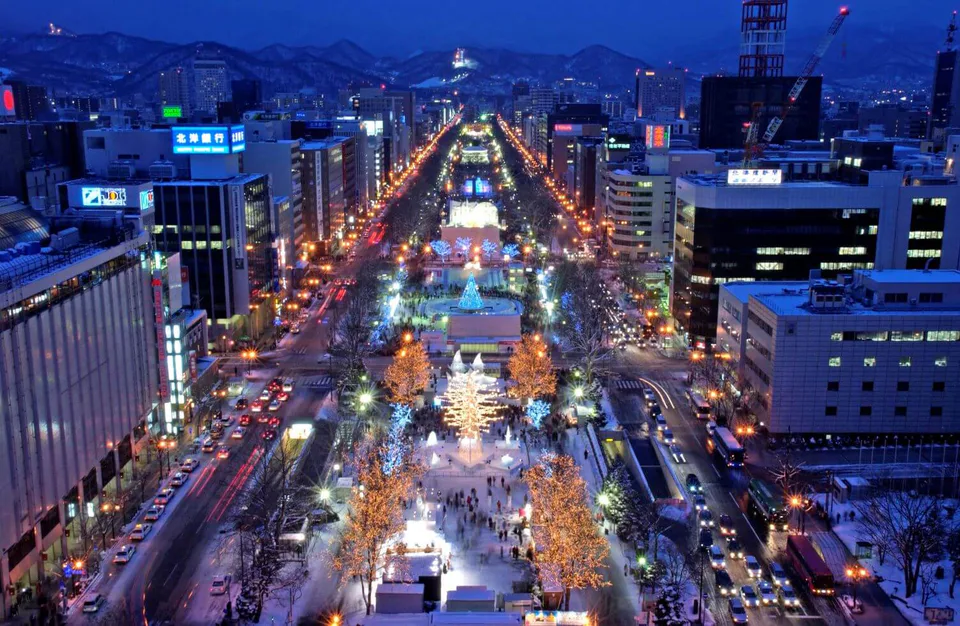
For the 2027 Sapporo Snow Festival, choose Odori when you expect to visit the main snow-sculpture site more than once and want the hotel to function as a warm-up/reset point between daylight and illuminated visits. Choose Susukino when the ice-sculpture site, late dinner and nightlife form one continuous evening. Choose Sapporo Station when two or more early JR mornings matter more than festival proximity.
The important correction is that “stay in Odori” is still too broad. The 2027 festival is confirmed for February 4–11, with the Odori site spanning West 1-chome to West 11-chome. The current official outline places the five large snow sculptures at 4-, 5-, 7-, 8- and 10-chome. If those are your priorities, a hotel beside 1-chome and a hotel beside 8-chome are not equivalent winter bases.
↔ Scroll table left or right
Your festival pattern | Start with | What the hotel is buying | Main trap |
Daylight + night visits to the Odori snow sculptures | Odori | A warm room close enough to turn one long outdoor session into two shorter visits | Booking “Odori” without checking which chome you are actually beside |
Ice sculptures + late dinner / bars most nights | Susukino | The festival evening ends near the hotel instead of with another cold transfer | Paying the nightlife premium when you normally return early |
Festival + two or three JR day trips | Sapporo Station | Repeated platform access for Otaru/Asahikawa/airport-type days | Overvaluing one festival evening relative to several hard departures |
Snow Festival + Otaru Snow Light Path on Feb 6–11 | Sapporo Station gains weight | The events overlap for six evenings, and Otaru’s candle-lighting runs until 21:00 | Moving the whole stay to the station for one Otaru evening when Odori is still visited repeatedly |
One festival evening inside a longer Sapporo stay | Keep the base that fits the rest of the itinerary | A one-stop subway difference is cheaper than moving hotels | Letting event-week hotel marketing rewrite the whole trip |
Tsudome is a major family priority | Still choose the central base first | Tsudome is a separate excursion from all three central hotel areas | Choosing a central hotel around a previous year’s Tsudome access plan |
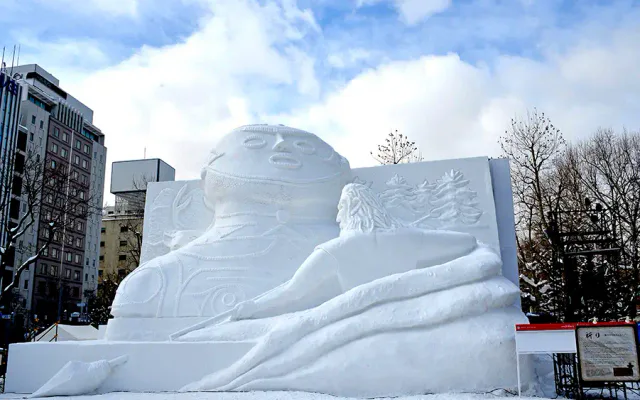
The hotel premium should buy repeat access, not the phrase “Snow Festival hotel”
The 2027 festival runs for eight days, but most travellers will not spend one uninterrupted day outside in Odori Park. The useful value of an Odori hotel is that it can divide the festival into separate high-value windows.
A common strong sequence is:
Daylight: see sculpture detail while visibility is good.
Warm-up: return indoors, change gloves/socks, rest children or older travellers, charge devices and eat.
After dark: return for illumination without rebuilding the whole transport chain.
Sapporo’s official tourism site currently states that the Odori snow sculptures are illuminated from sunset until 22:00. That makes the same sculpture corridor a different visual product after dark.
This is why I would pay an Odori premium only when the hotel turns one difficult winter outing into two or more easier visits. If you will see Odori once for two hours and spend the rest of the trip elsewhere, the location premium has much less work to do.
Odori is 1–11 chome: choose the block you will revisit
The official 2027 outline currently places major large-snow-sculpture installations at 4-, 5-, 7-, 8- and 10-chome, while other blocks hold winter attractions, smaller sculptures and the Sapporo International Art Festival component.
That creates a second-level hotel decision:
Near 1–3 chome: useful for the eastern end and TV Tower side, but not automatically closest to the large-sculpture concentration farther west.
Near 4–8 chome: stronger when the large sculptures and repeated central festival walks are the priority.
Near 9–11 chome: can work well for the western sculptures and international competition side, but may be less convenient for a Susukino-heavy evening.
This is ValueNavi planning analysis based on the currently announced 2027 site structure. The detailed sculpture content and sponsor programming will continue to be updated. Do not book a specific room because you expect one named sculpture to be outside the window months in advance.
Susukino is a one-stop alternative, not a remote second festival city
Subway Odori to Susukino is only about one minute / 0.6 km on Sapporo’s Namboku Line. The wider Sapporo–Susukino central corridor is also connected by underground passages, although the final hotel and festival-site walking still reaches the surface.
That short distance is why Susukino can be the better hotel even when Odori is the larger festival site. If your pattern is:
Odori daylight → dinner → Susukino ice sculptures → late bar / ramen → hotel,
then Susukino protects the tiring end of the day. You accept a short move to Odori earlier in exchange for eliminating the late-night return.
The logic collapses when you do not actually stay out late. If dinner ends at 19:30 and nightlife is not part of the trip, Susukino’s main premium may be unused.

Use a cold-reset count instead of a walking-distance ranking
In February, five extra minutes outside can have very different value depending on the group, wind and what you are carrying. A family with a stroller, an older parent or a photographer with batteries and gloves may value a nearby warm hotel far more than two adults who are comfortable staying outside for hours.
Count the number of times you realistically expect to use the hotel during festival hours:
before a daylight visit;
midday warm-up;
pre-dinner clothing reset;
before/after illumination;
after Susukino late-night food.
If the answer is zero or one, do not pay heavily for festival adjacency. If the answer is three or four across the stay, location is functioning like a real amenity rather than a map label.
Sapporo Station can still win the festival week
The Snow Festival does not make JR Sapporo Station irrelevant. If the trip includes Otaru Snow Light Path, Asahikawa, skiing or another rail-led day, Sapporo Station may be the hardest daily constraint.
The correct comparison is repetition. Two or three fixed JR mornings can matter more than one or two Odori evenings because the train departure cannot move. Festival visits are easier to shift within the day.
If that is your trip, use Sapporo Station vs Susukino for the general base decision, then treat Snow Festival access as one layer rather than the whole hotel strategy.
For a short one- or two-night festival-only stay, Odori usually regains the advantage because arrival, festival access and repeated site visits occupy a larger share of the trip.
The 2027 Otaru Snow Light Path overlap can change the base
The 2027 Sapporo Snow Festival runs February 4–11. The official Otaru Snow Light Path schedule currently runs February 6–13, with candle lighting from 17:00 to 21:00. That creates a six-evening overlap from February 6 through 11.
This matters because an Otaru trip during the overlap is no longer a normal daytime JR excursion. If you stay through the illumination, the return to Sapporo happens after a winter night event. A hotel beside JR Sapporo Station therefore gains more value than it would on a standard Otaru day because the most tiring part of the excursion ends at the same transport hub as the hotel.
Do not overcorrect. One Otaru evening inside a four- or five-night Snow Festival stay is still only one station-heavy return. If you plan repeated daylight and illuminated visits to Odori on the other nights, moving the whole Sapporo base to the station can simply exchange one easy Otaru return for several extra Station–Odori movements.
Use a simple count: one Otaru night versus how many separate Odori returns? If Otaru is one fixed night and Odori is revisited three or four times, Odori can still win. If Otaru is paired with another JR day or an airport-heavy morning, Sapporo Station becomes much stronger.
There is also a third answer. If the reason for going to Otaru is specifically the candle-lit evening plus the quieter city after day-trippers leave, consider one Otaru overnight instead of forcing a late return to Sapporo. That hotel move is justified only when it buys both the night atmosphere and the following morning; it is not justified merely to save one train ride.
Exact 2027 evening JR schedules should be checked when the event-period timetable is published. Do not build the hotel decision around an assumed last train months in advance.
Tsudome should not decide your central hotel
The 2027 festival is confirmed across Odori, Susukino and Tsudome. Tsudome is geographically separate and is the snow-play/family activity site rather than a continuation of the central walking corridor.
The detailed 2027 transport and activity plan will continue to be updated. Choose Odori, Susukino or Sapporo Station based on the repeated central movements first. Then solve Tsudome as a dedicated excursion once the official access plan is published.
The failure mode is booking a central hotel because it was convenient for a previous year’s shuttle or bus pattern, then discovering the 2027 routing has changed.
Do not split Odori and Susukino
The two sites are too close to justify another checkout. The location change is about one subway stop; the hotel move costs packing, luggage handling, check-in timing and lost room access.
A split only makes sense when the destination changes substantially—to a ski resort, Otaru overnight, Jozankei, Noboribetsu or another Hokkaido base. Moving from Odori to Susukino solely to “experience both festival areas” is a textbook case of spending more logistics to save almost no geography.
Three booking scenarios
Two-night Snow Festival city break
Choose Odori, preferably after checking the exact chome. You can use the hotel as a reset between daylight and illuminated visits. The trip is too short for JR convenience to dominate unless an airport/rail schedule is unusually tight.
Four nights, Otaru Snow Light Path + festival + normal dinner hours
Odori or Sapporo Station. During the February 6–11 overlap, Station gains weight because the Otaru excursion returns after the 17:00–21:00 illumination rather than after a normal daytime visit. Odori still wins when you expect several separate snow-sculpture visits and only one Otaru evening.
Four nights, festival evenings + restaurants/bars every night
Susukino. The short subway to Odori is easier to pay in daylight than the cold return after three late nights.
Final verdict
Odori is the best 2027 Snow Festival default when you will revisit the main site and use the hotel as a warm reset point. Susukino wins when festival nights continue into late food and nightlife. Sapporo Station wins when hard JR departures repeat more often than festival-site returns—and it gains extra weight from February 6–11 if Otaru Snow Light Path is a fixed evening plan.
Most importantly, do not stop at the district name. The 2027 Odori site spans 1–11 chome, and the currently announced large-sculpture blocks are not evenly distributed. A hotel that is technically “at Odori” can still put you a long winter walk from the part of the festival you plan to revisit.
Where to Stay for Tokushima Awa Odori: Tokushima, Naruto or Takamatsu
Where to Stay in Osaka With Parents: Cut Transfers Before You Pay for More Luxury
Where to Stay in Furano: Furano Station, Nakafurano, Asahikawa or Sapporo?
References
Sapporo Snow Festival Executive Committee — 2027 festival outline and Odori block plan · Visit Sapporo — 2027 dates, venue geography and illumination guidance · Otaru Snow Light Path — 2027 dates and candle-lighting hours · Sapporo City Transportation Bureau — central subway travel times/distances. Checked August 25, 2026. The detailed 2027 sculpture lineup, Tsudome access and event-period JR schedules are still being updated; recheck official sources before travel.