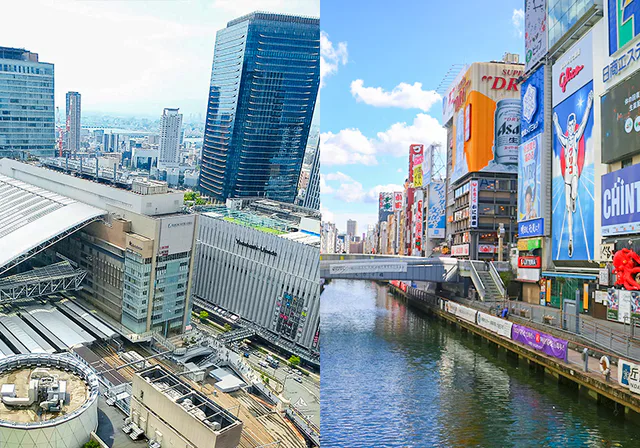
Choose Namba when the part of Osaka you will repeat is the night: Dotonbori, Hozenji, Shinsaibashi, late food and a direct Nankai route to Kansai Airport. Choose Umeda when the repeated part is the morning: Kyoto, Kobe, Himeji, Shin-Osaka or other rail-heavy Kansai days. One airport transfer should not decide four hotel nights, and one Kyoto day should not erase three Minami evenings. Count the journeys you pay more than once.
The second rule is just as important: “Namba” and “Umeda” are station districts, not single platforms. Nankai Namba, Osaka-Namba, JR Namba and Osaka Metro Namba solve different routes. Umeda combines JR Osaka, Hankyu, Hanshin and three Metro station names. The better district can still contain the wrong hotel if the final underground walk gives back the advantage you thought you bought.
↔ Scroll table left or right
Your actual pattern | Start with | Why | What can reverse it |
3+ nights ending in Dotonbori / Shinsaibashi / Minami | Namba | The tired final journey disappears repeatedly | Most mornings are long regional departures from Osaka/Umeda |
2+ Kyoto / Kobe / Himeji rail days | Umeda | The hub advantage is used morning and evening | You are staying far from the actual railway you need inside the Umeda complex |
KIX + large luggage, hotel genuinely beside Nankai Namba | Namba | Rapi:t reaches Nankai Namba in as little as 34 minutes | The airport is only one edge and the other days strongly favour Umeda |
Nara is a major day and Minami evenings already matter | Namba | Kintetsu fits the same district | Nara is the only south-side day in a rail-heavy Kansai stay |
One normal USJ day | Neither automatically | Choose by the rest of the stay | Two park days or a highly time-sensitive event can change the accommodation class |
Namba and Umeda are genuinely tied | Let the exact room and final 300–800 m decide | A better bed/room/exit can outweigh a small city-level transport edge | One district actually owns most mornings or nights once you map them |
Use a morning-versus-evening ledger before comparing hotel prices
The Namba–Umeda decision gets easier when every day contributes two votes: one for the first hard movement of the morning and one for the final meaningful movement at night.
As a ValueNavi planning heuristic—not an official scoring system—I would count:
+1 Namba for each evening you genuinely expect to end around Dotonbori, Shinsaibashi, Hozenji or Namba after dinner.
+1 Namba for a luggage-heavy KIX edge when the hotel is genuinely convenient to Nankai Namba.
+1 Umeda for each morning whose useful first train departs from JR Osaka, Hankyu Osaka-Umeda or another north-Osaka hub.
+1 Umeda for each late regional return that would otherwise require another Osaka crossing before reaching the room.
Do not give a normal daytime subway ride the same weight as a 22:30 return with shopping bags or a 07:00 reserved departure. The ledger is about friction, not distance.
If Namba wins four meaningful edges to Umeda’s two, stay south unless the hotel itself is much worse. If Umeda wins five to two, stop paying a Minami premium because Dotonbori is famous. If the result is close, room quality can legitimately break the tie.
Namba wins when the hotel participates in the night
Namba is the stronger first-time base when Osaka itself is a major reason for the stay. Dotonbori, Hozenji, Shinsaibashi and Minami dining create a pattern where the hotel can be reused after sightseeing: drop bags, rest, change clothes, go out again, then walk back after dinner.
That return-to-room value is easy to underestimate. A hotel is not only where you sleep. On a three- or four-night city stay, the ability to reset before dinner can be worth more than saving ten minutes on a day trip you take once.
Namba also has coherent KIX access. Nankai currently gives a minimum 34-minute run between Kansai Airport and Nankai Namba on the reserved-seat Rapi:t; the Airport Express takes about 45 minutes and does not require the limited-express ticket. That is a real advantage for a luggage-heavy arrival or departure.
But airport convenience is a boundary-day benefit. If you stay five nights, KIX usually affects at most two edges while your ordinary Osaka evenings happen four or five times. Use the airport as a high-weight tiebreaker, not as permission to ignore the middle of the stay.
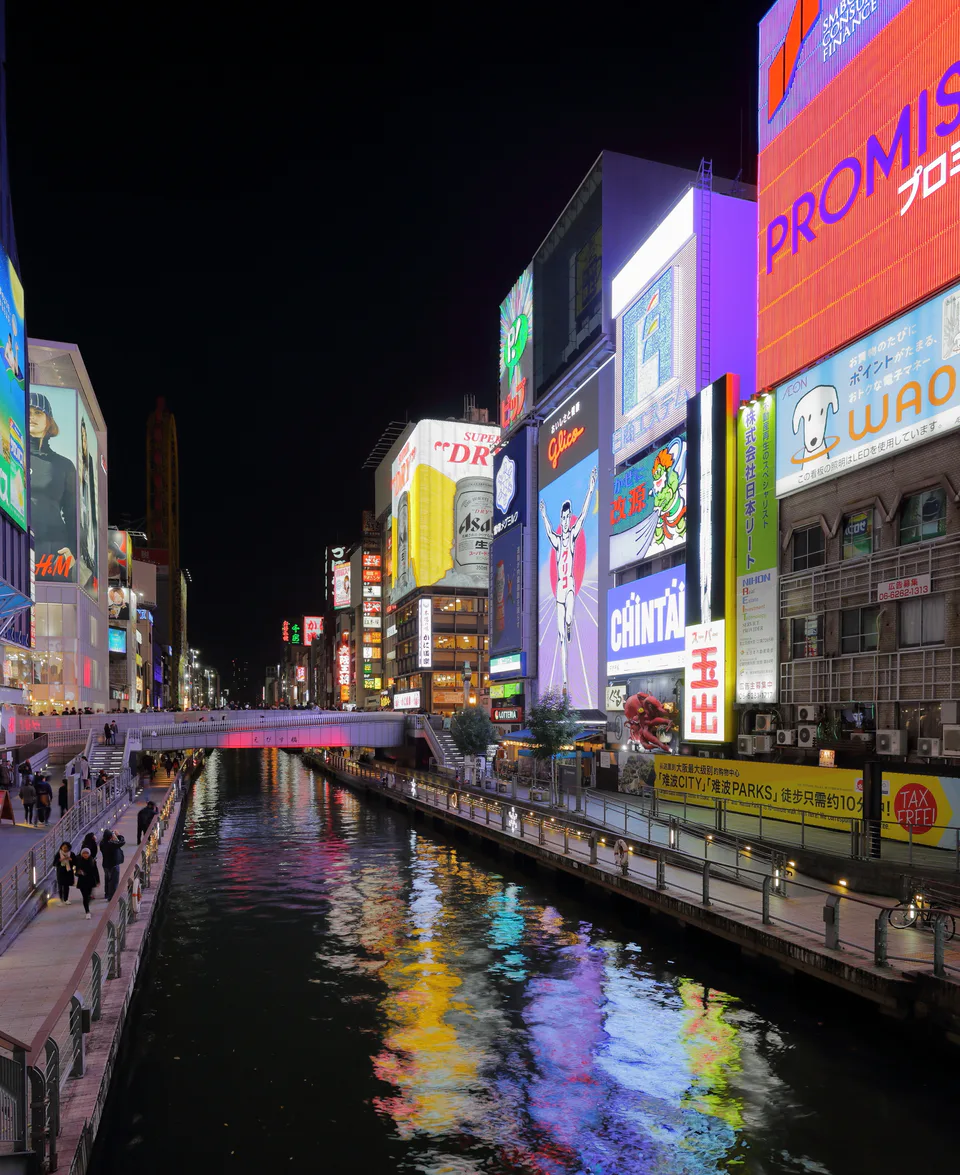
The Namba trap: the correct district can contain the wrong station
Osaka Metro’s current Namba station information lists transfers to the Midosuji, Yotsubashi and Sennichimae lines plus JR, Hanshin, Kintetsu and Nankai. That is excellent connectivity, but it is also evidence that “Namba Station” is not one small room underground.
If KIX is the reason Namba wins, the hotel-to-Nankai Namba route matters. If Nara is the reason, the hotel-to-Osaka-Namba / Kintetsu route matters. If the itinerary uses JR, a property near JR Namba may suddenly look better than one beside Nankai even though both advertise “Namba.”
This changes the booking test. Compare:
room door → lift → correct station entrance → correct operator platform
not:
hotel pin → word “Namba” on the map.
With two 28-inch suitcases or a stroller, an indoor 700-metre route with multiple level changes can cost more energy than a short train-time difference. Once Namba wins at area level, the exact operator should choose the hotel subarea.
Umeda wins when Osaka is functioning as a Kansai launchpad
Umeda earns its premium through repetition in the opposite direction. Osaka Metro’s current Umeda page lists transfers to JR, Hankyu, Hanshin, Higashi-Umeda on the Tanimachi Line and Nishi-Umeda on the Yotsubashi Line. The district therefore works as a collection of rail gateways rather than one attraction area.
If two or three full days start toward Kyoto, Kobe, Himeji or another northern/western corridor, the hotel’s location is used twice each time: morning departure and tired return. A small hub advantage repeated six times can beat a larger Namba nightlife advantage used once.
Umeda also has a real evening ecosystem—Osaka Station City, department stores, Grand Front, Kitashinchi and extensive dining—so choosing it is not a decision to “give up nightlife.” The trade-off is more specific: the street-level Minami experience is no longer your walk-home default.
If you want Dotonbori every night, that matters. If you want one Dotonbori evening and three Kansai rail days, it matters much less.
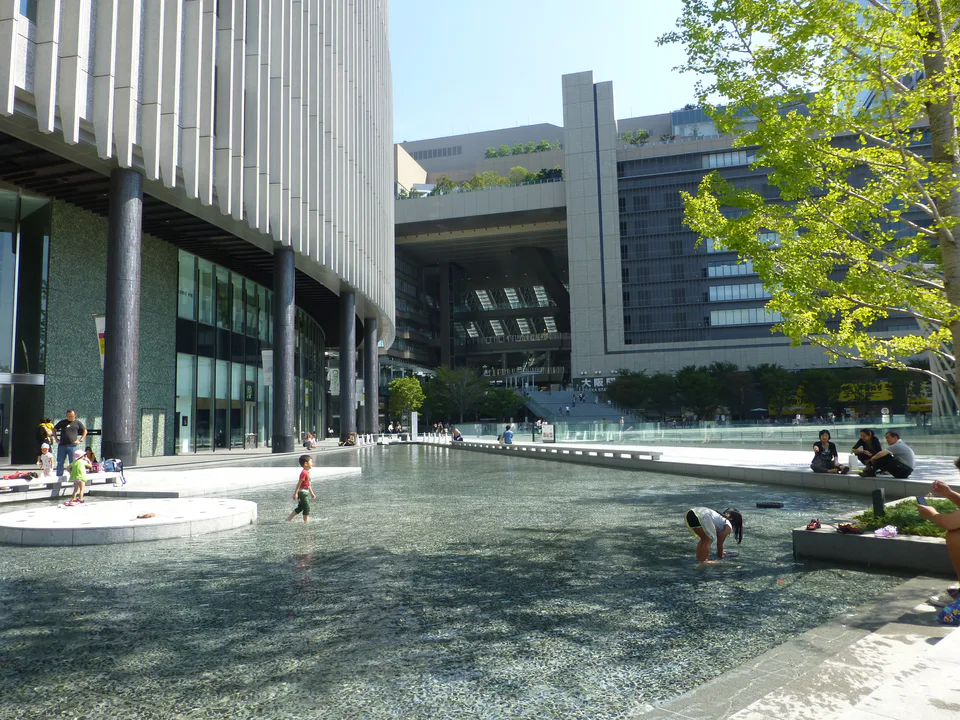
The Umeda trap: “beside Osaka Station” can still mean a long wrong-side walk
Umeda has the same naming problem as Namba. JR Osaka Station, Hankyu Osaka-Umeda, Hanshin Osaka-Umeda, Metro Umeda, Higashi-Umeda and Nishi-Umeda occupy one huge district rather than one ticket hall.
A hotel excellent for Hankyu Kyoto trains can be less convenient for a JR day, and a hotel on the west side can add underground walking to an east-side departure. Osaka Metro publishes detailed exit and barrier-free route maps for exactly this reason.
If older parents, a stroller or large suitcases are part of the trip, check which side of the complex the hotel is on before paying a premium for the word “Umeda.” The area-level verdict only survives when the final walk uses the railway you actually need.
Once Umeda wins, compare actual hotels with the Osaka Station hotel comparison rather than treating all station hotels as equivalent.
Nara can move the score toward Namba, but should rarely decide four nights alone
Namba’s Kintetsu access makes it a very clean origin for the classic Nara Park day. That matters most when Nara is already one of several south-side reasons to stay in Namba.
The mistake is letting one direct train decide a hotel that will be used every night. If the same trip contains two Kyoto days and a Himeji day, Umeda may still be the stronger total base even though Namba wins Nara.
Use Nara from Kyoto or Osaka to compare the full hotel-door-to-Nara chain. A one-day excursion should normally be a tiebreaker, not a veto on the rest of the accommodation plan.
KIX should choose the final night only when it solves more than the airport
A move to Namba before a KIX departure becomes much more rational when the final night also has a Minami job. For example:
Umeda/Kyoto day → move to Namba → Dotonbori dinner → sleep → direct Nankai KIX train.
One hotel move now improves the evening and the departure. That is different from moving only to shorten the airport rail time.
If your flight is mid-afternoon and the Umeda hotel works well for the previous three days, keep the room and travel to the airport once. The goal is not to minimize the final train at the cost of maximizing the final checkout.
One USJ day should not decide Namba vs Umeda
USJ is a specialist travel day. For one normal park day inside a three- to five-night Osaka stay, choose Namba or Umeda from the other days and accept one dedicated park commute.
The accommodation class changes when USJ consumes both edges of multiple days: two park days, a very aggressive opening strategy, or a late event where the return becomes unusually burdensome. At that point, compare Universal City directly rather than forcing Namba and Umeda to solve a park-first trip.
Use Universal City vs Umeda vs Namba when USJ is strong enough to control the hotel.
Two nights, four nights and six nights create different priorities
Two nights: protect the hardest edge
If you arrive from KIX with luggage, have one Osaka evening and leave the next morning, Namba can win very quickly when the hotel is genuinely near Nankai. If you arrive by Shinkansen, take a Kyoto day and continue west, Umeda may be the cleaner short-stay answer.
Short stays magnify arrival and departure because those movements occupy a larger share of the trip.
Four nights: repetition should decide
At four nights, one airport ride or one day trip should stop dominating. Count the actual morning departures and evening endpoints. Three Minami nights + one Nara day strongly favours Namba. Two Kyoto/Kobe days + one Himeji day strongly favours Umeda.
Six nights: room practicality gains weight
After five or six nights, laundry, floor space, bed layout and the ability to open luggage can overtake a small location difference. A 28 m² room five minutes farther away can be a better purchase than a 16 m² room attached to the “winning” station if you are living there for almost a week.
Families and older travellers should penalize transfers more than minutes
A fit couple with day bags can recover from choosing the wrong exit. A stroller, sleeping child or older parent changes the cost of every wrong turn and staircase.
For these groups, compare in this order:
number of transfers on repeated journeys;
lift / escalator route at the station actually used;
final covered or uncovered walk;
room size and bathroom layout;
then headline train time.
This is why a supposedly “slower” hotel can still be the better booking. Removing one transfer is often more valuable than saving five minutes.
Do not split Namba and Umeda on a normal 3–4 night stay
Namba and Umeda are linked directly by the Midosuji Line. For a normal short Osaka stay, checkout, packing, luggage movement and another check-in cost more than a few local rides.
I would only split when the second hotel has a different operational job, such as:
a final Namba night that also gives you a Minami evening and KIX departure;
a Universal City stay for two serious USJ days;
a final Shin-Osaka night before a genuinely early Shinkansen;
a family room or accessibility configuration unavailable in the main base.
“Experience both neighbourhoods” is not enough. You can visit both without moving your suitcase.
When the score is tied, buy the room—not the district label
Once Namba and Umeda are within one ordinary Metro ride of each other in your real itinerary, compare the hotel product. Hold the same dates, taxes and cancellation terms, then look at:
usable floor area;
actual bed count and width;
separate bath/toilet if that matters to the group;
laundry for a longer stay;
luggage storage before check-in / after checkout;
the lift route to the correct railway.
A materially better room can overturn a five-minute area advantage. It should not overturn three repeated hard departures.
Final verdict: Namba for repeated Osaka nights, Umeda for repeated Kansai mornings
Choose Namba when Osaka itself is the evening destination and the hotel will repeatedly participate in Dotonbori, Shinsaibashi, Nara and/or KIX-side movement. Choose Umeda when the room is functioning as a launchpad for several Kyoto, Kobe, Himeji or JR/Hankyu days.
Then inspect the sub-station. Nankai Namba is the airport product; Osaka-Namba is the Kintetsu/Hanshin product; JR Namba is another location. Umeda has the same internal geography problem across JR, Hankyu, Hanshin and Metro. A district recommendation is only valid when the hotel sits on the useful side of that district.
My final booking order is: count repeated mornings and evenings → identify the exact railway → inspect the last 300–800 metres → let room quality break a close tie. Do that and the Namba-vs-Umeda question becomes much less about reputation and much more about which hotel actually removes work from your trip.
Official references
Nankai Electric Railway — KIX/Namba Rapi:t and Airport Express travel times · Osaka Metro — Namba station transfers and facilities · Osaka Metro — Umeda station transfers and facilities. Rechecked August 25, 2026. Train times, station works and hotel access can change; verify the exact travel date and hotel-to-platform route before booking.
Sapporo Snow Festival: Odori vs Susukino — Where Should You Stay?
Niseko vs Furano vs Rusutsu: Which Hokkaido Ski Resort Should You Choose?
Fukushima Waraji Festival 2026: Aug 7, 8 or 9? Which Day Should You Choose?