
For a first Hokkaido ski holiday, choose Niseko when the group needs the widest resort ecosystem, Furano when skiing and central-Hokkaido routing matter more than nightlife, and Rusutsu when the holiday should become simple after check-in. The biggest mistake is comparing trail counts and one-day lift prices before comparing the first morning: hotel → breakfast → rental → lesson or first lift. A resort with more terrain can still be the worse trip if your accommodation sits on the wrong side of the village or the non-skiers in the group have nothing useful to do.
There is also an important 2026–27 planning asymmetry. Niseko United has already published its 2026–27 All Mountain operating dates and lift-pass prices. Furano has announced a tentative November 28, 2026 opening, but its main public winter pages still largely display 2025–26 operating and price information. Rusutsu is already selling 2026–27 accommodation, but its lift-ticket page explicitly says the prices currently shown are from last year. Do not manufacture a three-resort price table from unequal-season data.
↔ Scroll table left or right
Your real trip | Start with | Why | What can reverse it |
Mixed group: strong skiers + beginners + non-skiers | Niseko | Four ski areas plus the deepest international lodging, dining and service ecosystem | The group dislikes village complexity or the premium is much higher than a simpler resort |
Ski-first couple / small group + Biei or Asahikawa route | Furano | Two-zone mountain, ski-in/ski-out option at Shin Furano Prince and better central-Hokkaido geography | Non-ski nightlife, broad English-language services or village variety are major priorities |
Family that wants minimal decisions after check-in | Rusutsu | Three mountains, hotels, onsen, indoor pool, nursery and indoor family facilities in one resort system | The group wants a large village restaurant/nightlife ecosystem or a wider Hokkaido sightseeing route |
Only 1–2 ski days inside a Sapporo trip | Reconsider all three as destination stays | The hotel move can cost more than the resort stay saves | A specific ski-in/ski-out morning or family setup is worth moving for |
Late November / very early December | Book flexibly, not by marketing opening date | All three depend on snow and operating conditions; Rusutsu explicitly warns that slope opening can be postponed | Live snow/open-lift status becomes the deciding fact close to travel |
Niseko wins when the holiday has to satisfy different people at the same time
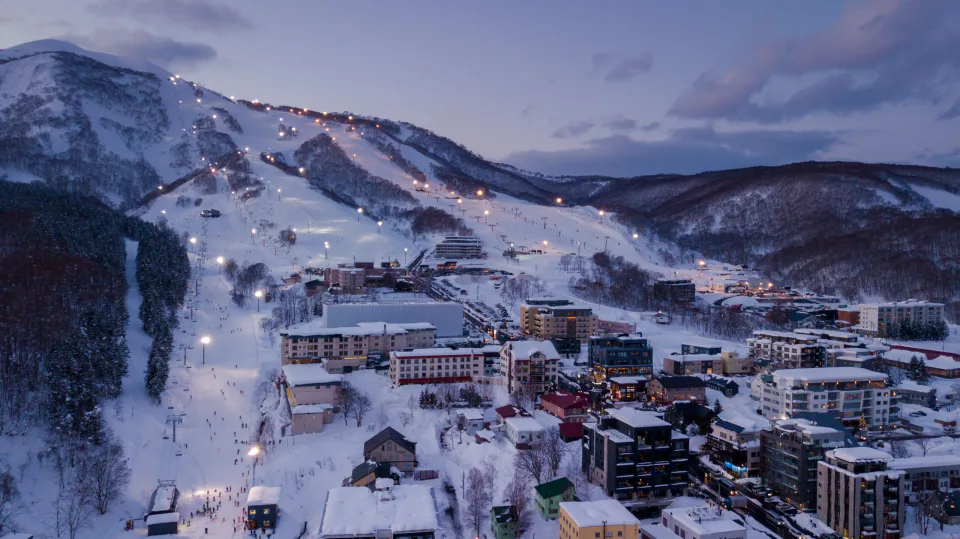
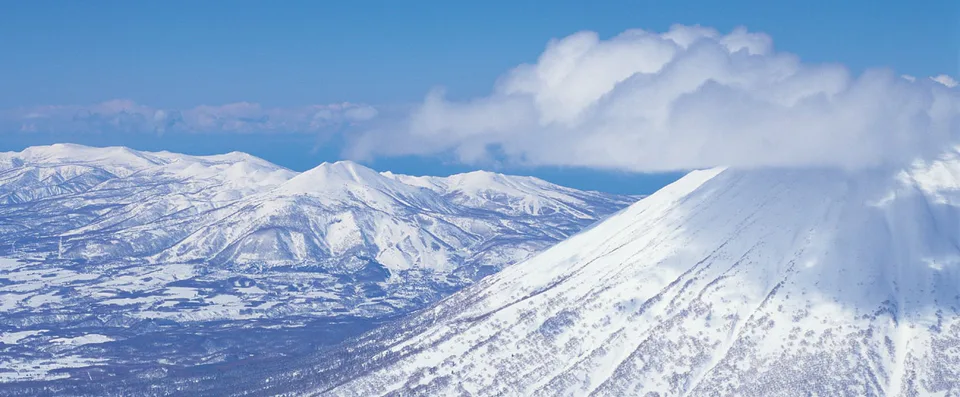
Niseko United connects Annupuri, Niseko Village, Grand Hirafu and HANAZONO. For 2026–27, all four are scheduled to open on November 28, 2026, although their planned closing dates differ. Night skiing is scheduled from December 12, 2026 to March 22, 2027, subject to operating conditions.
The advantage is not simply “more terrain.” It is optionality. A strong skier can use the All Mountain system, a beginner can take lessons and repeat a familiar base area, and a non-skier can still have restaurants, cafés, hotel facilities and village time. That makes Niseko the safest default when one resort has to satisfy people with different ski ability and different reasons for travelling.
The trade-off is that Niseko asks more decisions from you before the first lift. Which village? Which base lift? Which pass? Where is rental pickup? Does the lesson meet at the same resort where you sleep? Is dinner walkable, or does it require a shuttle? Niseko’s ecosystem is valuable only if you place the hotel inside the part of the ecosystem your group will actually use.
If Niseko wins, the next decision is Hirafu vs HANAZONO vs Niseko Village vs Annupuri. If you are paying specifically for ski-to-door convenience, use the Niseko ski-in/ski-out hotel comparison before assuming every property marketed as “Niseko” produces the same first morning.
The 2026–27 Niseko lift price is known — and that clarity is useful even if you do not choose Niseko
Niseko United currently publishes the 2026–27 All Mountain adult one-day pass at JPY 13,500 in peak season, JPY 12,600 in regular season and JPY 8,800 in the early/spring periods. A peak three-day adult pass is JPY 39,500. The online system says day passes are discounted by about 5% on average, while the first online key card costs JPY 500 and online purchases are generally non-refundable and non-cancellable after purchase.
That does not prove Niseko is “expensive compared with Furano and Rusutsu for 2026–27,” because the other two resorts have not yet published equivalent current-season public ticket data in the same way. It does give you a real budgeting anchor. If a Niseko lodging quote already strains the budget before passes, lessons and rental are added, you know the resort ecosystem is asking a meaningful premium.
There is another small operational detail worth knowing: Niseko says an online lift pass activates when you first pass a lift gate or use it on the Niseko United Shuttle. If you are holding a time-based product, understand what action starts the clock rather than treating transport and skiing as separate systems.
Furano wins when you want the mountain to be easier to understand than the holiday around it
Furano Ski Resort consists of Furano Zone and Kitanomine Zone with 28 trails. The official resort page currently says the 2026–27 season is tentatively scheduled to open on November 28, 2026. Shin Furano Prince Hotel is directly connected to Furano Zone, giving one of the cleanest hotel → rental → lift chains in this comparison.
That simplicity is especially valuable for a ski-first couple or small group. You can spend less energy choosing among four resort villages and more energy skiing. Furano also makes more geographic sense when Biei, Asahikawa or a central-Hokkaido road/rail itinerary already surrounds the ski block.
The trade-off is that Furano is not trying to be Niseko. If half the group wants nightlife, a huge international dining market, multiple villages and a broad English-language resort ecosystem, “simpler” can become “too quiet.” The mountain can be the better ski choice while the overall holiday is the worse fit for a mixed party.

Do not quote Furano’s 2025–26 lift price as if it were the 2026–27 answer
This is a useful booking-discipline example. As of August 25, 2026, Furano’s official pages clearly announce the planned November 28 opening for the coming winter, but its visible detailed winter operation and ticket material still carries 2025–26 season information. That means you can compare the mountain structure and route now, but you should not pretend the coming season’s exact lift cost has been fixed publicly on the same basis as Niseko.
If your decision depends on a small pass-price difference, wait for the 2026–27 Furano ticket publication. If the decision is already driven by a central-Hokkaido itinerary, ski-in/ski-out room and simpler mountain layout, the missing price does not stop you from shortlisting refundable accommodation.
If Furano wins, compare Furano Zone vs Kitanomine, then decide whether the trip needs three or four nights. A resort-level winner still needs a base-level decision.
Rusutsu wins when the family wants the hotel and mountain to behave like one system
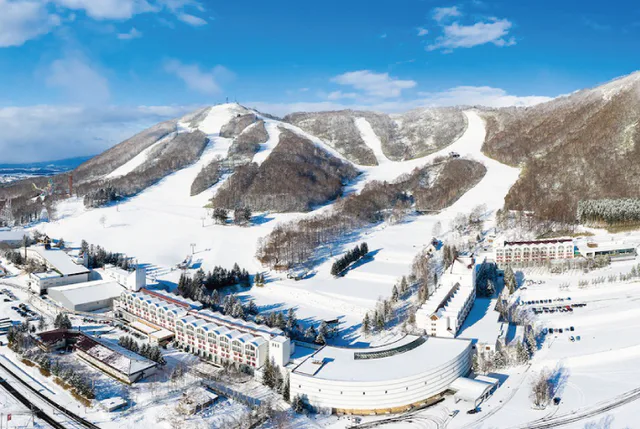
Rusutsu spreads skiing across West Mt, East Mt and Mt Isola, but its strongest family advantage is not the number of mountains. It is the concentration of the holiday inside the resort. Current family facilities include a nursery, indoor wave pool, onsen and indoor entertainment. The indoor wave pool is free for eligible overnight guests and gives the trip a weather-independent non-ski option.
This can be more valuable than a bigger village. A parent can ski while another adult and child remain inside the resort system. Dinner, pool, onsen and sleep do not require a new transport decision. For a three- or four-night family block, that reduction in daily logistics can be worth more than having dozens of restaurants outside the hotel.
The trade-off is obvious: self-contained also means you are choosing the resort as your world for several days. If adults want independent village nightlife, restaurant-hopping or easy sightseeing branches, the same concentration can feel restrictive.
Rusutsu 2026–27 rooms are on sale, but the public lift-price page still says “last year”
Rusutsu has already opened sales for 2026–27 winter accommodation: Rusutsu Resort Hotel & Convention is currently sold for stays from November 28, 2026 to March 30, 2027, and The Westin Rusutsu Resort from December 1, 2026 to March 30, 2027. Some 2026–27 packages include lift tickets.
At the same time, the public winter lift-ticket page explicitly warns that the prices currently published are from last year. That is exactly the sort of mismatch a planning article should preserve instead of silently “updating” with stale numbers.
The current ticket page also explains Rusutsu’s distinctive hour-based product: the 25-hour ticket can be consumed in one-hour increments rather than only consecutive full days. The concept can be valuable for families, bad-weather breaks and late starts, but its currently displayed price belongs to the prior season until Rusutsu publishes the 2026–27 ticket schedule. Use the flexibility concept now; wait for the new price before doing a precise break-even calculation.
The best beginner resort is the one that makes Day 1 boring
Beginner comparisons often over-weight trail count. Day 1 is more fragile than Day 4. You are collecting rental gear, finding the lesson desk, working out lockers, meeting an instructor and learning where to eat. Every extra base-village decision increases the chance that the first morning disappears into admin.
Use this test for the exact hotel you are considering:
How long from breakfast to rental pickup?
Can rental gear be collected the previous evening?
Where does the lesson meet?
Can a non-skier reach that meeting point without buying unnecessary transport?
After the lesson, can the beginner repeat familiar terrain without crossing the resort?
Niseko has the deepest service ecosystem but can create the most base-area choices. Furano can make the chain very simple when you stay slope-side. Rusutsu can make the whole family day self-contained. For a beginner, operational simplicity is terrain.
Non-skiers can reverse the ski-first answer
Imagine two strong skiers travelling with one adult who does not ski and a child. Furano may win the pure ski-and-route comparison, yet Rusutsu can win the holiday because the non-ski hours are easier to fill. Niseko can also win because the village and hotel ecosystem provides more independent choices.
This is why the correct scorecard is not “powder / lifts / trail count.” Add a second scorecard for the hours between 09:00 and 16:00 when one member of the party is not on the mountain. The non-skier does not become free just because their lift-pass cost is zero.
If the group contains non-skiers, compare the Hokkaido winter activities without skiing before locking the ski resort.
Route geography should eliminate one resort before you compare hotels
Furano naturally belongs to central-Hokkaido itineraries involving Biei and Asahikawa. Niseko and Rusutsu fit more naturally with western-Hokkaido routes around Sapporo and New Chitose Airport. That does not mean every transfer is simple or direct; seasonal buses still need to be checked. It means the resort should reduce backtracking rather than create another isolated hotel move.
A common over-optimisation is choosing the “best ski resort” and then discovering it costs half a day to enter and another half-day to leave relative to the rest of the trip. For a five- or seven-day Hokkaido itinerary, those transfer half-days can be more expensive than a small difference in snow or lift price.
Use the 5-, 7- or 10-day Hokkaido winter itinerary to see which resort is already on the route. If the trip is car-free, the Hokkaido without a car itinerary is an even stronger filter.
Early season: book the hotel, not the assumption that every lift will open
Niseko’s published November 28 opening dates are explicitly subject to change. Furano calls its November 28 start tentative. Rusutsu is selling November 28 accommodation but explicitly warns on its 2026–27 season-starter packages that slope opening may be postponed because of insufficient snow and that the hotel cannot guarantee it.
If you are travelling in late November or very early December, the correct response is not to guess which resort will “definitely” be open. Use flexible accommodation and transport where possible, watch live lift/snow status close to the trip, and avoid making the entire Hokkaido itinerary depend on one opening-day promise.
Four traveller profiles
First overseas ski trip, couple, both ski
Start with Furano. The two-zone structure and slope-side hotel option can make the learning curve smaller. Reverse to Niseko if après-ski, restaurant range and international resort services are part of the holiday rather than optional extras.
Family with one beginner child and one non-skier
Start with Rusutsu. The self-contained facilities reduce coordination. Reverse to Niseko if the adults want a broader village and more independent dining/lodging choices.
Four adults, different ski abilities, want nightlife
Start with Niseko. The resort ecosystem gives the group more ways to split and regroup. The price and village-location premium become the main red-team questions.
Seven-day Hokkaido route: Asahikawa → Biei → ski → Sapporo
Start with Furano. The route geometry is doing real work. Do not move the whole ski block west purely because Niseko has the stronger international brand.
Final verdict: choose the resort that removes the most repeated friction
Choose Niseko when mixed abilities, restaurants, services and non-ski options need the deepest ecosystem. Accept that you must still solve the correct village and that the 2026–27 All Mountain pass has a clearly published premium.
Choose Furano when skiing comes first, the trip is moving through central Hokkaido and a simpler hotel-to-lift routine is more valuable than resort nightlife. As of August 25, 2026, use the announced 2026–27 opening plan but wait for the fully updated coming-season ticket details before doing exact pass-price comparisons.
Choose Rusutsu when the family wants skiing, childcare, indoor backup and hotel life inside one system. Accommodation is already on sale for 2026–27, but the public lift-ticket page still identifies its current prices as last season’s; do not use them as a false current-season comparison.
If you are trying to put two or three of these resorts into one short Hokkaido trip, the better move is usually to delete a resort. Their value comes from repeating an easy ski morning, not from collecting resort names.
Niseko Private Ski Lessons 2026–27: 3 Hours vs 6 Hours, and Who Should Share?
Best MiraCosta Room: Which View, Balcony or Terrace Should You Book?
References
Niseko United — 2026–27 operating dates and All Mountain prices · Niseko United — online lift-pass rules · Furano Ski Resort — 2026–27 planned opening and mountain structure · Rusutsu — 2026–27 accommodation season · Rusutsu — current lift-ticket publication status · Rusutsu — family winter facilities. Checked August 25, 2026. Opening dates remain snow- and condition-dependent, and Furano/Rusutsu 2026–27 lift prices should be rechecked once their current-season ticket pages are fully published.