
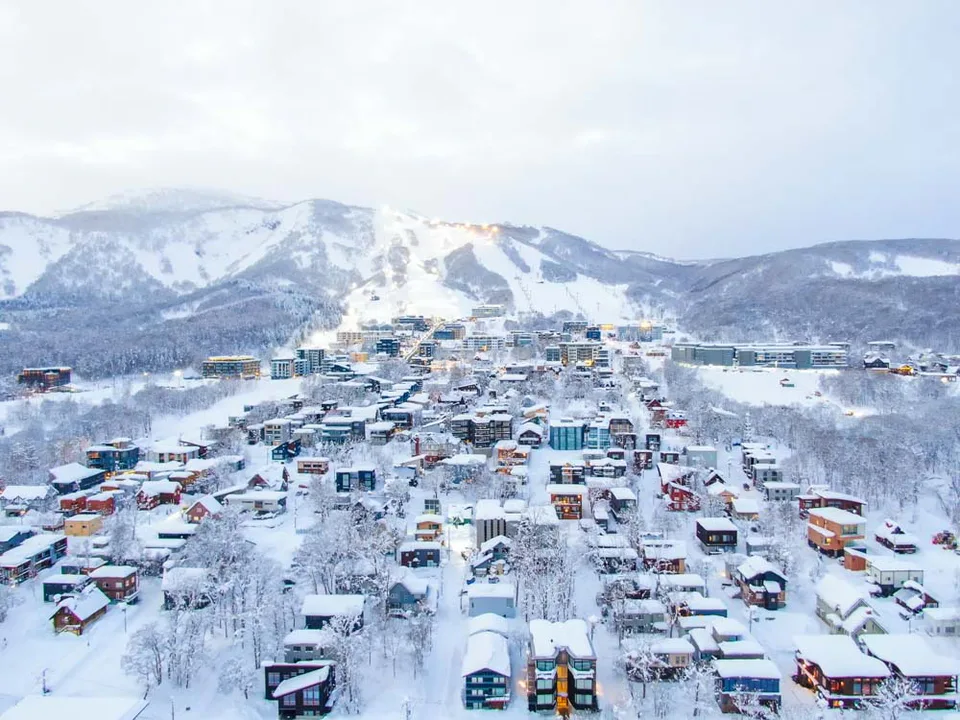
For a first Niseko trip without a car, Central Hirafu remains the safest default when the group wants restaurants, rentals, ski schools and evening choice outside the hotel. But the area decision should not start with nightlife or hotel photos. Start with four harder constraints: your exact ski-season dates, where lessons begin, which airport bus stop serves the hotel, and whether the group wants to leave the resort for dinner.
HANAZONO becomes stronger when children’s lessons and a polished resort routine are the anchor. Niseko Village works when the hotel itself should carry meals and non-ski time. Annupuri is best for a quieter, onsen-oriented stay. Upper Hirafu wins when verified slope access matters more than a flat dinner walk. Lower Hirafu can save money or buy apartment space, but only when its winter uphill return is solved.
↔ Scroll table left or right
Your repeated anchor | Start with | Why | Main veto |
No car + restaurants/bars/groceries outside hotel most nights | Central Hirafu | Best independent evening ecosystem and transport balance | Hotel may still be uphill from lifts; “Hirafu” is not one flat zone |
Verified ski-in/out or shortest Grand Hirafu morning | Upper Hirafu | Reduces the most repeated ski-day movement | Dinner/grocery walks can become the expensive edge |
Children booked into NISS / family resort routine | HANAZONO | Dedicated learning facilities and 2026–27 lessons are centred there | Independent Hirafu evenings require transport |
Slope-side hotel + self-contained meals / non-ski facilities | Niseko Village | The resort hotel can replace daily village movement | Less independent dining/nightlife outside the resort |
Quieter skiing + onsen + slower evenings | Annupuri | Calmer base with an onsen-led accommodation mix | No-car spontaneous dinners and late movement are less forgiving |
Travel after April 11, 2027 | Hirafu or Annupuri | Current 2026–27 published season runs there to May 5 | HANAZONO ends Apr 11; Niseko Village ends Apr 4 under current schedule |
First veto: is your chosen ski area operating on your dates?
Niseko United is marketed as one connected mountain network, but the four resort areas do not currently publish identical 2026–27 operating end dates:
Grand Hirafu: November 28, 2026 – May 5, 2027.
Annupuri: November 28, 2026 – May 5, 2027.
HANAZONO: November 28, 2026 – April 11, 2027.
Niseko Village: November 28, 2026 – April 4, 2027.
Opening days can change with snow and operations, but the published schedule creates a hard planning implication. A late-April skier should not choose a Niseko Village hotel because it looked family-friendly in a January review. The local ski operation is a more important filter than the room.
Night skiing is currently scheduled across the applicable Niseko United period from December 12, 2026 to March 22, 2027. If night skiing is a major reason for paying a slope-side premium, a stay outside that window should be priced differently.
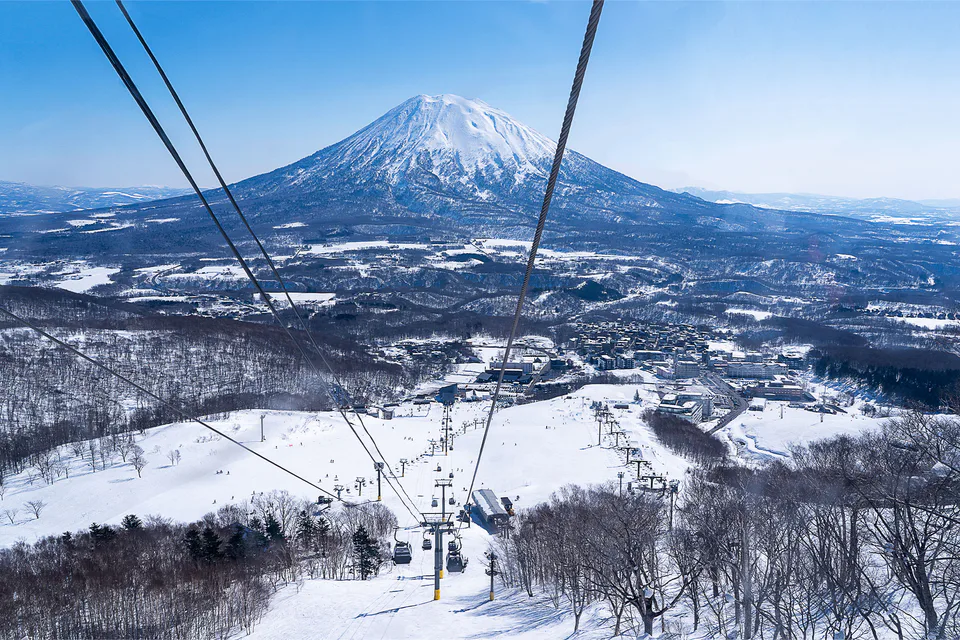
Use the repeated-anchor test instead of asking which area is “best”
A five-night Niseko stay repeats the same movements many times. The area that minimises the most expensive repeated movement is usually the correct base.
Count these anchors:
Morning anchor: which lift, gondola or ski-school meeting point must you reach before the day starts?
Evening anchor: do you eat inside the hotel or walk to independent restaurants?
Non-skier anchor: what does the person who is not skiing do after the skiers leave?
Transport anchor: where does your New Chitose bus actually drop the group with large luggage?
If one area wins three of those four anchors, do not overcomplicate the hotel search. If the result is split, the specific hotel shuttle/ski access matters more than the area label.
Central Hirafu: the no-car default because evenings remain independent
Central Hirafu is the easiest first shortlist for travellers who do not want every meal, rental decision and evening to depend on one resort hotel. Restaurants, bars, apartments, rental shops and services are concentrated here, and Hirafu Welcome Center is a major transport node.
Its advantage is especially strong for mixed groups. If one person stops skiing at 14:00 while others continue, Central Hirafu gives the non-skier more independent choices without arranging a vehicle.
The trade-off is that “Central Hirafu” does not equal ski-in/ski-out. Depending on the exact property, the morning can still include an uphill walk, shuttle or equipment carry. If the trip contains five ski mornings, that repeated movement may justify moving higher even if dinner becomes slightly less convenient.
For a no-car first trip, I would start Central Hirafu unless another area has a specific job that repeats every day.
Upper Hirafu: buy slope access only after verifying the exact ski-room route
Upper Hirafu gets stronger when the trip is ski-first. Hotels such as MUWA NISEKO can reduce the morning journey from room to Grand Hirafu terrain. But do not pay a “ski-in/ski-out” premium from a map pin alone.
Verify:
where the ski room or equipment storage sits;
which door actually reaches snow;
whether the return run is open to your ability level and on your dates;
what happens if wind or lift closure changes the normal route.
The premium is worth more for four or five ski days than for one. A couple skiing one day and spending the rest of the trip eating, shopping and using private transfers may get more value from Central Hirafu.
Upper Hirafu’s hidden cost is the opposite edge of the day: dinner, groceries and bars can require a steeper winter return than the morning ski route. Decide which edge you repeat more.
Lower Hirafu: a larger apartment is not cheaper if every evening ends with a transport problem
Lower Hirafu can produce attractive apartment space and lower headline rates. The value is real for groups that want kitchens, living rooms and multiple bedrooms.
The risk is the slope. A walking time that looks ordinary in summer can become a poor winter return after dinner with ski legs, icy roads and groceries. Before booking, confirm the property shuttle schedule, last return, taxi backup and whether large luggage can be delivered directly.
For a group of six, a large Lower Hirafu apartment can still beat several central hotel rooms—but only if the group can solve the same hill every day without turning the saving into repeated taxi/shuttle friction. Use the Niseko family/group apartment guide to compare real beds, bathrooms and kitchens rather than maximum occupancy alone.
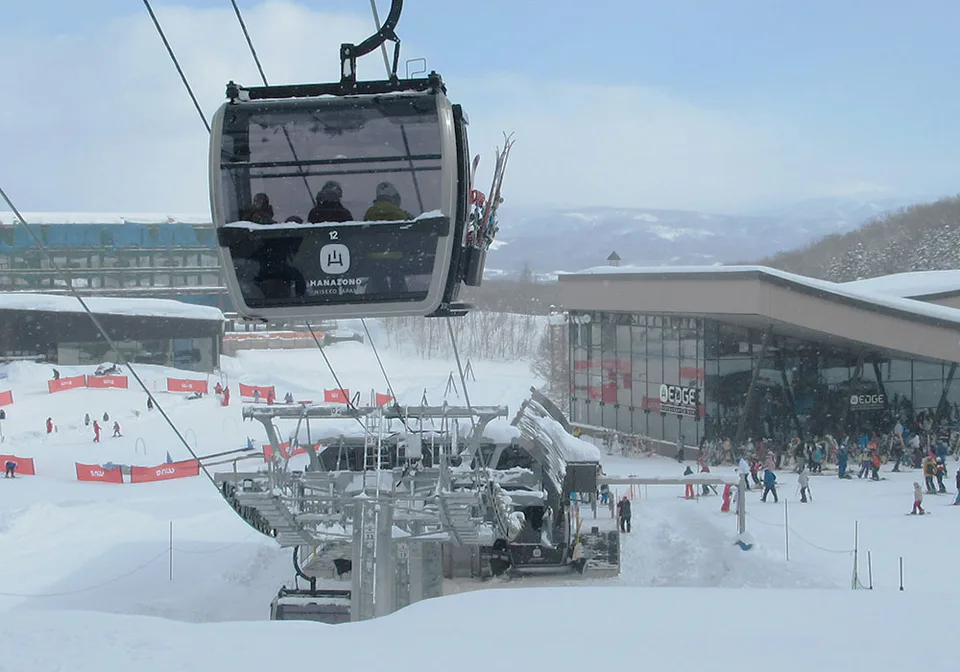
HANAZONO: strongest when lessons and resort infrastructure are the daily job
HANAZONO is more than a luxury-hotel alternative to Hirafu. It becomes the rational base when the family’s daily schedule is built around HANAZONO itself.
Niseko International Snowsports School is currently accepting 2026–27 bookings, with its main season scheduled from November 28, 2026 to April 11, 2027. Its dedicated beginner area uses magic carpets, and current group lessons are scheduled from December 8, 2026 to April 4, 2027, subject to the published conditions.
If two children have lessons at HANAZONO for four mornings, staying there deletes a repeated pre-lesson transfer. That can be worth more than having a larger restaurant list at night.
HANAZONO becomes weaker when the adults expect Hirafu restaurants and bars every evening. Resort shuttles exist, but schedules change by season and weather; a shuttle dependency is not the same as walking out of a Central Hirafu hotel.
Airport transfer also needs exact matching. Hokkaido Resort Liner’s current 2026–27 meeting-point list includes Park Hyatt Niseko Hanazono and Nikko Style Niseko HANAZONO, so those hotels should be matched to a service that actually reaches the HANAZONO area rather than assuming every “Niseko bus” does.
Niseko Village: choose it when the hotel is supposed to replace the village
Niseko Village works best when the property itself provides enough dining, slope access and non-ski time that you do not need independent Hirafu movement every day. This is a different travel product from renting an apartment in Central Hirafu.
The area is also changing for 2026–27: Niseko United has announced the first section of the new Mori-no Gondola for the winter season, replacing part of the older lift infrastructure. That is a meaningful infrastructure change, but it should not be inflated into a guarantee about queues, snow or every hotel’s access.
Choose Niseko Village when:
the hotel facilities are part of the holiday;
part of the group does not ski;
you are happy to reserve meals inside/around the resort;
you prefer a slope-side resort rhythm to independent nightlife.
Choose Hirafu instead when the group repeatedly wants spontaneous restaurants, bars and non-resort services after skiing.
Annupuri: buy quiet evenings and onsen, not “cheaper Hirafu”
Annupuri is strongest when the group actually wants a quieter base: skiing, an onsen, dinner at the property and a slower night. It should not be chosen simply because a comparable room is cheaper than Hirafu.
Its 2026–27 published season currently runs through May 5, giving it a late-spring advantage over HANAZONO and Niseko Village. That matters for April travel.
The trade-off is spontaneity. A no-car traveller who wants a different independent restaurant every night may find Annupuri restrictive. A couple who wants to ski, soak and eat at the ryokan/hotel may see that same lack of nightlife as a feature.
Hokkaido Resort Liner’s current meeting-point list includes Niseko Northern Resort Annupuri and Hotel Kanro no Mori, making certain properties easier for luggage-heavy airport arrivals than a generic “remote Annupuri” description suggests. Again, property-level transport can reverse the area-level assumption.
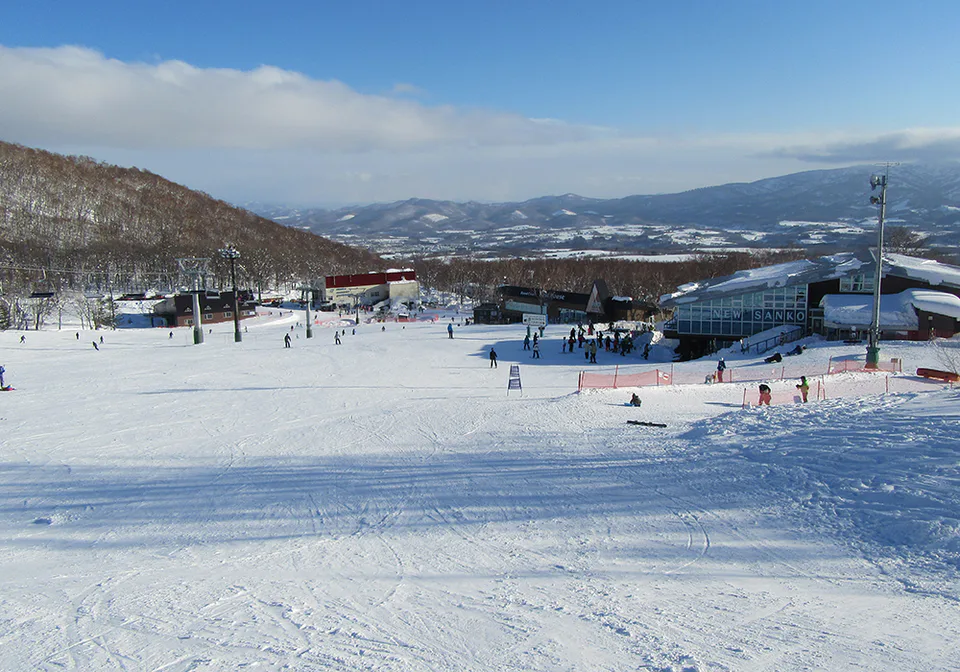
Do not assume the All Mountain Pass makes hotel location irrelevant
The 2026–27 Niseko United All Mountain Pass covers all four areas, and during the current scheduled night-skiing period multi-day passes remain valid through night operations on the final day. That makes cross-area skiing easier.
It does not erase weather, lift status or the morning distance from your hotel. Niseko United publishes live lift status because wind and operating conditions can suspend individual lifts. If upper-mountain connections are interrupted, your local base becomes more important, not less.
For beginners, the lesson meeting point usually matters more than theoretical access to all four resorts. For advanced skiers, the all-mountain network matters more—but weather should still stop you from paying a large hotel premium purely for a perfect cross-mountain plan.
Airport transfer should be part of the hotel comparison
Before paying a non-refundable Niseko hotel, open the New Chitose Airport to Niseko transport guide and match the hotel to a real 2026–27 stop.
The correct question is not “Is there a bus to Niseko?” It is:
Does the bus stop at my hotel or only at Hirafu Welcome Center?
If it stops at Hirafu, does my hotel provide a reliable onward shuttle?
Can the shuttle carry the group’s large luggage and ski equipment?
What is the taxi fallback after a delayed bus?
A hotel that costs slightly more but removes a snowy arrival transfer can be better value for a family carrying four ski bags.
Families should choose the lesson base before the nightlife base
Adults can tolerate a 20-minute morning shuttle. A family trying to put two children into ski school with boots, helmets and gloves pays that transfer in stress every morning.
If lessons are fixed at HANAZONO, HANAZONO gets a strong structural advantage. If lessons and rentals are fixed at Grand Hirafu, Upper/Central Hirafu get stronger. The hotel’s kids club or room size comes after the lesson geography.
For families who will take midday breaks, the hotel-to-slope distance is effectively paid twice per day: morning departure, midday return, then afternoon restart. That can justify a larger slope-access premium than an adult couple would rationally pay.
Mixed skier / non-skier groups should count independent hours
A non-skier changes the area decision because the hotel may become the person’s base for eight hours while everyone else is on the mountain.
Hirafu gives the strongest independent ecosystem for cafés, restaurants and services without depending entirely on one resort. Niseko Village/HANAZONO can work very well when the non-skier actively wants the hotel spa, restaurants and resort facilities. Annupuri works when the non-skier wants onsen and quiet rather than shopping/nightlife.
Do not pay for ski-in/ski-out access for the whole room if half the party does not ski unless the hotel itself provides equivalent non-ski value.
Should you split four or five nights between two Niseko areas?
Usually no. Moving ski gear, boots, winter clothing and luggage between Niseko bases is more expensive than moving one suitcase between city hotels.
I would split only when the second area unlocks a genuinely different repeated use case:
three nights Hirafu for restaurants/night skiing + two nights Annupuri for an onsen-led finish;
children’s lesson block at HANAZONO followed by a separate adult-focused Hirafu stay;
a seasonal operating-date issue makes the first area unavailable for the later part of the trip.
I would not split simply to “experience two sides of Niseko.” The All Mountain network already lets skiers visit other areas without moving the hotel when weather and lifts cooperate.
Five booking mistakes that create expensive Niseko stays
Booking “Hirafu” without checking Upper/Central/Lower. The winter hill can be the hidden daily cost.
Choosing a family hotel before fixing ski-school geography. The lesson commute then repeats every morning.
Assuming every New Chitose bus stops at every Niseko hotel. Hirafu Welcome Center is not HANAZONO or Annupuri.
Using peak-season advice for late spring. 2026–27 resort closing dates differ materially.
Splitting hotels for variety. Ski gear makes the hotel move more costly than the same move on a city itinerary.
Final recommendation
For most first-time no-car travellers, Central Hirafu is still the safest starting point because it preserves independent evenings and flexible services. Upgrade toward Upper Hirafu when slope access repeats enough to justify the premium. Choose HANAZONO when lessons/family resort infrastructure are the daily anchor, Niseko Village when the hotel should be a self-contained resort, and Annupuri when quiet skiing and onsen evenings are the point. Before all of those, check the 2026–27 operating date and exact airport stop—either one can override the generic area ranking.
Further planning
New Chitose Airport to Niseko · True Niseko Ski-In/Ski-Out Hotels · Lift Pass, Rentals and Lessons · Niseko Family and Group Apartments · Niseko Food Guide
Check all Niseko accommodation
Compare Niseko stays on Booking.com
Sources
Niseko United — 2026–27 ski-area dates, night skiing and All Mountain Pass · Niseko HANAZONO — 2026–27 NISS ski-school dates · Niseko HANAZONO — access and shuttle framework · Hokkaido Resort Liner — current Niseko-area meeting points · Niseko United — live lift status. Checked August 25, 2026. Opening dates, shuttles, lifts and weather-dependent operations can change.