
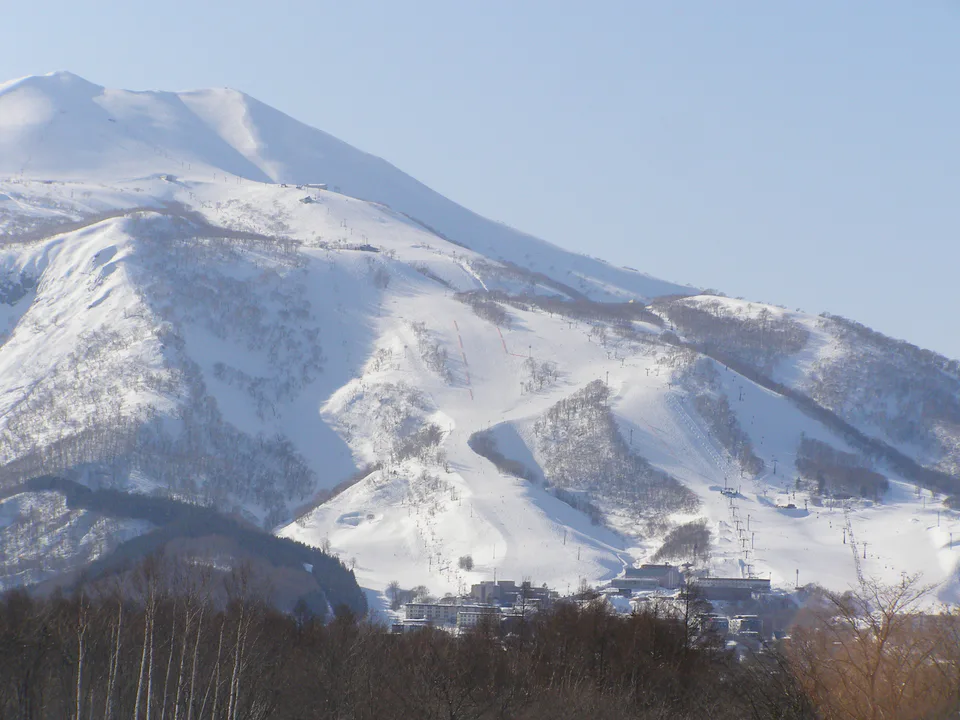
For most first-time winter visitors, the reserved airport bus is the correct baseline from New Chitose Airport to Niseko—but only after your flight clears the operator’s connection buffer. Hokkaido Resort Liner’s current 2026–27 rules require at least 45 minutes from a domestic flight to the bus and 90 minutes from an international flight. If your itinerary cannot meet that margin, stop comparing bus fares and price a private transfer or an airport/Sapporo night instead.
After the connection window, the second decision is the actual resort stop. Hirafu, HANAZONO, Niseko Village and Annupuri are not one drop-off point. A cheap bus to Hirafu can become a poor transfer if your hotel is elsewhere and the final snowy leg still needs a shuttle or taxi. JR is strongest when Kutchan fits a wider rail itinerary. A rental car belongs in the comparison only when every driver already has genuine snow-and-ice experience.
↔ Scroll table left or right
Your real situation | Start with | Why | Main failure mode |
1–2 adults, daytime arrival, operator buffer satisfied, hotel on a published resort stop | Reserved winter bus | Lowest-friction benchmark with ski luggage handled once | Flight delay erases the connection margin |
International arrival with less than ~90 minutes to the selected Resort Liner | Do not book that bus | Operator’s published minimum connection is not met | Building the trip around an impossible immigration/baggage sprint |
4–8 travellers, children, several ski bags or hotel not on a convenient bus stop | Private transfer | Per-vehicle pricing and door-to-door delivery can remove the final-mile problem | Vehicle capacity looks adequate by seats but not by luggage volume |
Kutchan stay or wider Hokkaido rail itinerary | JR deserves comparison | Rail can fit the rest of the itinerary rather than serving Niseko alone | Otaru transfer, sparse onward trains and resort last mile |
Experienced winter driver + dispersed rural itinerary beyond Niseko | Rental car | The car changes several days, not just the airport transfer | Black ice, whiteout, road closure and driver fatigue |
Early flight home | Work backward from flight first | Resort Liner currently asks for 60 min bus→domestic flight and 120 min bus→international flight | Using scheduled bus arrival as your airport check-in time |
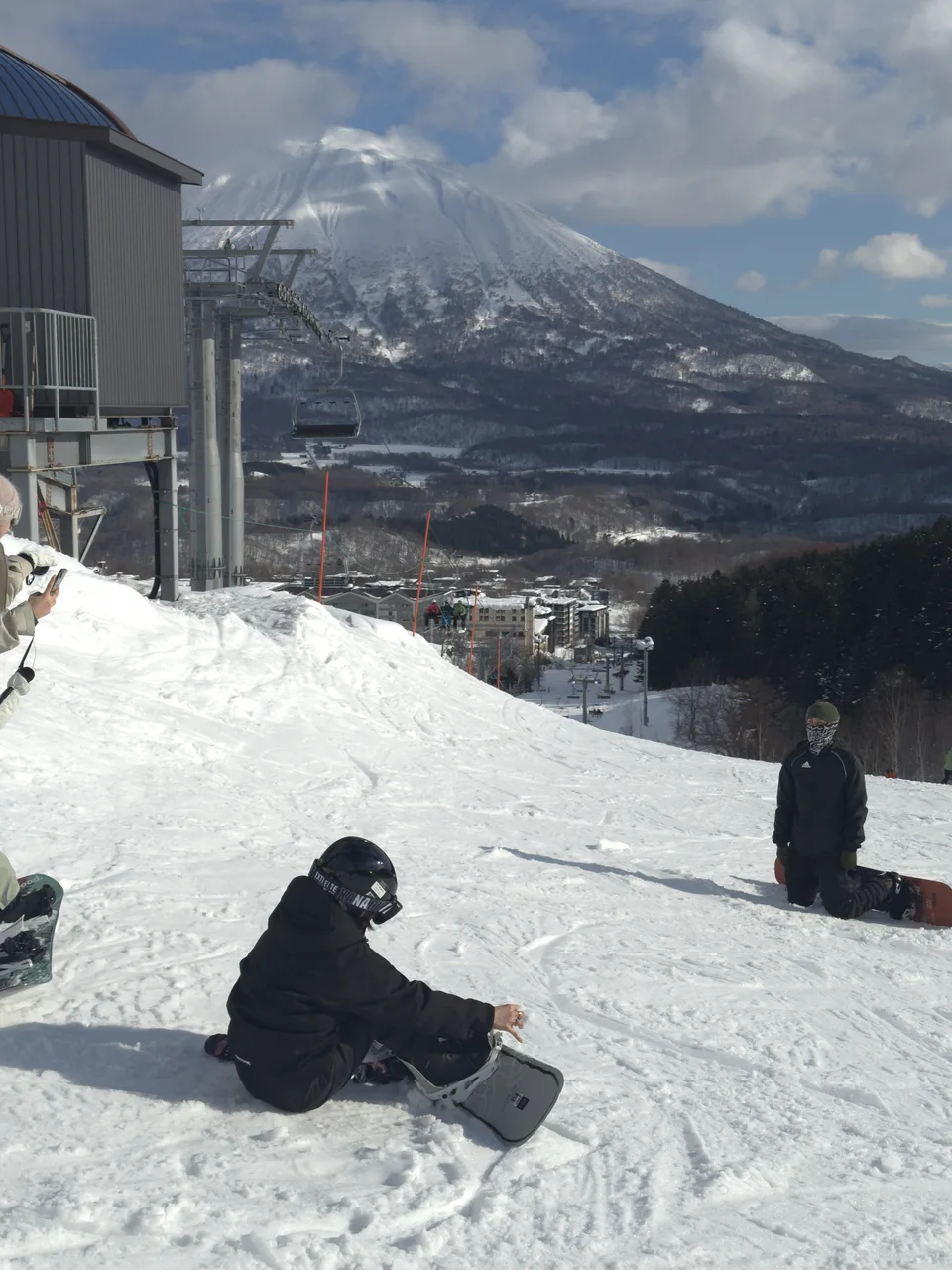
First veto: does your flight actually connect to the bus?
Airport-transfer articles often compare travel time after the bus has already departed. That is backwards. A flight passenger has to clear the terminal first.
For its 2026–27 New Chitose Airport–Rusutsu/Niseko service, Hokkaido Resort Liner currently publishes these minimum connection times:
Domestic flight → bus: 45 minutes.
International flight → bus: 90 minutes.
Bus → domestic flight: 60 minutes.
Bus → international flight: 120 minutes.
Those are operator minimums, not ValueNavi estimates. They should be treated as a hard screening rule before you buy the ticket.
An international arrival scheduled at 13:00 and a bus leaving at 14:00 is not a one-hour connection worth “trying.” It fails the published 90-minute minimum before you even account for a late aircraft. Immigration and baggage are not optional itinerary steps.
I would add more margin when the bus is the last realistic same-day departure, the flight is historically delay-prone, several checked bags are involved, or a child/stroller slows the terminal exit. A minimum connection is the floor, not necessarily a comfortable plan.
The direct winter bus is still the best benchmark when the connection is clean
Hokkaido Resort Liner’s current 2026–27 Niseko service runs from December 1, 2026 to March 30, 2027 from New Chitose Airport, with return service through March 31. The published one-way Niseko fare is JPY 6,000 for adults and JPY 5,000 for children aged 3–11; infants under three can travel free without a seat under the operator’s rule.
If the bus runs directly without the Rusutsu stop, the operator says Hirafu can be reached in about 2 hours 30 minutes. That is a useful in-vehicle benchmark, but the decision value is the lack of rail transfers. Ski bags and suitcases are loaded once, the driver handles the winter road, and you can arrive at a named resort stop without changing at Otaru.
The operator also publishes multiple Niseko-area meeting points, including Hirafu Welcome Center, Park Hyatt Niseko Hanazono, Nikko Style Niseko HANAZONO, Niseko Northern Resort Annupuri, Hilton Niseko Village and others. This is why “bus to Niseko” is too broad. Match the service to the full hotel name before booking.
Hirafu is not a universal Niseko drop-off
Hirafu, HANAZONO, Annupuri and Niseko Village solve different ski trips and have different final-mile arrangements. A service ending at Hirafu Welcome Center can be excellent for Upper/Lower Hirafu accommodation with a confirmed hotel shuttle. It is not automatically convenient for a HANAZONO hotel or an Annupuri property.
Snow makes the last 500 metres more expensive than a summer map suggests. A sloped walk in ordinary shoes with a 25 kg suitcase and ski bag is not a trivial hotel transfer. If the bus drops you at a central stop rather than the hotel, confirm all three pieces before payment:
Which exact stop does the bus use?
Does the hotel shuttle meet that stop at your arrival time?
What is the taxi backup if the hotel shuttle is missed or full?
That last-mile chain can justify a more expensive door-to-door transfer even when the bus is cheaper.
Private transfer: compare the vehicle against the luggage, not the passenger count
A private transfer becomes more rational as the group gets larger or the final mile gets worse. Four bus tickets at JPY 6,000 are already JPY 24,000 one way before any hotel-side taxi. That does not prove a private vehicle is cheaper, but it means the correct comparison is now the total vehicle quote rather than “bus fare per person versus expensive transfer.”
For ski trips, seat count is a weak capacity measure. Four adults can produce four suitcases, four ski or snowboard bags, boot bags and carry-ons. A nominal six- or eight-seat van can run out of luggage volume before it runs out of legal seats.
Ask the transfer company to confirm the exact inventory in writing: adults, children, child seats, suitcases, ski bags, snowboard bags, stroller and any wheelchair. If the operator cannot confirm the load, do not assume it fits because the website says “up to 8 passengers.”
Private transfer also becomes more valuable when a flight arrives after the practical bus window, but read the delay policy carefully. “Flight tracking” does not necessarily mean unlimited waiting with no surcharge or guaranteed rebooking after a major diversion.
JR is a rail-itinerary tool, not the default ski-bag answer
The normal rail logic is New Chitose Airport → Otaru → Kutchan or Niseko, then a final bus, hotel shuttle or taxi. Some Airport trains continue directly from New Chitose to Otaru, which removes one early transfer, but the segment beyond Otaru is much less frequent than the airport–Sapporo corridor.
JR becomes strong when the train is solving more than this one transfer. Examples:
you are staying in Kutchan rather than a ski-in resort;
the itinerary continues through Otaru and Sapporo;
you are already using rail passes or reserved JR segments elsewhere;
the bus timetable does not fit but the train schedule still provides a robust arrival.
It becomes weak when two adults have large cases plus skis and still need a taxi after Kutchan. The fare can look attractive while the handling burden grows at every platform change.
JR Hokkaido’s ordinary baggage rule allows up to two items per traveller within its published weight and dimension limits, but that rule does not create dedicated ski storage or remove the physical burden of changing trains.
A rental car is only rational if it earns value after you arrive in Niseko
Do not rent a car merely because four bus tickets look expensive. The New Chitose–Niseko road is a winter-driving problem before it is a cost problem.
Use a rental car only when every driver has genuine experience with compacted snow, ice, poor visibility and winter braking, and the car will continue to solve dispersed trips after arrival. Grocery runs alone are not enough reason to turn a safe bus transfer into a mountain-road drive after a long-haul flight.
The full cost includes winter tyres, requested 4WD where relevant, protection/NOC, fuel, tolls, parking, child seats, snow clearing, airport branch time and a much larger flight-day buffer. Severe weather can close or slow roads; having a vehicle does not create immunity from a whiteout.
If you are considering a wider winter road trip, use Hokkaido Winter Rental Car: Full Trip or Partial Rental? and Hokkaido Winter Driving Guide before booking.
Return day: the bus-to-flight buffer matters more than the nominal journey time
The transfer back to New Chitose should be planned more conservatively than the arrival. Missing an airport bus on arrival usually costs time and money. Missing an international flight can destroy the next leg of the entire trip.
Hokkaido Resort Liner currently requires at least 60 minutes between bus arrival and a domestic flight, and 120 minutes before an international flight. Treat those as minimum connection rules, then add your own weather margin when conditions are poor or the flight is expensive to miss.
This produces an important boundary condition: the last resort bus that technically satisfies 120 minutes may still be a poor choice for a long-haul international flight during a snowstorm. If the consequence of delay is severe, take an earlier bus or move to New Chitose/Sapporo the night before.
The New Chitose late-arrival / airport-night guide works in reverse for this decision: sometimes the safest “Niseko transfer” is ending the ski stay one night earlier.
One useful comparison for four travellers

Assume four adults, four ski bags and four suitcases travelling to a hotel that is not directly served by the chosen bus.
The current Resort Liner adult fare creates a bus baseline of JPY 24,000 one way for the group, before the final hotel transfer. Now compare a private vehicle quote that genuinely fits eight large pieces of luggage plus four people and delivers to the hotel door.
If the private quote is only modestly above JPY 24,000 plus the taxi/shuttle cost and removes a snowy final-mile transfer, the convenience premium may be small enough to justify. If the private quote is dramatically higher and the hotel already runs a reliable shuttle from the published bus stop, the bus wins.
This is derived ValueNavi analysis from the operator fare, not a claim that private transfers have one fixed market price.
Late arrival: when should you stop trying to reach Niseko that night?
Use landside-with-bags time, not scheduled touchdown. If the remaining same-day bus does not satisfy the operator’s minimum connection time, remove it from the plan. If a private transfer is still available at a price you accept, compare that with an airport hotel. Otherwise sleep near New Chitose or in Sapporo and travel in daylight.
That is particularly important after a long-haul international flight. The first Niseko night is often expensive, but paying for a room you reach after midnight can be worse value than deliberately starting the resort stay the next day with enough sleep to ski safely.
Final verdict
Start with a reserved winter bus when your flight comfortably satisfies the published connection buffer and the bus stop genuinely serves your hotel area. Move to a private transfer when group size, ski luggage or the final mile makes the bus chain clumsy. Use JR when Niseko is one segment of a rail itinerary. Rent only when winter-driving competence is already solved and the car earns value for several rural days.
The best transfer is not the one with the shortest advertised journey time. It is the one that survives immigration, baggage, snow, the hotel’s last mile and the return-flight deadline without requiring every step to go perfectly.
Related Niseko planning
Where to Stay in Niseko: Hirafu, HANAZONO or Annupuri? · Niseko Ski-In/Ski-Out Hotels · MUWA NISEKO Review · Japan Luggage Forwarding Guide
Sources
Hokkaido Resort Liner — 2026–27 New Chitose Airport ↔ Niseko service, fares and connection times · Hokkaido Resort Liner — current meeting points · JR Hokkaido — airport rail information · Niseko United — access overview. Checked August 25, 2026. Winter schedules, stops, road conditions and flight-connection rules can change; recheck the exact travel date.