
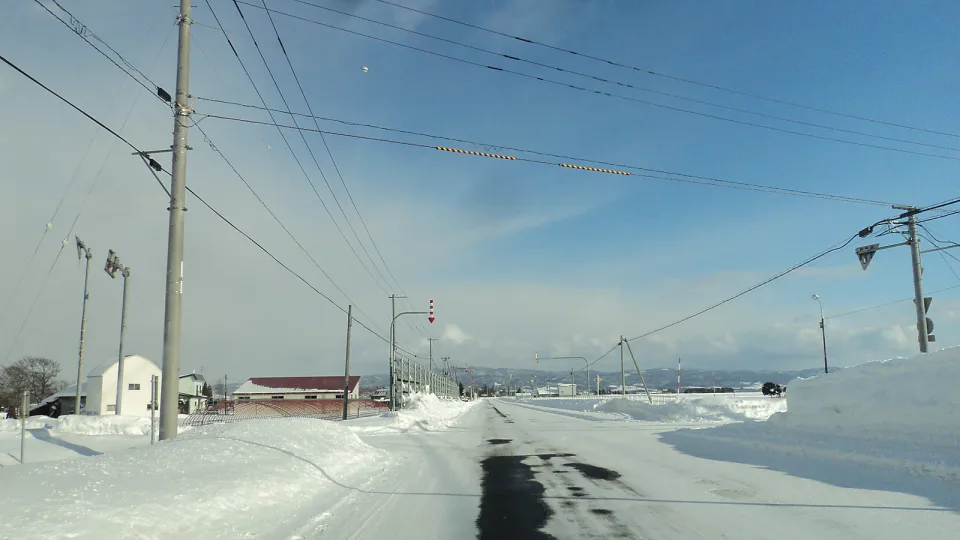
For most first-time Hokkaido winter trips, I would not keep a rental car for every day. Keep Sapporo, Otaru and the New Chitose Airport rail corridor car-free, then rent only for the rural segment if the driver already has genuine snow-and-ice experience. A full-trip rental becomes rational when the route is rural from the start and the car does useful work on most paid rental days—not when it spends half the trip parked outside a Sapporo hotel.
The strongest filter is simple: count useful car days, not total holiday days. A useful car day is one where the vehicle unlocks dispersed rural stops, removes a difficult hotel transfer, carries family/luggage between rural bases or solves a schedule public transport handles poorly. A city day where the car mainly sits parked is a paid exposure day, not a useful car day.
↔ Scroll table left or right
Your winter trip shape | Start with | Why | What can reverse it |
Sapporo + Otaru only | No car | JR already links New Chitose, Sapporo and Otaru efficiently | A specific rural hotel or activity outside the rail/bus corridor is added |
Sapporo/Otaru first, then 2–3 rural Biei/Furano days | Partial rental | You delete city driving while keeping rural flexibility | Rental pickup/one-way fees make the short window unusually expensive |
Rural route from Day 1 with 4–5 useful driving days | Full rental deserves comparison | The same car repeatedly solves luggage, hotel transfers and rural access | Driver lacks winter experience or severe weather makes the route too fragile |
Little or no snow/ice driving experience | No car | Partial rental does not remove the hardest part of winter driving | None based on itinerary convenience alone; experience is the hard constraint |
Late flight into New Chitose + first night Sapporo | Rail first | The airport railway is direct and avoids making the first winter drive while tired | The first hotel is genuinely rural and a safe daytime pickup plan is already built |
Use the useful-car-day ratio before comparing rental prices
A seven-day rental can look convenient because it avoids a second pickup and another luggage hand-off. But convenience should be compared with how often the vehicle is actually doing work.
Use this ValueNavi planning test:
useful-car-day ratio =
days when the car materially changes the itinerary
÷ paid rental days
This is an editorial planning tool, not an official threshold. As a rule of thumb, if the car is useful on fewer than half of the paid days, I would try to redesign the trip as a partial rental. If it solves a real problem on roughly two-thirds or more of the days, a full rental becomes much easier to justify.
Example: a seven-day trip with Sapporo for three nights, an Otaru day trip and only two rural driving days gives the car perhaps two useful days out of seven—about 29%. The other five days are largely rental cost, parking, winter-road exposure and responsibility. A seven-day rural loop where the car is genuinely useful on five days is a very different calculation—about 71% useful days.
The point is not the exact percentage. It is to stop calling every day in Hokkaido a “car day” simply because a car is available.
Sapporo and Otaru are where a full-trip rental most often becomes deadweight
JR Hokkaido currently lists New Chitose Airport → Sapporo at a fastest 33 minutes and New Chitose Airport → Otaru at a fastest 73 minutes. Between 09:00 and 16:00, the Airport service runs six times per hour between the airport and Sapporo, and some trains continue directly to Otaru. Most seats do not require reservations, and IC cards can be used on the airport–Sapporo–Otaru corridor.
That does not mean rail is immune to winter disruption. Snow can delay or suspend trains. It means the city corridor already has a strong transport product before you add a vehicle. A car in central Sapporo can therefore create obligations—parking, snow around the vehicle, unfamiliar intersections and another winter drive—without unlocking a better day.
Otaru has the same problem. If the plan is Sapporo hotel → Otaru Canal/sushi/shopping → Sapporo hotel, rail already solves the main movement. A full rental only becomes more defensible if Otaru is one stop inside a wider rural driving day that rail does not handle well.
If your winter itinerary is mostly this corridor, build it with Hokkaido Without a Car rather than renting “just in case.”
Partial rental works best when the trip changes geography, not just when you reach Day 4
The cleanest partial-rental pattern is a change of operating environment:
City phase: New Chitose → Sapporo → Otaru by rail.
Rural phase: move by rail to Asahikawa, then collect the car for Biei/Furano or a rural hotel sequence.
Exit phase: return the car when the itinerary re-enters a strong rail/airport corridor.
This avoids the worst hybrid: paying for a car through city days merely because you will need it later.
Asahikawa is a useful winter hand-off because JR Hokkaido Rent-A-Car currently operates its Asahikawa Station office year-round, with 2026 regular hours of 08:30–19:00 for most of the year. Its Asahikawa Airport office is also open year-round. That makes Asahikawa a more dependable provider-specific pickup point than assuming every small scenic town has a winter counter.
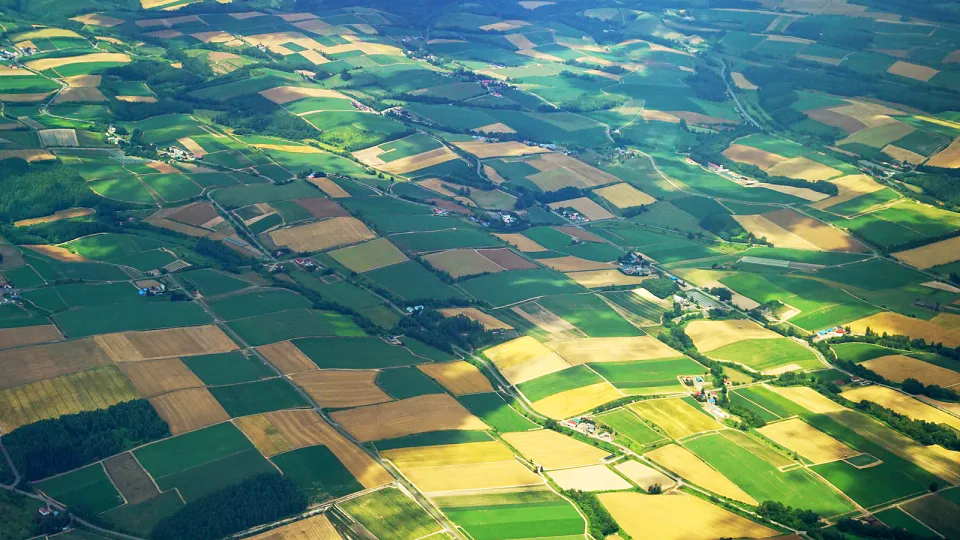
Do not turn one company’s seasonal office into “no winter rental in Furano”
This is an important correction to older planning advice. JR Hokkaido Rent-A-Car currently lists its Furano Station office only for the warm season, from May 1 to September 30 in 2026. That makes JR Hokkaido Rent-A-Car at Furano Station unavailable as a winter pickup.
But that does not mean Furano has no winter rental-car option. Other operators can have different seasons; for example, Budget currently lists a Furano Station branch operating in winter with studless tyres fitted as standard during the winter period.
The practical rule is therefore: rental availability is provider-specific. If the partial-rental strategy depends on collecting in Furano, confirm the exact company, exact date, opening hours, winter equipment and return location before booking the hotels. If you want the simplest year-round hand-off with rail, Asahikawa remains the first place I would compare.
One-way return can erase part of the saving from a shorter rental
A partial rental does not automatically mean a cheaper rental. The second pickup, a different return city and one-way fees can offset part of the days you removed.
JR Hokkaido Rent-A-Car’s current published one-way table gives a useful example: returning an Asahikawa-area rental in the Sapporo area costs JPY 6,600, while returning it in the Chitose area costs JPY 7,700. Those are provider-specific 2026 examples, not universal Hokkaido fees.
This changes how to compare the two structures:
Full rental cost =
all paid rental days
+ city parking / fuel / tolls
+ protection

Partial rental cost =
rural paid rental days
+ protection
+ pickup/return positioning
+ one-way fee, if any
+ rail/bus used before and after
If shortening a seven-day rental to two days saves five rental days but creates a JPY 7,700 one-way fee, partial rental can still win—but the one-way charge belongs in the calculation. If the rural segment is only one day, that same fee can destroy the economics.
A third option is often overlooked: return to the same rural hub and take rail back to Sapporo or New Chitose. It may add one rail leg but avoid a large one-way charge.
Winter-driving experience is a veto, not a preference score
Hokkaido’s current official winter-driving guidance says frozen road surfaces can be about ten times as slippery as dry summer roads and recommends keeping more than three times the normal following distance. Hokkaido Police also publishes braking-test examples showing how dramatically stopping distance increases on compacted snow and ice.
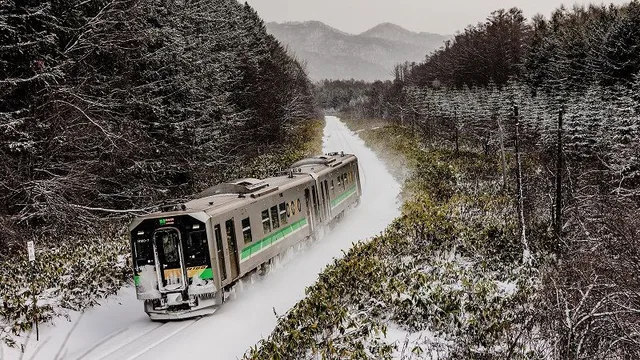
That is why “partial rental” is not the compromise I recommend to everyone. If you have never driven on compacted snow, black ice or low-visibility winter roads, shortening the rental from seven days to two does not make the hardest two days easy. It only concentrates the risk into the rural segment.
In 2026 the Hokkaido Transport Bureau expanded safety work aimed specifically at foreign rental-car users, including winter-road simulator training. The bureau reported record foreign rental use and rising accident concern as part of the reason for the programme. Treat that as a planning signal: winter-driving competence should be decided before hotel convenience.
If you do drive, use Hokkaido Winter Driving Guide and check official road restrictions, cameras and road-weather information before each rural day.
A rental car is not a reliable “backup” when the weather is worst
It is tempting to think a full rental makes the trip more resilient because you are no longer dependent on train timetables. That logic breaks in severe winter weather.
The Ministry of Land, Infrastructure, Transport and Tourism’s road-information system publishes current restrictions, road cameras, snow depth, wind, air temperature and road temperature, with information refreshed frequently. Hokkaido also has seasonal road closures and weather-related closures. When visibility or road conditions become unsafe, having a car transfers the transport decision to you; it does not guarantee mobility.
Rail and buses can also be disrupted, so “no car” is not disruption-proof. The difference is responsibility. With public transport, the operator decides whether the service runs. With a rental car, you have to decide whether continuing is safe. That burden should count against a full-trip rental when the car is not essential that day.
When full-trip rental actually earns its cost
I would seriously compare a full rental when most of these are true:
the driver already has real winter-driving experience;
the first hotel is outside the Sapporo/Otaru city corridor;
four or more days contain dispersed rural stops or rural hotel transfers;
the same vehicle materially simplifies large luggage, ski equipment or young children;
the route does not keep returning to Sapporo between rural days;
hotel parking and vehicle storage are already solved;
the route still has a safe weather fallback if one driving day is cancelled.
A route such as New Chitose → rural onsen → Furano/Biei → Asahikawa, with several rural nights and an experienced driver, can make one continuous car rational. A route such as New Chitose → Sapporo three nights → Otaru day trip → Sapporo → two rural days normally does not.
Airport day should not automatically count as a useful car day
New Chitose Airport is directly connected to the railway station. JR currently runs Airport services to Sapporo throughout the day and even publishes a late 23:21 departure from New Chitose Airport toward the Sapporo/Teine direction. For a first night in Sapporo, airport rail is a strong baseline before you add a winter rental counter, luggage loading and a night drive.
That makes the arrival day a common false “car day.” The car may be paid from 18:00, but if its only job is to drive airport → Sapporo and then sit in a city car park, it has not created meaningful rural access.
The same applies to the departure day. If the car has already completed the rural segment, returning it in Asahikawa or Sapporo and taking rail to New Chitose can remove fuel-stop, inspection and winter-road timing from the flight day. Compare that against any one-way fee before deciding.
Families and large luggage can move the threshold toward a full rental
Partial rental adds hand-offs: hotel → station → train → rental counter → vehicle, then the reverse at the end. For two adults with carry-ons, those hand-offs may be trivial. For two adults, two children, winter clothing, a stroller and four large bags, they can become the strongest argument for keeping the car.
But the car only helps if the vehicle is correctly sized. Winter coats, child seats, ski gear and hard-shell luggage consume cabin and boot space quickly. A nominal five- or seven-seat vehicle may be a poor family choice when every seat is occupied. Price the vehicle class that fits the maximum luggage load, not the cheapest class that fits the passenger count.
Luggage forwarding can lower the cost of a partial-rental strategy on hotel-moving routes. Use the Japan luggage-forwarding guide to decide whether the largest cases actually need to follow the car into every rural stop.
Three realistic seven-day winter structures
1. Sapporo + Otaru city trip: no car
New Chitose → Sapporo by Airport train, Otaru as a rail day trip or overnight, then return to Sapporo/New Chitose by rail. The car would have very few useful days and adds winter-driving responsibility without materially improving the route.
2. Sapporo/Otaru + Biei/Furano: partial rental
Use rail for New Chitose, Sapporo and Otaru. Move to Asahikawa, pick up a winter-equipped car for the rural segment, then return it when the route re-enters rail. This is the strongest default for an experienced winter driver who wants rural flexibility without paying for city deadweight days.
3. Rural loop from the airport: full rental
Use one vehicle when the first hotel is already rural and most following days require rural movement. Do not use this pattern merely to avoid changing transport modes. It only wins when the car earns its keep repeatedly and the driver is competent in winter conditions.
Final verdict: shorten the rental unless the car keeps earning another day
For a first Hokkaido winter trip, no car is the default for inexperienced snow drivers; partial rental is the default for experienced drivers combining Sapporo/Otaru with a short rural segment; full rental is the exception for itineraries that are rural for most of the trip.
Before paying for another rental day, ask one question: What does the car unlock tomorrow that rail, bus, hotel transfer or a taxi cannot solve reasonably? If the answer is “nothing; it will mostly sit in Sapporo,” return it. If the answer is “three rural stops, a remote hotel and all our luggage,” keep it.
The conclusion reverses when the one-way fee, family luggage hand-offs or rural hotel sequence makes partial rental more expensive and more fragile than keeping the same vehicle. It reverses again when the driver lacks snow experience: then convenience should not override the safety veto.
Okinawa With Kids: The Road Trip Works Only If the Car Seat, Boot and Nap Window Fit Together
Okinawa Car Rental: OTS vs Toyota vs ORIX — Which Should You Book?
Best Place for a First Japan Autumn Trip: Tokyo, Kyoto, Hokkaido or Tohoku?
Niseko vs Furano: Which Ski Base Is Better for Your Hokkaido Trip?
Japan in February Is Still Winter: What to Wear in Tokyo, Kyoto, Hokkaido and Okinawa
References
JR Hokkaido — New Chitose Airport, Sapporo and Otaru rail access · JR Hokkaido Rent-A-Car — 2026 office operating periods · JR Hokkaido Rent-A-Car — one-way fees · Hokkaido Government — winter-road driving guidance · Hokkaido Police — winter-driving safety information · Hokkaido Transport Bureau — 2026 foreign rental-car winter safety programme · MLIT — current road restrictions, cameras and road-weather information. Checked August 25, 2026. Rental-office seasons, one-way fees, road restrictions and train operations can change; verify the exact travel date and provider before payment.